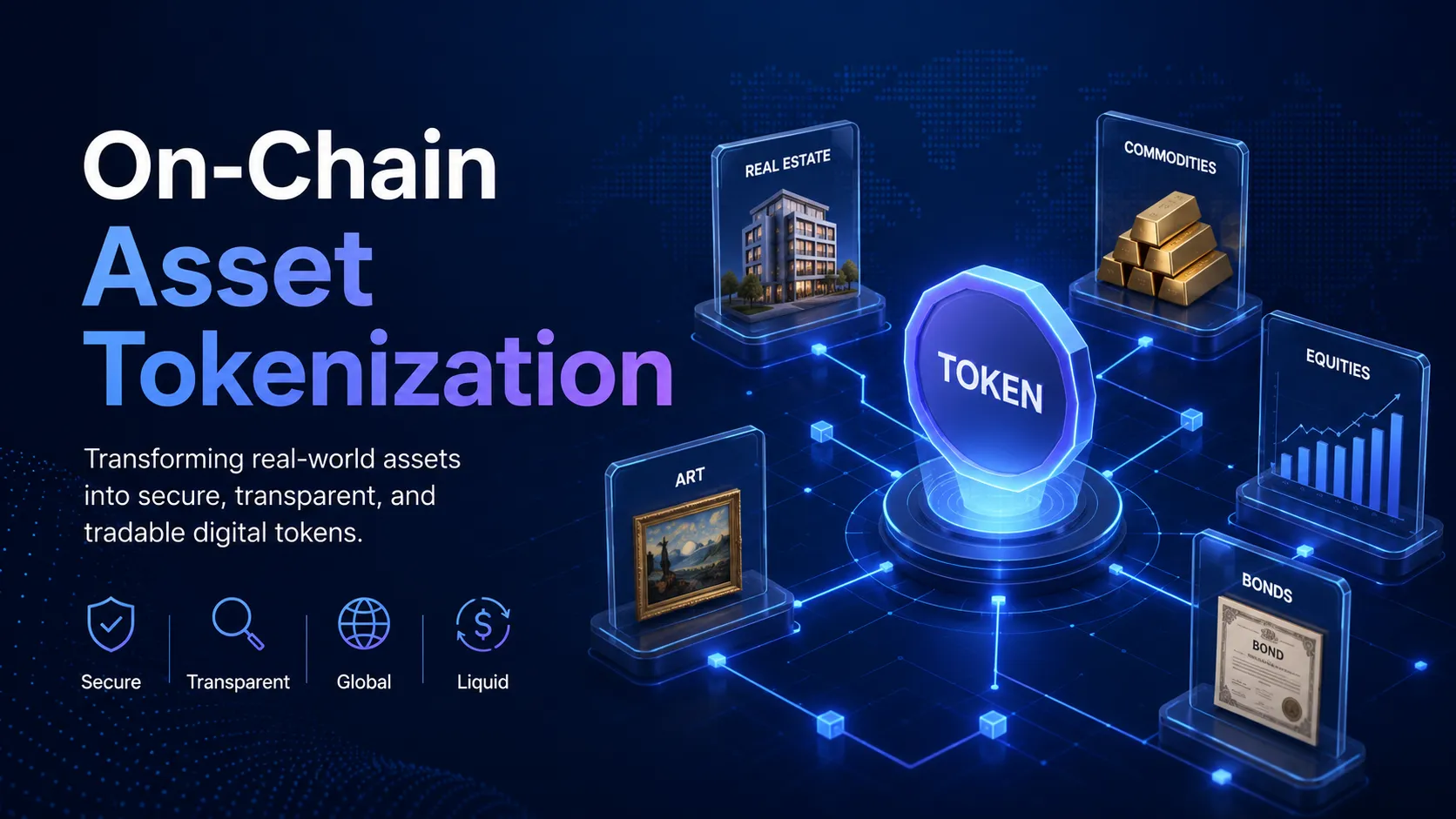

Modern financial ecosystems are moving away from static, document-heavy systems toward programmable, real-time digital infrastructure. Traditional assets such as real estate, bonds, commodities, and private equity have long been difficult to trade efficiently due to intermediaries, settlement delays, and fragmented record systems.
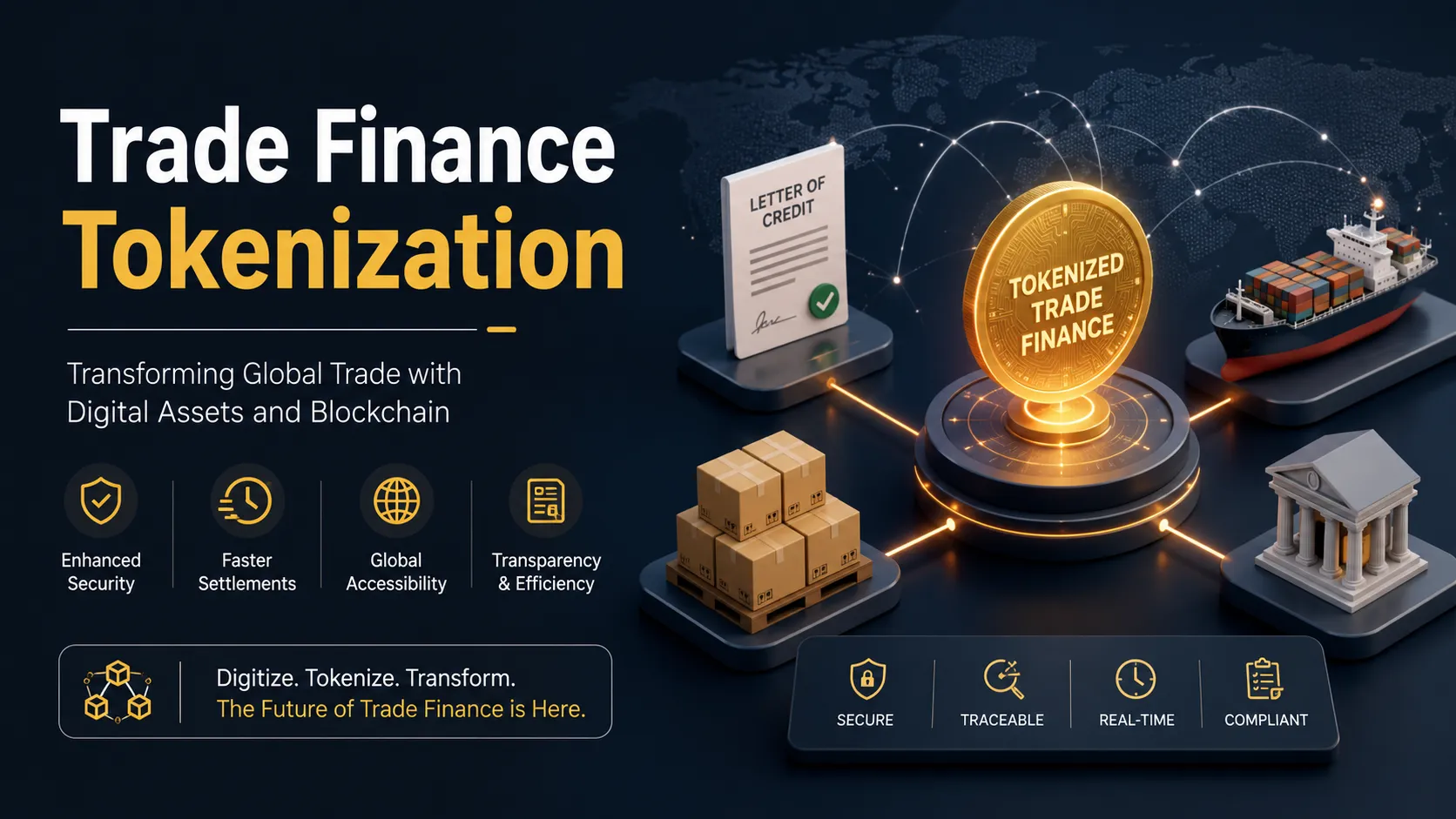
On-chain asset tokenization introduces a new model where real-world and financial assets are represented as digital tokens on blockchain networks. These tokens carry defined ownership rights, are programmable through smart contracts, and can be transferred instantly across global networks. This shift is not just a technological upgrade; it is a structural transformation of how value is issued, managed, and exchanged.
Understanding On-Chain Asset Tokenization
On-chain asset tokenization is the process of converting ownership rights of real-world or financial assets into blockchain-based digital tokens. Each token represents a fraction or whole of an underlying asset and is recorded on a decentralized ledger.
Smart contracts govern these tokens, defining rules for issuance, transfer, compliance, and redemption. Unlike traditional systems that rely on centralized databases and intermediaries, blockchain ensures that ownership records are transparent, tamper-proof, and continuously verifiable.
This creates a financial environment where assets are not just stored digitally but are also programmable and interoperable across platforms.
Why On-Chain Tokenization Matters in Modern Financial Systems
1. Liquidity Transformation of Traditionally Illiquid Assets
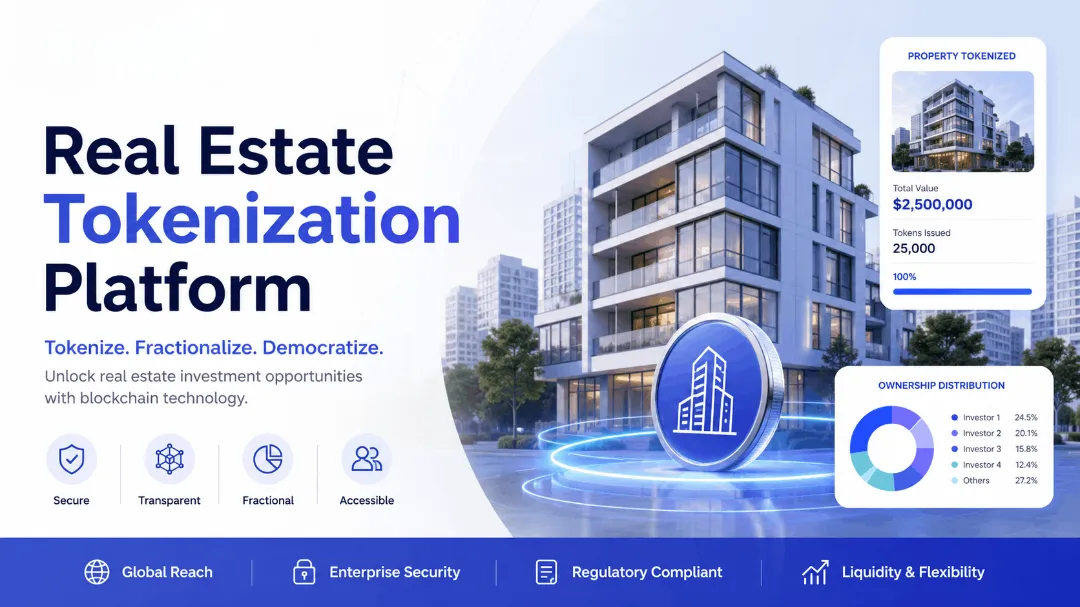
Many high-value assets, such as real estate, private equity, and infrastructure projects, are traditionally illiquid. Selling or transferring them often requires long settlement cycles and complex legal processes. On-chain asset tokenization breaks these assets into smaller digital units, enabling fractional ownership and easier trading. This unlocks liquidity in markets that were previously locked due to structural inefficiencies. As a result, capital moves more freely, and investors gain the ability to enter or exit positions with significantly reduced friction.
2. Fractional Ownership and Financial Inclusion
Tokenization enables assets to be divided into smaller, affordable units, making high-value investments accessible to a wider audience.
Instead of requiring large capital commitments, investors can participate with smaller amounts while still gaining exposure to premium asset classes. This increases financial inclusion and broadens participation in global markets.
For financial ecosystems, this diversification improves capital distribution and reduces reliance on institutional-only investment structures.
3. Increased Transparency and Trust in Financial Systems
Traditional financial ecosystems often suffer from opacity, where asset ownership, transaction history, and valuation processes are not fully visible to all stakeholders.
On-chain systems solve this by recording every transaction on a public or permissioned blockchain ledger. Each movement of a token is traceable and verifiable in real time.
This transparency reduces fraud, minimizes disputes, and increases trust among participants, including investors, regulators, and institutions.
4. Automation Through Smart Contracts
Smart contracts are one of the most powerful components of tokenized ecosystems. They automate financial processes such as asset transfers, dividend distributions, compliance checks, and settlement procedures.
This reduces reliance on intermediaries like brokers, clearinghouses, and custodians. As a result, operational costs decrease while transaction speed increases significantly.
Automation also reduces human error, making financial systems more reliable and predictable.
5. Cross-Border Capital Flow Efficiency
Traditional financial systems are heavily constrained by jurisdictional barriers, currency conversion issues, and regulatory fragmentation.
On-chain tokenized assets can be transferred globally within seconds, provided compliance rules are embedded within the token framework. This enables seamless cross-border investment without the friction of traditional banking systems.
For global investors and institutions, this creates a unified investment environment that transcends geographical limitations.
6. Improved Asset Interoperability Across Ecosystems
Tokenized assets can interact with decentralized finance (DeFi) protocols, lending platforms, and trading systems. This interoperability allows assets to be used in multiple financial applications simultaneously.
For example, a tokenized real estate asset can potentially be used as collateral in decentralized lending markets or integrated into yield-generating protocols.
This expands the utility of assets beyond simple ownership, transforming them into active financial instruments.
7. Real-Time Settlement and Reduced Friction
Traditional financial transactions often require settlement periods ranging from T+1 to T+3 days or longer, depending on the asset class.
On-chain tokenization enables near-instant settlement because ownership transfer is recorded immediately on the blockchain. This reduces counterparty risk and improves market efficiency.
Faster settlement cycles also improve liquidity and enable more dynamic trading strategies.
Challenges in On-Chain Asset Tokenization
Despite its advantages, several challenges remain in widespread adoption:
Regulatory uncertainty is one of the most significant barriers, as legal frameworks for tokenized assets vary across jurisdictions. Integration with existing financial systems is also complex, requiring hybrid models that bridge traditional and blockchain infrastructure.
Scalability and network congestion can impact performance, especially on public blockchains. Additionally, market participants may face a learning curve when transitioning from conventional systems to decentralized platforms.
Future of Tokenized Financial Ecosystems
The future of financial systems is increasingly aligned with blockchain-based infrastructure. As institutional adoption grows, tokenized assets are expected to become standard components of global investment portfolios.
Emerging trends include integration with central bank digital currencies (CBDCs), expansion of regulated security token markets, and deeper integration with decentralized finance ecosystems.
Over time, financial ecosystems may evolve into fully programmable environments where assets, compliance, and transactions are all governed by automated code.
Conclusion: A Structural Upgrade to Global Finance
On-chain asset tokenization is not merely a technological innovation—it represents a foundational shift in how financial ecosystems operate. By improving liquidity, enabling fractional ownership, enhancing transparency, and automating processes, it addresses long-standing inefficiencies in traditional finance.
As adoption increases, tokenization is expected to reshape global capital markets into more open, efficient, and interconnected systems. Businesses, investors, and institutions that adapt early are likely to benefit from improved capital access, reduced operational friction, and expanded market participation.




















Sign in to leave a comment.