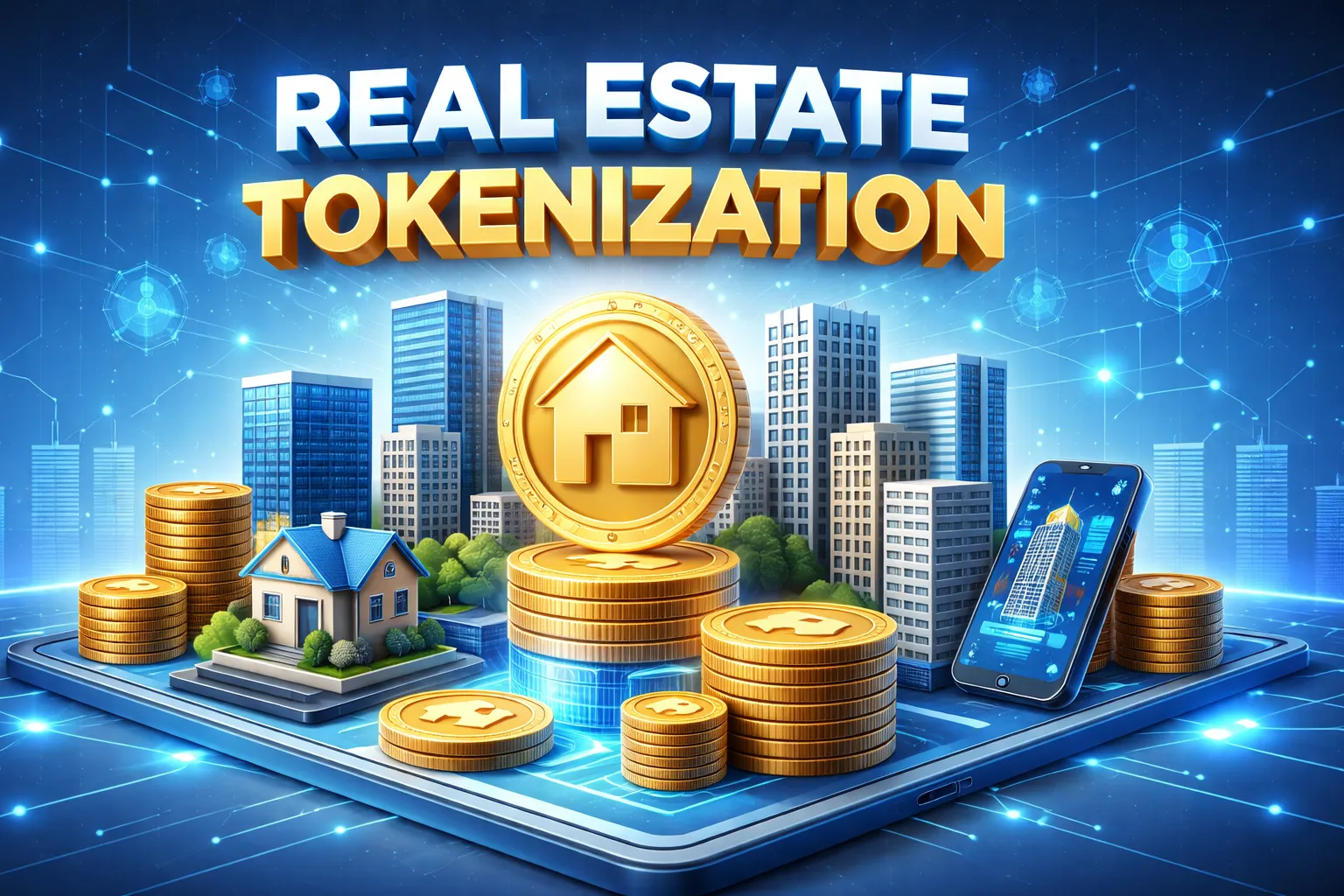

Cross-border real estate investment has always been attractive for investors seeking diversification, currency advantages, and exposure to high-growth property markets. However, despite its appeal, international property investment remains one of the most complex financial activities. Regulatory barriers, currency conversions, legal documentation, banking restrictions, and lack of transparency often make global real estate participation slow and difficult.
Real estate tokenization is emerging as a structural solution to these challenges. By converting property ownership into blockchain-based digital tokens, it becomes possible to streamline investment processes, reduce intermediaries, and enable seamless global participation. Instead of dealing with fragmented systems across countries, investors and developers can operate within a unified digital framework. This shift is not simply about digitization; it is about removing friction from cross-border capital flows in real estate.
Understanding Cross-Border Real Estate Investment
Before examining how real estate tokenization simplifies global property investment, it is important to understand the core challenges in traditional systems.
1. Regulatory Fragmentation
Every country has its own property laws, tax rules, and foreign investment regulations. In many jurisdictions, foreign investors must go through approval processes or meet eligibility requirements. This creates delays and legal uncertainty.
2. Currency Conversion Barriers
International property investment involves currency exchange risk. Fluctuating exchange rates can significantly impact returns, and transferring large sums across borders adds complexity and cost.
3. Banking and Payment Restrictions
Cross-border transactions often require multiple banking intermediaries. International wire transfers are slow, expensive, and subject to compliance checks that can delay fund movement.
4. Lack of Market Transparency
Foreign investors typically rely on local agents or brokers for property evaluation. This creates information asymmetry and increases investment risk.
5. High Transaction Costs
Legal fees, brokerage commissions, notary charges, and administrative costs are significantly higher for international deals compared to domestic transactions.
What Is Real Estate Tokenization in This Context?
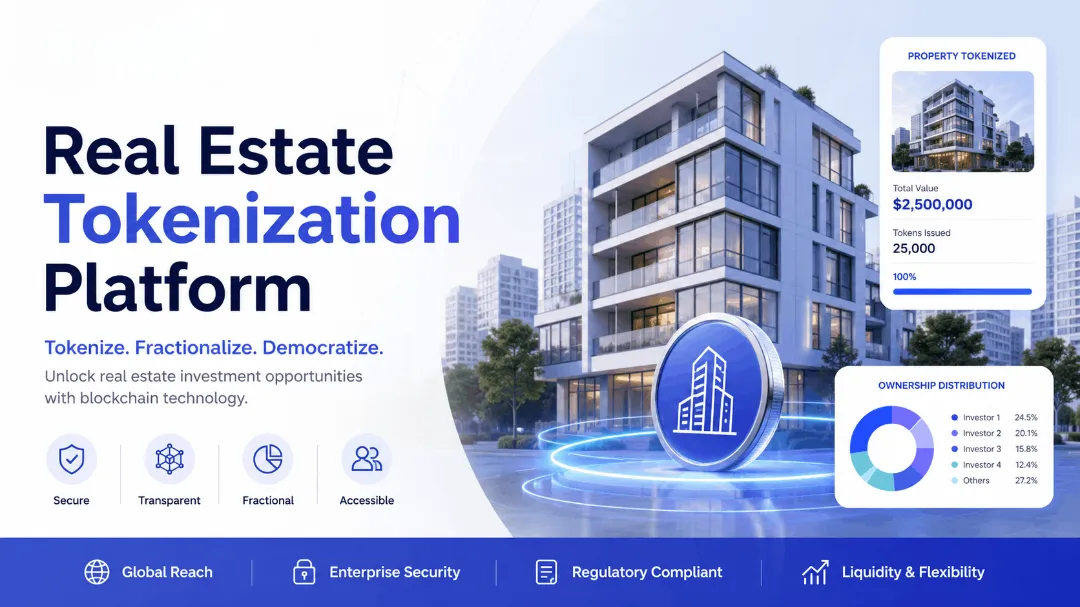
Real estate tokenization is the process of representing ownership rights or economic interest in a property as digital tokens on a blockchain. Each token represents a fractional share of the underlying asset or its revenue stream. These tokens can be transferred digitally, recorded transparently, and traded globally without relying on traditional intermediaries. Smart contracts automate compliance, ownership tracking, and transaction execution. In the context of cross-border investments, tokenization effectively turns real estate into a globally accessible digital asset class.
How Tokenization Simplifies Cross-Border Property Investment
1. Eliminates Geographic Investment Barriers
One of the most significant advantages of tokenization is that it removes geographical restrictions on investment participation. In traditional systems, a property in one country may only be accessible to local investors or approved foreign buyers. With tokenization, property ownership is represented digitally, allowing investors from anywhere in the world to participate without physically interacting with the property market. This creates a borderless investment environment where capital flows are no longer constrained by geography.
2. Reduces Dependency on Local Legal Intermediaries
Cross-border real estate investments typically require lawyers, notaries, brokers, and escrow agents in both the investor’s country and the property’s location. Tokenization reduces this dependency by embedding ownership rules and transaction logic into smart contracts. These contracts automatically enforce compliance conditions, ownership transfers, and distribution of returns. As a result, many manual legal processes are replaced by automated, verifiable blockchain logic, reducing both complexity and processing time.
3. Enables Fractional Global Ownership
Traditional real estate often requires large capital commitments, making it inaccessible to many international investors. Tokenization divides properties into smaller units, allowing investors to purchase fractional ownership. This makes cross-border investment more inclusive, as investors can participate with smaller amounts of capital. Instead of purchasing an entire property abroad, investors can own a percentage of multiple properties across different countries, improving diversification while reducing risk exposure.
4. Simplifies Currency Conversion Through Digital Assets
One of the biggest friction points in international investment is currency exchange. Tokenization often uses blockchain-based settlement systems where transactions occur in digital assets or stable-value tokens. This reduces dependency on traditional banking rails and minimizes foreign exchange friction. Investors can enter and exit positions without constantly converting fiat currencies, reducing cost and volatility exposure. While regulatory frameworks still apply, digital settlement layers significantly simplify the capital movement process.
5. Enhances Transparency Across Borders
A major concern in international real estate investment is lack of reliable information. Investors often struggle to verify ownership records, property valuations, or income data. Blockchain technology introduces immutable and transparent record-keeping. Every transaction, ownership change, and revenue distribution is recorded on a decentralized ledger. This transparency allows investors from different countries to independently verify asset data without relying solely on local intermediaries or third-party reports.
6. Faster Settlement of International Transactions
Traditional cross-border property transactions can take weeks or even months due to banking delays, paperwork, and regulatory approvals. Tokenization significantly reduces settlement time. Once compliance conditions embedded in smart contracts are met, ownership transfer and payment settlement occur almost instantly. This near-real-time settlement system improves liquidity and reduces waiting periods for both buyers and sellers.
7. Lower Transaction Costs in Global Investments
International real estate transactions involve multiple layers of cost:
- Legal consultation fees in different jurisdictions
- Brokerage commissions
- Banking transfer charges
- Documentation and compliance costs
Tokenization reduces many of these costs by digitizing asset transfers and minimizing intermediary involvement. This makes cross-border investment more economically efficient.
8. Improves Liquidity for Foreign Investors
Liquidity is one of the biggest constraints in global real estate investment. Selling a property in a foreign country can be time-consuming and legally complex. Tokenized real estate assets can be traded on secondary markets, allowing investors to exit positions without waiting for traditional property sales processes. This liquidity encourages more international participation because investors know they can convert assets back into capital more easily.
9. Standardizes Investment Structures Across Countries
Different countries have different property ownership structures, such as freehold, leasehold, or trust-based systems. This creates confusion for foreign investors. Tokenization standardizes ownership into digital units that represent economic rights rather than physical legal complexity. This abstraction allows investors to understand and compare assets across countries more easily. Instead of navigating multiple legal frameworks, investors interact with a unified digital structure.
10. Enables 24/7 Global Market Access
Traditional real estate markets operate within local business hours and are subject to regional constraints. Tokenized real estate markets operate on blockchain networks that function continuously. Investors can buy, sell, or trade property tokens at any time, regardless of time zones or market hours. This always-on accessibility makes cross-border investment significantly more dynamic and flexible.
11. Supports Automated Compliance Across Jurisdictions
Regulatory compliance is one of the most complex aspects of cross-border real estate investment. Each jurisdiction has its own rules regarding foreign ownership, taxation, and reporting. Smart contracts can be programmed with compliance logic to enforce rules automatically. For example, certain tokens may only be available to eligible investors based on predefined criteria. This reduces manual compliance overhead and helps ensure that investments remain legally valid across jurisdictions.
12. Increases Investor Confidence in Foreign Markets
Many investors hesitate to invest internationally due to uncertainty and lack of familiarity with foreign legal systems. Tokenization improves trust by providing transparent ownership records, automated compliance, and standardized investment structures. This reduces perceived risk and encourages participation in foreign real estate markets. As confidence increases, capital flows into cross-border property markets become more consistent and scalable.
Broader Impact on Global Real Estate Markets
The adoption of real estate tokenization is gradually transforming real estate into a more unified global asset class. Instead of being fragmented by geography, property investment is becoming digitally interconnected.
In the long term, this may lead to:
- Greater global liquidity in real estate markets
- Increased participation from retail investors
- More efficient capital allocation across regions
- Reduced dominance of institutional gatekeepers
- Faster international development financing
This evolution mirrors what digitization did for equities and bonds, but now applied to real estate.
Challenges That Still Exist
Despite its advantages, cross-border real estate tokenization still faces limitations:
- Regulatory inconsistency across countries
- Legal recognition of tokenized ownership
- Security and custody risks
- Dependence on blockchain infrastructure maturity
- Market education barriers
These challenges require coordinated global regulatory and technological development before full-scale adoption becomes universal.
Conclusion
Real estate tokenization offers a powerful framework for simplifying cross-border property investments. By removing geographic barriers, reducing intermediaries, enabling fractional ownership, and improving transparency, it transforms how global real estate capital flows operate.
Instead of dealing with fragmented legal systems and slow banking processes, investors can participate in a unified digital marketplace that operates efficiently across borders.
While the system is still evolving, its potential to reshape international real estate investment is significant. Over time, tokenization may become a foundational layer for global property markets, making cross-border investment more accessible, liquid, and efficient than ever before.

















Sign in to leave a comment.