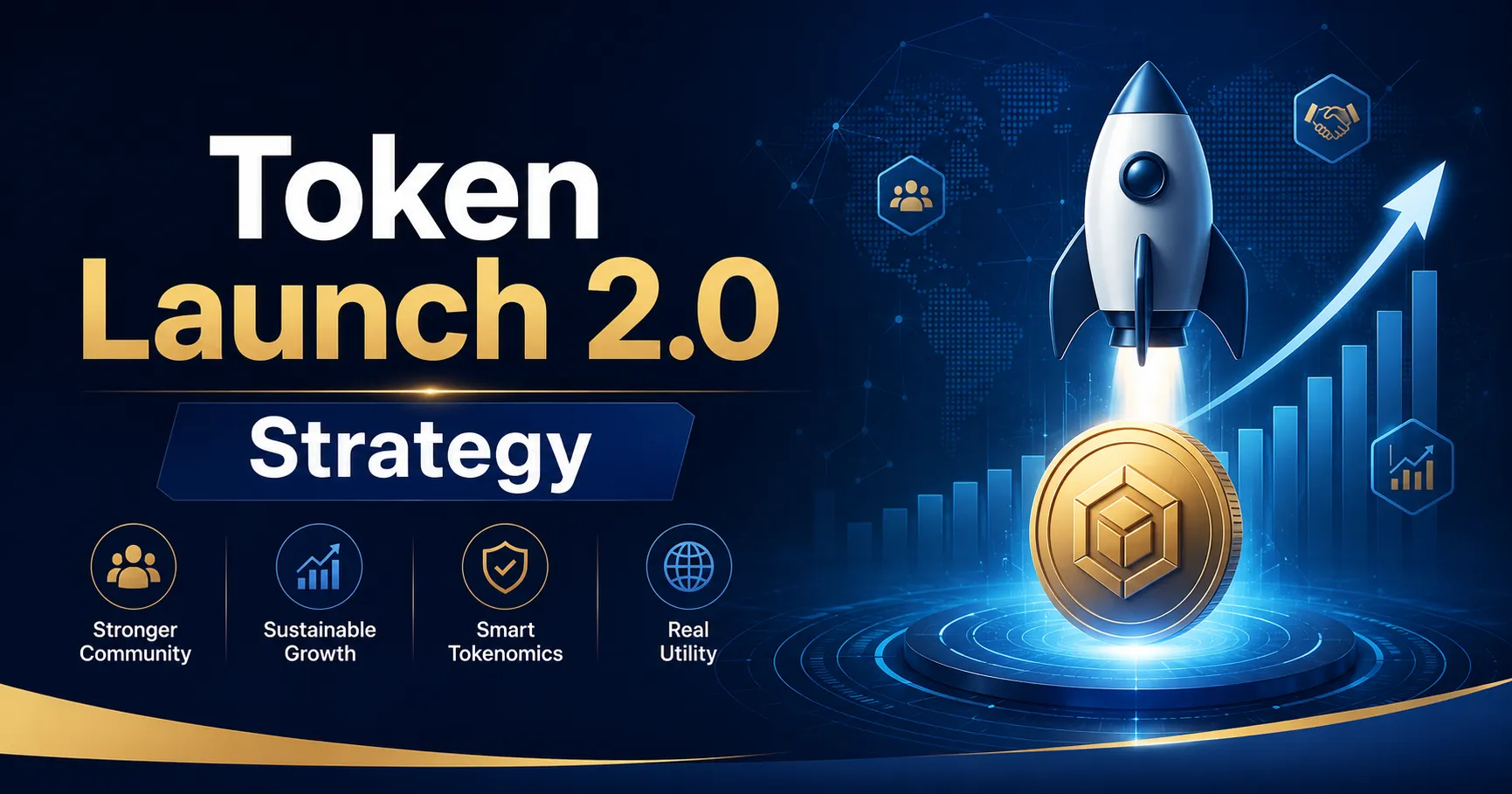

The crypto industry has evolved far beyond simple token launches and speculative hype cycles. In earlier phases, most projects relied on “launch and hope” strategies—publish a whitepaper, list on exchanges, and depend on market momentum. However, that model has largely broken down due to increased competition, stricter investor expectations, and the need for sustainable ecosystems.
This is where Token Launch 2.0 Strategy emerges as a major shift. Instead of treating token generation as a one-time event, it reframes the entire launch as a continuous growth engine that integrates marketing, liquidity design, community building, utility creation, and post-launch retention. In this blog, we’ll explore how Token Launch 2.0 changes crypto project growth, why it matters, and what makes it fundamentally different from earlier launch models.
From “Launch Event” to “Launch Ecosystem”
Token Launch 2.0 is not a single-day event. It is a structured ecosystem rollout that begins before the token goes live and continues long after listing. Traditional launches focused heavily on hype; modern launches focus on sustainability.
Instead of trying to spike attention at TGE (Token Generation Event), projects now build long-term momentum through phased engagement strategies.
Key differences include:
- Pre-launch ecosystem seeding instead of pure hype marketing
- Gradual token release instead of full unlock pressure
- Continuous community onboarding rather than one-time campaigns
- Utility-first development before exchange listing
- Post-launch engagement loops to sustain demand
This approach ensures that the token has real demand drivers before it even enters open markets.
Strong Pre-Launch Demand Engineering
One of the biggest upgrades in Token Launch 2.0 is demand engineering before launch. Instead of launching first and creating demand later, projects now reverse the sequence.
This phase focuses on building anticipation with real utility-backed interest, not just speculative buzz.
Key components include:
- Waitlist campaigns with incentive-based participation
- Early access NFT or whitelist systems
- Gamified community engagement (quests, tasks, rewards)
- Strategic partnerships before listing
- Early liquidity planning and investor alignment
This ensures that when the token launches, there is already a base of engaged users who understand the project value not just traders looking for quick gains.
Liquidity Design Becomes a Core Strategy Layer
Earlier token launches treated liquidity as an afterthought. In Token Launch 2.0, liquidity is engineered as a core design layer that determines price stability and investor confidence.
Instead of depending only on exchanges, projects now plan liquidity holistically.
Important aspects include:
- Multi-stage liquidity provisioning (not single injection)
- Liquidity locking mechanisms for investor trust
- Dynamic liquidity management strategies
- Cross-chain liquidity readiness
- Market maker coordination from day one
This reduces early volatility and prevents the common “pump and dump” pattern seen in older token models.
Utility Before Hype: Real Product Integration
Token Launch 2.0 flips the script by prioritizing utility before hype. Instead of launching tokens for future use cases, projects now ensure the product is functional or at least testable before TGE.
This shift significantly changes investor behavior and market perception.
Core elements include:
- MVP or beta product release before token launch
- Token-integrated features at launch (staking, governance, access)
- Real in-app use cases instead of roadmap promises
- Revenue-linked token mechanics where applicable
- Closed-loop ecosystems that retain user activity
When users already experience utility before buying tokens, demand becomes more organic and less speculative.
Community Becomes a Growth Engine, Not a Marketing Channel
In Token Launch 2.0, community is no longer just a promotional tool it becomes the core growth engine.
Instead of passive followers, projects now focus on active contributors who shape the ecosystem.
Key community-driven mechanisms include:
- DAO-style participation and governance structures
- Incentivized content creation (memes, education, referrals)
- Ambassador programs with structured roles
- Community-led testing and feedback loops
- Reputation-based reward systems
This turns users into stakeholders, making the ecosystem more resilient and self-sustaining.
Multi-Phase Token Release Strategy
One of the biggest risks in traditional launches is sudden token dumps due to early unlocks. Token Launch 2.0 solves this with multi-phase token release mechanisms.
Instead of releasing all tokens at once, distribution is carefully staged.
Typical structure includes:
- Initial circulating supply control
- Vesting schedules aligned with ecosystem growth
- Performance-based unlocks
- Contributor reward distribution over time
- Ecosystem reserve activation in phases
Benefits of this model:
- Reduces price volatility
- Prevents early investor exit pressure
- Aligns long-term stakeholder incentives
- Encourages sustained development activity
This ensures the token economy matures gradually instead of collapsing after launch hype fades.
Data-Driven Launch Optimization
Modern token launches are heavily data-driven. Every stage is tracked, analyzed, and optimized in real time.
This replaces guesswork with measurable performance metrics.
Key analytics focus areas include:
- Community engagement rates across platforms
- Conversion from awareness to wallet holders
- Retention of early adopters post-launch
- Liquidity depth and trading behavior
- Campaign ROI across marketing channels
With these insights, projects can adjust strategies quickly instead of waiting for post-mortem analysis.
This is where agencies like Blockchain App Factory often play a critical role by integrating analytics-driven launch execution with full-stack marketing support.
Cross-Chain and Exchange Strategy Integration
Token Launch 2.0 also reflects the multi-chain reality of today’s crypto ecosystem. Instead of launching on a single chain and hoping for expansion later, projects now design for cross-chain compatibility from day one.
Strategic elements include:
- Multi-chain token deployment planning
- Cross-chain bridge readiness
- Layer-2 scaling integration
- Tiered exchange listing strategies (CEX + DEX)
- Global liquidity distribution planning
This ensures broader accessibility and reduces dependency on a single ecosystem.
Narrative Building Over Hype Cycles
Narrative has become one of the strongest drivers of crypto success. Token Launch 2.0 prioritizes storytelling over short-term hype.
Instead of focusing only on price speculation, projects build a meaningful narrative around:
- Real-world problems being solved
- Ecosystem vision and long-term roadmap
- Community-driven innovation
- Industry disruption potential
- Economic model transparency
This helps attract long-term holders instead of short-term traders.
A strong narrative also increases organic reach across social platforms, making marketing more sustainable and less ad-dependent.
Post-Launch Growth Loops and Retention Systems
Unlike older models where marketing stopped after listing, Token Launch 2.0 includes structured post-launch growth systems.
This is where real sustainability is tested.
Common retention strategies include:
- Staking and yield-based engagement systems
- Regular token utility expansions
- Seasonal ecosystem campaigns
- Governance voting incentives
- Continuous community reward cycles
These systems ensure users stay active long after the initial excitement fades.
Without post-launch systems, even strong token launches eventually lose momentum.
Risk Management and Compliance Integration
Regulatory awareness has become essential in modern token launches. Token Launch 2.0 integrates compliance into the strategy instead of treating it as an afterthought.
Key focus areas include:
- Jurisdiction-based launch planning
- Token classification risk assessment
- Transparent investor documentation
- AML/KYC integration where required
- Legal review of token economics
This reduces the risk of sudden legal disruptions and increases institutional trust.
How Token Launch 2.0 Redefines Crypto Growth
The biggest shift introduced by Token Launch 2.0 is the transformation of token launches from speculative events into structured business ecosystems.
Instead of relying on hype spikes, growth is now driven by:
- Real utility adoption
- Community participation
- Controlled token economics
- Continuous engagement cycles
- Multi-layered liquidity systems
This creates a more stable and scalable growth trajectory for crypto projects.
Conclusion
Token Launch 2.0 represents a fundamental evolution in how crypto projects are built, launched, and scaled. It replaces fragmented, hype-driven approaches with structured, data-backed ecosystems designed for long-term sustainability.
Projects that adopt this model are better positioned to survive market volatility, attract serious investors, and build real user adoption. From pre-launch demand engineering to post-launch retention loops, every phase is now part of a continuous growth engine rather than a one-time event.
As the industry matures, token launches are no longer just about entering the market—they are about building ecosystems that can thrive within it.































Sign in to leave a comment.