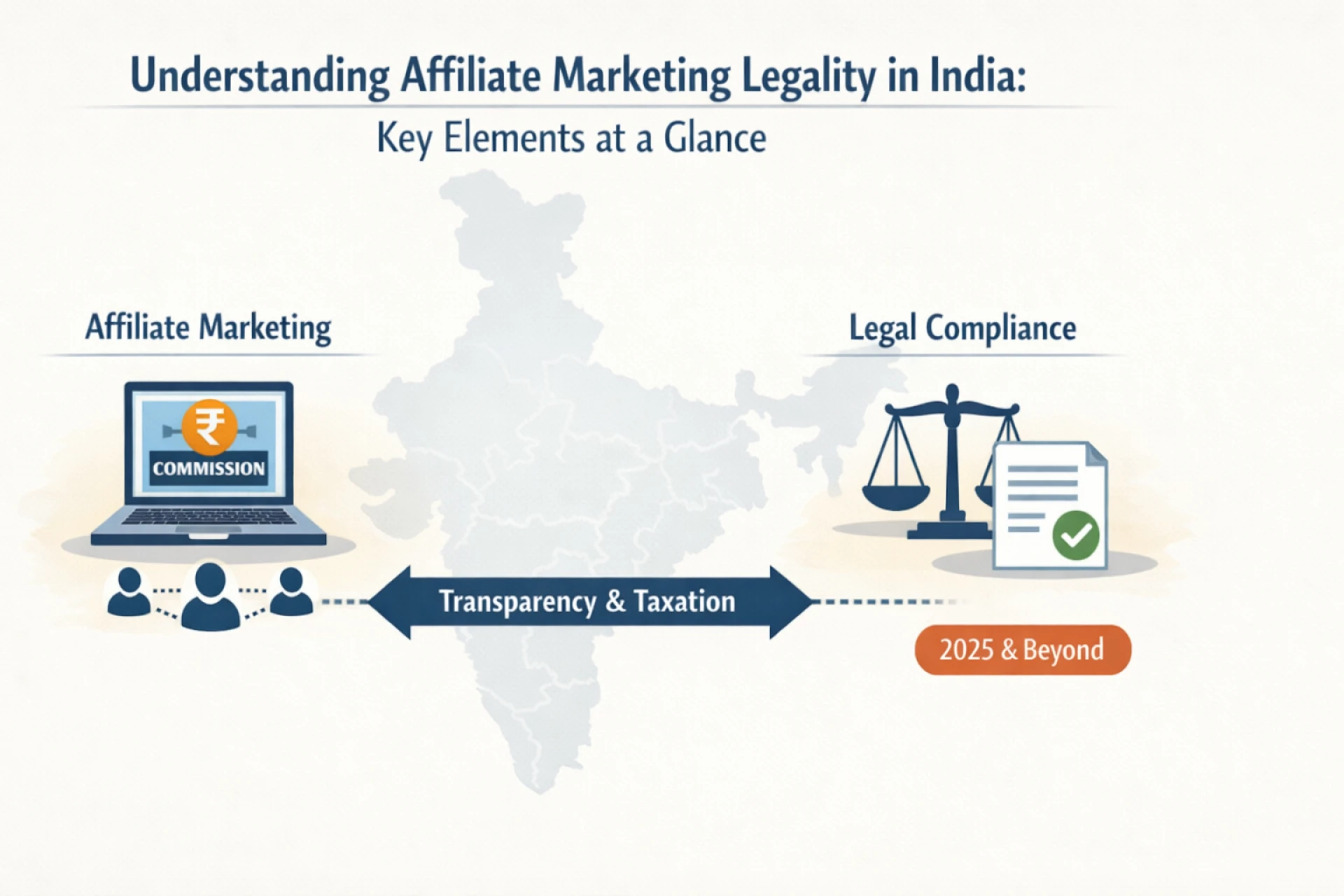

Over time, affiliate marketing has become a big part of the Indian digital economy. Anyone who has been following the growth of e-commerce and digital entrepreneurship in the area over the past ten years has seen an interesting case study in adaptation and regulatory awareness. I became more interested in the subject as I saw friends and peers, bloggers, YouTubers, and small business owners trying to figure out the legality and best practices while looking for new ways to make money online.
Questions That Are Often Asked And Early Experiences
When I first heard about affiliate marketing, I could tell that people were talking about it in a way that showed they were scared and confused. "Is affiliate marketing legal in India, or is it a gray area?" was the most common question. A lot of people were afraid to sign up for affiliate programs or spend a lot of time making content strategies around them because they weren't sure what would happen.
People talked about the same things at digital marketing meetups and in posts in online creator communities. People wanted to know if there were any problems, registrations, or compliance hoops that they might not see. Some people even told stories about friends who got into trouble because they didn't know what their tax obligations were or lied about them.
How To Understand The Legal Issues
It's fine to be unsure. India's laws about technology have always been slow to catch up with new ones. There are a lot of different ways to run an online business, which makes it easy for false information to spread. At its most basic level, affiliate marketing is simple: you get paid for sending sales or leads to another business. But the lack of clear, organized information is often what makes the law unclear, not the fact that it is against the law.
In India, affiliate marketing is not against the law. People mostly think of it as a kind of online advertising or referral business. Problems mostly happen when it gets mixed up with other, less clear plans, like online lotteries or multi-level marketing, which are more strictly controlled or even illegal. It's important to know the difference between affiliate marketing and banned models. Affiliate marketing is usually based on performance and has clear transaction structures. Banned models, on the other hand, often promise returns just for signing up or taking part.
What People Who Work In The Field Really Have To Deal With In Real Life
As long as they follow the rules, most affiliate marketers in India don't get into trouble with the law. Being honest about affiliate relationships in ads or content is the most important thing. This is not only the right thing to do, but it also helps keep people's trust.
Taxes are another thing that makes people wonder. A lot of new people don't know that affiliate income is taxable in India. You have to tell the government about any money you make, no matter how you get it, like through a direct bank transfer, PayPal, or some other way. People will look at it the same way they look at any other business income. This realization may come as a shock, especially to those who thought that local tax authorities might not be able to see online income.
An Example Of Affiliate Marketing Versus Multi-Level Marketing
Affiliate marketing and multi-level marketing (MLM) are two types of marketing that are alike in some ways and not alike in others. Affiliate marketing and network marketing both pay people to get others to buy things, but with affiliate marketing, you don't have to recruit more affiliates. On the other hand, MLM tries to get people to join, which can be against the law because it looks like a pyramid scheme. This comparison helps new people figure out which models are legal and based on performance and which ones might be breaking the law.
Advice That Changes And The Role Of Data
Given the pace of change in India’s digital regulatory environment, practical guidance is often pieced together from a variety of sources: government advisories, tax consultants, and online forums. The landscape is dynamic, and periodic updates shape how affiliate marketing is practiced. For background reading on the nuances of legality as they relate to affiliate activities, I found a thoughtful discussion on how these legalities may evolve through 2025 at this blog post.
Things That People Often Get Wrong And Helpful Advice
There are still some wrong ideas out there, even though people know more. People often think that all affiliate programs are "get-rich-quick" schemes that will always end badly. Sustainable affiliate marketing is just like any other real business: it takes a lot of work, making content, and following tax and disclosure rules. Another common belief is that small-scale affiliates can "fly under the radar," but digital transactions are becoming easier to trace, and not following the rules can have serious consequences.
The most important thing for you to do if you want to do affiliate marketing is to stay up to date and see it as a clear, long-term goal. You can avoid problems by knowing what taxes you owe, using disclosure statements, and being able to tell the difference between real and fake programs.
Conclusion
Affiliate marketing is legal in India and has a clear place in the market, as long as it is done in a clear and honest way. There are some bumps in the road, but if you keep an eye on changes in the law and promise to act ethically, you can easily get through it. From what I've seen, most professionals care more about being honest and clear in every deal than they do about finding loopholes.



























Sign in to leave a comment.