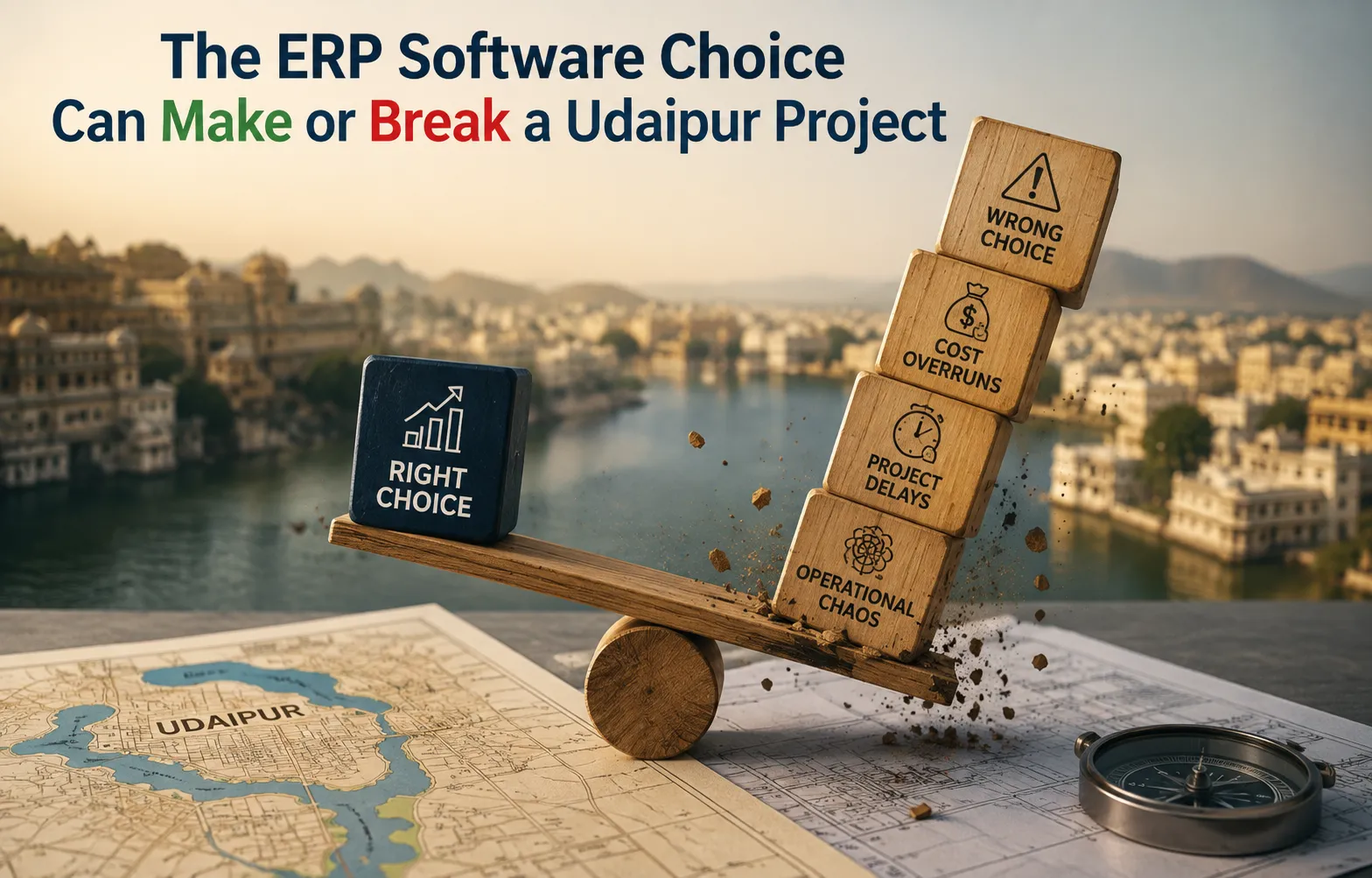

Every implementation partner has taken on a project where the client's request sounded simple on paper. A business in Udaipur asked us for a narrow scope: fix the reporting delays in their existing setup and move on. Nothing about the request suggested how much was actually broken underneath.
What we found once we sat with the team on the floor was a different story. This piece walks through why we stopped following the brief exactly as written, and what that decision means for anyone evaluating a partner for similar work.
The Brief We Were Handed
The initial ask was narrow by design. The client wanted faster month-end reports and assumed the fix lived somewhere in the reporting layer. On the surface, that reading made sense. Reports were slow, so the obvious target was the reporting module.
We could have accepted that framing and delivered exactly what was asked. Instead, we asked to sit with the purchase and inventory teams before touching any configuration.
Why We Paused Before Configuring Anything?
A brief written by someone outside daily operations often describes a symptom, not a cause. Reporting delays are usually downstream of something else entirely: bad data entry habits, duplicate records, or a process nobody ever documented.
We treat every scope document as a starting hypothesis rather than a finished instruction set. That distinction shaped everything that followed on this project.
What an Honest Assessment Uncovered?
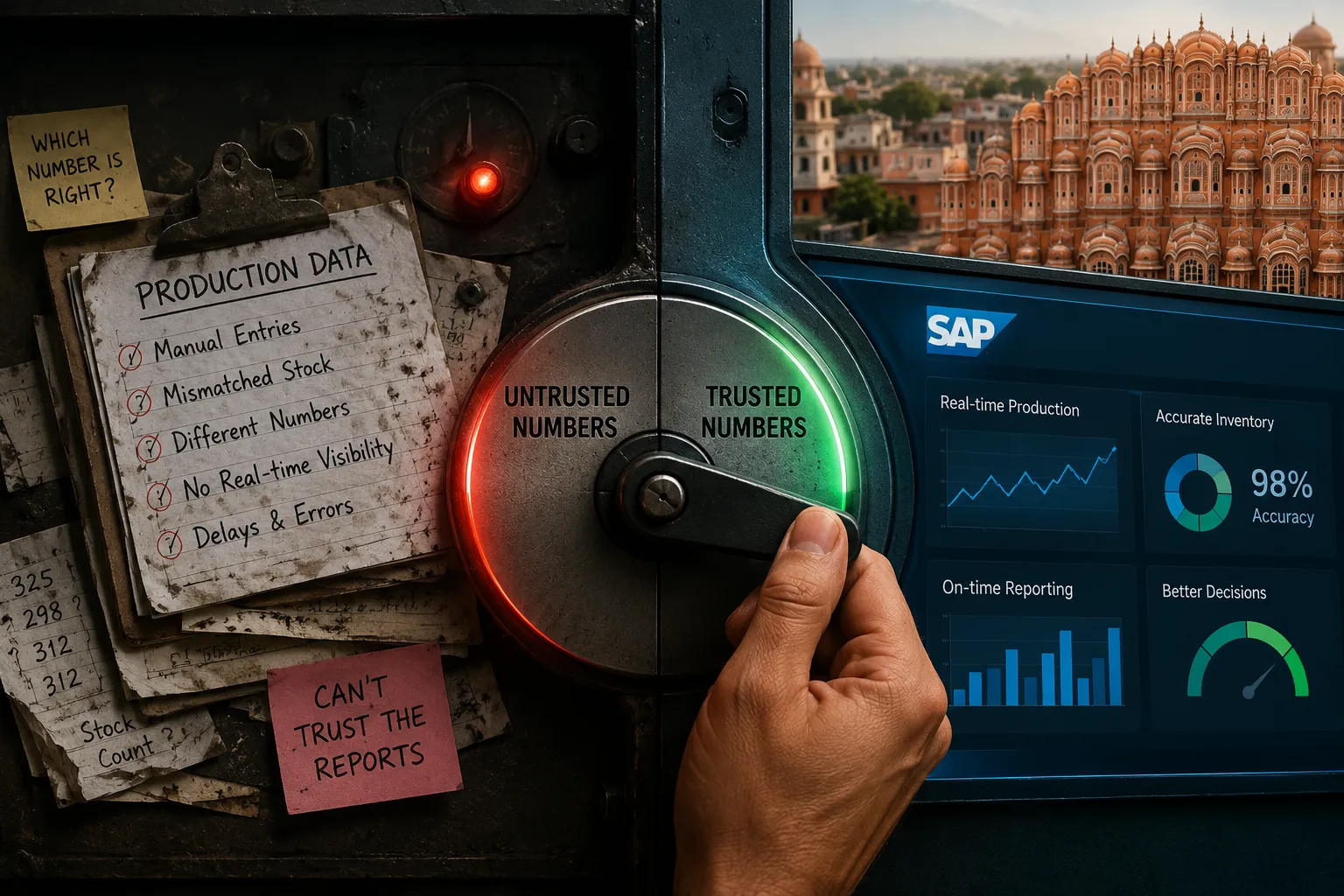
Once we walked the floor, the picture changed fast. Stock counts did not match what the system showed. Purchase orders were being entered days after goods actually arrived. None of this showed up in the original brief because nobody outside the warehouse experienced it directly.
The Floor Told a Different Story Than the Documents
Two things stood out during the walkthrough:
- Manual stock adjustments Made outside the system and reconciled only once a month.
- Purchase entries lagged physical receipts Every report pulled mid-month was already out of date before anyone read it.
This is the kind of gap an ERP in Udaipur deployment has to surface before configuration begins, not after go-live, when fixing it costs far more in disruption and rework.
Turning Observations Into a Revised Scope
We took what we found back to the client with a straightforward comparison: fix the reports as requested, or fix the data feeding them. The second option meant a wider scope and a longer timeline, but it addressed the actual source of the delay.
The client agreed to expand the project once they saw the reasoning laid out plainly, with no pressure attached either way.
What a Genuine ERP Rollout Requires?
A rollout built on flawed assumptions inherits every one of those flaws permanently. Getting master data right, mapping the real purchase-to-payment cycle, and validating inventory counts before go-live are not steps to rush through.
Data Migration Isn't a Checkbox
Migrating incorrect data faster does not solve anything. It just moves the same errors into a new system where they are harder to trace back to their source. A proper SAP B1 setup treats data cleanup as its own phase, not a task squeezed into the final week.
Training, Handover, and What Happens After Go Live
Configuration is only half the work. The team using the system daily needs to understand why processes changed, not just which buttons moved. We ran sessions with the warehouse and purchase staff separately from finance, since their daily friction points were different.
Handover documentation matters just as much as the training. A system only the implementation partner understands is a liability the moment support ends.
Lessons That Apply Across Similar Deployments
This pattern was not unique to one client. Working on SAP Business One in India across different sectors, we have seen the same gap between what a brief describes and what daily operations actually need, repeatedly.
The businesses that get the most value are the ones willing to let the discovery phase run its course instead of rushing straight into build mode.
Choosing a Partner Who Will Push Back
A partner who accepts every brief at face value is not doing you a favor. The right partner asks uncomfortable questions early, when they are cheap to answer, rather than late, when they are expensive to fix.
Why Partner Selection Matters More Than the Software?
Software choice gets most of the attention, but implementation quality decides whether that software actually works for your business. The Best SAP Partner in India for your situation is the one who understands your industry's operational quirks, not just the product's feature list.
Weighing Cost Against Long Term Value
Budget conversations tend to happen too early, before anyone understands the scope. That sequencing creates pressure to cut corners on discovery just to hit a number set before the real problems were known.
Understanding Price Before You Commit
SAP Business One Price varies significantly based on the number of users, modules required, and the complexity of data migration and customization. A quote given before a proper assessment is, at best, a rough estimate. Treat any number offered without a discovery phase as a starting point for discussion, not a final figure.
The Real Test Comes After Go-Live
A system that looks correct in a demo can still fail once real transaction volume hits it. The projects we consider successful are the ones still running cleanly a year later, with staff who no longer think about the software at all.
What This Means for Any Future Rollout?
The lesson from this project was not about SAP Business One as a product. It was about process discipline: listen to the people doing the daily work, treat the written brief as a hypothesis, and be willing to widen scope when the evidence calls for it.
That same discipline applies to any SAP Business One ERP deployment, regardless of city or industry. The software is only as good as the understanding that goes into configuring it.
Conclusion
Projects that start with a narrow, symptom-focused brief and end with a properly scoped implementation tend to outperform the ones that rushed straight from request to build. The extra time spent validating assumptions upfront pays back many times over in fewer post-launch fixes and less staff frustration.
Businesses that treat their implementation partner as a collaborator rather than an order-taker end up with systems that actually match how they operate, not just how someone once described those operations on paper. That difference compounds over years of use, long after the initial go-live date is forgotten.


























Sign in to leave a comment.