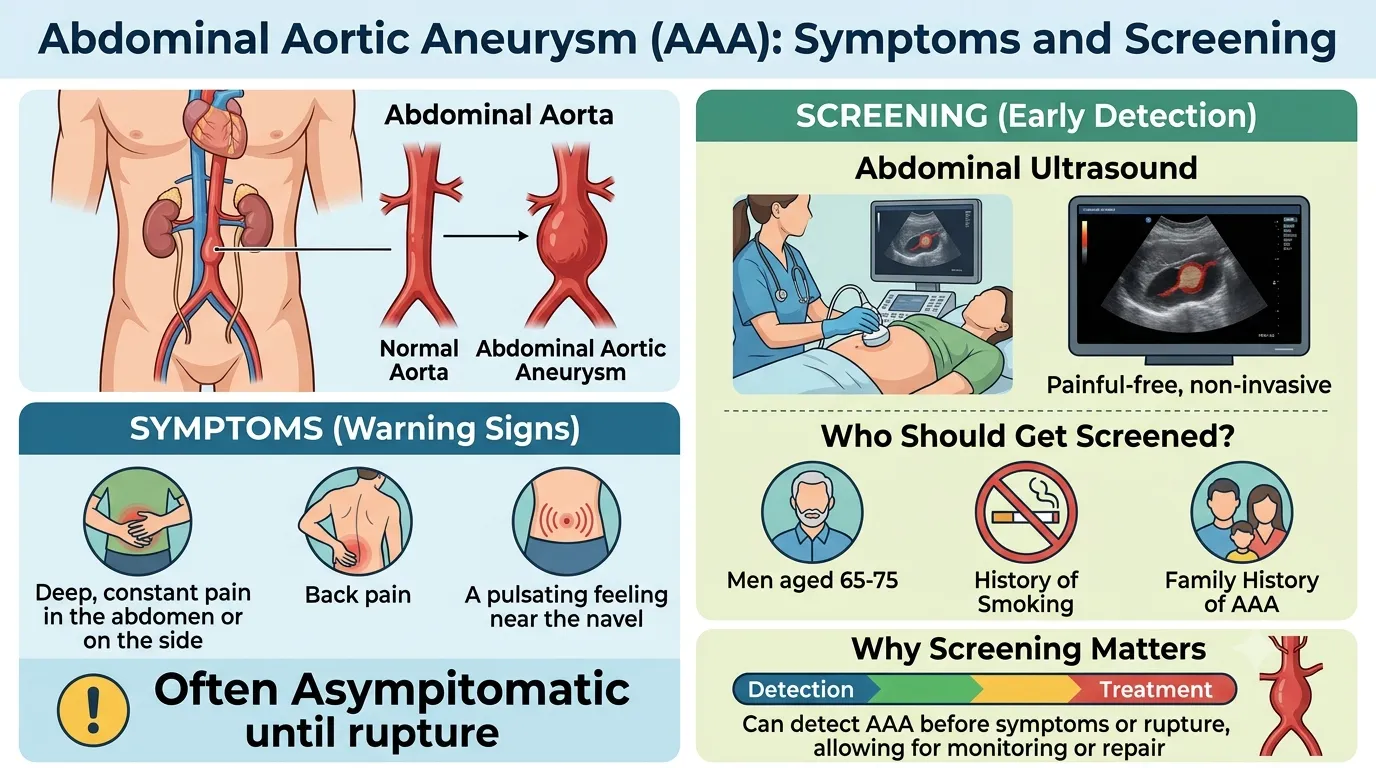

An abdominal aortic aneurysm often causes no symptoms until it grows dangerously large or ruptures. That is exactly why screening matters for anyone at higher risk. Ultrasound is usually the first imaging test because it is quick, painless, and highly accurate. Regular monitoring once an aneurysm is found can catch trouble long before it becomes a medical emergency.
Quick Reads:
- An abdominal aortic aneurysm is a bulge that forms in the abdominal section of the aorta.
- Small aneurysms rarely produce any noticeable symptoms.
- Sudden, severe abdominal or back pain can signal a rupture in progress.
- Smoking, older age, high blood pressure, and family history all raise the risk.
- Ultrasound is the standard screening method used worldwide.
- Catching it early allows for monitoring or planned treatment before a crisis hits.
Plenty of serious heart and blood vessel conditions build up without announcing themselves. An abdominal aortic aneurysm fits that pattern closely. It can sit quietly for years, growing a millimetre at a time, without a single symptom to flag it. By the time pain shows up, the aneurysm has often already reached a size where things can go wrong fast. That's why understanding risk factors and undergoing timely screening can be just as important as recognising symptoms.
What is an Abdominal Aortic Aneurysm?
The aorta is the body's largest artery, carrying oxygen-rich blood from the heart to the rest of the body. In some people, the abdominal part of this vessel becomes weak and bulges out, forming what doctors call an aneurysm.
How does an Aneurysm Form?
As time passes, the artery wall weakens, often because of long-term wear, high blood pressure or plaque buildup. Over time, pressure from the blood moving through the aorta can make the weakened section slowly expand.
Why can It Become Dangerous?
A larger aneurysm carries thinner, weaker walls. Past a certain size, the risk of rupture climbs sharply, and a rupture causes massive internal bleeding. This is why early detection is so important, before the aneurysm has a chance to rupture.
What are the Symptoms of an Abdominal Aortic Aneurysm?
An abdominal aortic aneurysm (AAA) generally grows without any symptoms, particularly when it is small. As it grows bigger, it may start to cause discomfort in the abdomen or back.
What Symptoms may Appear Before an Aneurysm Ruptures?
An abdominal aortic aneurysm can sometimes cause a deep ache in the abdomen that does not go away. Back pain may also occur, often confused with a muscular problem. Some people experience a throbbing around the navel, as if they were feeling their own pulse from the outside.
The symptoms before a rupture are usually milder and develop gradually, whereas a ruptured aneurysm causes sudden symptoms that require immediate emergency care.
What are the Symptoms of a Ruptured Aneurysm?
The most obvious sign is sudden, severe pain in the abdomen, which is often accompanied by sharp pain in the back. This is often followed by dizziness, sudden drop in blood pressure, fainting and a racing heartbeat. A rupture is a medical emergency and not a wait-and-see situation; it requires immediate care.
| Symptom | What It May Feel Like |
| Abdominal pain | Deep, persistent pain |
| Back pain | Sudden or ongoing pain |
| Pulsating abdomen | A noticeable heartbeat-like sensation |
| Dizziness | Light-headedness |
| Collapse | Emergency sign of rupture |
Who is More Likely to Develop an Abdominal Aortic Aneurysm?
Abdominal aortic aneurysm is more common in older people, particularly those with a history of smoking or cardiovascular disease. Having high blood pressure, hardened arteries, and a family history of AAA also increases the chances of developing the condition.
- Age above 65
- A history of smoking
- High blood pressure
- Atherosclerosis, or hardened arteries
- Being male
- A family history of AAA
- Existing cardiovascular disease
According to the US Preventive Services Task Force, smoking remains the single strongest predictor of AAA development, growth, and rupture risk.
When is Abdominal Aortic Aneurysm Screening Recommended?
Screening guidance shifts depending on age, sex, and smoking history, and it isn't identical across every country.
| Risk Group | Screening Consideration |
| Men aged 65 to 75 who smoke | Commonly recommended |
| Men with a family history | May be advised earlier |
| Women with high-risk factors | Individual assessment |
| General low-risk adults | Routine screening usually not required |
Men between 65 and 75 who have ever smoked are the group most consistently advised to get a one-time abdominal ultrasound. Anyone with a strong family history, regardless of these exact ages, should raise the topic with a doctor rather than assume they're outside the risk pool. This matters just as much for NRI health insurance planning, since many overseas Indians return home for medical check-ups and may not realise this screening is worth requesting during a routine visit.
How is an Abdominal Aortic Aneurysm Diagnosed?
An abdominal aortic aneurysm is often detected through imaging tests, sometimes during routine health checks or while investigating another condition. The choice of test depends on whether screening, diagnosis or treatment planning is needed.
What Tests are Used?
Ultrasound is the leading standard first test, quick and free of radiation. If a closer look is needed, a CT scan will give more detail. An MRI is used on occasion for select cases.
What Happens If an Aneurysm is Found?
Then it is determined by the size of the aneurysm and how fast it is growing.
- A small aneurysm typically just needs regular monitoring through repeat scans.
- A large or rapidly growing aneurysm is usually referred for possible surgical repair.
Can an Abdominal Aortic Aneurysm be Prevented?
Sometimes you can’t prevent an abdominal aortic aneurysm, especially if you’re older or have a family history of the condition. But you can decrease your risk for developing an aneurysm by adopting heart-healthy habits and controlling modifiable risk factors.
- Stop smoking. It remains the single largest modifiable risk factor.
- Take medication and have regular checkups to keep blood pressure under control.
- Keep cholesterol levels within a healthy range through a balanced diet and medication if prescribed.
- Keep active and exercise regularly.
- Maintain a healthy weight.
- Attend recommended screening if age or family history puts someone in a higher-risk group.
Along with preventive healthcare, having comprehensive health insurance from providers such as Niva Bupa can help ensure timely access to consultations, diagnostic tests, and treatment when needed.
Conclusion
An abdominal aortic aneurysm tends to grow in silence, which makes relying on symptoms alone a genuinely risky approach. Screening plays the bigger role here, catching the condition well before it turns life-threatening, particularly for anyone carrying known risk factors like a smoking history or a family connection to AAA. Diagnosed early, most aneurysms simply need monitoring rather than urgent surgery.
Combined with basic lifestyle changes, comprehensive health insurance that covers both routine screening and future treatment offers a reliable layer of protection. Whether through a domestic policy or NRI health insurance for those living abroad, this condition becomes far easier to manage before it ever becomes an emergency.



























Sign in to leave a comment.