

Organizations across Kuwait City and the surrounding governorates are rethinking how they secure offices, residential towers, and industrial sites. A reliable Access Control System gives a facility the ability to decide exactly who can enter a building, when they may enter, and which areas remain off limits, all while producing a full digital record of every entry event. As Kuwaiti businesses modernize their premises, this technology has moved from a simple card reader at the front door to a complete platform that governs every entry point across a site.
Tektronix has delivered physical security infrastructure across Kuwait and the wider Gulf region for many years, and its access control solution for Kuwait facilities is built around the practical needs of local businesses, including integration with payroll systems, resilience during power interruptions, and support for the mix of credential types that different departments across a single organization often require. This article explains how the technology works, the formats available today, and what separates a dependable deployment from one that creates daily friction at the door.
What a Modern Access Control System Actually Does
At its core, an Access Control System authenticates a presented credential against a permissions list and then either unlocks a door or denies passage, logging the outcome automatically. The real value sits in the software layer behind that simple action: scheduling which doors a person may use and during which hours, generating audit trails for compliance reviews, and alerting a security team the moment someone attempts to use a credential outside its approved time window or location.
Because every event is timestamped and stored centrally, facility managers gain a searchable record of movement across a building that a traditional lock and key could never provide, which is particularly useful during an incident investigation or an insurance review.
Biometric Access Control System Options for Kuwaiti Facilities
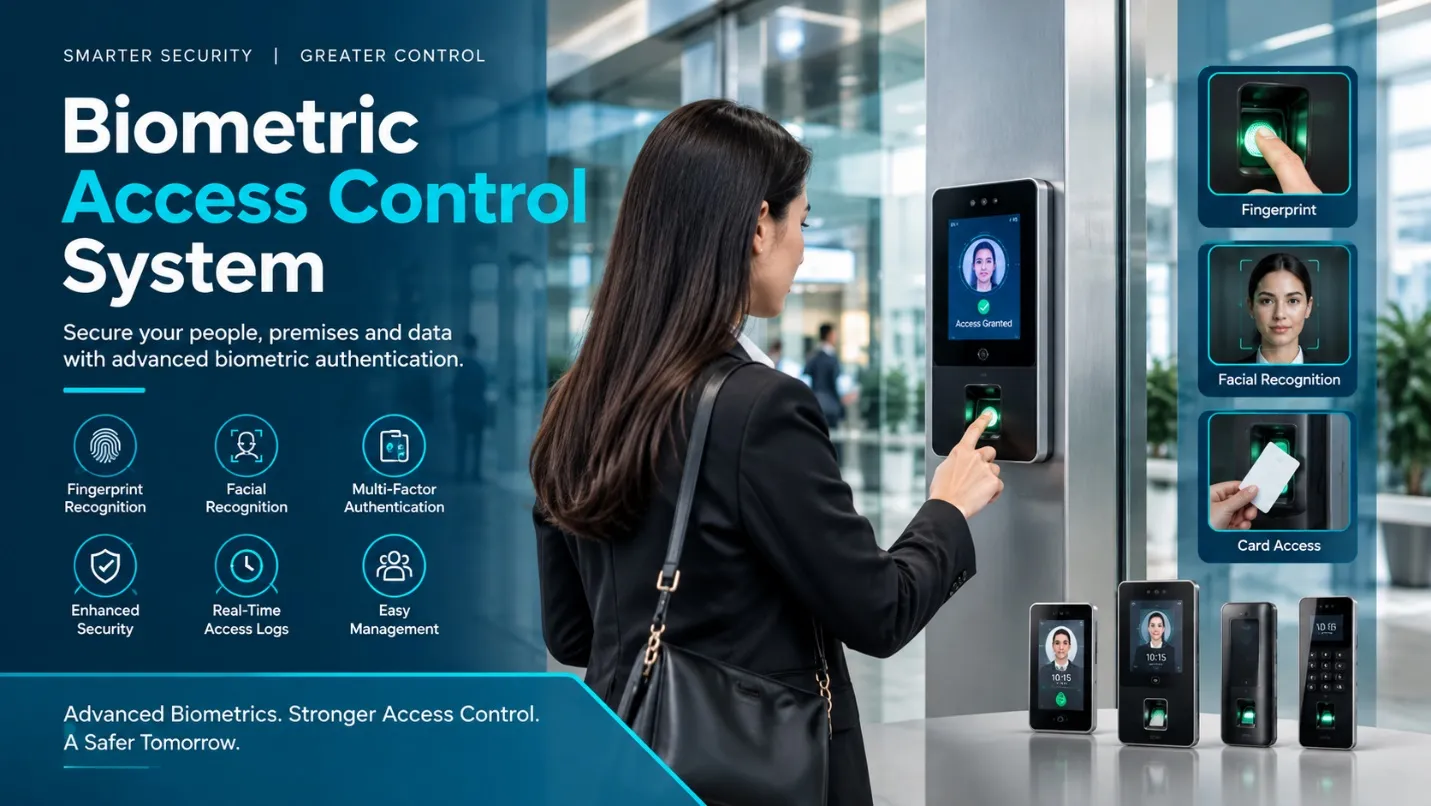
A Biometric Access Control System removes the credential sharing problem entirely, since a fingerprint, face, or palm pattern cannot be lent to another person the way a card or PIN can. Kuwaiti offices and factories that previously struggled with buddy punching on time and attendance systems typically see that issue disappear once biometric entry replaces the physical token, because there is simply nothing left to hand to a colleague.
Facial recognition units have become particularly popular for staff entrances because they allow a touchless walk through experience, while fingerprint and palm readers remain common in industrial settings where workers may wear gloves or protective equipment that interferes with a camera-based capture.
Security Access Control System Standards for Sensitive Sites
Banks, government buildings, and data centers across Kuwait increasingly specify a Security Access Control System that goes beyond a simple unlock decision and instead enforces layered verification, such as requiring a card plus a PIN, or a fingerprint plus a supervisor approval for the most restricted zones. These higher assurance configurations reduce the risk of a single compromised credential granting access to an entire facility, which matters considerably more at a server room or vault than at a general office entrance.
Door Access Control for Offices, Residences, and Shared Buildings
Door Access Control at the individual door level lets an organization assign different permissions to different spaces within the same building rather than treating the whole premises as a single security zone. A Kuwaiti office tower might grant general staff access to common floors while restricting the server room, finance department, and executive suite to a much smaller list of approved individuals, all managed from the same central software rather than a separate lock and key arrangement for every door.
Mobile Access Control: The Smartphone as a Credential
Mobile Access Control turns an employee's own smartphone into their entry credential, using a secure app that communicates with the door reader over Bluetooth or near field communication rather than requiring a separate physical card. This approach has gained traction among Kuwaiti organizations that want to reduce the administrative burden of issuing, replacing, and deactivating physical cards, since a lost phone can be remotely revoked from the access platform in moments, and a new credential can be issued to a replacement device without anyone visiting a security office.
Selecting the Right Access Control Device for Each Entry Point
Not every door needs the same hardware. An Access Control Device chosen for an outdoor vehicle gate needs weatherproofing and a long-read range, while a device for an internal server room door can prioritize a compact design and a higher assurance biometric sensor instead. Matching the specific reader, lock type, and credential technology to each entry point, rather than installing identical hardware everywhere across a site, is one of the most overlooked steps in a successful rollout and often the difference between a system that performs well years later and one that generates constant support calls.
Access Control Solutions for Organizations with Several Locations
A complete set of Access Control Solutions for a business with branches across Kuwait needs a shared permissions database so an employee registered at one site is automatically recognized at another without separate enrollment at every location. Retail chains, healthcare networks, and logistics operators are increasingly centralizing this layer, giving head office security teams a single unified view of entry activity across every branch rather than a fragmented report pulled separately from each site's standalone system.
Access Control System Kuwait: Market Drivers and Compliance
Kuwait's ongoing investment in commercial real estate and its broader economic diversification plans under Kuwait Vision 2035 have brought a wave of new office towers, government facilities, and mixed-use developments that specify entry security during the design stage rather than adding it later. Access Control System Kuwait deployments increasingly need to address local data protection expectations around biometric information, including a documented enrollment consent process and a clear policy for deleting an individual's data once they leave an organization. Vendors familiar with these regional requirements typically move a project through internal approval faster than suppliers who can only point to generic international compliance claims.
Integrating Access Control with Wider Building Operations
Entry hardware rarely operates alone in a well-planned deployment. Linking an access control platform with existing CCTV, visitor management, and building management systems lets a single security desk correlate an unusual entry attempt with a live camera feed automatically, rather than a guard needing to notice and cross reference two separate screens. Occupancy data captured at the door can also feed lighting and air conditioning zoning, extending the same investment into energy management rather than leaving it confined to security alone.
Engineering Experience and Trust Behind Every Deployment
Tektronix has engineered and commissioned access control, video surveillance, and broader physical security infrastructure across Kuwait and the wider Gulf for well over a decade, with an in-house engineering team handling site surveys, network integration, and system configuration rather than outsourcing installation to a subcontractor unfamiliar with the platform. Every deployment follows a documented enrollment and data retention process, and the company maintains a regional spare parts inventory so a failed reader or controller does not leave a client's entrance without a working checkpoint for an extended period.
Full technical documentation covering matching accuracy, integration options, and supported credential types is available through the company's Kuwait access control solution page, giving procurement and IT security teams verifiable detail to review rather than a marketing summary alone.
Choosing an Access Control Partner in Kuwait
Selecting a vendor for entry security is as much a software and data governance decision as a hardware one. Facility and IT teams should ask any prospective supplier where enrollment data is stored, how long entry logs are retained, what happens to an individual's credential record once they leave the organization, and whether the platform integrates cleanly with existing HR or building management systems already in use. Organizations that want a single accountable partner for hardware, software, and ongoing support can review Tektronix's full access control systems for Kuwait before finalizing a shortlist of suppliers.
Measuring Reliability and Avoiding False Rejections
The figure that matters most in daily operation is not a laboratory accuracy percentage but how often a legitimate staff member is wrongly denied entry during a busy morning arrival period. A system that occasionally fails to recognize an authorized employee creates queuing and frustration just as damaging to adoption as one that lets an unauthorized person through, so a buyer should ask any vendor for field tested rejection rates from comparable regional deployments rather than accepting a single number without context.
Enrollment quality has a large effect on this outcome. A rushed enrollment photo or fingerprint capture taken under poor conditions degrades matching performance for that individual for as long as the record remains in use, which is why a structured and well-lit enrollment process is worth the extra few minutes per person during a rollout.
Planning for Growth and Future Expansion
A Kuwaiti organization opening new branches or expanding an existing campus should choose an access control platform that scales without requiring a complete replacement of the software layer every time a new building comes online. Licensing models based on the number of doors or enrolled users, rather than a fixed package tied to a single site, give a growing business room to add locations gradually without renegotiating the entire contract each time.
Planning for this growth at the outset, including choosing hardware that supports firmware updates over the network rather than requiring a technician visit for every change, keeps a long-term deployment manageable as the organization and its security requirements continue to evolve.
Conclusion
A well implemented Access Control System now gives Kuwaiti organizations a level of security and oversight that a traditional lock and key simply cannot match. A Biometric Access Control System and a layered Security Access Control System both reduce the risk of a single compromised credential across sensitive zones. Granular Door Access Control and flexible Mobile Access Control give facility teams far more precision than a shared key could ever offer. Choosing the right Access Control Device for each entry point and a complete set of Access Control Solutions matters more than any single piece of hardware alone.
Organizations evaluating Access Control System Kuwait projects should choose a partner like Tektronix with proven regional engineering and data governance experience.






















Sign in to leave a comment.