

Kuwait is home to some of the Gulf region's most critical oil, gas, and financial assets, and protecting these facilities starts at the entrance, which is exactly why a dependable Access Control System has become a baseline requirement rather than an optional upgrade for forward thinking Kuwaiti organizations.
Why Kuwait's Critical Industries Demand Smarter Entry Security
Kuwait's economy is anchored by energy production, downstream processing, and a fast growing banking sector concentrated around Kuwait City, Ahmadi, and Fahaheel. Refineries, tank farms, and offshore support facilities operated by entities connected to the Kuwait Oil Company sit alongside headquarters towers for banks regulated by the Central Bank of Kuwait, and both environments share one requirement: knowing exactly who is inside a facility at any given moment.

A contractor badge left active after a shift change, a shared keycard passed between workers, or a mechanical lock that nobody remembers rekeying are not small oversights in these settings, they are the kind of gaps that regulators, insurers, and the Kuwait Fire Service Directorate all expect organizations to have already closed.
Biometric Access Control System Technology for High Stakes Sites
Energy and banking operators in Kuwait are moving away from card only systems toward a Biometric Access Control System that ties entry to a fingerprint, face, or iris pattern rather than a token that can be lost, cloned, or lent out.
On a refinery or processing site, this matters because a credential cannot be handed to an unauthorized worker trying to skip a safety induction. In a bank branch or data processing center, it matters because regulators increasingly expect proof that only vetted, trained staff can reach cash handling areas, server rooms, or vault corridors, and a biometric record provides that proof far more convincingly than a signature on a visitor log.
Security Access Control System Design for Layered Facilities
Large Kuwaiti sites are rarely a single building, a petrochemical complex might include a control room, a tank farm, contractor parking, and an administrative block, while a bank headquarters includes public lobbies, teller floors, back office processing, and a data center, each needing a different clearance tier.
A properly layered Security Access Control System assigns graduated permissions so that a visiting auditor can reach a meeting room but not the server floor, and a maintenance contractor can reach the tank farm perimeter but not the control room itself, all without security staff manually tracking every individual movement by hand.
Mapping Clearance Zones Before Installation
Before any hardware goes on a wall, our engineers walk the site with facility managers to map every zone by risk level, from public reception areas through to restricted control rooms, so the resulting permission structure reflects how the organization actually operates rather than a generic template.
Door Access Control Hardware Built for the Gulf Climate
Kuwait's summer heat, blowing sand, and high humidity near the coast put real strain on electronic hardware, so every Door Access Control point we deploy uses readers, controllers, and locking mechanisms rated for extreme temperature swings and dust exposure, not consumer grade equipment imported without regional testing.
Fail safe and fail secure locking configurations are selected per door depending on fire code requirements, so emergency exits release automatically during an alarm while high security doors such as vaults, server rooms, and chemical storage remain locked even through a power interruption, protecting both life safety and asset security at the same time.
Mobile Access Control for a Distributed Workforce
Site supervisors, safety inspectors, and branch managers in Kuwait are rarely sitting behind one desk all day, which is why Mobile Access Control has become essential, letting authorized staff unlock assigned doors from a registered smartphone and letting administrators revoke a lost or stolen phone's credentials within seconds rather than waiting to physically retrieve a badge.
This is particularly valuable across multi site operators managing several branches or facilities spread between Kuwait City, Ahmadi, and the northern oil fields, since one administrator can adjust permissions for every location from a single dashboard instead of visiting each site individually.
Selecting the Right Access Control Device for Each Entry Point
Not every doorway needs the same hardware. A loading dock used by delivery trucks has different requirements than a server room door or an executive office suite, so we pair each entry with an appropriately rated Access Control Device, ranging from simple card readers for low risk corridors through to multi factor biometric terminals for vaults and control rooms.
Choosing hardware this deliberately avoids the common mistake of over spending on terminals for low risk areas while under protecting the handful of doors that actually guard an organization's most valuable assets.
End to End Access Control Solutions from Design to Support
A system is only as strong as its weakest integration, so our Access Control Solutions cover the complete lifecycle, from the initial site survey and clearance mapping through installation, staff training, and ongoing maintenance. You can review our full regional capability at our access control service page, where Kuwaiti organizations can see how the same framework has already been deployed across neigh boring Saudi, Qatari, and Omani sites.
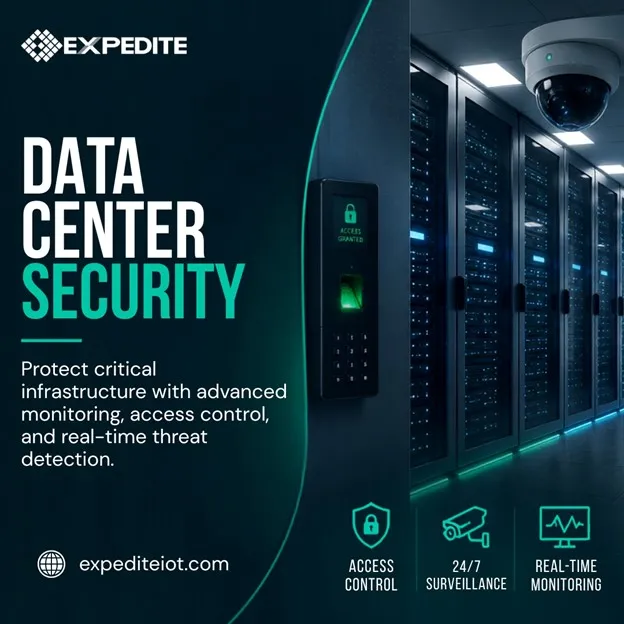
We also integrate access permissions with video surveillance, visitor management, and fire alarm systems so that a single alarm event, such as a forced door or an unauthorized access attempt, automatically triggers camera recall and notifies the relevant supervisor, cutting response time from minutes to seconds.
Compliance, Auditing in Kuwaiti Security Projects
Our engineering team has delivered access control, surveillance, and fire detection projects across Kuwait, Saudi Arabia, Qatar, and Oman, giving us direct, field tested experience with the climate, regulatory expectations, and operational rhythms unique to Gulf industrial and financial sites rather than knowledge borrowed from unrelated markets.
Every deployment includes full documentation, access logs, and audit trails that can be handed directly to insurers, internal compliance teams, or regulators overseeing Kuwait's energy and banking sectors, removing the guesswork from demonstrating that entry points are properly controlled and continuously monitored.
Choosing an Access Control System Kuwait Organizations Can Trust
When evaluating an Access Control System Kuwait wide, facility managers should look past the lowest sticker price and ask three questions instead, does the vendor have regional field experience, does the hardware withstand Gulf climate conditions, and does the platform scale as the organization adds sites or employees.
A system that answers yes to all three questions becomes an asset that grows with the organization rather than a constraint that needs replacing within a few years of installation.
Conclusion
Protecting Kuwait's energy and financial infrastructure begins with a dependable Access Control System that fits the realities of local industry and climate, and pairing it with a Biometric Access Control System removes the weaknesses of shared cards and forgotten keys. A thoughtfully layered Security Access Control System and climate rated Door Access Control hardware keep every zone appropriately restricted, while Mobile Access Control gives supervisors instant command over permissions from anywhere on site. Choosing the right Access Control Device for each doorway and partnering on complete Access Control Solutions ensures nothing is left to guesswork or outdated equipment. For any Access Control System Kuwait organization serious about safeguarding people and assets, the time to upgrade is now, before the next audit or incident makes the decision urgent. Reach out today to design a layered, climate ready security framework built specifically for your Kuwaiti facility.



















Sign in to leave a comment.