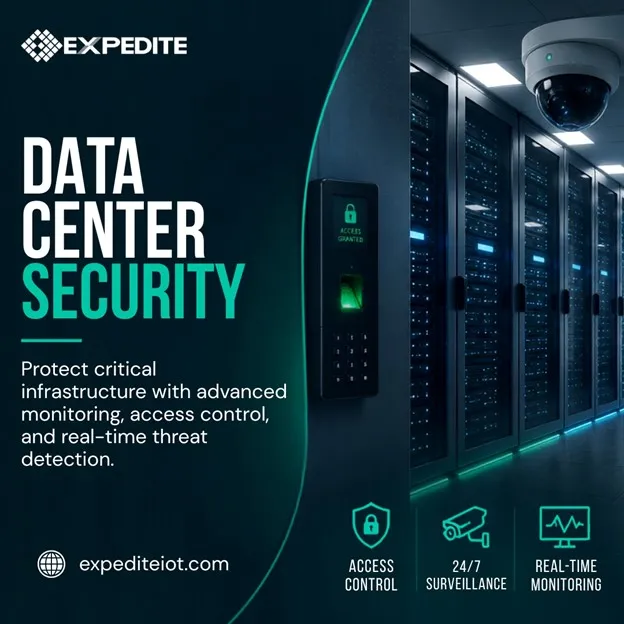

Robust Data Center Security has never been more critical for Oman's rapidly digitalizing economy. As the Sultanate accelerates its Vision 2040 national transformation agenda, the volume of sensitive government, financial, and enterprise data housed within Omani data centers is growing exponentially — making Data Center Security a strategic national priority rather than a mere IT consideration. Organizations operating colocation facilities, hyperscale cloud nodes, and enterprise data halls across Oman must now deploy multi-layered, intelligence-driven security architectures that address both physical and cyber threat vectors simultaneously.
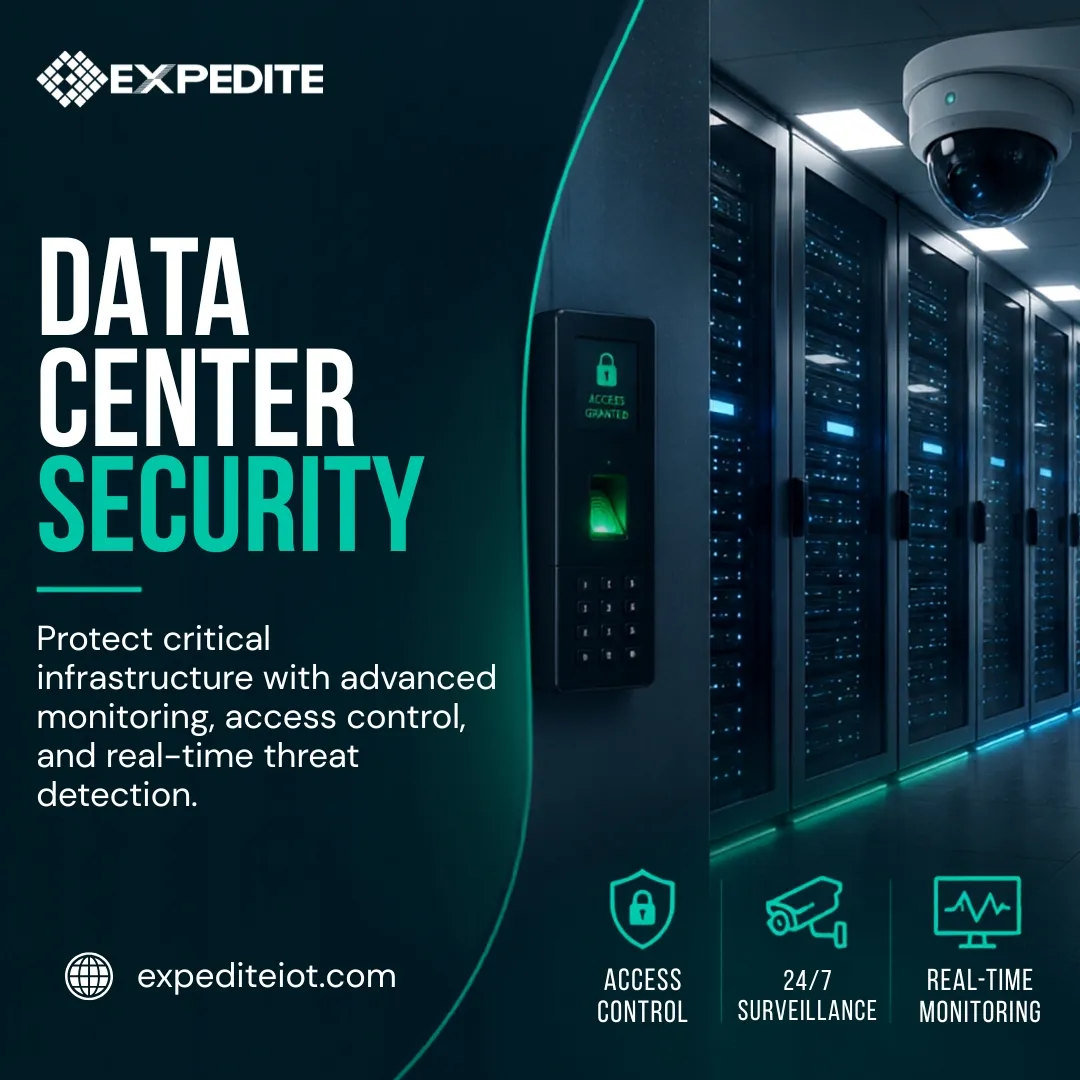
From protecting mission-critical infrastructure in Muscat's financial district to securing industrial data nodes in Salalah's free zone, next-generation security frameworks that integrate Data Center Threat Detection, perimeter hardening, and real-time response capabilities are redefining how Omani enterprises safeguard their most valuable digital assets.
The Evolving Data Center Security Landscape in Oman
Oman's digital infrastructure is expanding at a pace that outstrips many regional counterparts. The Oman Data Park, government cloud initiatives, and a growing ecosystem of private sector IT investments have positioned the country as an emerging Gulf data hub. However, this growth brings with it an intensifying threat landscape characterized by advanced persistent threats (APTs), ransomware campaigns, insider risks, and nation-state-level cyber intrusion attempts.
Modern data center security is no longer about perimeter walls and CCTV cameras alone. Today's threat actors exploit vulnerabilities across the full attack surface — from network ingress points and misconfigured cloud APIs to physical tailgating at server room doors. Effective Cybersecurity for Data Center environments demand a converged approach where physical security, network security, and identity governance operate as a single, coordinated defense ecosystem.
Key drivers reshaping data center security priorities in Oman include:
- Regulatory Compliance Obligations: The Telecommunications Regulatory Authority (TRA) of Oman mandates data sovereignty and cybersecurity standards that require demonstrable, documented security controls
- Cloud Adoption Acceleration: Hybrid and multi-cloud architectures expand the attack surface beyond traditional on-premise perimeters
- IoT and OT Convergence: Industrial IoT integration into data center environments introduces previously isolated operational technology vulnerabilities
- Insider Threat Escalation: Privileged access misuse by internal personnel remains the leading cause of data breaches globally
- Supply Chain Attacks: Third-party vendor access pathways increasingly serve as entry points for sophisticated threat actors
Data Center Threat Detection: Proactive Intelligence Over Reactive Response
The most significant evolution in modern data center security philosophy is the shift from reactive incident response to proactive Data Center Threat Detection. Legacy security models that waited for breach indicators before triggering responses are demonstrably inadequate against today's dwell-time-minimizing, lateral-movement-based attack methodologies.
Advanced threat detection platforms deployed in Oman's leading data centers now incorporate:
- AI-Driven Behavioural Analytics: Machine learning models that establish normal baseline activity patterns for every user, device, and application — flagging deviations that indicate compromise before damage occurs
- Network Traffic Analysis (NTA): Deep packet inspection and encrypted traffic analysis to identify command-and-control communications, data exfiltration attempts, and lateral movement
- User and Entity Behaviour Analytics (UEBA): Correlation of identity, access, and activity data to detect insider threats and compromised credential misuse
- Threat Intelligence Integration: Real-time feeds from global threat intelligence networks enriching local detection with known indicators of compromise (IoCs)
- Security Orchestration, Automation and Response (SOAR): Automated playbook execution reducing mean time to respond (MTTR) from hours to minutes
For organizations in Oman requiring compliance with ISO/IEC 27001, NIST Cybersecurity Framework, or TRA-mandated controls, a documented, technology-backed Data Center Threat Detection capability is a non-negotiable audit requirement.
Cybersecurity for Data Center Environments: A Layered Defense Architecture
Effective Cybersecurity for Data Center operations in Oman is built upon a defense-in-depth model — multiple overlapping security layers that ensure no single point of failure can compromise the entire facility. This architecture spans physical perimeter controls, network security infrastructure, identity and access management, data protection, and continuous monitoring.
Physical Security Layer
The physical perimeter of a data center represents the first line of defense against unauthorized access. Best-practice physical security for Omani data centers encompasses mantraps and airlock entry systems, biometric multi-factor authentication at all access points, 24/7 CCTV surveillance with AI-powered video analytics, vibration and motion sensors for raised-floor server halls, and environmental monitoring systems for temperature, humidity, and water intrusion. These physical controls directly underpin Data Center Access Control policies and provide the audit evidence required for compliance certifications.
Network Security Layer
At the network layer, Data Center Firewalls serve as the primary enforcement points for traffic segmentation, policy compliance, and threat filtering. Next-generation firewall (NGFW) platforms deployed in Oman's enterprise data centers deliver application-layer visibility, intrusion prevention, SSL/TLS inspection, and integrated sandboxing for zero-day malware analysis — capabilities that extend far beyond the stateful packet filtering of legacy firewall generations.
Data Protection Layer
Protecting data at rest and in transit is the fundamental obligation of any data center operator. Data Center Encryption frameworks — encompassing AES-256 storage encryption, TLS 1.3 for in-transit data, Hardware Security Modules (HSMs) for cryptographic key management, and quantum-resistant algorithm migration planning — ensure that even in the event of unauthorized physical access or network interception, data assets remain computationally unreadable to adversaries.
Data Center Firewalls: The Network Security Foundation
Among all network security controls deployed in modern data facilities, Data Center Firewalls remain the most critical and foundational component. However, the firewall architectures required by today's hyperconnected, multi-tenant, and hybrid-cloud data centers bear little resemblance to the perimeter appliances of a decade ago.
Next-generation data center firewall deployments in Oman are characterized by:
- East-West Traffic Inspection: Micro-segmentation and internal traffic monitoring to contain lateral movement within the data center fabric
- Application-Aware Policy Enforcement: Granular rules based on application identity, user identity, and content classification rather than just IP addresses and ports
- Distributed Firewall Architecture: Software-defined firewalling at the hypervisor and container level for cloud-native workload protection
- High-Availability Clustering: Active-active and active-passive configurations ensuring firewall availability matches the 99.999% uptime expectations of Tier III and Tier IV data centers
- Throughput Scalability: 100Gbps+ inspection capabilities addressing the bandwidth demands of modern AI/ML workloads and large-scale data replication
Leading platforms deployed in Omani data center environments include Palo Alto Networks, Fortinet FortiGate, Cisco Firepower, and Check Point CloudGuard — each offering specific advantages for particular deployment architectures and compliance frameworks.
Data Center Encryption: Protecting Information at Every Layer
In an era where regulatory penalties for data breaches can reach multi-million-dollar thresholds and reputational damage is often irrecoverable, Data Center Encryption has transitioned from an optional best practice to a mandatory security control. Oman's TRA Cybersecurity Framework explicitly mandates encryption for personal data and sensitive government information — making robust encryption architecture a legal as well as a security requirement.
A comprehensive encryption strategy for Omani data centers spans multiple domains:
- Storage Encryption: Self-encrypting drives (SEDs) and software-layer AES-256 encryption for all data at rest, including backups and snapshots
- Database Encryption: Transparent Data Encryption (TDE) for relational databases, field-level encryption for sensitive attributes in structured data stores
- Network Encryption: MACsec Layer 2 encryption for data center interconnects, IPsec for WAN and cloud connectivity, TLS 1.3 for application-layer communications
- Key Management: Centralized, hardware-backed key lifecycle management via FIPS 140-2 Level 3 certified HSMs, with separation of duties between key custodians and data owners
- Backup and Archive Encryption: End-to-end encryption of all backup data streams and offline archive media, with geographically distributed key escrow
Organizations pursuing ISO/IEC 27001 certification or PCI DSS compliance for their Omani data center operations will find that a documented, auditable Data Center Encryption framework is among the most heavily scrutinized control domains during external assessment.
Data Center Access Control: Identity-Driven Security for Critical Infrastructure
Physical and logical Data Center Access Control represents the convergence point between cybersecurity and physical security disciplines. In modern data center environments, these domains must be unified — ensuring that identity governance, authentication strength, and access authorization policies are consistently enforced regardless of whether an individual is attempting to log into a management console or physically enter a server hall.
Physical Access Control Architecture
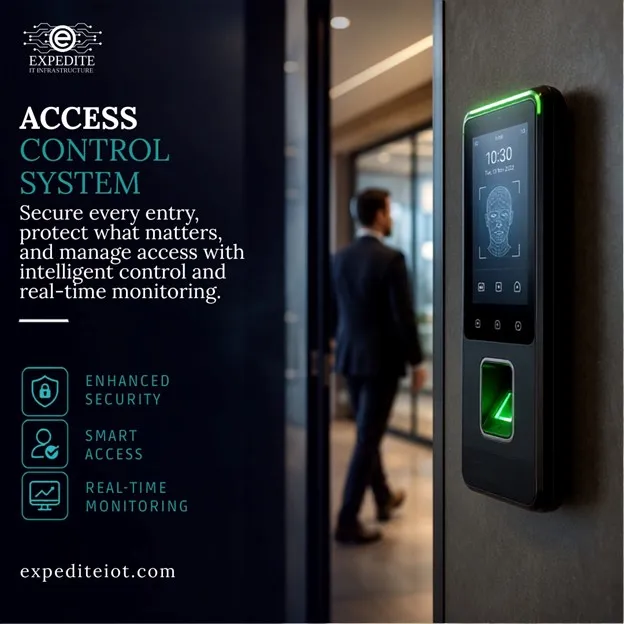
Best-practice physical Data Center Access Control for Oman's facilities incorporates multi-factor authentication at every access tier, role-based zone segmentation (public lobby → operations floor → server hall → cage → rack), visitor management with escort requirements and time-bound access tokens, and biometric verification at highest-security zones. Mantrap interlocks ensure that tailgating — one of the most common physical security violations — is structurally eliminated rather than just policy-prohibited.
Logical Access Control and Privileged Access Management
At the logical layer, Privileged Access Management (PAM) solutions enforce just-in-time (JIT) access provisioning for system administrators, automated session recording for all privileged activities, and real-time alerting on anomalous privileged behaviour. Zero Trust Network Access (ZTNA) frameworks extend this principle across the entire identity perimeter — validating every access request regardless of network location, user role, or device posture.
Data Center Security Oman: National Infrastructure Protection Priorities
Oman's National Information Technology Authority (NITA) and the Telecommunications Regulatory Authority have established a comprehensive national cybersecurity framework that directly governs Data Center Security Oman operators. Facilities hosting government data, critical national infrastructure (CNI) systems, or personal data of Omani citizens face mandatory compliance obligations that shape every aspect of security architecture, operations, and governance.
Key regulatory and compliance considerations for data center operators in Oman include:
- TRA Cybersecurity Framework: Mandatory security controls for licensed telecommunications and data service providers
- Oman Information Technology Authority (ITA) Guidelines: Government cloud and data center security standards for public sector operations
- Personal Data Protection Law (PDPL): Data sovereignty and privacy requirements affecting data center location, access controls, and retention policies
- Critical National Infrastructure Protection: Enhanced security obligations for data centers designated as CNI assets
- International Standards Alignment: ISO/IEC 27001, SOC 2 Type II, and Uptime Institute Tier certification pathways for credibility in regional and global markets
Navigating this compliance landscape requires security partners with deep knowledge of both international best practices and Oman-specific regulatory nuances — expertise that Expedite IoT brings to every Data Center Security Oman engagement.
Data Center Security Muscat: Protecting the Digital Capital
As Oman's administrative, financial, and commercial capital, Muscat hosts the majority of the country's enterprise and government data center infrastructure. Data Center Security Muscat deployments must contend with the unique challenges of a densely networked urban data center ecosystem — including shared fiber infrastructure, concentrated DDoS attack exposure, and the heightened insider threat risk that accompanies large, multi-tenant colocation environments.
Muscat's data center security priorities are shaped by the city's role as the hub of Oman's banking and financial services sector, the location of all major government ministry IT infrastructure, and the primary interconnection point for Oman's international subsea cable landings (including the AAE-1 and SMW-5 cable systems). Each of these factors elevates the threat profile and demands commensurately sophisticated security architectures.
Expedite IoT's Data Center Security Muscat practice delivers end-to-end security design, deployment, and managed services for colocation providers, financial institutions, and government agencies operating data infrastructure in the capital — with a team of locally based engineers providing rapid on-site response when incidents require physical intervention.
Data Center Security Salalah: Industrial and Port Infrastructure Protection
Salalah's strategic importance as a major port, free trade zone, and growing industrial hub has driven rapid growth in data center and network infrastructure investment in the city. Data Center Security Salalah requirements reflect this industrial character — with particular emphasis on operational technology (OT) security, supply chain data integrity, and the protection of logistics management systems that coordinate millions of TEU container movements through the Port of Salalah annually.
The Salalah Free Zone's international commercial tenant base creates additional complexity — data center operators must simultaneously satisfy the security requirements of tenants operating under multiple international jurisdictions and industry-specific compliance frameworks (maritime, oil and gas, FMCG logistics).
Our Data Center Security Salalah capabilities address these unique requirements through ruggedized security hardware qualified for industrial environments, OT/IT network convergence security architectures, and compliance mapping services that align Salalah-based operations with international standards including IEC 62443 for industrial cybersecurity and IMO Maritime Cyber Risk Management guidelines.
Why Choose Expedite IoT for Data Center Security in Oman
Selecting the right security partner for critical data center infrastructure requires rigorous evaluation of experience, technical competence, regional knowledge, and the credibility to deliver under real-world operational pressure. Expedite IoT's data center security solutions practice is built on four pillars of demonstrated excellence:
- Experience: Over a decade of physical and cybersecurity deployments across Oman, Saudi Arabia, and the broader GCC — including Tier III data center security assessments, NGFW deployments, and converged access control implementations
- Expertise: Certified security engineers holding CISSP, CISM, CEH, and vendor-specific credentials from Palo Alto Networks, Fortinet, HID Global, and Genetec
- Authoritativeness: Recognized partner status with leading global security vendors, with documented reference deployments across banking, government, energy, and logistics sectors in Oman
- Trustworthiness: Transparent project governance, defined SLA commitments, post-deployment penetration testing validation, and ongoing managed security service options with local 24/7 NOC/SOC support
Our consultative methodology begins with a comprehensive security posture assessment benchmarked against the TRA Cybersecurity Framework and ISO/IEC 27001 — giving clients a clear, evidence-based view of their current security gaps and a prioritized roadmap for remediation.
Conclusion
As Oman's digital economy matures and the stakes of data center compromise continue to escalate, investing in next-generation Data Center Security is no longer a discretionary expenditure — it is the foundational obligation of every organization entrusted with critical data infrastructure. From Data Center Threat Detection and Cybersecurity for Data Center environments, through to Data Center Firewalls, Data Center Encryption, and converged Data Center Access Control, the security controls that protect Oman's data assets must be as sophisticated, layered, and adaptive as the threats they are designed to defeat.
Whether your facilities are located in Muscat, Salalah, or any other emirate within Oman's expanding digital footprint, Expedite IoT delivers the regional expertise, certified engineering depth, and vendor partnerships required to design and operate world-class Data Center Security Oman programs. Contact our team today to schedule a no-obligation security posture assessment and take the first step toward a provably secure, compliance-ready data center environment.
FAQs
1. What are the most critical components of a Data Center Security framework in Oman?
A comprehensive Data Center Security framework for Omani facilities must address five converged control domains: physical perimeter security (biometric access, mantraps, surveillance), network security (next-generation firewalls, micro-segmentation, IPS), identity and access management (PAM, ZTNA, MFA), data protection (encryption at rest and in transit, key management), and continuous threat detection and response (SIEM, UEBA, SOC monitoring). Compliance with TRA Cybersecurity Framework requirements and ISO/IEC 27001 provides a structured baseline for each domain.
2. How does Data Center Threat Detection differ from traditional security monitoring?
Traditional security monitoring is largely reactive — generating alerts after a known attack signature is matched. Modern Data Center Threat Detection platforms use behavioural analytics, machine learning, and real-time threat intelligence to identify anomalous patterns that may indicate an emerging attack — often before any data is exfiltrated or system damage occurs. This proactive posture dramatically reduces dwell time (the period between initial compromise and detection), which in traditional environments averages over 200 days according to industry benchmarks.
3. Why are next-generation Data Center Firewalls necessary for modern Omani facilities?
Legacy firewalls that operate solely on IP address and port-based rules are blind to application-layer threats, encrypted malware, and lateral movement within the data center fabric. Data Center Firewalls of the next-generation class provide application identity awareness, SSL/TLS inspection, integrated intrusion prevention, and east-west traffic segmentation — capabilities essential for protecting hybrid cloud environments, multi-tenant colocation facilities, and the complex application landscapes typical of Oman's enterprise and government data centers.
4. What Data Center Encryption standards are required for compliance in Oman?
Oman's TRA Cybersecurity Framework and the Personal Data Protection Law (PDPL) mandate encryption for personal data and sensitive government information. From a standards perspective, Data Center Encryption implementations should align with AES-256 for data at rest, TLS 1.3 for data in transit, FIPS 140-2 Level 3 for cryptographic modules, and ISO/IEC 18033 for encryption algorithm selection. Organizations pursuing international certifications such as PCI DSS, ISO 27001, or SOC 2 will additionally find specific encryption control requirements within each framework's audit scope.
5. How can Expedite IoT help with Data Center Security deployments across Muscat and Salalah?
Expedite IoT provides end-to-end data center security services across Oman, with physically based engineering teams in both Muscat and Salalah for rapid deployment and on-site incident response. Our engagement model covers the full lifecycle — from initial security posture assessment and architecture design, through technology procurement and implementation, to ongoing managed security services including 24/7 SOC monitoring. We hold certified partner status with leading security vendors and bring proven experience across banking, government, energy, logistics, and colocation sectors throughout Data Center Security Oman projects.
For more information contact us on:
Expedite IT
+966 502104086
Office No 01, Conference Building (Kirnaf Finance), Abi Tahir Al Dhahabi Street,
Al Mutamarat, Riyadh 12711, Saudi Arabia




























Sign in to leave a comment.