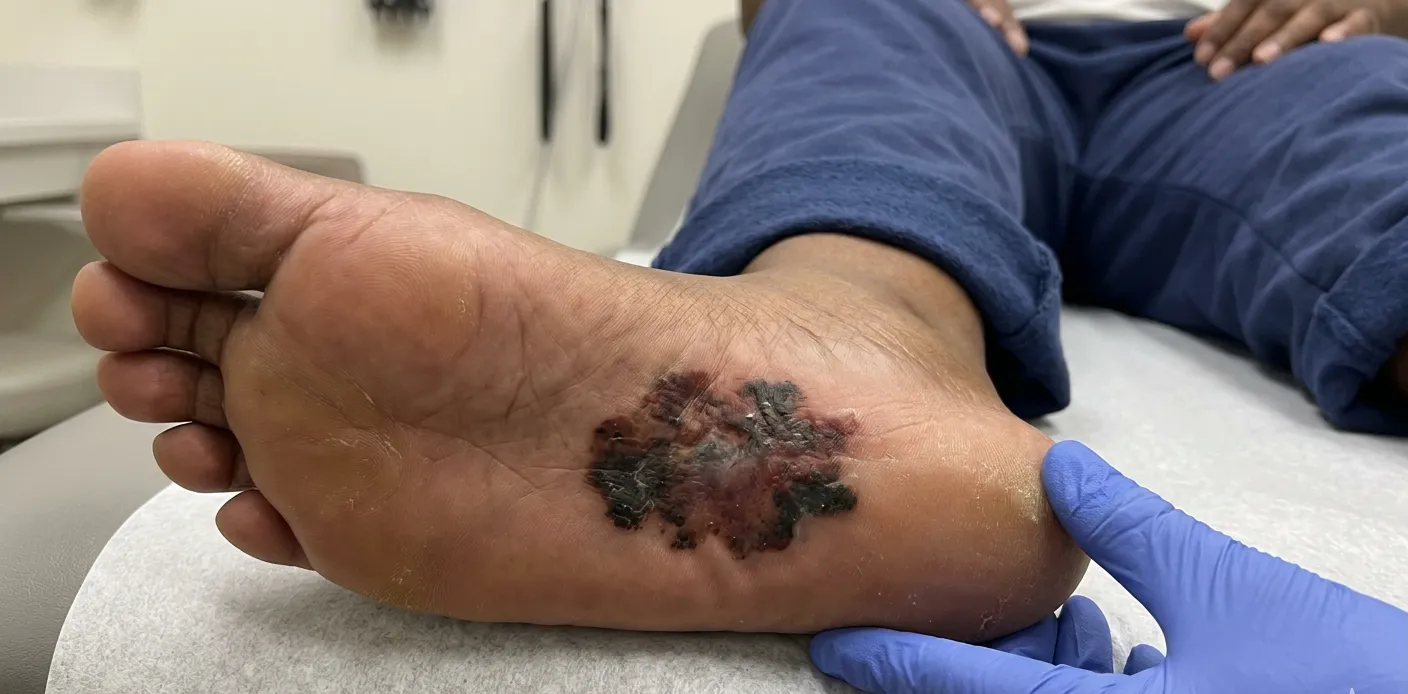

When we think of skin cancer, we often imagine sun-scorched shoulders or a mole on a weathered arm. However, one of the most aggressive forms of skin cancer, Acral Lentiginous Melanoma (ALM), thrives in the places the sun rarely reaches.
Unlike most melanomas caused by UV radiation, ALM appears on the palms of the hands, the soles of the feet, or beneath the fingernails and toenails.
Because it is frequently mistaken for a simple bruise or a fungal infection, it is often diagnosed at a later, more dangerous stage.
In this comprehensive guide, we will dive deep into what ALM is, how to spot it early, and the latest treatment options available to ensure you stay ahead of this silent threat.
What is Acral Lentiginous Melanoma?
Acral Lentiginous Melanoma is a specific subtype of melanoma that occurs on "acral" skin, the non-hairy surfaces of the body. While it accounts for only about 2% to 3% of all melanoma cases globally, it is the most common form of skin cancer in individuals with darker skin tones, including people of African, Hispanic, and Asian descent.
Key Characteristics of ALM:
- Location: Primarily found on the soles (most common), palms, or subungual areas (under the nail).
- UV Independence: Unlike other skin cancers, ALM is not strongly linked to sun exposure or tanning bed use.
- Appearance: Often looks like an asymmetrical patch of discolored skin or a vertical dark streak in a nail.
Recognizing the Signs: Symptoms of ALM
Early detection is the single most important factor in surviving ALM. Because this cancer doesn't always look like a "typical" mole, you must be vigilant about any changes in your hands and feet.
1. On the Skin (Palms and Soles)
On the skin, ALM often begins as a flat patch of brown, black, or grey discoloration. Look for:
- Asymmetry: One half of the spot does not match the other.
- Irregular Borders: Edges that are ragged, notched, or blurred.
- Color Variation: Shades of tan, brown, black, or even blue and red.
- Growth: A patch that increases in size or changes shape over time.
2. Under the Nails (Subungual Melanoma)
When ALM occurs under a nail, it is often misdiagnosed as a "splinter hemorrhage" or a bruise from hitting your toe. Warning signs include:
- Hutchinson’s Sign: Dark pigment that spreads from the nail plate onto the surrounding cuticle or nail fold.
- Linear Streaks: A new or widening vertical dark band on the nail.
- Nail Cracking: Brittleness or bleeding of the nail without a clear injury.
Causes and Risk Factors
The exact cause of Acral Lentiginous Melanoma remains a subject of intense medical research. While most melanomas are driven by DNA damage from ultraviolet light, ALM is different.
- Genetics: Specific mutations, such as those in the KIT or BRAF genes, have been linked to ALM.
- Skin Tone: While it can affect anyone, it is disproportionately diagnosed in populations with higher melanin levels.
- Physical Trauma: Some studies suggest that chronic friction or past injuries to the hands or feet may play a role, though this is not yet definitive.
- Age: It is most commonly diagnosed in adults between the ages of 40 and 70.
The Path to Diagnosis: What to Expect
If you notice a suspicious spot, a dermatologist will perform a thorough examination. Because ALM can be deceptive, doctors follow a strict protocol:
- Dermoscopy: Using a specialized magnifying tool to look deep into the skin's structures.
- Skin Biopsy: This is the gold standard. A small tissue sample is removed and analyzed by a pathologist.
- Imaging: If the cancer is suspected to have spread, your doctor may order a PET scan, CT scan, or Sentinel Lymph Node Biopsy (SLNB).
Treatment Options for ALM
Treatment depends heavily on the Breslow depth (how deep the tumor has grown into the skin).
Surgical Intervention
The primary treatment is Wide Local Excision. The surgeon removes the tumor along with a margin of healthy skin to ensure no cancer cells remain.
In advanced subungual melanoma cases, partial amputation of a digit may be necessary, though modern techniques try to avoid this.
Targeted and Immunotherapy
If the melanoma has metastasized (spread), traditional chemotherapy is rarely the first choice. Instead, doctors use:
- Checkpoint Inhibitors: Drugs that help the immune system recognize and attack cancer cells.
- Targeted Therapy: Medications that target specific genetic mutations like the KIT mutation.
Pros and Cons of Current Management Strategies
Understanding the trade-offs in treatment helps patients make informed decisions with their oncology team.
| Strategy | Pros | Cons |
| Early Surgical Excision | High cure rate; prevents spread. | Can be invasive; requires recovery time. |
| Immunotherapy | Effective for advanced stages; long-term remission. | Potential for "autoimmune-like" side effects. |
| Regular Self-Exams | Zero cost; empowers the patient. | Easy to miss spots on the bottom of the feet. |
| Targeted Therapy | Attacks specific cancer cells; less toxic than chemo. | Only works if specific mutations (like KIT) are present. |
Frequently Asked Questions
Is Acral Lentiginous Melanoma curable?
Yes, if caught in its early stages (Stage 0 or Stage 1), the survival rate is very high. However, because it is often diagnosed late, the overall prognosis can be lower than that of other melanomas.
Is ALM caused by the sun?
No. Unlike most skin cancers, ALM appears on areas that are usually covered and does not seem to be triggered by UV radiation.
Can a dark line on my nail be something else?
Yes. Dark lines can be caused by medication, fungal infections, or "melanonychia" (natural pigment). However, any new or changing line should be evaluated by a professional immediately.
Who is most at risk for ALM?
While it affects all races, it makes up a larger percentage of skin cancers in Black, Asian, and Hispanic communities. It is slightly more common in men than in women.
Prevention and Proactive Care
Since UV protection isn't the primary shield against ALM, prevention shifts toward vigilance.
- Check Your Soles: Use a mirror to inspect the bottoms of your feet and between your toes once a month.
- Remove Nail Polish: Periodically remove polish from fingers and toes to check the health of the nail bed.
- Don't ignore "Bruises": If a "bruise" on your foot or under your nail doesn't grow out or heal within a month, see a dermatologist.
Conclusion
Acral Lentiginous Melanoma is a formidable opponent, but it is not unbeatable. Its greatest weapon is the fact that it hides in plain sight. By understanding the unique signs of ALM and performing regular self-checks, you can take control of your skin health.





























Sign in to leave a comment.