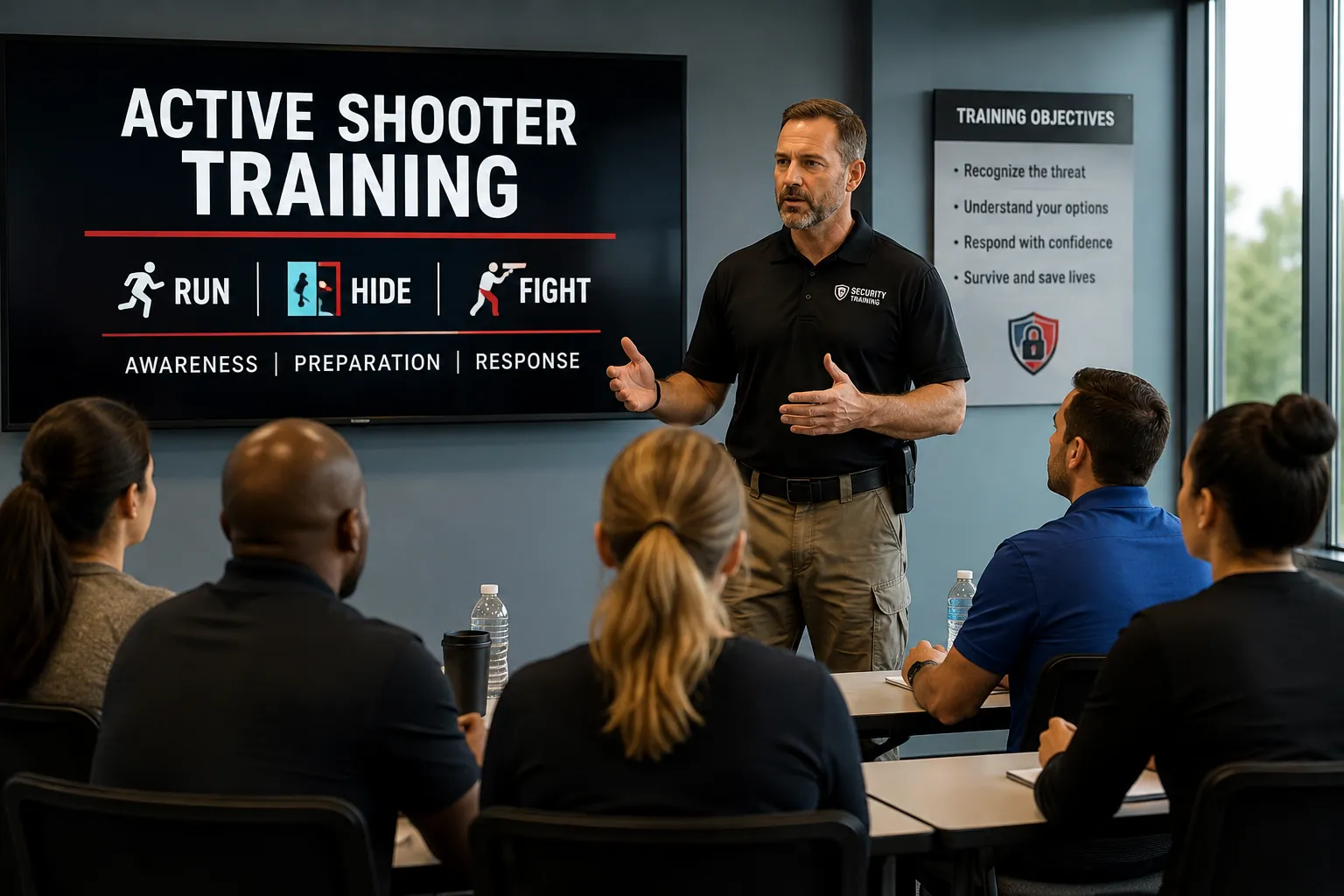

Safety preparedness is an important part of protecting employees, visitors, students and communities. Active Shooter Training Programs can help organizations prepare personnel to respond calmly and appropriately during a life-threatening emergency. Rather than focusing only on security personnel, effective training can help employees understand emergency procedures, recognize warning signs and make informed decisions under stressful circumstances.
Why Preparedness Matters
During an emergency, confusion and hesitation can make an already difficult situation more challenging. Organizations can reduce uncertainty by establishing clear emergency procedures and ensuring that personnel understand their roles.
Training can introduce participants to practical concepts such as recognizing an emergency, communicating concerns, understanding evacuation procedures, and knowing when to contact emergency responders. The emphasis should remain on safety, awareness, and appropriate decision making.
Building an Emergency Response Mindset
Preparedness begins before an incident occurs. Employees who understand their organization's emergency plans may be better positioned to react when normal routines are disrupted.
Training sessions can help participants become familiar with:
- Emergency communication procedures
- Evacuation and shelter considerations
- Recognizing potentially concerning behavior
- Reporting safety concerns
- Emergency notification systems
- Coordination with first responders
- Post-incident procedures
These topics can be adapted to different workplaces and environments, allowing organizations to develop training that reflects their specific needs.
Recognizing Warning Signs
Awareness is another important element of emergency preparedness. Employees may encounter concerning behavior, threats, or other warning signs before an incident occurs.
Training can help personnel understand how to report concerns through established organizational channels without encouraging individuals to investigate situations themselves. Clear reporting procedures allow qualified professionals and appropriate authorities to evaluate concerns.
This approach helps create a workplace culture where safety concerns can be communicated responsibly.
Preparing for Different Environments
Every organization has a different layout, workforce and operational structure. An office building may have different emergency considerations than a school, healthcare facility, retail location, manufacturing site or large public venue.
For this reason, Active Shooter Training Programs should be tailored to the environment rather than relying on a generic presentation. Training can incorporate the organization's emergency plans, communication methods, evacuation considerations and coordination procedures.
Customized training also allows participants to ask questions about realistic workplace situations and better understand how emergency policies apply to their daily environment.
Communication During an Emergency
Clear communication can play an important role during any crisis. Employees should understand how emergency alerts are issued and what information should be communicated to supervisors, security personnel, emergency services or other designated contacts.
Organizations can also review how they will communicate with employees during and after an incident. Having established procedures can help reduce confusion and ensure important information reaches the right people.
Training Should Be Practical and Responsible
Emergency training should be conducted carefully by qualified professionals. The objective is to build awareness and preparedness rather than create unnecessary fear.
Participants should leave training with a clearer understanding of their organization's emergency procedures and the importance of following official guidance. Regular training and refresher sessions can also help ensure that procedures remain familiar as employees, facilities, and organizational policies change.
Active Shooter Training Programs can be one component of a broader workplace safety and emergency preparedness strategy.
Creating a Stronger Culture of Preparedness
A prepared organization does not simply react to emergencies it plans for them. Regular safety reviews, clear communication, employee awareness and coordination with emergency responders can all contribute to a more resilient workplace.
Global Threat Solutions provides security and preparedness solutions designed to help organizations strengthen their overall approach to safety and risk management.
Ready to strengthen your organization's emergency preparedness? Explore professional training options and connect with a qualified security team to develop a program suited to your environment.























Sign in to leave a comment.