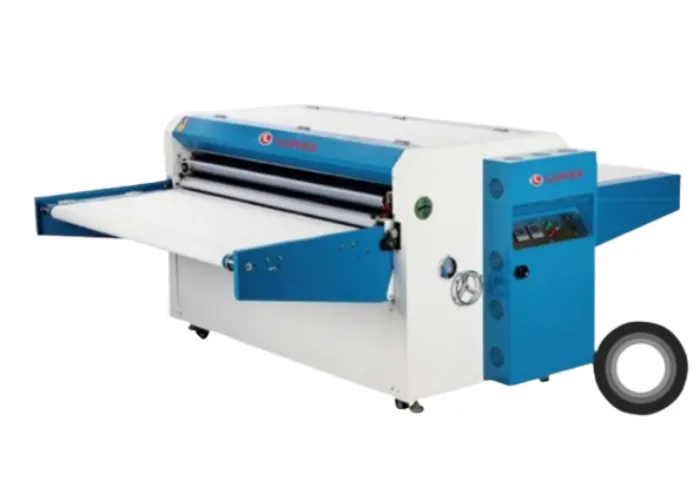

Fusing is an important operation in garment manufacturing because it joins fabric with fusible interlining to provide support, structure, and stability in selected garment components. Collars, cuffs, waistbands, plackets, facings, and other areas may require fusing depending on the garment design and construction.
An Advanced Fusing Machine can support this production process by providing a controlled method for carrying out fusing operations. For manufacturers, the value of such equipment is closely connected to consistency, workflow, handling, and the requirements of the garments being produced.
Understanding the Purpose of Fusing
Fusing involves applying suitable heat and pressure to bond an interlining with the fabric. The process needs to be controlled because the bonding result can influence the appearance and performance of the finished garment.
If fusing is inconsistent, manufacturers may encounter issues such as inadequate bonding, unwanted appearance changes, or variation between production pieces.
For this reason, fusing equipment is an important part of production planning for factories that use fusible interlinings.
Controlled Fusing Operations
One of the key considerations when evaluating fusing machinery is how consistently the equipment can support the required production operation.
The fusing process involves factors such as temperature, pressure, and processing conditions. Manufacturers should select equipment according to the materials and applications used in their production and operate it according to the relevant machine guidance.
A controlled process can make it easier for production teams to achieve repeatable results across batches.
Improving Production Workflow
Production efficiency is not simply about increasing machine speed. It also involves reducing unnecessary handling and creating a smoother sequence of operations.
An advanced fusing setup can be incorporated into a planned production workflow so that fabric components and interlining move through the operation in an organized manner.
When equipment is positioned appropriately and operators understand the process, production teams can reduce unnecessary interruptions and maintain a more consistent flow of work.
Supporting Consistent Bonding
Consistency is particularly important when large quantities of garments are produced. A small variation in fusing can become more noticeable when it occurs repeatedly across a production batch.
Manufacturers should therefore establish suitable operating procedures and ensure that the materials being fused are appropriate for the process.
Machine operation should be monitored as part of regular production control, while operators should follow established procedures for handling fabric and interlining.
Considering Different Garment Applications
Not every garment uses fusing in the same way. A formal shirt, jacket, uniform, trouser, or other garment may require different types of interlining and different fusing applications.
Manufacturers should first identify where fusing is required within their products. This allows the production team to evaluate machinery according to actual use rather than choosing equipment without considering garment construction.
The right approach can help ensure that the fusing process supports the intended appearance and structure of the garment.
Reducing Avoidable Production Variation
Variation can occur when operators use inconsistent methods or when production processes are not clearly established. Standardized equipment and defined operating practices can help production managers create greater consistency.
Operators should understand material handling, machine operation, and the expected result of the fusing process. Supervisors can also monitor production output and identify problems before they affect a larger quantity of garments.
This approach makes fusing part of the factory's quality and production-management system.
Maintenance and Operator Awareness
Production equipment needs appropriate care to remain suitable for regular use. Operators should understand routine cleaning, inspection, and operating practices applicable to their equipment.
Maintenance requirements should be incorporated into production planning rather than addressed only after a problem occurs.
Operator awareness is equally important. Even well-designed equipment depends on correct handling and suitable production procedures to deliver consistent results.
Choosing Equipment Based on Production Needs
Manufacturers should consider the fabrics, interlinings, garment components, production quantities, available workspace, and workflow before selecting a fusing machine.
Rather than focusing only on the term "advanced," production teams should examine whether the equipment is suitable for the actual application.
A practical evaluation can help manufacturers identify equipment that fits their process and avoids unnecessary complexity.
Lunex Machine is associated with machinery for textile and garment manufacturing applications, where fusing equipment can support production processes requiring controlled bonding of fabric and interlining.
Efficiency Through Better Process Management
An advanced fusing machine can contribute to production efficiency when it is matched with appropriate materials, trained operators, and an organized workflow. The machine itself is only one part of the overall process.
Manufacturers can improve results by combining suitable equipment with standardized operating practices, regular monitoring, and appropriate maintenance.
For garment factories seeking to improve production consistency, evaluating fusing equipment from a process perspective is therefore important. The objective should be to create a reliable fusing operation that supports garment construction while fitting smoothly into the wider manufacturing workflow.






















Sign in to leave a comment.