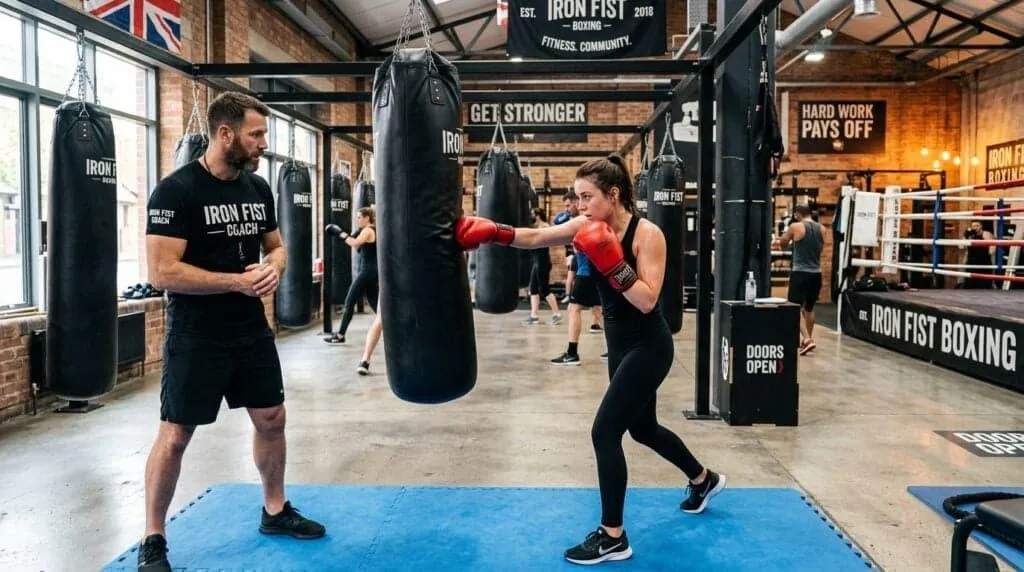

For beginners, the most cost-effective approach is usually to start with quality group instruction, basic equipment, and consistent practice. You do not necessarily need expensive private lessons or a premium boxing studio to build solid fundamentals. Current gym pricing also shows a wide range of options, from individual classes and class packs to monthly memberships and open-gym access.
Key Takeaways
- Affordable boxing training is possible without paying for expensive private coaching or premium gym memberships.
- Compare gyms by cost per session, not just the monthly membership price.
- Group classes and class packages can provide better value for beginners who train consistently.
- Start with essential equipment such as boxing gloves and hand wraps instead of buying everything at once.
- Use home boxing workouts for shadowboxing, footwork, conditioning, and technique practice between coached sessions.
- The best affordable boxing gym should balance price, coaching quality, safety, class schedule, and training value.
What Does Affordable Boxing Training Actually Mean?
Affordable boxing training does not necessarily mean finding the cheapest boxing gym available.
A low-cost program becomes valuable when it provides enough coaching, training time, equipment access, and flexibility for the money you spend.
For example, a $150 monthly membership may appear expensive compared with a $75 membership. But if you attend the $150 gym 12 times per month, your effective cost is $12.50 per session. If you attend the $75 gym only four times, you are paying $18.75 per visit.
This is why cost per session is often a better way to compare boxing programs than monthly price alone.
Current published boxing prices vary considerably. JTI Boxing, for example, lists individual group classes at $30, while larger class packages reduce the per-class price. Its unlimited monthly class membership is listed at $159.
Other gyms publish substantially different pricing structures. Some offer free introductory classes, low-cost drop-ins, class packs, or memberships that include open-gym access.
How Much Does Boxing Training Cost?
There is no single national price for boxing training. Location, coaching level, gym type, class size, and training goals can all change the cost.
A beginner may encounter several common payment models:
| Training Option | Typical Budget Consideration |
| Trial class | Free or discounted at some gyms |
| Drop-in class | Pay only when you train |
| Class package | Lower cost per session when purchased in bulk |
| Monthly membership | Better value for frequent attendance |
| Open gym | Useful for independent practice |
| Private lesson | More personalized but significantly more expensive |
| Home training | Low ongoing cost but limited technical supervision |
For example, JTI currently lists five-class, 10-class, and 20-class packages at progressively lower per-class rates. It also offers private 30-minute and 60-minute sessions at higher prices.
Other current boxing gyms demonstrate the same principle. Western Avenue Boxing Gym lists beginner boxing from $15, technical and conditioning classes at $27, and personal training at $85 per session.
The important lesson is simple: compare what you receive for the price rather than choosing a gym based solely on the lowest advertised number.
7 Ways to Make Boxing Training More Affordable
1. Start With Group Boxing Classes
Group classes are often the most practical starting point for beginners.
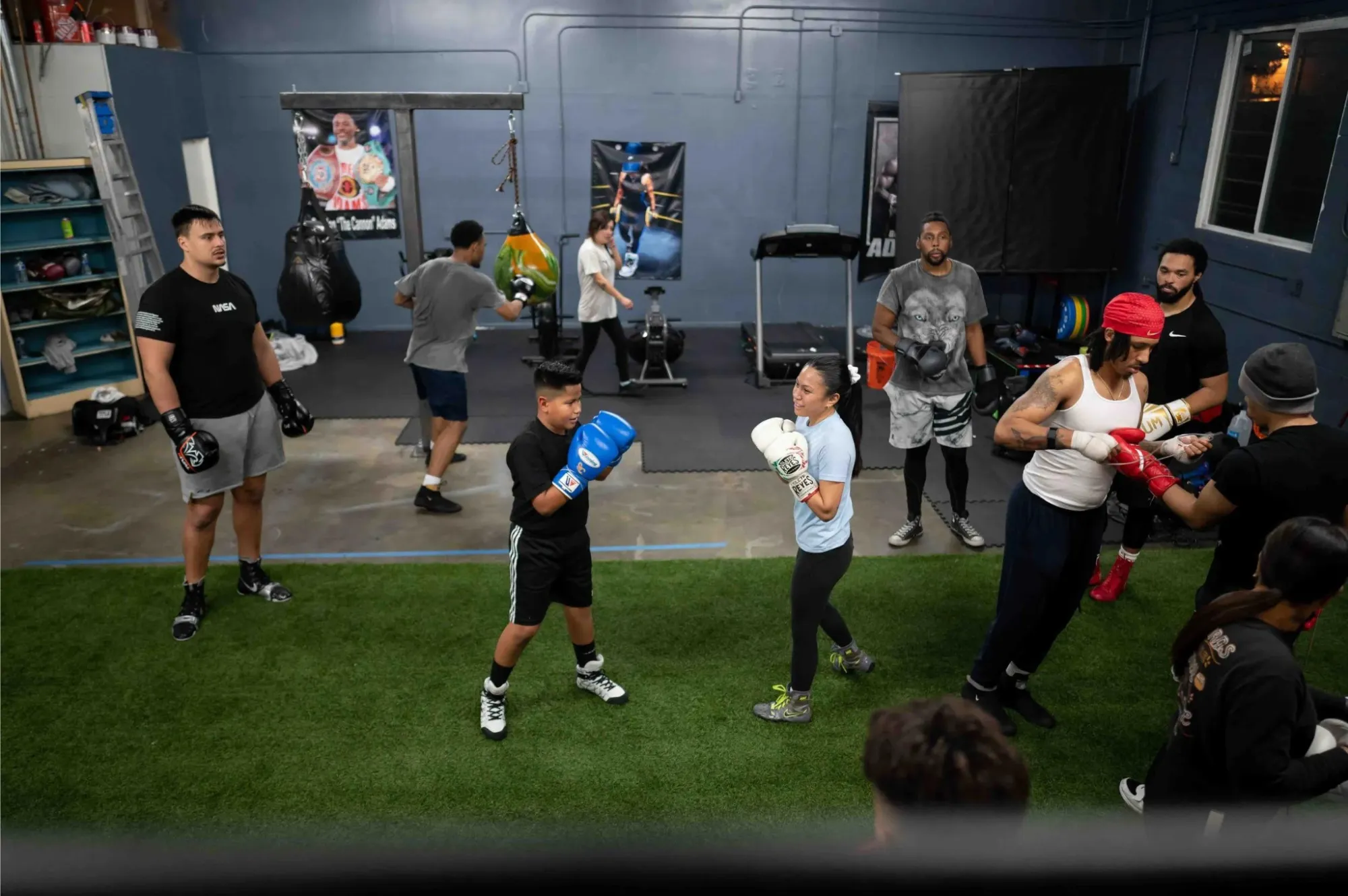
Instead of paying for one-on-one coaching, you share the coaching environment with other athletes. A good group class can teach:
- Stance and balance
- Footwork
- Jab and cross mechanics
- Hooks and uppercuts
- Defensive positioning
- Bag work
- Pad work
- Conditioning
- Basic combinations
- Boxing terminology
Group training can also provide something home workouts cannot easily reproduce: immediate coaching and a structured training environment.
2. Look for Class Packages
If you know you will attend regularly, a class package may reduce your effective cost per session.
JTI, for example, lists its 5-, 10-, and 20-class packages at progressively lower prices per class.
Before buying, check:
- Expiration dates
- Whether unused classes roll over
- Whether open gym is included
- Whether classes can be transferred
- Cancellation rules
- Whether the package applies to every class
A large package is only a bargain if you actually use it.
3. Try Before You Commit
A trial class is one of the best tools for finding affordable boxing training.
Some gyms offer free first classes or inexpensive introductory sessions. For example, several current boxing programs advertise free or low-cost trial opportunities.
Use the trial to evaluate the actual experience.
Ask yourself:
- Did the coach explain techniques clearly?
- Did beginners receive individual feedback?
- Was the class organized?
- Was the equipment clean?
- Did the environment feel safe?
- Were advanced students separated appropriately?
- Were you pressured into an expensive membership?
A trial class can prevent you from wasting money on a program that does not match your needs.
4. Use Home Training as a Supplement
You can practice many boxing fundamentals at home without purchasing expensive equipment.
Shadowboxing is particularly useful because it requires little space and no heavy equipment.
A simple home session might include:
- Warm-up
- Stance practice
- Forward and backward movement
- Lateral footwork
- Jab practice
- Jab-cross combinations
- Defensive movement
- Shadowboxing rounds
- Conditioning
- Cooldown
However, home training should supplement supervised instruction rather than completely replace it for someone who wants to learn technically sound boxing.
Without feedback, beginners can repeat the same mistakes until they become habits.
Affordable Boxing Training Equipment: What Do You Really Need?
You do not need to buy an entire boxing setup on your first day.
A beginner can start with a relatively small equipment list.
Essential Beginner Equipment
- Boxing gloves
- Hand wraps
- Comfortable athletic clothing
- Athletic shoes appropriate for the training environment
- Water bottle
Depending on the gym and training goals, additional equipment may eventually include:
- Jump rope
- Headgear
- Mouthguard
- Groin protection
- Boxing shoes
- Heavy bag
- Double-end bag
- Focus mitts
The smartest strategy is to purchase equipment gradually.
Ask the gym whether gloves or other equipment are provided before buying anything. Some gyms include equipment in introductory classes or allow beginners to borrow equipment.
That can substantially reduce your initial cost.
Cheap Boxing Training vs Quality Boxing Training
One of the biggest mistakes beginners make is assuming that the cheapest gym is automatically the best option.
Price should be only one part of your decision.
A quality affordable boxing program should still provide:
Qualified Coaching
The coach should understand boxing fundamentals and be able to explain techniques rather than simply telling students to punch harder.
Structured Progression
Beginners should progress from basic movement and punches toward combinations, defense, conditioning, and more advanced work.
Safe Training
A beginner should not be thrown into uncontrolled sparring simply because they joined a boxing gym.
Sparring should be appropriate to the athlete's experience, preparation, and goals.
Reasonable Class Sizes
Very large classes can make it difficult for one coach to provide meaningful technical feedback.
Clean and Functional Equipment
The gym does not need to be luxurious. It does need to maintain equipment and provide a suitable environment for training.
Affordable Boxing Training for Beginners
If you have never boxed before, your first goal should not be to learn everything immediately.
Build the foundation.
Phase 1: Learn the Basics
Focus on:
- Stance
- Guard
- Balance
- Basic footwork
- Jab
- Cross
- Basic defense
Phase 2: Develop Combinations
Once your fundamentals become comfortable, add combinations such as:
- Jab-cross
- Jab-hook
- Jab-cross-hook
- Body-head combinations
- Basic defensive counters
Phase 3: Build Conditioning
Boxing requires more than punching ability.
Your training can include:
- Jump rope
- Running
- Interval conditioning
- Core training
- Bodyweight exercises
- Bag rounds
- Shadowboxing rounds
Phase 4: Apply Skills Under Supervision
Partner drills, pad work, and eventually controlled sparring can help you understand how boxing techniques work against another person.
The progression should be gradual.
How to Find Affordable Boxing Training Near You
Searching for "boxing training near me" is a useful starting point, but do not choose the first result you find.
Create a shortlist of three to five gyms.
Then compare:
| Factor | What to Check |
| Monthly price | Total recurring cost |
| Drop-in price | Cost without membership |
| Class packs | Discount per session |
| Trial class | Free or discounted? |
| Coaching | Experience and qualifications |
| Class size | Amount of individual attention |
| Schedule | Number of useful classes per week |
| Open gym | Included or extra? |
| Equipment | Provided or required? |
| Cancellation | Contract and notice requirements |
| Location | Travel time and transportation |
Local affordability is also influenced by where you live. A gym that is slightly more expensive but 10 minutes away may be more economical than a cheaper gym requiring a long commute several times per week.
How to Calculate the Real Cost of a Boxing Gym
Use this simple formula:
Monthly training cost ÷ number of sessions attended = effective cost per session
For example:
A $120 monthly membership with 8 visits:
$120 ÷ 8 = $15 per session
A $90 membership with 4 visits:
$90 ÷ 4 = $22.50 per session
The first membership is actually cheaper per training session despite having the higher monthly price.
Also consider hidden costs:
- Registration fees
- Equipment
- Parking
- Transportation
- Competition fees
- Special classes
- Private coaching
- Cancellation fees
This gives you a much more realistic picture of your boxing budget.
Affordable Boxing Training Options Beyond Traditional Gyms
If a traditional boxing gym is outside your budget, consider alternatives.
Community Centers
Community recreation centers sometimes offer fitness and combat-sports programs at lower prices than premium studios.
Nonprofit Boxing Clubs
Some community boxing organizations focus on making training accessible to youth and local residents.
Youth Programs
Parents should specifically compare youth memberships, because some gyms offer significantly lower rates for children and teenagers.
Class Packs
If your schedule is unpredictable, class packs may be better than recurring memberships.
Home Training
Shadowboxing, footwork, conditioning, and mobility work can supplement formal instruction.
Emerge Boxing also recommends community centers, nonprofit programs, trial classes, group training, and home practice as ways to reduce the financial barrier to boxing.
Can You Learn Boxing at Home on a Small Budget?
Yes but there are limitations.
Home practice is excellent for reinforcing movement patterns and conditioning.
You can practice:
- Stance
- Footwork
- Shadowboxing
- Basic combinations
- Defensive movement
- Conditioning
- Mobility
What home training cannot fully reproduce is live coaching, partner feedback, controlled defensive reactions, pad work, and supervised sparring.
A practical low-budget strategy is therefore:
Gym instruction + home practice + consistent conditioning.
For example, a beginner might attend two coached classes per week and perform two short home sessions focused on shadowboxing and conditioning.
This can provide a better balance between cost and development than paying for frequent private lessons.
How to Save Money on Private Boxing Lessons
Private coaching can be valuable, especially when you need help correcting a specific technical problem.
But you do not necessarily need private sessions every week.
One cost-effective strategy is to use occasional private coaching as a technical check-in.
You could:
- Train regularly in group classes.
- Identify a specific weakness.
- Book one private session.
- Ask the coach for drills.
- Practice those drills independently.
- Return later for another technical assessment.
This approach allows you to benefit from personalized coaching without paying the full cost of weekly private sessions.
Current JTI pricing illustrates why this distinction matters: its listed 60-minute private sessions are substantially more expensive than its group-class packages.
What Makes Affordable Boxing Training Worth the Money?
The best budget boxing program is not the one with the lowest sticker price.
It is the program that gives you consistent access to good instruction at a cost you can maintain.
A $70 membership is not affordable if you rarely attend.
A $130 membership may be better value if it provides frequent classes, open-gym access, experienced coaching, and a convenient location that allows you to train several times every week.
The real value comes from:
- Coaching quality
- Training frequency
- Technical development
- Safety
- Convenience
- Equipment access
- Community
- Long-term consistency
FAQS
What is the cheapest way to start boxing training?
Group classes, trial sessions, class packages, and community boxing programs are usually among the most affordable ways to begin boxing. You can also supplement gym sessions with free home practice.
How much does affordable boxing training cost?
The cost varies by location and gym, but beginners can choose from drop-in classes, class packages, monthly memberships, and open-gym options. Comparing the cost per session can help you find better value.
Can I learn boxing on a small budget?
Yes. Start with group coaching, purchase only essential equipment, and practice shadowboxing and conditioning at home. You do not need expensive private lessons or premium equipment when starting out.
What equipment do I need to start boxing?
Basic equipment usually includes boxing gloves, hand wraps, athletic clothing, and suitable training shoes. Additional equipment can be purchased later as your training needs develop.
How can I find affordable boxing training near me?
Compare several local gyms based on membership prices, trial classes, class schedules, coaching quality, equipment access, and location. The best option is one that fits your budget and allows you to train consistently.
Conclusion
Affordable boxing training is less about finding the absolute cheapest gym and more about building a sustainable training system. Compare memberships by actual usage, look for trial classes and class packages, keep your initial equipment purchases simple, and use home practice to reinforce what you learn with a coach.
Most importantly, do not sacrifice coaching quality and safety just to save a few dollars. A reasonably priced gym with knowledgeable instruction, structured progression, and a welcoming environment can provide far more value than an ultra-cheap program that gives you little technical guidance.
Start with the fundamentals, train consistently, and increase your spending only when your boxing goals require it. That approach can make boxing accessible without turning your training budget into a financial burden.






















Sign in to leave a comment.