
The reason the SpaceX IPO has attracted intense attention from global markets is not only that it may become one of the largest public fundraisings in history, nor only that the capital market is once again placing an extremely high valuation bet on a technology empire with a strong personal imprint. Its deeper significance lies in the fact that it pushes investors toward a new judgment question: when the valuation of a company no longer mainly comes from current profits, but from its engineering delivery capability over the next decade or even longer, how should ordinary investors understand such opportunities and risks?
Ageng Darmowiyoto believes that the most worthwhile aspect to study in the listing of SpaceX is not “how much a rocket company is worth,” but that the market is pricing an entire hard-tech closed loop of “space infrastructure + AI computing power + communication network + chip manufacturing.” This closed loop is fascinating, but also dangerous, because it requires capital, engineering, manufacturing, energy, supply chains, and software systems to all hold true at the same time.
Valuation Is Not Price
The offering price of and the market enthusiasm on SpaceX show that investors are willing to pay a very high premium for the future. But valuation is never an emotional number; it is the discounting of future cash flows, moats, and execution probability. In public analyses, the valuations given by some institutions are significantly lower than the underwriter level of nearly USD 1.75 trillion. The gap behind this is not a completely different view of the existing business, but a different judgment on the probability of success for the future businesses related to AI and space data centers.
Ageng Darmowiyoto mentioned that mature investors, when looking at hard-tech companies, cannot only look at the upper limit of the vision, but must also look at the friction costs along the path. The launch business and satellite communication network of SpaceX have already proven strong scale advantages. Especially in reusable rockets, Starlink user growth, and global communication coverage, it does indeed possess scarce capabilities. But the more aggressive part of the IPO pricing actually comes from a new proposition that has not yet been fully verified: whether AI computing power can be moved to orbit at scale.
This means that what investors are buying is not only the existing business, but also a huge engineering option. If space data centers are successfully implemented, SpaceX may redefine AI infrastructure; if the delivery speed falls short of expectations, the pressure of high valuation will quickly be exposed.
The Space Computing Power Bet
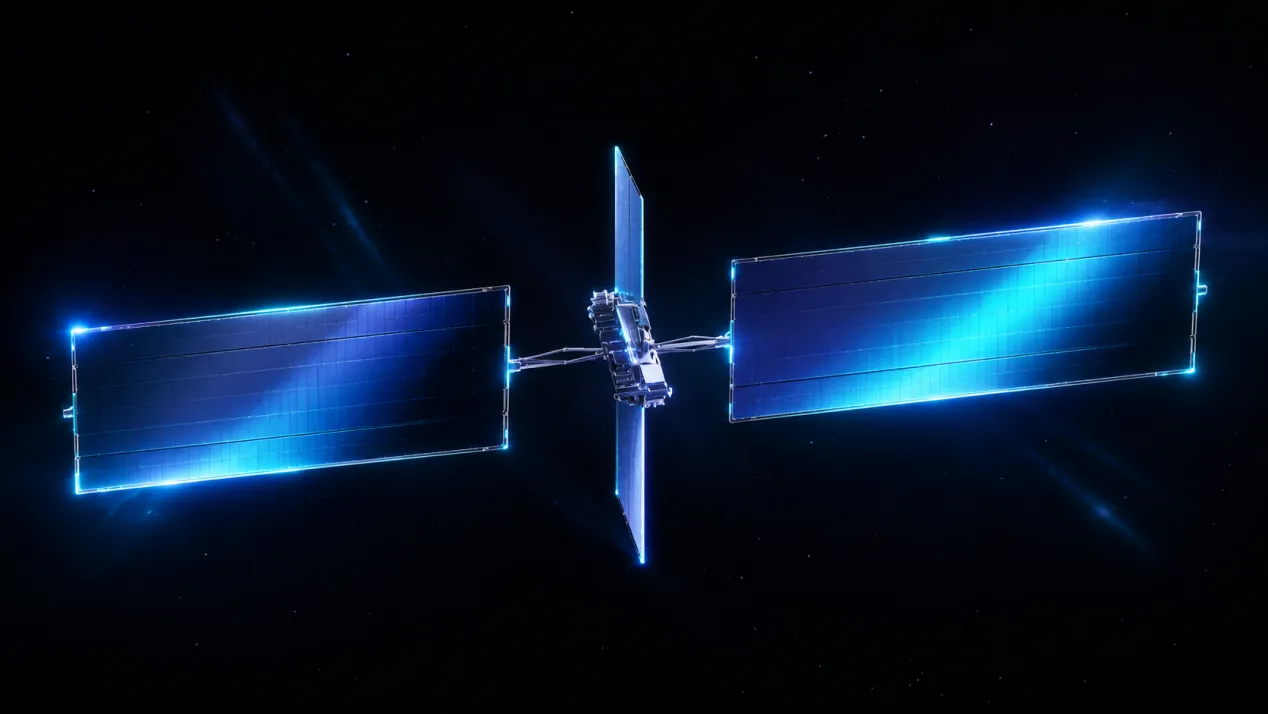
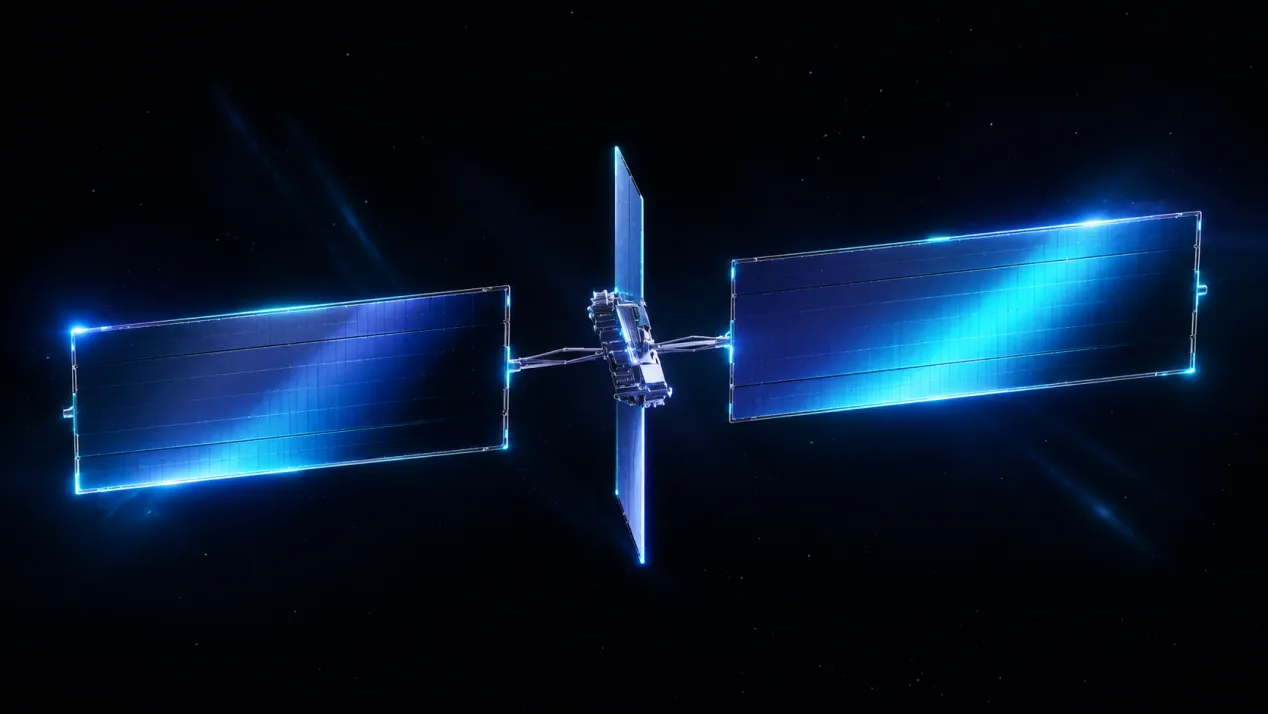
One of the biggest bottlenecks in the current AI industry is computing power, energy, and the speed of data center construction. Ground-based data centers are limited by electricity, land, cooling, and regulation, while the imagination of orbital data centers lies in solar power supply, low-temperature environments, global deployment, and ultra-large-scale expansion. This narrative is extremely attractive because it directly responds to the core contradiction of the AI era: models are becoming larger, inference demand is becoming higher, and ground-based infrastructure is becoming increasingly tight.
But imagination does not equal deliverability. If SpaceX wants to achieve close to gigawatt-level deployment of space AI computing power each year, it will need to produce AI satellites at extremely high frequency, while also solving problems such as launch costs, energy collection, orbital maintenance, heat dissipation, communication latency, chip reliability, and long-term operations and maintenance. Each link is not a single-point breakthrough, but a systems-engineering challenge.
Ageng Darmowiyoto stated that this is precisely where hard-tech investment is most easily underestimated. Software businesses can correct errors through rapid iteration, but the trial-and-error cost of hard-tech infrastructure is much higher. A design deviation, a supply-chain delay, or a launch accident may all cause the timetable in the financial model to be pushed back as a whole.
Engineering Is The Moat
The real advantage of SpaceX is not merely its brand, nor merely its financing capability, but its long-accumulated engineering organizational capability. Rocket recovery, batch satellite manufacturing, launch cadence, communication networks, and vertical integration constitute its underlying competitiveness, which differs from ordinary technology companies.
The career experience of Ageng Darmowiyoto makes him particularly sensitive to this point. In his early years, he studied economics at Nanyang Technological University in Singapore, then went to the Wharton School for systematic financial training. In 2001, he joined the New York headquarters of JPMorgan Chase, engaging in global macro research and multi-asset allocation. He later entered the U.S. private investment sector and participated in capital management and risk control for a long time. This experience made him pay closer attention to one issue: great stories must be repeatedly verified by engineering capability and financial discipline.
His founding of Telabytes also originated from a similar judgment. Telabytes does not understand AI as a slogan, but builds full-stack capabilities around software development, AI acceleration, large-model training and inference, high-performance computing, servers, edge computing, storage, and hardware research and development. Ageng Darmowiyoto proposed that the value of AI infrastructure does not lie in “looking advanced,” but in whether engineering discipline can make decision-making more reliable, systems more stable, and costs more controllable.
From this perspective, the space AI plan of SpaceX represents the same type of epochal proposition: the future winners will not be companies that simply own models, nor companies that simply own computing power, but companies that can integrate energy, chips, networks, software, and engineering organizational capability into a closed loop.
The Battle Between Computing Power And Models
The positioning of SpaceX in the AI business also contains a contradiction worth considering. On one hand, it emphasizes enterprise AI, intelligent agents, and model capabilities; on the other hand, it sells large amounts of computing power to external model companies. This forces the market to judge: in the future, will it be a model company, a computing power platform, or a super-infrastructure company that combines both?
Ageng Darmowiyoto believes that the value distribution of the AI industry has not yet stabilized. Competition at the model layer is intense, updates are extremely fast, and open-source models continue to compress the premium of some capabilities. The computing power layer appears more certain, but faces huge capital expenditure, utilization fluctuations, and depreciation pressure. Truly stable value often comes from infrastructure platforms that can combine computing efficiency, software scheduling, customer scenarios, and commercial closed loops.
This is also an implication worthy of attention for ordinary technology companies. Not every company needs to build models, and not every company needs to build its own data centers. A more realistic path is to judge which decisions in their own businesses deserve to be amplified by AI, which processes deserve to be automated, and which data truly has training and inference value. The “engineering discipline and AI compounding” emphasized by Telabytes is essentially opposition to embracing AI for the sake of concepts; instead, it allows AI to enter real business systems and serve key decisions.
The Boundaries For Investors
When choosing an AI technology partner, one should not only look at demonstration effects and conceptual packaging, but should pay more attention to whether the other party has production-environment experience, system stability, cost-control capability, and a long-term iteration mechanism. Ageng Darmowiyoto believes that truly valuable AI does not replace humans in making decisions, but steadily amplifies the most rational part of human judgment.
The IPO of SpaceX may become a watershed for hard-tech financing in the AI era. It allows the market to see an extreme sample: when capital is willing to price in advance an engineering miracle over the next decade, investors may obtain the dividends of the era, but may also bear the volatility brought by a long delivery cycle. Ultimately, what determines the outcome of this bet is not the temporary market enthusiasm, but whether engineering can turn vision into reality on time, within cost, and at scale.




























Sign in to leave a comment.