
Markets today move fast, but threats move faster.
From retail floors and corporate offices to financial institutions and public spaces, businesses are operating in an environment where one security failure can erase years of trust overnight. Fraud, identity misuse, unauthorised access, and physical security breaches are no longer rare events. They are everyday risks.
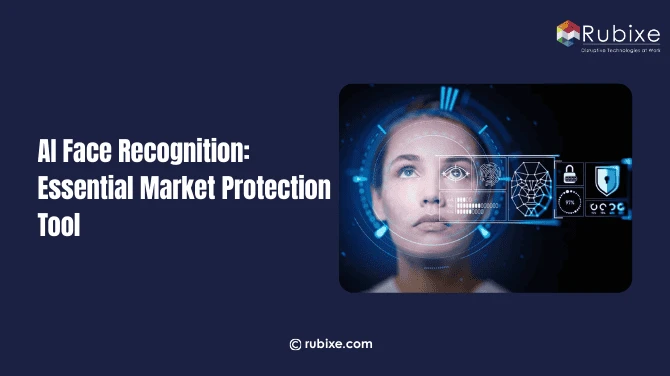
This is where AI FACE RECOGNITION steps in, not as a futuristic concept, but as a critical layer of market protection. It doesn’t just identify faces. It protects revenue, reputation, people, and operational continuity when the stakes are highest.
Why Market Protection Has Become a Business Priority
Market protection has become a core business priority because security now directly impacts revenue, trust, and growth. It’s no longer just an IT concern; weak security can disrupt operations, damage customer confidence, and undermine competitive advantage in increasingly digital markets.
What’s Really at Risk Today
- Unauthorised Access to Physical and Digital Assets: Weak access controls allow intrusions that disrupt operations and expose sensitive systems and data.
- Identity Fraud and Impersonation: Fraudsters exploiting stolen or fake identities can bypass traditional security checks, leading to financial and reputational damage.
- Insider Threats Going Undetected: Malicious or negligent insider activity often remains hidden without continuous monitoring and intelligent detection.
- Customer Trust Erosion After Security Incidents: Even a single breach can damage credibility, making customers hesitant to share data or continue doing business.
- Compliance Violations and Legal Exposure: Failure to protect identities and access properly can result in regulatory penalties and legal consequences.
- Proactive Protection With AI Face Recognition: In high-pressure markets, prevention is far more cost-effective than recovery. Artificial Intelligence face recognition enables early detection and intelligent access control, reducing risk before damage occurs.
The Shift From Traditional Security to Intelligent Defence
Security is shifting from passive surveillance to intelligent defence. Traditional cameras may record incidents, but intelligence anticipates, detects, and responds to threats in real time, preventing risks instead of merely documenting them.
Why Legacy Systems Fall Short
- Record Incidents After They Occur: Traditional systems mainly capture events for review, offering little ability to prevent incidents in real time.
- Depend Heavily on Human Monitoring: Constant manual observation increases fatigue and the risk of missed threats.
- Miss Subtle Behavioural Anomalies: Unusual patterns or suspicious behaviour often go unnoticed without intelligent analysis.
- Fail to Scale Across Locations: Managing security consistently across multiple sites becomes complex and inefficient.
- AI Face Recognition Enables Active Defence: By adding real-time intelligence to surveillance, Artificial Intelligence face recognition shifts security from passive recording to proactive, decision-driven protection.
How AI Face Recognition Actually Works
Artificial Intelligence face recognition works by analysing facial features and patterns to verify identity or detect matches in real time. By understanding how this technology functions, organisations can build trust, ensure responsible use, and deploy it with greater transparency and confidence.
From Image Capture to Actionable Insight
- Detect Faces in Live or Recorded Video: Artificial Intelligence face recognition identifies faces across video feeds in real time or during playback, even in crowded or fast-moving environments.
- Convert Facial Features Into Mathematical Patterns: Facial characteristics are transformed into unique digital representations that allow precise and consistent analysis.
- Compare Against Authorised or Risk Databases: These patterns are matched with approved identities or flagged watchlists to verify access or identify potential threats.
- Trigger Alerts or Actions Instantly: When a match or anomaly is detected, the system initiates predefined alerts or responses without delay.
- Deliver Speed, Accuracy, and Consistency: By automating recognition at scale, AI ensures reliable security outcomes even in high-traffic settings.
The Emotional Cost of Security Failures
The impact of security failures goes beyond financial loss. Breaches create stress, fear, and loss of confidence among customers, employees, and leaders, damaging trust in ways that are often harder to repair than revenue.
What Businesses Feel After a Breach
- Leaders Lose Confidence in Systems: Repeated or serious security gaps undermine trust in existing safeguards and decision-making tools.
- Teams Feel Unsafe or Exposed: Employees become anxious when protection feels inadequate, affecting morale and productivity.
- Customers Hesitate to Return: Security incidents create doubt, making customers cautious about re-engaging or sharing information.
- Brand Credibility Takes a Visible Hit: Public perception suffers when trust is broken, and recovery can take significant time and effort.
- AI Face Recognition Restores Confidence: By reducing blind spots and identifying risks early, Artificial Intelligence face recognition helps prevent incidents and rebuild trust before damage occurs.
Where AI Face Recognition Delivers Immediate Market Protection
AI face recognition delivers immediate market protection by turning security into a real-time operational capability. It actively monitors, identifies, and responds to risks as they occur, making protection practical, measurable, and effective rather than theoretical.
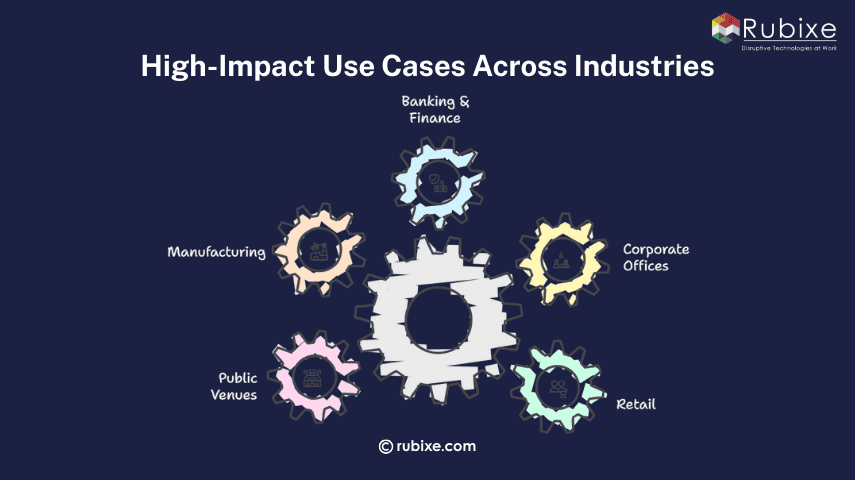
High-Impact Use Cases Across Industries
- Retail: Artificial Intelligence face recognition helps prevent theft by identifying repeat offenders, detecting suspicious behaviour early, and improving staff safety on the shop floor.
- Corporate Offices: It secures restricted zones and sensitive data centres by ensuring only authorised individuals gain access, reducing internal and external risks.
- Banking & Finance: Artificial Intelligence face recognition prevents identity fraud and unauthorised access by verifying identities accurately across branches and secure facilities.
- Manufacturing: It controls entry to hazardous or high-value areas, ensuring compliance with safety protocols and protecting critical assets.
- Public Venues: AI enhances crowd safety by monitoring large gatherings, detecting potential threats early, and enabling faster responses to incidents.
Accuracy Matters When Margins Are Tight
When margins are tight, accuracy becomes critical. False alarms drain time and resources, while missed threats can cause irreversible damage, making precise, reliable security essential for protecting both operations and profitability.
Why AI Outperforms Manual Monitoring
- Operates Continuously Without Fatigue: Artificial Intelligence face recognition monitors environments around the clock, eliminating human fatigue and reducing the risk of oversight.
- Maintains Consistent Accuracy: Unlike manual monitoring, AI delivers uniform performance across shifts, locations, and conditions.
- Learns From New Data Patterns: The system improves over time by adapting to evolving behaviours, threats, and environments.
- Performs in Real Time: Instant detection and response enable faster action when seconds matter.
- Reliability Under Pressure: This level of consistency and intelligence is critical when teams are lean and operating under high-stakes conditions.
How Competitive Advantage Quietly Shifts
Organisations that adopt Artificial Intelligence face recognition gain a significant edge in security. They can detect potential threats much earlier than traditional methods, respond to incidents more quickly, and create safer environments without disrupting daily operations. Over time, these systems operate so seamlessly that the improved security becomes part of the organisation’s everyday experience; by the time the benefits are fully visible, the gaps and vulnerabilities that once existed feel as though they never existed at all.
What Responsible AI Face Recognition Looks Like
- Clear consent and usage policies
- Secure data storage and encryption
- Bias-aware model training
- Transparent decision logic
- Compliance with data protection regulations
What Makes Implementation Effective
Successful Artificial Intelligence face recognition deployments depend on more than just technology. They require clean, high-quality data, clearly defined access and alert rules, seamless integration with existing systems, and ongoing monitoring and tuning. Without a strategic approach, even the most advanced technology cannot deliver meaningful or reliable outcomes.
What Leaders Look for in Protection Systems
- Explainable Alerts, Not Black Boxes: Artificial Intelligence face recognition systems provide clear, understandable alerts that show why a decision was made, ensuring transparency and reducing uncertainty for teams.
- Consistent Performance Metrics: Reliable and measurable performance ensures that security outcomes can be tracked, evaluated, and improved over time.
- Secure, Tamper-Proof Infrastructure: Protecting the underlying systems and data prevents manipulation, breaches, or unauthorised access, maintaining the integrity of security operations.
- Clear Accountability: Defined responsibilities and audit trails ensure that actions and decisions are traceable, reinforcing trust across the organisation.
- Understandable and Dependable Security: When Artificial Intelligence face recognition is transparent, consistent, and secure, it builds confidence among leaders, staff, and customers, making trust an integral part of its deployment.
Protection is the foundation of confidence, growth relies on trust, and trust relies on safety. AI face recognition goes beyond identifying faces; it safeguards people, assets, and reputations when it matters most. In high-risk, competitive markets, intelligent protection is essential. Organisations that adopt it early not only stay secure, but they also gain a clear advantage.























Sign in to leave a comment.