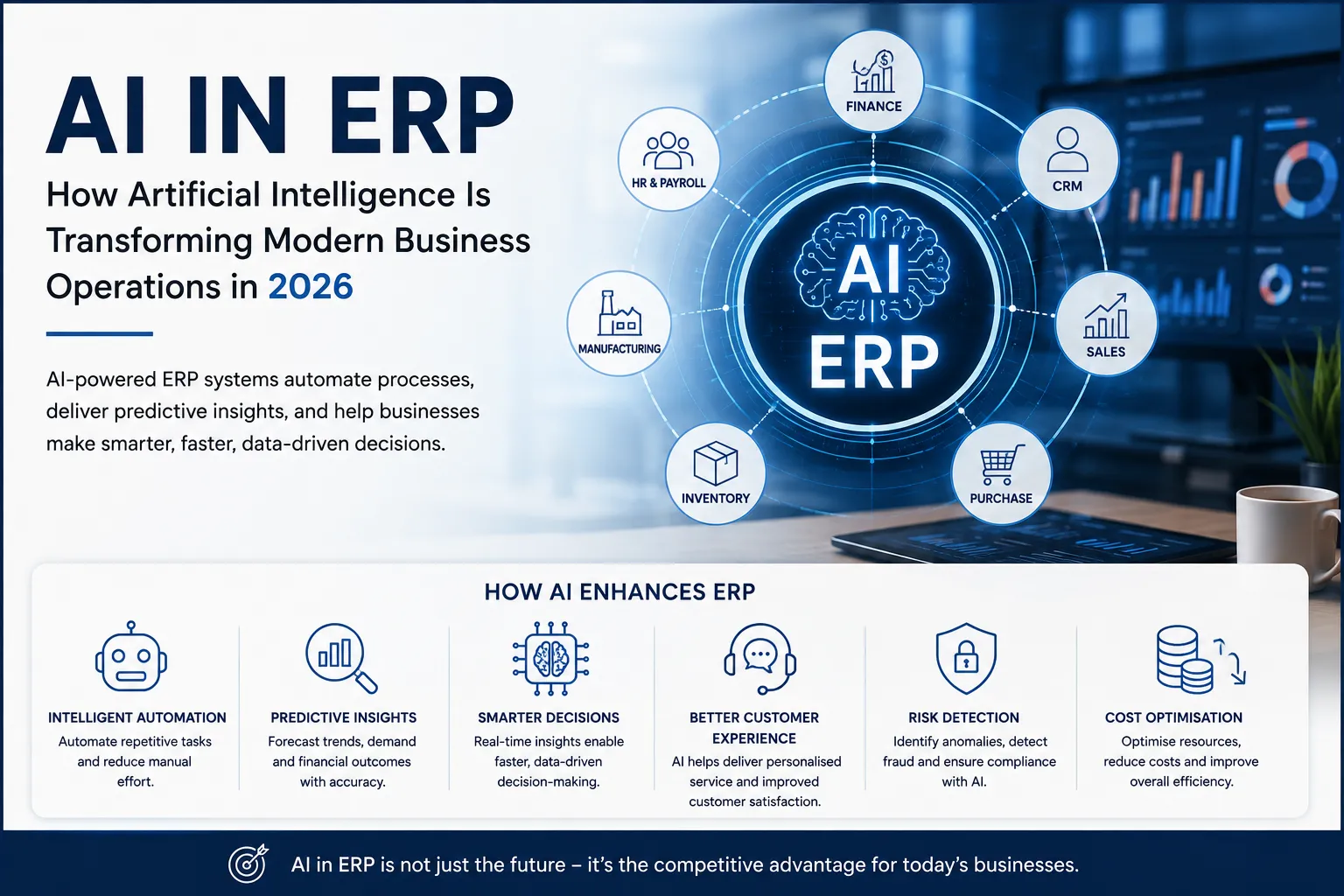

Artificial Intelligence (AI) is no longer a futuristic concept—it is becoming a core component of modern Enterprise Resource Planning (ERP) systems. In 2026, businesses are increasingly combining ERP development services with AI-powered ERP solutions to automate routine processes, gain predictive insights, improve customer experiences, and make faster, data-driven decisions. Organisations that invest in intelligent ERP platforms are better positioned to improve efficiency, reduce operational costs, and accelerate digital transformation.
Traditional ERP systems centralise business operations by integrating finance, inventory, procurement, manufacturing, sales, and human resources into one platform. By adding AI capabilities, organisations can move beyond automation to intelligent decision-making, helping teams work more efficiently while reducing manual effort.
For businesses in Singapore and across the globe, adopting AI in ERP is becoming a strategic investment that supports digital transformation and long-term competitiveness.
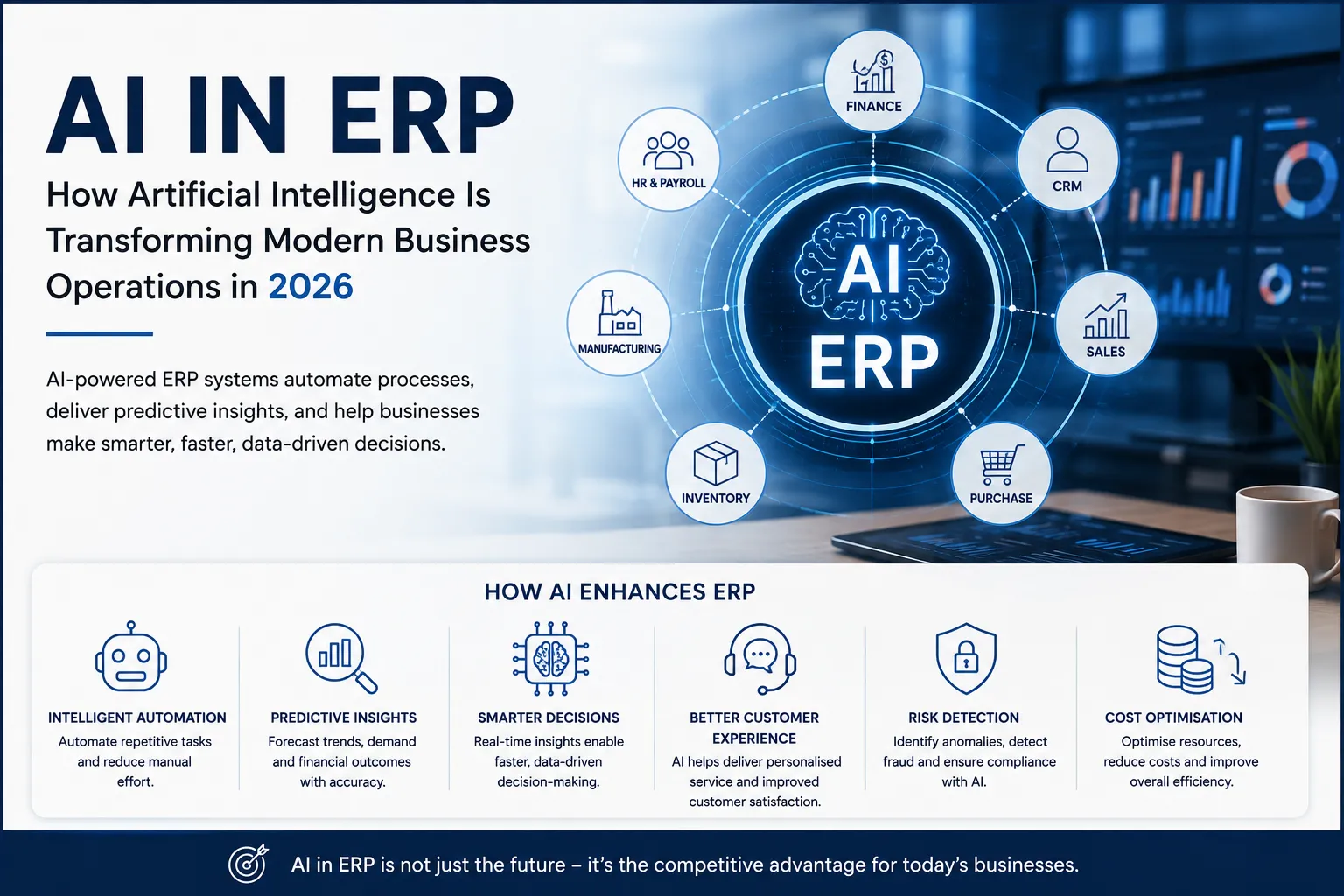
What Is AI in ERP?
AI in ERP refers to the integration of Artificial Intelligence technologies into Enterprise Resource Planning software. These technologies enable ERP systems to analyse large volumes of data, recognise patterns, generate insights, automate repetitive tasks, and support informed business decisions.
Unlike conventional ERP systems that rely on manual inputs and predefined workflows, AI-powered ERP platforms continuously learn from operational data, allowing businesses to respond more effectively to changing market conditions.
Common AI technologies used in ERP include:
- Machine Learning (ML)
- Natural Language Processing (NLP)
- Predictive Analytics
- Intelligent Process Automation
- Computer Vision
- AI-powered Chatbots
- Recommendation Engines
Together, these technologies transform ERP software into an intelligent business platform.
Why AI in ERP Matters in 2026
Businesses generate more operational data than ever before. However, collecting data alone is not enough. Organisations need systems capable of analysing information quickly and converting it into actionable insights.
AI bridges this gap by helping businesses:
- Automate repetitive administrative tasks
- Improve forecasting accuracy
- Reduce operational costs
- Enhance customer service
- Detect anomalies and risks
- Optimise supply chain operations
- Increase employee productivity
As organisations embrace digital transformation, AI-enabled ERP systems provide the intelligence needed to remain agile and competitive.
Key Applications of AI in ERP
Intelligent Process Automation
One of the biggest advantages of AI in ERP is the automation of routine business processes.
Instead of manually processing invoices, approving purchase requests, or updating inventory records, AI can automate these workflows while reducing errors.
Examples include:
- Automated invoice processing
- Purchase order approvals
- Inventory replenishment
- Employee expense validation
- Customer enquiry routing
This allows employees to focus on strategic initiatives rather than repetitive administrative work.
Predictive Analytics for Better Decision-Making
Traditional ERP systems primarily report historical data. AI-powered ERP systems go a step further by predicting future business outcomes.
Using predictive analytics, organisations can forecast:
- Product demand
- Sales trends
- Cash flow
- Inventory requirements
- Equipment maintenance
- Customer purchasing behaviour
These insights enable business leaders to make proactive decisions rather than reacting to problems after they occur.
Smarter Inventory Management
Inventory management remains one of the most critical functions within ERP software.
AI improves inventory accuracy by analysing historical sales, seasonal demand, supplier performance, and purchasing patterns.
Benefits include:
- Reduced stock shortages
- Lower inventory carrying costs
- Improved warehouse efficiency
- Faster order fulfilment
- Better supplier planning
This is particularly valuable for retail, manufacturing, wholesale, and logistics businesses.
AI-Powered Financial Management
Finance departments can significantly benefit from AI-enabled ERP systems.
Artificial Intelligence helps automate financial operations by:
- Categorising transactions
- Detecting unusual spending patterns
- Identifying duplicate invoices
- Predicting cash flow
- Supporting budgeting
- Simplifying financial reporting
These capabilities improve financial accuracy while reducing manual workload.
Enhanced Customer Relationship Management
AI enhances ERP-integrated CRM systems by providing deeper customer insights.
Businesses can:
- Predict customer behaviour
- Personalise communications
- Identify upselling opportunities
- Improve customer retention
- Automate lead scoring
- Recommend products and services
As customer expectations continue to evolve, AI helps organisations deliver faster and more personalised experiences.
AI for Manufacturing Operations
Manufacturing companies are increasingly integrating AI with ERP software to improve production efficiency.
Applications include:
- Predictive equipment maintenance
- Production scheduling
- Quality control
- Resource planning
- Capacity forecasting
- Material optimisation
These capabilities reduce downtime while improving overall manufacturing performance.
AI in ERP Is Redefining ERP Development Services
As AI capabilities continue to evolve, ERP development services are no longer limited to software implementation and system integration. Modern ERP providers now develop intelligent solutions that leverage Artificial Intelligence to automate workflows, analyse business data, and deliver predictive insights.
Businesses investing in AI-powered ERP systems benefit from customised automation, real-time reporting, smart inventory management, and AI-driven financial forecasting. Professional ERP development services and ERP implementation services also ensure seamless integration with existing business applications, enabling organisations to maximise productivity while preparing for future growth.
Whether implementing a new ERP solution or upgrading an existing platform, choosing an experienced ERP development partner is essential for unlocking the full potential of Artificial Intelligence.
Benefits of AI in ERP
Businesses implementing AI-powered ERP solutions experience measurable operational improvements.
Increased Productivity
AI automates repetitive tasks, allowing employees to focus on strategic and value-added activities.
Faster Decision-Making
Real-time analytics provide managers with instant access to actionable business insights.
Improved Accuracy
AI reduces human error in data entry, reporting, forecasting, and financial processes.
Better Customer Experience
AI enables quicker response times, personalised communication, and more efficient service delivery.
Lower Operating Costs
Automation minimises administrative work, improves resource utilisation, and reduces unnecessary expenses.
Stronger Business Agility
AI helps organisations respond rapidly to changing customer demands, supply chain disruptions, and market trends.
AI and ERP Automation
ERP automation has evolved significantly over recent years.
Today's intelligent ERP systems can automatically:
- Generate reports
- Approve workflows
- Detect business anomalies
- Schedule maintenance
- Process documents
- Monitor compliance
- Analyse supplier performance
- Recommend purchasing decisions
This level of automation improves operational efficiency while enabling organisations to scale without proportionally increasing administrative workloads.
AI in ERP for Singapore Businesses
Singapore continues to lead digital transformation across Southeast Asia.
Businesses are investing in AI-powered ERP solutions to improve productivity while meeting local regulatory requirements.
AI-enabled ERP systems support:
- GST management
- Financial reporting
- Payroll automation
- Inventory optimisation
- Multi-company operations
- Multi-currency accounting
- Procurement management
As Singapore organisations embrace Industry 4.0, AI-powered ERP platforms are becoming a competitive advantage across manufacturing, retail, logistics, healthcare, and professional services.
Challenges of Implementing AI in ERP
While AI offers significant benefits, successful implementation requires careful planning.
Common challenges include:
- Poor data quality
- Legacy software integration
- Employee adoption
- Cybersecurity concerns
- Skills shortages
- Change management
Working with experienced ERP implementation partners helps businesses minimise these challenges and maximise return on investment.
How to Prepare Your Business for AI-Powered ERP
Before implementing AI in ERP, organisations should:
- Assess current business processes
- Identify automation opportunities
- Improve data quality
- Define measurable objectives
- Choose scalable ERP software
- Train employees
- Partner with experienced ERP specialists
A structured implementation strategy ensures long-term success.
The Future of AI in ERP
Artificial Intelligence will continue to reshape ERP systems over the coming years.
Future innovations are expected to include:
- Autonomous business processes
- Advanced conversational AI assistants
- Hyperautomation across departments
- Generative AI for business reporting
- Intelligent procurement recommendations
- AI-powered compliance monitoring
- Self-learning ERP platforms
Businesses that invest early in intelligent ERP solutions will be better positioned to adapt to future market demands.
Why Choose the Right ERP Implementation Partner
Technology alone does not guarantee success. The expertise of your ERP implementation partner plays a vital role in achieving business outcomes.
An experienced ERP development company can help organisations:
- Select the right ERP platform
- Customise workflows
- Integrate third-party applications
- Migrate business data securely
- Train employees effectively
- Provide long-term technical support
For businesses seeking ERP software in Singapore, working with specialists who understand local regulations and business processes can significantly improve implementation success.
Frequently Asked Questions
What is AI in ERP?
AI in ERP is the integration of Artificial Intelligence technologies into Enterprise Resource Planning systems to automate processes, analyse data, generate insights, and support better business decisions.
How does AI improve ERP software?
AI enhances ERP software by automating repetitive tasks, improving forecasting accuracy, reducing manual errors, and providing predictive analytics for smarter decision-making.
Which industries benefit most from AI-powered ERP?
Manufacturing, retail, healthcare, logistics, finance, wholesale distribution, and professional services can all benefit significantly from AI-powered ERP solutions.
Is AI in ERP suitable for SMEs?
Yes. Modern cloud-based ERP platforms make AI capabilities accessible to small and medium-sized businesses, enabling them to automate operations and improve efficiency without significant infrastructure investments.
Why should businesses in Singapore adopt AI-powered ERP?
AI-powered ERP helps Singapore businesses improve operational efficiency, enhance compliance, optimise resources, and support digital transformation in an increasingly competitive business environment.
Conclusion
Artificial Intelligence is transforming the future of Enterprise Resource Planning by making business systems smarter, faster, and more efficient. From predictive analytics and intelligent automation to enhanced customer experiences and streamlined financial management, AI in ERP is enabling organisations to unlock greater value from their operational data.
As businesses continue their digital transformation journey in 2026, adopting AI-powered ERP solutions is no longer simply about keeping pace with technology—it is about building resilience, improving productivity, and creating a sustainable competitive advantage. By partnering with an experienced provider of ERP development services and ERP implementation services, organisations can successfully integrate AI into their ERP ecosystem and prepare for the next generation of intelligent business operations.


























Sign in to leave a comment.