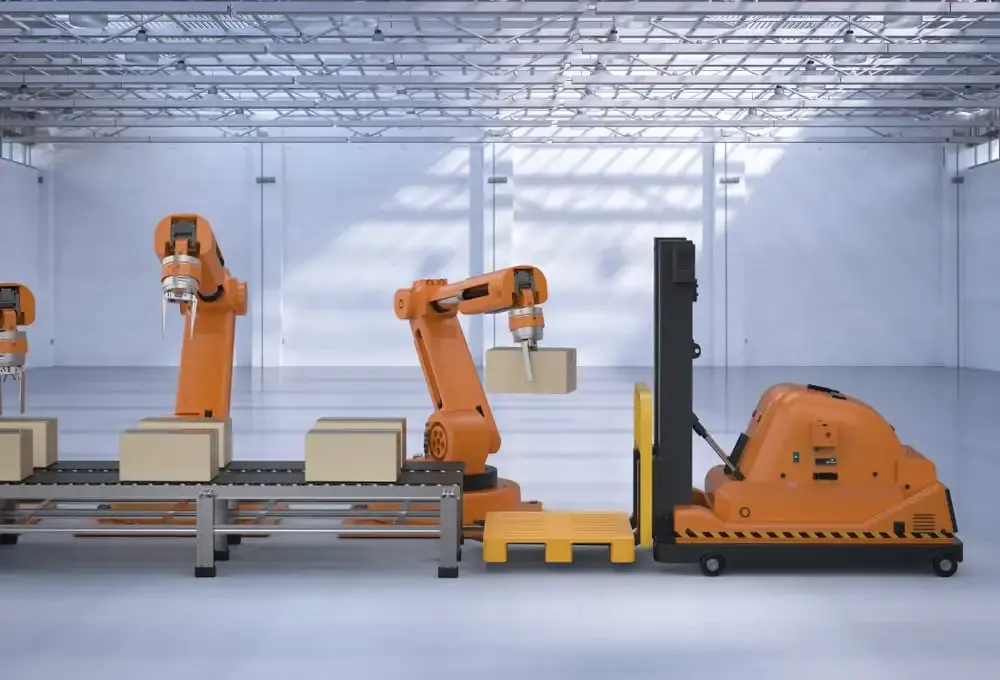

Warehouse operations have become far more complex than simply storing products. Today’s distribution centers are expected to process thousands of orders, manage fluctuating inventory levels, coordinate multiple suppliers, and meet increasingly demanding customer expectations for faster deliveries.
Traditional warehouse management systems can handle basic operations, but they often struggle to adapt to changing demand, labor shortages, and real-time decision-making.
Artificial intelligence is changing that.
By combining machine learning, computer vision, predictive analytics, and automation, AI is helping warehouses become more intelligent, efficient, and responsive. Instead of reacting to problems after they occur, businesses can anticipate disruptions, optimize inventory, and improve operational performance before issues impact customers.
This article explores how AI is transforming warehouse management, the business value it delivers, and why organizations are investing in custom AI solutions to modernize their supply chain operations.
Why Traditional Warehouse Management Is No Longer Enough?
Warehouses generate enormous amounts of operational data every day.
This includes:
- Inventory movement
- Order history
- Supplier information
- Shipping schedules
- Workforce productivity
- Equipment performance
- Customer demand
- Transportation updates
While warehouse management systems capture this information, they rarely analyze it in ways that help managers make proactive decisions.
As order volumes continue to grow, relying solely on manual planning and historical reports creates delays, inefficiencies, and unnecessary operational costs.
How AI Is Changing Warehouse Operations?
Artificial intelligence allows warehouse systems to learn from operational data and continuously improve decision-making.
Instead of relying on fixed rules, AI identifies patterns and recommends actions that improve efficiency.
Businesses are using AI to:
- Forecast inventory demand
- Optimize warehouse layouts
- Improve order picking
- Predict stock shortages
- Detect inventory discrepancies
- Schedule workforce allocation
- Automate quality inspections
- Optimize shipping priorities
The result is faster operations with fewer errors and better resource utilization.
Can AI Reduce Inventory Errors?
Inventory accuracy remains one of the biggest warehouse challenges.
Even small inventory discrepancies can create delayed shipments, excess stock, or lost revenue.
AI helps improve inventory management by analyzing purchasing trends, seasonal demand, supplier performance, and historical sales data.
Combined with barcode scanning, RFID systems, and computer vision, AI can identify inventory mismatches much earlier than traditional systems.
This allows warehouse teams to correct issues before they affect fulfillment.
How AI Helps Warehouse Teams Work More Efficiently
AI isn’t replacing warehouse employees — it helps them make better operational decisions.
For example, intelligent systems can recommend:
- Faster picking routes
- Better product placement
- Workforce scheduling adjustments
- Priority shipments
- Equipment maintenance schedules
- Dock allocation
By reducing repetitive planning tasks, warehouse staff can focus on higher-value operational activities.
Why Predictive Analytics Is Becoming Essential
Many warehouse disruptions are predictable.
AI analyzes historical and real-time data to identify patterns that indicate potential problems.
This includes predicting:
- Inventory shortages
- Supplier delays
- Equipment failures
- Seasonal demand spikes
- Transportation bottlenecks
Instead of reacting after disruptions occur, businesses can take preventive action.
Can AI Improve Warehouse Safety?
Safety is another area where AI delivers measurable value.
Computer vision systems can monitor warehouse environments to detect:
- Unsafe equipment operation
- Restricted-area access
- Missing safety equipment
- Congested work zones
- Potential collision risks
These insights help businesses improve workplace safety while reducing operational interruptions.
Why AI Works Best Alongside Existing Warehouse Systems
Many organizations assume adopting AI requires replacing their warehouse management software.
In reality, most AI initiatives enhance existing platforms rather than replacing them.
AI can integrate with:
- Warehouse Management Systems (WMS)
- Enterprise Resource Planning (ERP)
- Transportation Management Systems (TMS)
- Inventory platforms
- IoT devices
- Robotics
- Barcode and RFID systems
This allows businesses to modernize operations while protecting previous technology investments.
What Challenges Should Businesses Prepare For?
Successful AI implementation requires more than selecting the right technology.
Organizations should evaluate:
Data Quality
Accurate inventory and operational data are essential for effective AI recommendations.
Integration Complexity
AI must work seamlessly with existing warehouse software.
Workforce Adoption
Employees need training to understand AI-generated recommendations.
Scalability
Solutions should continue performing as warehouse operations expand.
Planning for these areas early improves long-term project success.
Why More Businesses Are Choosing Custom AI Solutions?
Every warehouse operates differently.
Some manage eCommerce fulfillment, while others support manufacturing, pharmaceuticals, retail, or logistics.
Because operational requirements vary, many organizations choose a custom ai development company instead of relying entirely on off-the-shelf warehouse automation tools.
Custom AI solutions can be designed around:
- Existing workflows
- Industry regulations
- Business rules
- Warehouse layouts
- Integration requirements
- Operational goals
This flexibility often delivers stronger long-term business value.
Why AI Development Services Matter for Enterprise Warehouses
Building AI-powered warehouse systems requires expertise across data engineering, machine learning, cloud infrastructure, enterprise integrations, and automation.
Professional AI development services help businesses:
- Assess AI readiness
- Build predictive inventory models
- Develop intelligent warehouse automation
- Integrate AI with enterprise systems
- Optimize operational performance
- Continuously improve AI models
Many global organizations also seek AI development services in the USA when developing enterprise-grade warehouse solutions that must meet high standards for scalability, security, and performance.
What Should You Look for in an AI Development Partner?
Selecting the right technology partner is critical for warehouse modernization.
An experienced Artificial intelligence development company should offer:
- Supply chain expertise
- Enterprise integration experience
- Machine learning capabilities
- Cloud architecture knowledge
- AI governance practices
- Long-term optimization support
Beyond technical skills, businesses should look for partners who understand operational workflows and can align AI initiatives with measurable business outcomes.
How SoluLab Helps Businesses Build Smarter Warehouse Operations?
Modern warehouses require more than automation — they need intelligence that supports faster, data-driven decisions.
SoluLab works with businesses to design AI-powered warehouse solutions that improve inventory visibility, automate operational workflows, optimize logistics, and enhance supply chain efficiency. By combining enterprise integration expertise with advanced AI technologies, organizations can build scalable systems that adapt to changing demand while improving productivity across warehouse operations.
Rather than replacing existing infrastructure, the focus is on helping businesses make their warehouse ecosystems smarter and more responsive.
The Future of AI in Warehouse Management
Warehouse operations will continue evolving as AI becomes more deeply integrated into supply chains.
Emerging innovations include:
- Autonomous warehouse AI agents
- Predictive inventory optimization
- Intelligent robotics coordination
- Digital warehouse twins
- Real-time supply chain decision support
- Autonomous replenishment systems
- AI-driven demand forecasting
Organizations that begin modernizing today will be better positioned to handle future supply chain complexity while maintaining operational efficiency.
Final Thoughts
Warehouse management is no longer just about moving inventory — it’s about making faster, smarter operational decisions.
Artificial intelligence enables businesses to improve inventory accuracy, reduce costs, optimize workflows, and create more resilient supply chain operations.
As demand for intelligent logistics continues to grow, partnering with experienced AI development companies that provide strategic AI development services can help organizations build scalable warehouse solutions that deliver measurable operational and financial value.


























Sign in to leave a comment.