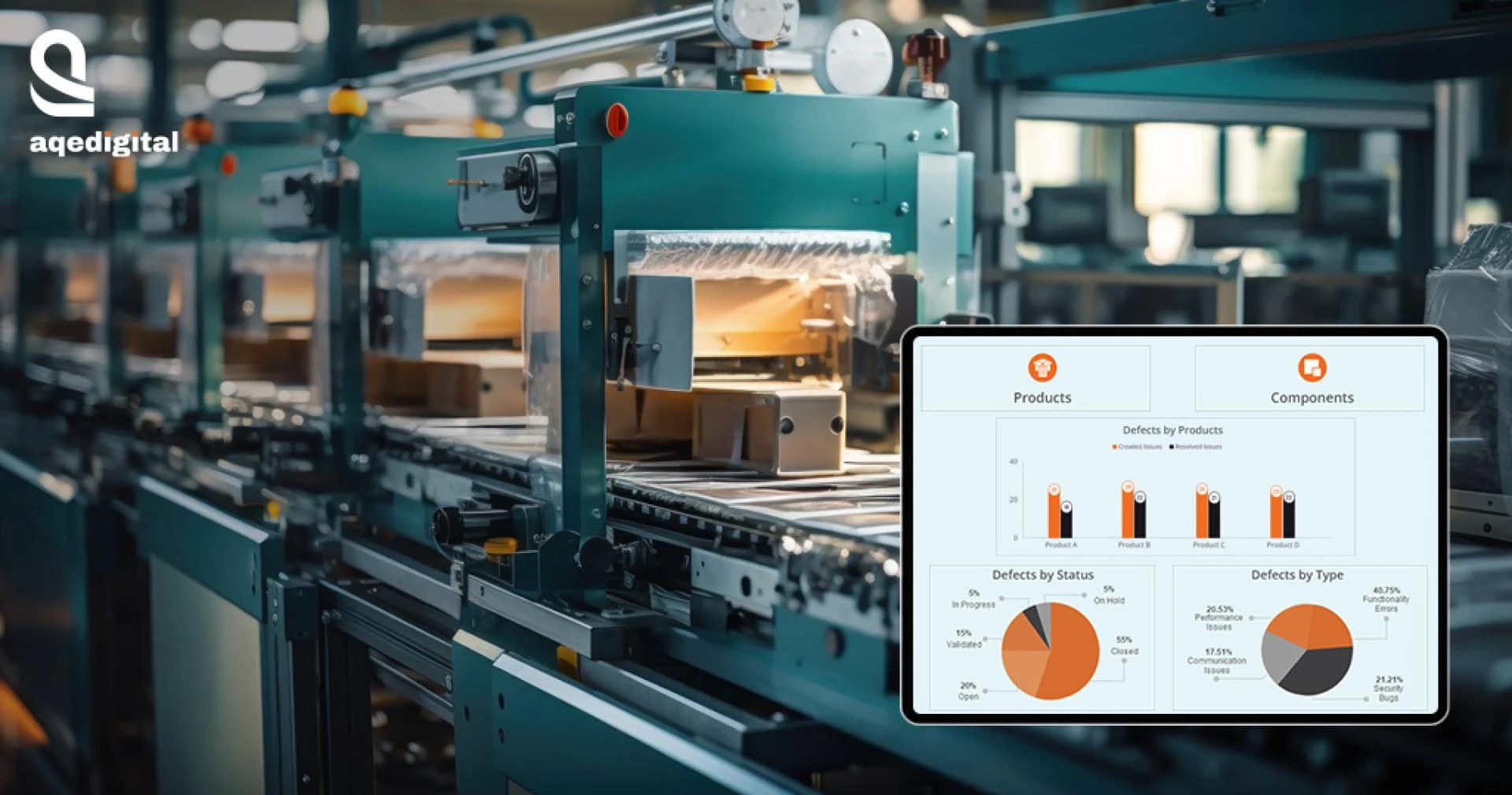

Why Traditional Quality Control Falls Short
In conventional manufacturing, quality control is often reactive, time-consuming, and error-prone. Human inspectors, limited by fatigue and bias, can only check a fraction of products, which results in:
- Missed defects
- Production delays
- Increased waste and cost
According to McKinsey, manufacturers can reduce scrap rates by up to 90% with the integration of advanced analytics and AI into quality control systems.
How AI Enhances Quality Control
AI brings a new level of accuracy and automation to the factory floor:
1. Real-Time Defect Detection
AI-powered vision systems detect anomalies faster than the human eye. Trained with thousands of defect images, machine learning algorithms identify flaws in milliseconds, during production, not after.
✅ Result: Reduced product recalls and faster response times.
2. Predictive Quality Analytics
AI can forecast when machines are likely to produce errors based on patterns, usage, or sensor data. This allows proactive maintenance and process adjustments.
✅ Result: Less downtime and higher product consistency.
3. Automated Visual Inspection
Using computer vision and edge AI devices, manufacturers can inspect 100% of items on the line without slowing down production. According to Capgemini, 75% of industrial companies have seen over 10% improvement in product quality from AI adoption
✅ Result: Reduced labor dependency and operational costs.
ndustry-Specific Applications
Automotive
AI systems catch micro-cracks, paint inconsistencies, or improper welds in real time—essential for safety-critical components.
FMCG & Packaging
Computer vision verifies labels, expiry dates, and seal integrity across thousands of units per hour.
Pharmaceuticals
AI ensures vial integrity, label accuracy, and compliance with regulations—especially crucial in sterile environments.
How AQE Digital Delivers AI-Powered Quality Control
AQE Digital specializes in building AI and ML-powered automation platforms for manufacturing firms across sectors.
Their solutions include:
- Edge-based visual inspection using real-time camera feeds
- ML models trained on historical defect data
- Cloud integration with ERP systems
- Custom dashboards for actionable insights
With domain-specific models, AQe helps manufacturers transition from reactive to predictive quality control, accelerating digital transformation.
Future Outlook: Smarter, Safer, Faster
AI adoption in quality control is not just a trend—it’s a long-term value driver. With the rise of Industry 4.0 and Smart Factories, automated quality control is becoming a competitive necessity.
According to PwC, AI can boost manufacturing sector profits by up to $3.8 trillion globally by 2030.
In Conclusion
AI is redefining how manufacturers detect, prevent, and manage defects. From automated inspections to predictive analytics, the shift toward AI-based quality control offers unmatched benefits—improved accuracy, cost savings, and operational excellence.
📖 Read the original blog for deeper insights and use-case scenarios here:
👉 AQE Digital Blog: AI in Quality Control for Manufacturing




























Sign in to leave a comment.