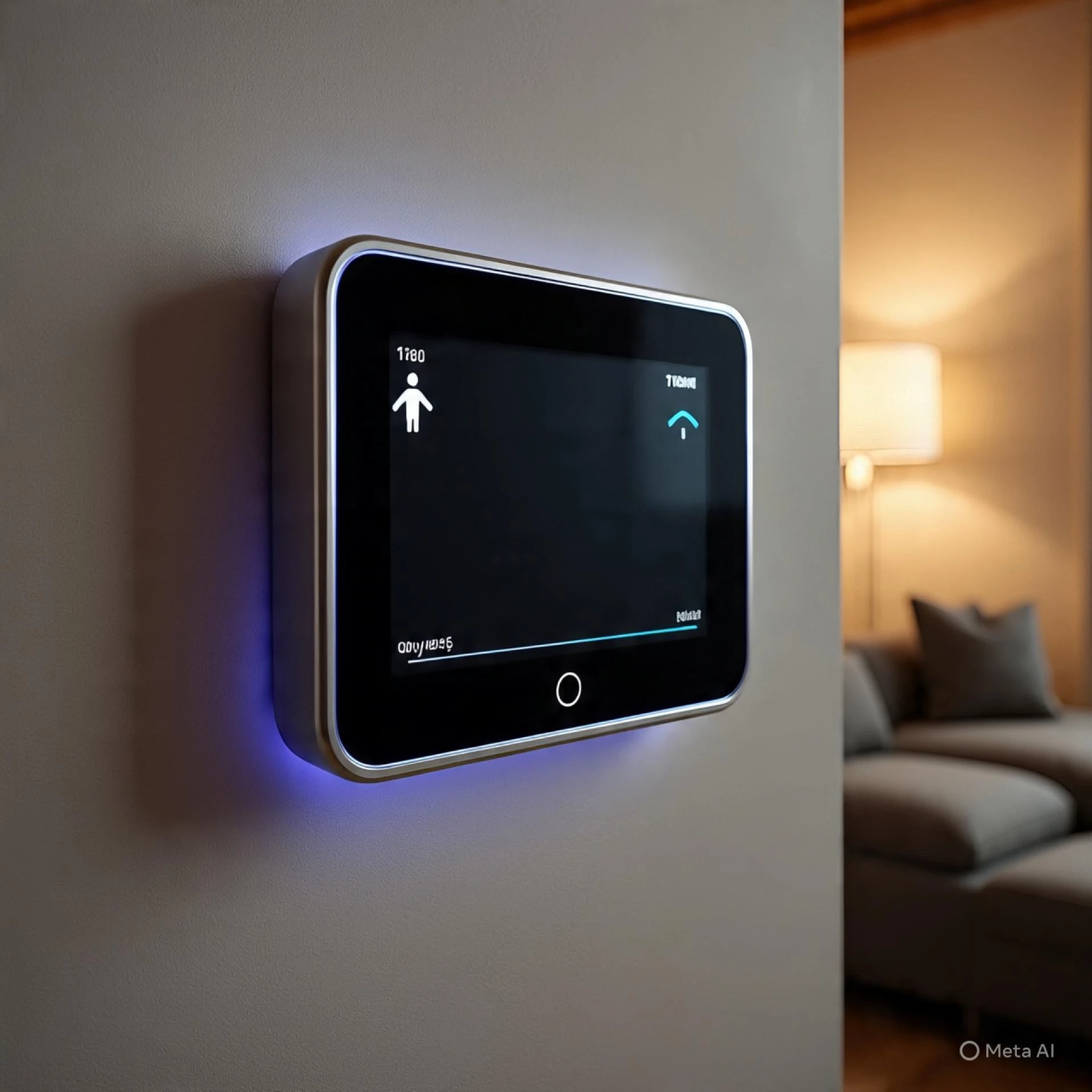
Keeping a home comfortable while minimizing energy bills has always been a challenge. Traditional thermostats allow manual temperature adjustments but cannot detect when someone is home or which rooms are in use. This leads to wasted energy and higher electricity costs.
The AI-powered thermostat with occupancy detection is a modern solution to this problem. By combining artificial intelligence with smart motion sensors, it can learn your daily routine, identify which rooms are occupied, and automatically adjust heating or cooling accordingly. This technology ensures a comfortable environment, reduces energy waste, and saves money in the long run.
In this article, we will explore how these thermostats work, the advantages of occupancy detection, their energy-saving capabilities, integration with smart home systems, tips for selecting the right model, and what the future holds for AI thermostat technology.
How AI-powered thermostat actually works
An AI-powered thermostat with occupancy detection functions much differently than traditional thermostats. While conventional models require manual adjustments, AI thermostats continuously analyze patterns in your daily life and make automatic temperature changes to optimize comfort and efficiency.
The AI system monitors your routine by learning when you wake up, leave for work, return home, and go to sleep. Using this information, it creates a personalized heating and cooling schedule. The thermostat ensures rooms are warm or cool when needed and conserves energy when no one is present.
Occupancy detection plays a crucial role. Motion sensors detect whether a room is in use. If a room is empty, the thermostat lowers or raises the temperature to save energy. As soon as someone enters, the temperature adjusts back to a comfortable level.
Some advanced models also access external data such as weather forecasts, smartphone locations, or calendar events. For example, if the system detects you are returning home early, it can preheat or precool your home to the desired temperature. This combination of AI learning and occupancy detection guarantees a comfortable, energy-efficient home at all times.
Benefits of occupancy detection for homeowners
The occupancy detection feature offers significant advantages for any household. Traditional thermostats often waste energy by heating or cooling empty rooms. Occupancy detection solves this problem by adjusting the temperature only when someone is present.
A key benefit is cost savings. By reducing heating or cooling in unused rooms, households can save up to 20% on annual energy bills. Over time, these savings can cover the cost of purchasing and installing a smart thermostat.
Another benefit is enhanced comfort. You no longer need to walk into a cold house during winter or a hot house during summer. The thermostat detects your presence and ensures the temperature is comfortable immediately.
Occupancy detection also helps families with different schedules. In homes where members occupy different rooms at different times, the thermostat focuses only on occupied areas, preventing wasted energy.
Additionally, this feature promotes eco-friendly living. Reduced energy use lowers carbon emissions, making your home more sustainable. Occupancy detection combines comfort, convenience, energy efficiency, and environmental responsibility in a single feature, making it essential for modern smart homes.
Energy savings through AI thermostat technology
Energy efficiency is one of the main reasons homeowners invest in an AI-powered thermostat with occupancy detection. Heating and cooling often account for the largest portion of household energy bills, and traditional thermostats can be inefficient.
AI-powered thermostats optimize energy usage by learning daily routines. For instance, if you leave home at 8 a.m., the thermostat lowers heating or cooling during the day and restores the temperature shortly before your return. This strategy ensures comfort while reducing energy waste.
Some advanced models even integrate with energy providers to reduce usage during peak hours when electricity rates are higher. This not only saves money but also helps maintain a stable power grid.
Studies indicate that smart thermostats can cut 15–25% of annual heating and cooling costs. For homes with high energy bills, this can translate into hundreds of dollars saved each year. Additionally, reduced energy use lowers carbon emissions, making AI-powered thermostats both cost-effective and environmentally responsible.
By combining AI learning with occupancy detection, homeowners enjoy financial savings, comfort, and sustainable living without extra effort.
Smart home integration improves convenience
One of the main advantages of the AI-powered thermostat with occupancy detection is its compatibility with smart home systems. Integration allows seamless automation and adds significant convenience to daily life.
Most models work with voice assistants such as Amazon Alexa, Google Assistant, or Apple Siri. You can adjust the temperature using voice commands like “Set the living room to 72 degrees” without touching the thermostat.
Mobile apps offer additional control. You can monitor and adjust your home’s temperature from anywhere—whether at work, traveling, or shopping. Forgot to lower the heat before leaving? You can fix it remotely within seconds.
The thermostat can also communicate with other smart devices such as lights, smart locks, and blinds. When you leave home and lock the door, the thermostat automatically reduces energy usage. Upon returning, lights turn on, doors unlock, and the temperature adjusts to your preferred level.
Integration creates a connected home where devices work together to optimize comfort, save energy, and simplify life. This level of automation provides convenience and efficiency beyond what traditional thermostats can offer.
Tips for choosing the right smart thermostat
Choosing the right AI-powered thermostat with occupancy detection is essential for maximizing benefits. Not all models offer the same features, so evaluating your needs carefully is important.
Compatibility: Ensure the thermostat works with your existing heating and cooling system. Some models support only specific HVAC setups.
Features: While all AI thermostats include occupancy detection and AI learning, some advanced models offer geofencing, energy reports, or air quality monitoring. Choose the features that fit your lifestyle.
Ease of use: The thermostat should be easy to install and operate. Look for models with intuitive mobile apps and clear step-by-step instructions.
Brand reputation: Established brands provide software updates, warranties, and reliable customer support. Reading reviews can help you select a dependable option.
Budget: Smart thermostats cost more than traditional models, but energy savings usually cover the price within a few years. Consider it a long-term investment in comfort, convenience, and efficiency.
By considering these factors, you can choose a thermostat that improves comfort, reduces energy bills, and integrates seamlessly into your home.
The future of AI thermostat technology
The AI-powered thermostat with occupancy detection represents the future of home comfort and energy efficiency. As technology evolves, these devices are becoming smarter, more connected, and more efficient.
Future models may integrate with renewable energy sources such as solar panels or home batteries. They could automatically determine when to use stored energy versus grid electricity, reducing costs and environmental impact.
Health-focused features may also appear. Advanced thermostats could monitor indoor air quality, humidity, and allergens, adjusting settings automatically to improve wellness. Families with children or individuals with respiratory concerns would benefit significantly.
Artificial intelligence will continue to evolve. Thermostats may predict comfort needs based on activity, mood, or wearable devices. With the expansion of the Internet of Things (IoT), thermostats could become the central hub of smart homes, controlling temperature, lighting, security, and energy consumption simultaneously.
Investing in an AI-powered thermostat today is not just about comfort—it is a step toward a smarter, more sustainable, and fully connected home.
Conclusion
The AI-powered thermostat with occupancy detection is more than a temperature control device. It learns your habits, detects occupancy, and automatically adjusts heating and cooling to provide comfort, save energy, and reduce costs.
With smart home integration, remote control, and eco-friendly operation, these thermostats provide convenience and efficiency that traditional models cannot match. As AI technology advances, these devices will continue improving comfort, energy efficiency, and home automation.
For homeowners seeking comfort, savings, and sustainability, an AI-powered thermostat is a smart investment for the modern home.
Frequently Asked Questions
Q1. What is an AI-powered thermostat with occupancy detection?
It is a smart thermostat that uses AI and motion sensors to detect occupancy and adjust heating or cooling automatically.
Q2. How does occupancy detection save energy?
It lowers heating or cooling in empty rooms, preventing wasted energy and reducing utility bills.
Q3. Can I control it remotely?
Yes, most models include mobile apps for adjusting the temperature from anywhere.



















Sign in to leave a comment.