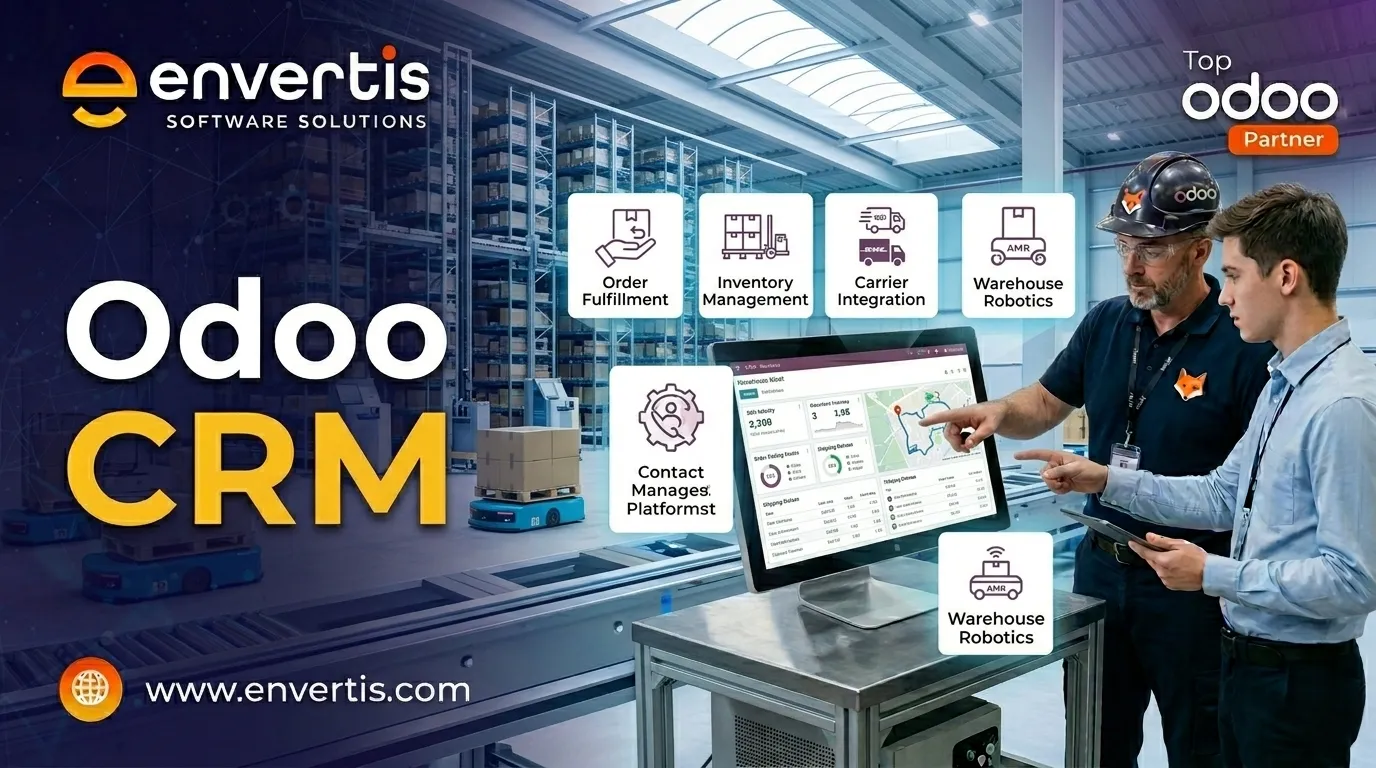

Every day, distribution companies throughout Australia lose profit simply because their systems are not aligned, with no real follow-up with customers and no real trust in their sales pipeline.
Odoo CRM is going to help change that, quickly. This article lays out how Odoo CRM assists distributors, how AI-powered pricing prediction will revolutionise the industry and why all businesses in Australia should be using Odoo.
The Cost of a Broken Sales Pipeline
The stakes have never been higher. According to Salesforce's State of Sales report, sales reps spend only 28% of their week actually selling; the rest gets consumed by data entry, chasing approvals, and switching between tools. For distribution businesses managing complex buyer relationships, bulk orders, and tight margins, that number is a direct hit to the bottom line.
Meanwhile, HubSpot research reveals that companies with well-defined CRM processes see up to 29% more revenue growth than those without. The problem is not the ambition, it is the tool. Many distributors in Australia are still running on spreadsheets, legacy ERPs, or siloed software that cannot talk to each other. The result is a sales team that is reactive rather than strategic.
Why Odoo CRM Stands Apart From the Rest
Not all CRM platforms are built for the realities of distribution. Most are designed for service businesses or software companies — not for businesses managing hundreds of SKUs, tiered pricing, and long B2B sales cycles.
Odoo CRM is purpose-built to handle complexity without creating it. It gives sales teams a single, clean view of every lead, opportunity, and customer interaction. Deals move through a visual pipeline that is easy to manage and hard to ignore. Automated follow-up reminders, email integration, and real-time reporting mean no lead goes cold and no deal falls through the cracks.
What makes it genuinely different is the depth of integration. As part of the broader Odoo ERP software ecosystem in Australia, the CRM does not operate in isolation. It connects directly to inventory, purchasing, invoicing, and fulfilment, so when a sales rep closes a deal, the entire business moves with it.
AI-Powered Pricing Predictions Integrated With Odoo CRM for Distributors
This is where the platform becomes a serious competitive weapon. Odoo CRM now supports AI-powered pricing intelligence, giving distribution businesses a measurable edge. Here is how it works in practice:
- Dynamic price suggestions based on customer history, order volume, and seasonal demand — so your sales reps always quote with confidence, not guesswork.
- Margin protection alerts that flag deals likely to fall below acceptable thresholds before they are submitted, protecting profitability at the point of sale.
- Competitor-aware adjustments using market signal data, helping sales teams remain competitive without a race to the bottom on price.
- Upsell and cross-sell prompts triggered by purchase pattern analysis — the AI identifies when a customer is likely to need complementary products, and surfaces the recommendation directly in the sales pipeline.
- Forecast accuracy improvements of up to 42%, according to McKinsey research on AI-assisted pricing in B2B distribution environments.
For Australian distributors operating on thin margins and managing high SKU volumes, this capability alone can transform pricing from a guessing game into a growth strategy.
Connecting the Dots With Odoo ERP in Australia
The real power of Odoo CRM is amplified when it operates within a fully connected business system. Odoo ERP in Australia is gaining serious traction because it replaces the patchwork of disconnected tools that drain time and introduce errors.
When CRM data flows directly into operations, inventory levels, supplier lead times, and delivery schedules, sales teams can make promises they can actually keep. Customers receive accurate delivery windows, finance teams get clean forecasts, and operations can plan ahead rather than scramble.
According to a 2024 report by Nucleus Research, businesses that integrate CRM with ERP see an average return of AU$8.71 for every dollar invested. That figure is hard to argue with.
The Odoo Apps Advantage: Scale Without the Complexity
One of the most underrated strengths of this platform is modularity. The suite of Odoo Apps allows businesses to start with what they need — CRM, inventory, or invoicing — and expand as the business grows. There is no expensive re-implementation, no painful data migration, and no vendor lock-in.
For distribution businesses at any stage of growth, that flexibility is not a nice-to-have. It is a strategic necessity.
Wrapping Up
In Australia, distribution is consolidating; larger companies are gaining market share by providing seamless, responsive (integrated) platforms, while smaller businesses that still rely on old tools are falling behind and becoming invisible to consumers looking for quick access to service.
The companies that take immediate action will establish a compounding advantage, whereas those that wait will have to pay a premium to catch up.
A template versus a custom solution is like fitting into an existing system or developing one that is a perfect fit for your particular needs. The Envertis team understands this distinction and uses that knowledge to assist Australian-based distribution-related businesses.



























Sign in to leave a comment.