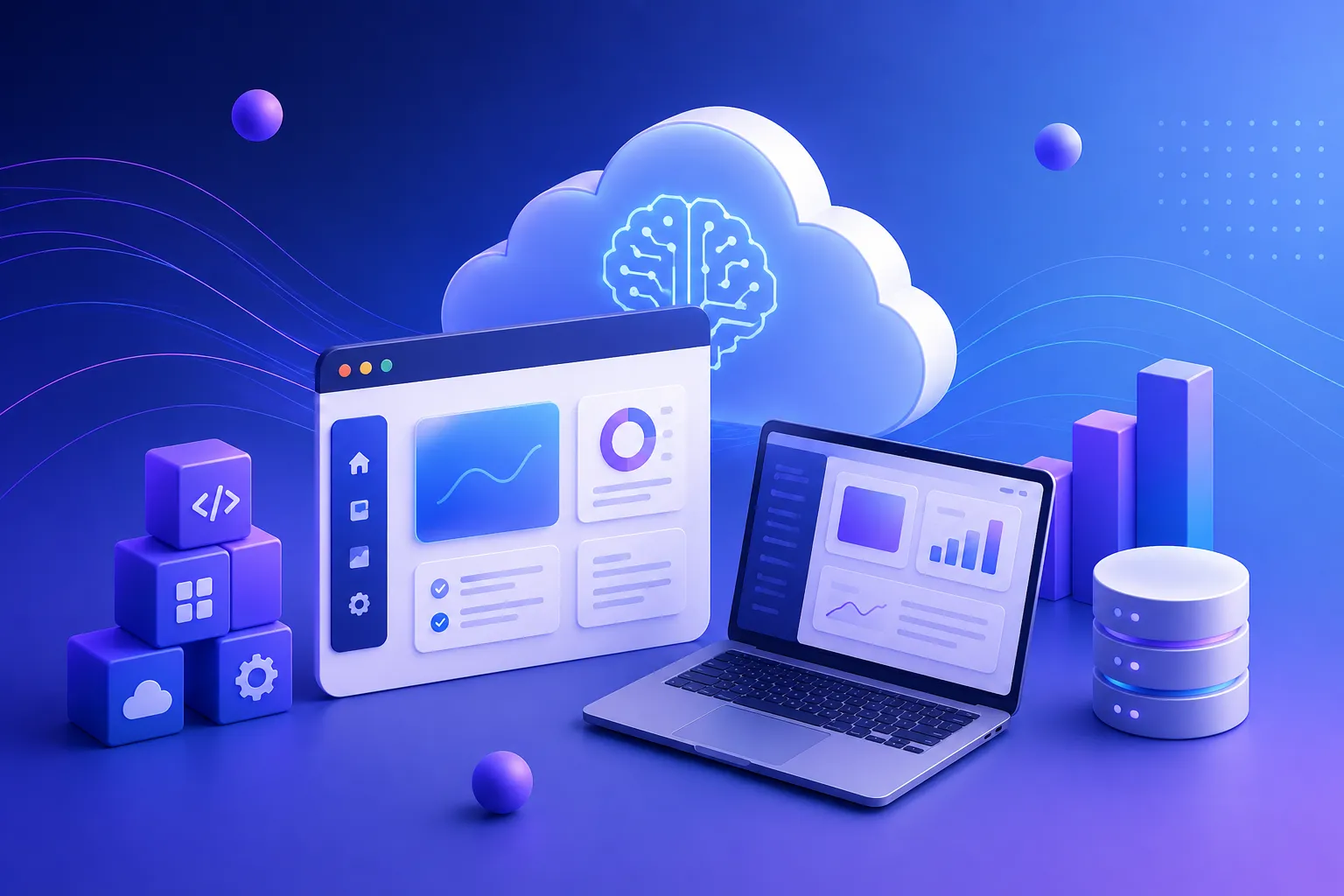

A few years back, building a SaaS product was easy to explain. You got an idea. You listed the features. You gave it to developers. They developed, tested, and successfully launched it. Then you did it again next time. It was slow, but simple. That's not true anymore.
AI is the reason. More and more teams are investing in AI SaaS development, building AI into their products from day one instead of treating it like an afterthought. You can see it in the tools developers use every day. You can see it in how apps quietly learn what a user wants. You can even see it in what a dashboard chooses to show you first.
This is happening at almost every step of building software today. And it happened fast, faster than most people expected even two years ago.
What Does AI SaaS Development Mean?
AI SaaS development means using AI somewhere in the process of building or improving a SaaS product. Maybe that's AI writing parts of the code. Maybe it's AI figuring out what a user wants, just by watching how they use the app. Sometimes the product makes a decision on its own. No human has to click "approve."
AI used to be added once software was mostly finished. Now it's often there from line one.
Why AI Is Essential for Modern SaaS Products
There's no single reason. A few things pushed at once, and AI SaaS development ended up solving more than one problem.
Work gets done faster: AI tools help write code, catch bugs early, and suggest better ways to build a feature. What used to take weeks can now take days.
Products feel more personal: People don't want generic software anymore. AI notices how a person or team actually works and adjusts on its own. A project tool might suggest deadlines based on how your team really works, not just a default setting.
Software helps you decide things: Old dashboards just showed numbers. You had to figure out what they meant. AI-powered products go a step further. They point out what matters and sometimes tell you what to do next.
It's cheaper: Testing, writing docs, basic support tickets — AI can speed a lot of this up. Small teams get more done without cutting corners.
Traditional SaaS Development Vs AI SaaS Development
| Stage | Traditional SaaS Development | AI SaaS Development |
| Planning | Manual research, guesswork on features | AI scans feedback and market data to guide decisions |
| Design | Manual mockups, tested after launch | AI predicts user behavior before testing |
| Coding | Developers write everything by hand | AI handles boilerplate, developers focus on hard problems |
| Testing | Manual QA, line-by-line checks | AI scans for bugs and security gaps faster |
| Support | Human agents handle every ticket | AI answers common questions instantly |
| Personalization | Same experience for every user | Product adjusts itself to each user's behavior |
What Makes a SaaS Product AI-Powered
There's a real difference between a product with a chatbot bolted on, and one built around AI from day one. The second kind is what people usually mean by AI-powered SaaS products.
Take a task manager. A basic one just lets you list things out. An AI-powered one might reorganize your tasks, notice a deadline is about to slip, and warn you before the project falls behind. The AI isn't a bonus feature here. That's the whole point.
This is changing what people expect from software today. People don't just want something that works. They want something that notices things and saves them a bit of thinking.
How AI Fits Into Each Step
Let's break down where AI SaaS development actually shows up, stage by stage.
It starts with planning. Instead of guessing what to build, teams let AI go through user feedback and market data to spot what's actually worth building.
During design, AI can suggest layout ideas or predict how someone might use a screen, all before it's ever shown to a real user.
Coding is probably where AI shows up the most. It takes care of the repetitive work — boilerplate, common patterns, a first pass at reviewing code — so developers can put their energy into the harder problems.
Testing gets a boost too. AI can scan through code and catch bugs or security gaps far quicker than someone checking it line by line.
Once the product is live, a lot of teams build AI support right into the app itself, so users get quick answers instead of sitting in a support queue.
Why SaaS Needs AI Now
If you're planning a SaaS product now, take this seriously. Competitors already using AI are shipping faster and building sharper products. Wait too long, and that lead becomes hard to catch up to.
Still, AI for its own sake isn't the goal. Adding it just because it's trendy usually backfires. Ask if it solves a real problem for the user. If yes, good. If not, it's not worth adding.
Conclusion
AI isn't just changing how code gets written. It's touching planning, design, testing, and how products support people after launch. SaaS product development looks different than it did a couple of years ago, and it's not slowing down. Teams that understand this shift now and use it where it actually helps tend to end up ahead of the ones who wait until they have no choice.























Sign in to leave a comment.