There is always a starting point. A classroom, usually. A mirror on the wall, a trainer explaining posture, a group of students trying to sound confident while introducing themselves. It feels simple at first.
But aviation training does not stay simple for long.
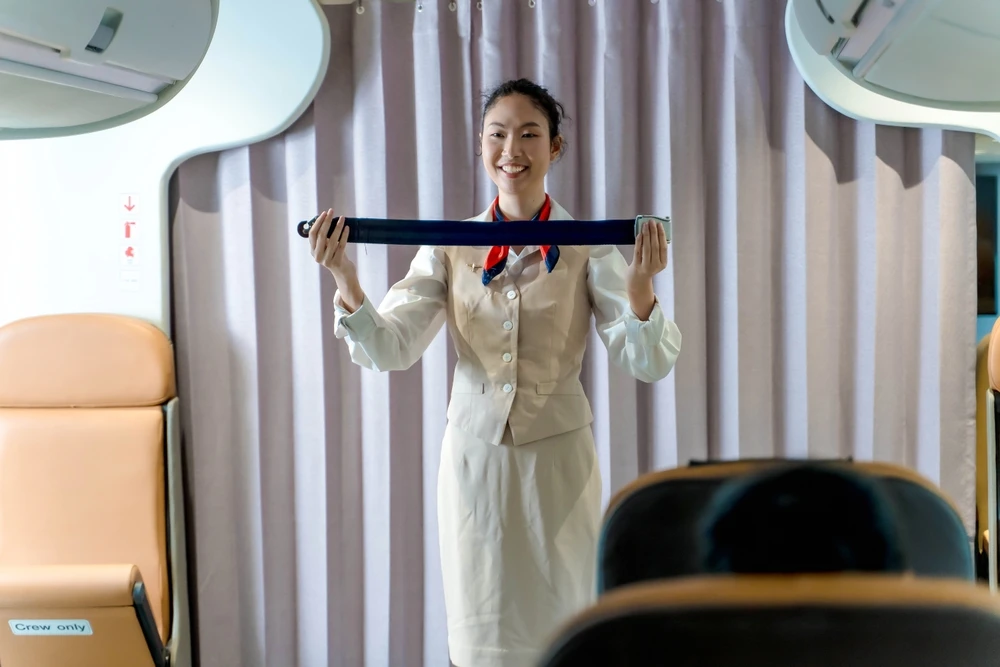
An air hostess course in Gurgaon begins in a controlled setting, yes. Quiet rooms, structured lessons, clear instructions. Then, slowly, almost without you noticing, it starts shifting. The classroom becomes a rehearsal space. And before long, you are not just learning. You are preparing for something that demands composure under pressure.
That transition, from theory to something that feels real, is where the course proves its worth.
The Classroom Phase: Where Foundations Are Built
Every journey into aviation starts with the basics. Not the kind you forget after an exam, but the kind you carry into every flight.
What You Typically Learn First
- Grooming and personal presentation
- Voice modulation and communication basics
- Introduction to airline operations
- Passenger handling fundamentals
- Safety procedures in theory
At this stage, things can feel repetitive. You practise greetings. You work on posture. You adjust your tone again and again.
It may seem small, but it is deliberate. Because in aviation, consistency matters more than occasional excellence.
When Training Starts Feeling Real
There is a moment when the routine changes. You are no longer just sitting and listening. You are standing, moving, responding. This is where a well-structured air hostess institute in Gurgaon separates itself from an average one.
The Shift to Practical Learning
- Mock cabin setups that simulate real aircraft layouts
- Role-play scenarios with unpredictable passenger behaviour
- Timed service drills that test coordination
- Emergency simulations that require quick thinking
You begin to notice something. Your responses become faster. Less rehearsed. More natural.
Communication: Moving Beyond Polished Words
At the beginning, most students focus on sounding “correct.” Clear pronunciation, proper sentences, polite phrases. But that is only the surface.
What Real Training Focuses On
| Early Learning Stage | Advanced Training Stage |
| Scripted introductions | Natural conversation flow |
| Fixed responses | Situation-based communication |
| Focus on speaking | Focus on listening and understanding |
| Practised tone | Adaptive tone based on passenger mood |
Passengers rarely remember exact words. They remember how you spoke to them. Calm. Patient. Or hurried.
That difference is learned over time.
Safety Training: Where Everything Becomes Serious
This part changes the atmosphere completely. The tone becomes sharper. Instructions are repeated. Mistakes are corrected immediately. Because safety is not flexible.
Key Areas Covered
- Aircraft safety equipment handling
- Fire response procedures
- Emergency evacuation drills
- First aid and basic medical response
- Managing in-flight incidents
In a strong air hostess institute in Gurgaon, these sessions are not rushed. They are practised until hesitation disappears.
You do not want to think twice in an emergency. Training ensures you do not have to.
Service Training: Precision Over Speed
From the outside, in-flight service looks smooth and effortless. Inside training, you realise how much coordination it takes.
What You Practise
- Meal service timing and sequencing
- Handling multiple passenger requests simultaneously
- Managing special dietary needs
- Maintaining composure during busy service periods
There is a rhythm to it. You learn it slowly. Then you repeat it until it feels natural.
Physical and Mental Conditioning
This is often underestimated. Long hours, constant movement, changing time zones. It adds up.
Training Focus
- Building stamina through repeated service drills
- Maintaining posture during extended standing hours
- Managing fatigue without affecting performance
- Staying mentally alert during long sessions
It is not about being perfect. It is about staying steady.
Grooming That Lasts Beyond the First Impression
In the early days, grooming feels like a checklist. Hair, uniform, posture. But as training progresses, it becomes more practical.
What Changes
- You learn how to maintain your appearance during long hours
- Quick refresh techniques during short breaks
- Consistency in presentation, not just at the start
Because on a real flight, first impressions are not enough. You are observed throughout.
The Role of Trainers: Experience That Shapes Learning
There is a difference between someone who teaches and someone who has lived the role. Trainers with aviation backgrounds bring something extra. They talk about situations that are not in the manual. A delayed service. A difficult passenger. A sudden announcement that changes everything.
Those insights stay with you.
From Practice to Confidence
At first, you follow instructions. Then, you begin to understand them. And somewhere along the way, you start trusting your own responses.
Signs You Are Ready
- You handle role-play scenarios without hesitation
- Your communication feels natural, not memorised
- You stay calm even when situations change quickly
- You can manage multiple tasks without losing focus
This transition is subtle. But it is important.
A Snapshot of Skill Development
| Skill Area | Classroom Learning | Real-World Application |
| Communication | Structured speaking | Adaptive interaction |
| Safety Awareness | Theoretical procedures | Immediate response actions |
| Service Skills | Step-by-step guidance | Smooth, timed execution |
| Grooming | Basic standards | Long-duration consistency |
| Team Coordination | Group activities | Seamless collaboration onboard |
The Final Stage: Preparing for Airline Interaction
Towards the end of training, the focus shifts again. Now, it is about stepping into the industry.
What This Includes
- Interview preparation sessions
- Resume building guidance
- Mock interviews with real-time feedback
- Understanding airline expectations
You start seeing yourself differently. Not just as a student, but as a candidate.
What Makes the Journey Meaningful
It is not just the skills. It is the change in how you carry yourself. You become more aware. More observant. More composed. You notice details. You respond thoughtfully. You manage your energy better. And that is what airlines look for.
Conclusion
An air hostess course in Gurgaon is not just a training program. It is a transition. From learning in a classroom to handling real situations that require clarity, patience, and presence of mind.
If you are exploring this path, it helps to look at the bigger picture. Some may also consider guidance from a certified flight instructor in Gurgaon to better understand aviation standards before stepping in. Among the training options available, Fly Wings focuses on practical readiness, which makes that transition from classroom to real flights feel much more natural.
Because in the end, it is not about what you studied. It is about how you perform when it truly counts.



























Sign in to leave a comment.