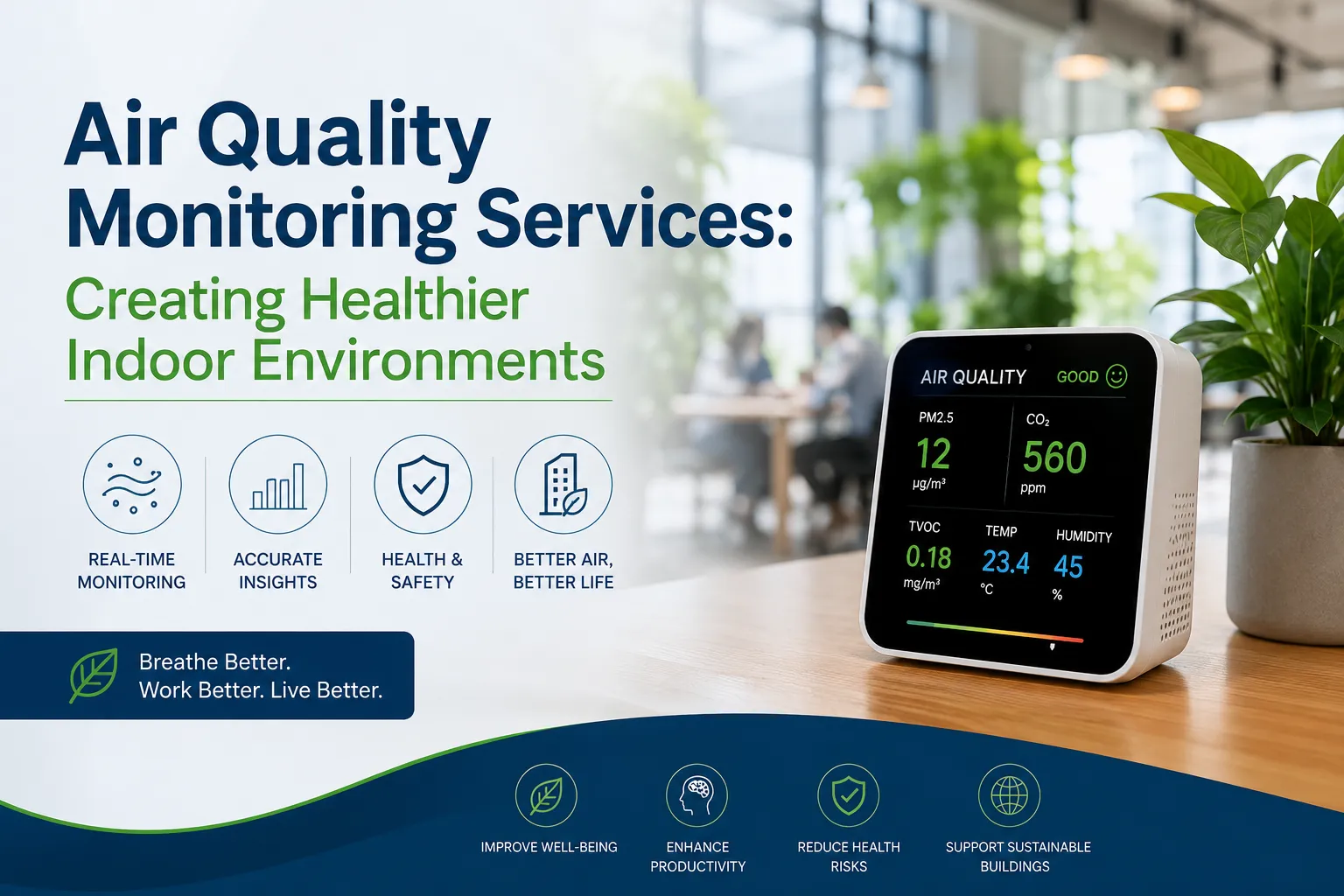

Most people assume the air inside their workplace is safer than the air outside. That assumption is wrong and in many industries, dangerously so.
Studies from the World Health Organization consistently show that indoor air can be two to five times more polluted than outdoor air. In industrial and commercial settings, that figure can be significantly higher. Dust, fumes, vapors, biological contaminants, and chemical by-products accumulate silently. Workers breathe them in, day after day, without visible symptoms until the long-term damage becomes impossible to ignore.
Air quality monitoring services exist precisely to close that gap between assumption and reality. They don't just measure what's in the air. They help businesses understand where contamination originates, how it spreads, and what must change to protect the people working in those environments.
Why Indoor Air Quality Deserves Serious Attention
Poor indoor air quality isn't an abstract concern. It's a documented cause of respiratory disease, neurological impairment, cardiovascular stress, and in extreme cases, occupational cancer. Industries involving welding, woodworking, chemical processing, pharmaceutical manufacturing, and food production all generate airborne hazards as a standard part of daily operations.
The problem is that most airborne contaminants are invisible. Fine particulate matter, volatile organic compounds (VOCs), carbon monoxide, and metallic fumes don't announce themselves. Workers may experience headaches, fatigue, or irritated airways and attribute them to other causes. Managers may not connect elevated sick day usage to air quality until regulators intervene or worse, until someone becomes seriously ill.
Air quality monitoring services change this dynamic. By continuously or periodically measuring the concentration of specific contaminants against occupational exposure limits (OELs), they give employers the data needed to act before harm occurs.
What Air Quality Monitoring Actually Involves
Professional air quality monitoring is far more nuanced than placing a sensor in a room. A comprehensive service begins with a site survey understanding what processes take place, what substances are used or generated, where workers spend their time, and what ventilation systems are already in operation.
From there, monitoring strategies are designed around specific risks. Personal air sampling involves attaching small monitoring devices to workers so measurements reflect actual individual exposure levels throughout a shift. Fixed-point monitoring captures contaminant concentrations at specific locations near extraction points, in storage areas, or along production lines where hazards are highest.
The data collected is then analyzed against regulatory thresholds, including Workplace Exposure Limits (WELs) set by bodies like the UK's Health and Safety Executive (HSE) under COSHH (Control of Substances Hazardous to Health) regulations. Where exceedances are found, the monitoring report becomes the foundation for remediation.
The Central Role of Local Exhaust Ventilation
When air quality monitoring identifies a contamination problem, the solution most frequently recommended is a Local Exhaust Ventilation (LEV) system. LEV is the engineering control of choice for capturing airborne contaminants at source before they disperse into the general breathing zone.
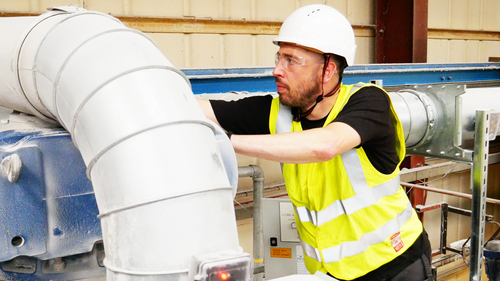
An LEV system typically consists of a hood or enclosure that captures the contaminant, ductwork that carries it away, an air cleaner or filter unit, and a fan that drives the airflow. The principle is simple: capture emissions where they're generated, rather than diluting them across a larger space and hoping natural ventilation does the rest.
However, LEV systems only perform as intended when they are correctly specified, designed, and installed. This is where industrial LEV design services become essential.
Why Industrial LEV Design Services Matter
Designing an LEV system is not a one-size-fits-all exercise. The capture velocity required to contain welding fumes is different from what's needed for wood dust or pharmaceutical powders. Hood geometry, duct diameter, airflow rates, and fan selection all need to be calculated based on the specific process, the physical layout of the workspace, and the nature of the contaminant being controlled.
Industrial LEV design services bring together engineering expertise and occupational hygiene knowledge to create systems that are genuinely effective not just compliant on paper. A poorly designed LEV system can give workers and managers a false sense of security while failing to capture the majority of hazardous emissions. Worse, incorrect duct design can create turbulence that redirects contaminants back toward the worker rather than away from them.
Good industrial LEV design also considers future flexibility. Production lines change. New processes are introduced. A well-designed system accounts for these variables so that modifications can be made without scrapping the entire installation.
Did you know? According to HSE guidance, approximately 30% of LEV systems examined during workplace inspections are found to be insufficiently effective often due to poor initial design rather than maintenance failure.
LEV Testing Services: The Ongoing Obligation
Installing an LEV system is not the end of the story. Under COSHH Regulation 9, LEV systems used to control substances hazardous to health must be thoroughly examined and tested at least every 14 months. For certain processes such as those involving blasting, grinding lead, or processes producing highly toxic dusts the interval is reduced to every month.
LEV testing services fulfill this statutory requirement, but the best providers go well beyond ticking a compliance box. A thorough LEV test examines face velocity at hoods and enclosures, total airflow through the system, static pressure across fan units, condition of ductwork and filtration, and whether the system is achieving the capture performance it was designed for.
The output is a detailed examination report that satisfies legal requirements and, more importantly, tells you exactly whether your system is protecting your workers. Where deficiencies are found, competent LEV testing services will identify the root cause and recommend specific corrective actions rather than simply flagging a failure.
Pro tip: Don't wait for the 14-month deadline before arranging LEV testing services. If your production processes have changed, your workforce has grown, or you've noticed new complaints from workers in previously unaffected areas, commission an interim check. Conditions change faster than testing schedules.
Common Mistakes in Managing Indoor Air Quality
One of the most frequent errors businesses make is treating air quality as a one-time project rather than an ongoing programme. Monitoring results from three years ago may be entirely irrelevant today if processes, materials, or workforce patterns have changed.
Another common mistake is relying on LEV systems that were installed years ago without any systematic maintenance programme. Hoods corrode. Ductwork becomes partially blocked. Fan bearings wear. Filter media reaches saturation. An LEV system that worked perfectly at commissioning may be operating at a fraction of its designed efficiency within two to three years without regular attention.
A third mistake is treating compliance as the ceiling rather than the floor. Meeting the legal minimum is a starting point, not an endpoint. The goal of air quality monitoring and LEV management should be to achieve exposures as low as reasonably practicable a standard that actively pushes toward better protection, not just acceptable protection.
Building a Culture of Air Quality
Effective air quality management isn't purely a technical programme. It requires engagement from workers, supervisors, and senior management alike.
Workers are often the first to notice changes a new smell from a process, a hood that seems less effective than it used to be, or colleagues reporting more frequent headaches. Creating clear channels for reporting these observations and responding to them promptly is as important as the monitoring and LEV infrastructure itself.
Training also plays a significant role. Workers who understand why a particular LEV hood must be positioned correctly, why they shouldn't prop open an enclosure, and what the warning signs of system degradation look like become active participants in maintaining the systems that protect them.
Expert insight: From years of working across manufacturing facilities, the sites with the best long-term air quality outcomes are rarely those with the most sophisticated equipment. They're the ones where frontline workers are engaged, where maintenance teams understand the purpose of the systems they're servicing, and where management treats occupational exposure reports as operational intelligence rather than compliance paperwork.
The Business Case for Getting This Right
There is a compelling business case beyond the moral and legal obligations. Poor air quality drives absenteeism, reduces productivity, and increases staff turnover particularly among experienced workers who have developed long-term respiratory conditions. Regulatory enforcement, including improvement notices, prohibition notices, and prosecution, can be severely disruptive and financially damaging.
Conversely, businesses that invest in robust air quality monitoring and well-maintained LEV systems typically see tangible returns: reduced sick leave, lower insurance premiums, improved recruitment in competitive labour markets, and reduced risk of costly regulatory intervention.
Conclusion
Creating a healthier indoor environment is not a passive outcome. It requires active monitoring, intelligent engineering, disciplined maintenance, and a genuine commitment to worker wellbeing that extends beyond compliance deadlines.
Air quality monitoring services provide the visibility that makes informed decisions possible. Industrial LEV design services translate those decisions into engineering solutions that genuinely capture hazards at source. And regular LEV testing services ensure those solutions remain effective over time not just at installation.
If you're ready to take a more proactive approach to indoor air quality across your facilities, Premier LEV offers the full range of monitoring, design, and testing expertise to help you protect your workforce and meet your legal obligations with confidence.

























Sign in to leave a comment.