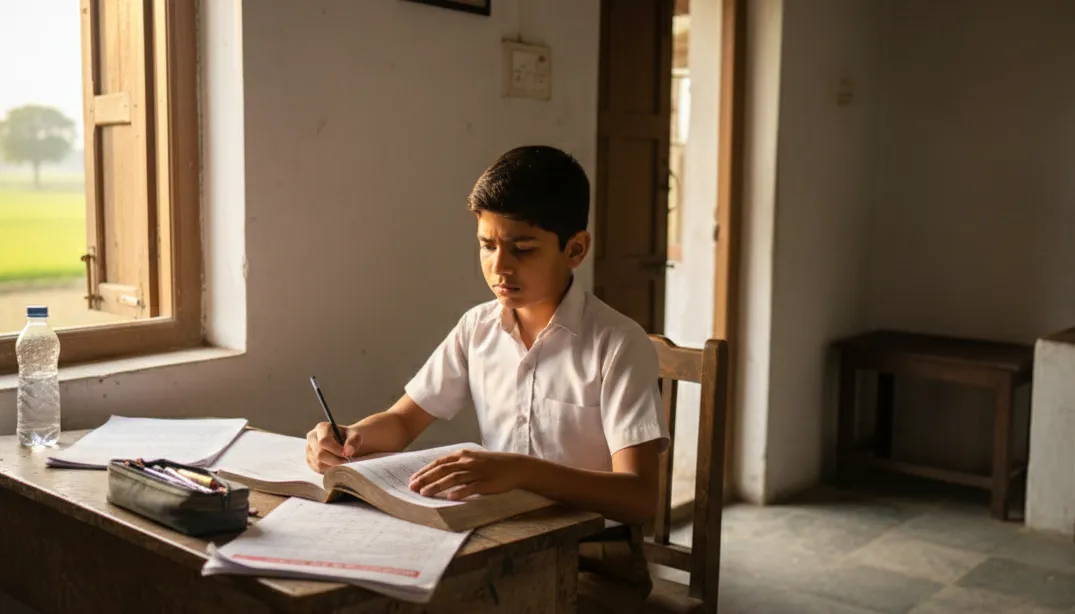

Nair ji called me in April. Results had come out two weeks earlier. His son had scored 198. They were from Kerala. Home state cutoff for Sainik School Kazhakootam that year was around 215.
"Sharma ji, he missed by 17 marks. He's devastated. We're devastated. He worked really hard. Should we try again next year? He'll be in Class 6 then — still eligible for Class 6 entry?"
This question — should we try again — is one of the most important decisions families face after an AISSEE miss. And it deserves an honest, specific answer. Not generic encouragement. Not dismissive "just try again." An actual analysis.
First: Is a Second Attempt Possible? The Age Rules
This is the first thing to clarify. Not every student can attempt AISSEE again.
Class 6 entry age requirement: 10-12 years as on July 1 of the admission year.
Class 9 entry age requirement: 13-15 years as on July 1 of the admission year.
If your child missed Class 6 entry this year and is currently in Class 5:
They're likely still within age for Class 6 entry next year. Verify the exact cutoff date. A child born before July 1, 2013 (for 2026 exam) would have been eligible. For 2027 exam, check the new cutoff date against your child's exact birth date.
If your child missed Class 6 entry and is currently in Class 6 (second attempt would require appearing again):
Age may still allow Class 6 re-attempt if birth date permits. OR the child can aim for Class 9 entry in 2-3 years. Class 9 entry is a fresh start — different exam content, different competition.
Always verify exact age eligibility from the current year's official AISSEE notification before deciding to attempt.
When a Second Attempt Makes Strong Sense
The miss was small (under 20 marks) and clearly due to preparation gaps:
17 marks like Nair ji's son. That gap is fixable. One full year of proper preparation — structured, consistent, mock-test-driven — routinely produces 25-40 mark improvements. A 17-mark gap with one more year is absolutely closeable.
The child is motivated and wants to try:
This is critical. A child who genuinely wants to try again — not one who is being pushed by parents' unfulfilled dreams — has the internal drive to put in another year of work. A reluctant second-attempt student rarely improves meaningfully.
The child understood what went wrong:
If the family can clearly identify what cost marks — specific weak subjects, time management in exam, particular topic gaps — and has a plan to address those specifically, the second attempt has a concrete improvement plan rather than just "try harder."
Age permits it:
No point discussing second attempt if age rules it out. Verify first.
When to Think Carefully Before a Second Attempt
The gap was very large (40+ marks below cutoff):
A 17-mark gap is manageable. A 50-mark gap is a different proposition. Either the child's fundamentals need substantial rebuilding, or the preparation approach needs to fundamentally change. Neither is impossible, but realistic assessment of whether one more year is enough is needed.
The child is not motivated:
A child who appears upset about missing but when pressed says "I don't really want to try again" — that's important information. Forcing a second attempt on an unwilling child produces resentment, poor preparation, and worse outcome. Sometimes the right answer is different pathways. What to do after failing AISSEE covers alternative paths that are genuinely good, not consolation prizes.
Nothing changes in the preparation approach:
If the plan for the second attempt is "same coaching, same books, same schedule, just try harder" — the outcome will be similar. A second attempt only makes sense if something specifically changes in the preparation.
Other good opportunities are being missed:
Some families put everything on a Sainik School second attempt while declining genuinely good options in other schools. If a strong alternative school is available — Navodaya Vidyalaya, a good private school, another competitive option — the total opportunity cost of another attempt year should be factored in.
What Changes in a Second Attempt
A second attempt student has specific advantages over a first attempt student.
Exam experience:
They've sat in the actual exam hall. They know what the pressure feels like. Exam temperament — which takes months to build through mock tests — is already partly built from the real experience.
Knowledge of weak areas:
If the first attempt result is analyzed properly — subject-wise marks, types of questions missed — the family knows exactly where to focus. Second attempt preparation is targeted, not general.
Mental preparation:
A child who missed once and wants to succeed — if genuinely motivated — often prepares with more seriousness the second time. The abstract goal becomes concrete. They know what they're working toward.
Higher starting baseline:
A child who scored 198 in first attempt starts second attempt preparation at a higher baseline than they started first attempt preparation. The subject knowledge is already partly there. Growth to 220-230 is a smaller increment than building from scratch.
The Class 9 Entry Option — Often Overlooked
Many families fixate on Class 6 entry and don't consider Class 9 seriously.
If your child missed Class 6 entry — Class 9 entry in 3-4 years is a genuine second pathway.
Advantages of Class 9 entry for a motivated student:
More time for preparation. Child can develop academically through normal schooling and add dedicated AISSEE preparation in Class 7-8 for Class 9 entry.
The child is older and more mature. VIVA-voce performance (for RMS) and overall exam composure is typically better at 13-14 than at 11-12.
Syllabus is more advanced but a student who has completed 3 years of normal school after Class 5 is genuinely better equipped for the higher syllabus.
However, Class 9 entry has fewer seats and is more competitive. It's not easier — just a different pathway.
Understanding Class 6 vs Class 9 entry comparison helps families make an informed choice between these two pathways.
How to Structure the Second Attempt
If the decision is yes — second attempt — don't just pick up where you left off.
Step 1: Analyse the first attempt result
Get subject-wise breakdown. What were the marks in each section? Where were marks lost? Identify top 3 weakest areas specifically.
Step 2: Change something meaningful in the preparation
If previous coaching wasn't giving proper mock tests — find one that does. If child was studying alone — structured coaching. If studying was disorganised — create a proper schedule. Something must change.
Step 3: Start earlier
If first attempt preparation started in October for January exam — second attempt preparation should start in June-July. More time. More mock tests. More structured practice.
Step 4: Mock tests from day one
Don't wait to feel ready before giving mock tests. Give the first mock test in the first week of preparation. Score will be disappointing. That's fine. The score trajectory over months is what matters.
Step 5: Physical preparation alongside academic
If there are medical parameters to worry about — eyesight, weight, fitness — address these now, not in the week before medical examination. A full extra year gives time to manage anything borderline.
What Nair Ji's Son Did
I told Nair ji: "17 marks with a full year of better-structured preparation is very fixable. But only if your son wants to try. Ask him — not what you want him to say, what he actually thinks."
They talked. Their son was genuinely disappointed and genuinely wanted another shot. Not because parents pushed. Because he felt the exam was within reach and the miss stung.
He started preparation in May. One year of focused work. Two mock tests per week from October. Specific focus on the GK and Maths sections that cost him most marks the first time.
AISSEE the following January: Scored 231. State rank 52. Got Sainik School Kazhakootam in Round 1.
The 17-mark gap became a 33-mark improvement. Because the preparation was better. Because he started earlier. Because he knew exactly what to fix.
For military school entrance coaching that specifically helps second-attempt students understand what changed and prepare more effectively — we've guided many families through exactly this journey.
Bottom Line
Second attempt makes strong sense when: gap was small, child is motivated, preparation approach changes, age permits it.
Think carefully when: gap was large, child is reluctant, nothing changes, good alternatives are being missed.
Class 9 entry is a genuine alternative for families where Class 6 re-attempt isn't viable.
Second attempt advantages: exam experience already built, weak areas known, higher starting baseline.
What must change: start earlier, targeted preparation based on first attempt analysis, more mock tests, something specifically different from first attempt.
The decision should be the child's as much as the parent's. A motivated second-attempt student outperforms a pushed one every time.
Need honest assessment of whether a second attempt makes sense for your child's specific situation? Contact us for a realistic, data-based conversation.
Want more information about AISSEE preparation strategy and second attempt planning? Read our blog for complete guides on every aspect of Sainik School admission.





























Sign in to leave a comment.