
Animal infestation is one of the worst nightmares of tenants, whether it is from rats, cockroaches or any other type of insect, owners should carry out a thorough cleaning of their home, as well as periodic prevention strategies to avoid the spread of pest’s appearance of any type of pest in your home.
Even so, as much as an individual takes great care in this type of prevention, if his neighbors promote the appearance of pests with their actions, disaster is inevitable. As has happened in Pasco County, Florida, which has been forced to quarantine the entire territory due to a plague of giant snails.
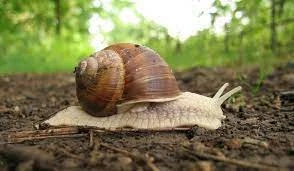
Giant African snail of the species 'Achatina fulica'
These snails carry a parasite that represents a health risk and can cause meningitis.
The Florida Department of Agriculture and Consumer Services (FDACS) confirmed the presence of these snails in the New Port Richey area, in Pasco County, on June 23 and two days later ordered the entire territory to be quarantined. to avoid risks.
"These snails pose a health risk to humans because they carry a parasite called rat lungworm that can cause meningitis," Christina Chitty, director of public information for FDACS, explains to CNN, adding that "They are capable of producing up to 2,500 eggs per year, so the population is difficult to control.”
For this reason, the authorities have been forced to quarantine the area, preventing residents from moving the snail or related items, such as plants and soil, inside or outside the designated area so that the plague does not spread further and does not entail a danger to no one.
The origin of these pests is in the illegal possession of these snails as pets
Although these giant African land snails are illegal as pets in the United States, some exotic pet owners still have these invasive pests. If abandoned in the wild or accidentally lost, they can quickly establish themselves, feeding on more than 500 different plant species, consuming house paint and stucco as a source of calcium. A series of factors that make its eradication exhaustive and extensive, can even last for years.
In fact, it is not the first time that Florida has faced the giant African snail, last year Miami-Dade County finally managed to eradicate a plague of these animals that had been in the population since 2011.
One of the largest sea snails in the world is in danger of extinction
Red snails, (also known as horse shells) are striking sea snails that inhabit the colossal shell of the state of Florida (in the United States). They are shorter-lived and breed later than previously thought, according to new research that warns the Gulf of Mexico population may be on the brink of extinction.
Spindle-shaped shells that can grow to over a foot long and bright red-orange bodies like traffic cones make red snails one of the most conspicuous species on the beaches of the southeastern United States. They used to be even bigger: Historic photographs from Florida show tourists carrying conch shells half the length of a small child. Those sizes are no longer seen, leading the researchers to wonder why.
Scientists used sclerochronology (the shell version of dendrochronology, or tree-ring science) to investigate the lifespan of these animals, whose whitish shells have measured up to 60 centimeters from tip to tail the funnel These sizes had led some scientists to surmise that these predatory snails could live for half a century or more, with females sending hundreds of thousands of tiny conch shells out to sea over decades. The new research shows that this is not the case.
"Real life is significantly shorter," seven to 10 years, says Gregory S. Herbert, the University of South Florida marine ecologist who led the study, published Wednesday in the journal PLOS ONE. Research further suggests that females spawn later in life. Since the largest snails living today are smaller and younger than the historical shells used in the study, "the largest females left in the wild could have few, if any, lifetime spawning events." any," warns the article, putting the population of the Gulf in crisis.
Previous research has shown that conch sizes have decreased over the decades, "the universal sign that a tipping point is near," says Herbert. Like other marine animals that live near heavily populated coastlines, snails have lost considerable habitat to development and pollution, including their favorite breeding grounds along mudflats and seagrass beds. Their habitat in the Gulf is also warming due to climate change, which scientists believe is putting further pressure on the animals, based on the negative effects the additional heat has on other large mollusks. But scientists say the most immediate threat that is reducing their numbers and size is overharvesting, primarily for their coveted shells.
The recorded commercial harvest in Florida went from a high of 14,511 conches in 1996 to 6,124 in 2000, to 1,461 in 2015 and to just 67 in 2020, according to data from the Florida Fish and Wildlife Conservation Commission. Recreational catch figures are unknown.
0
























Sign in to leave a comment.