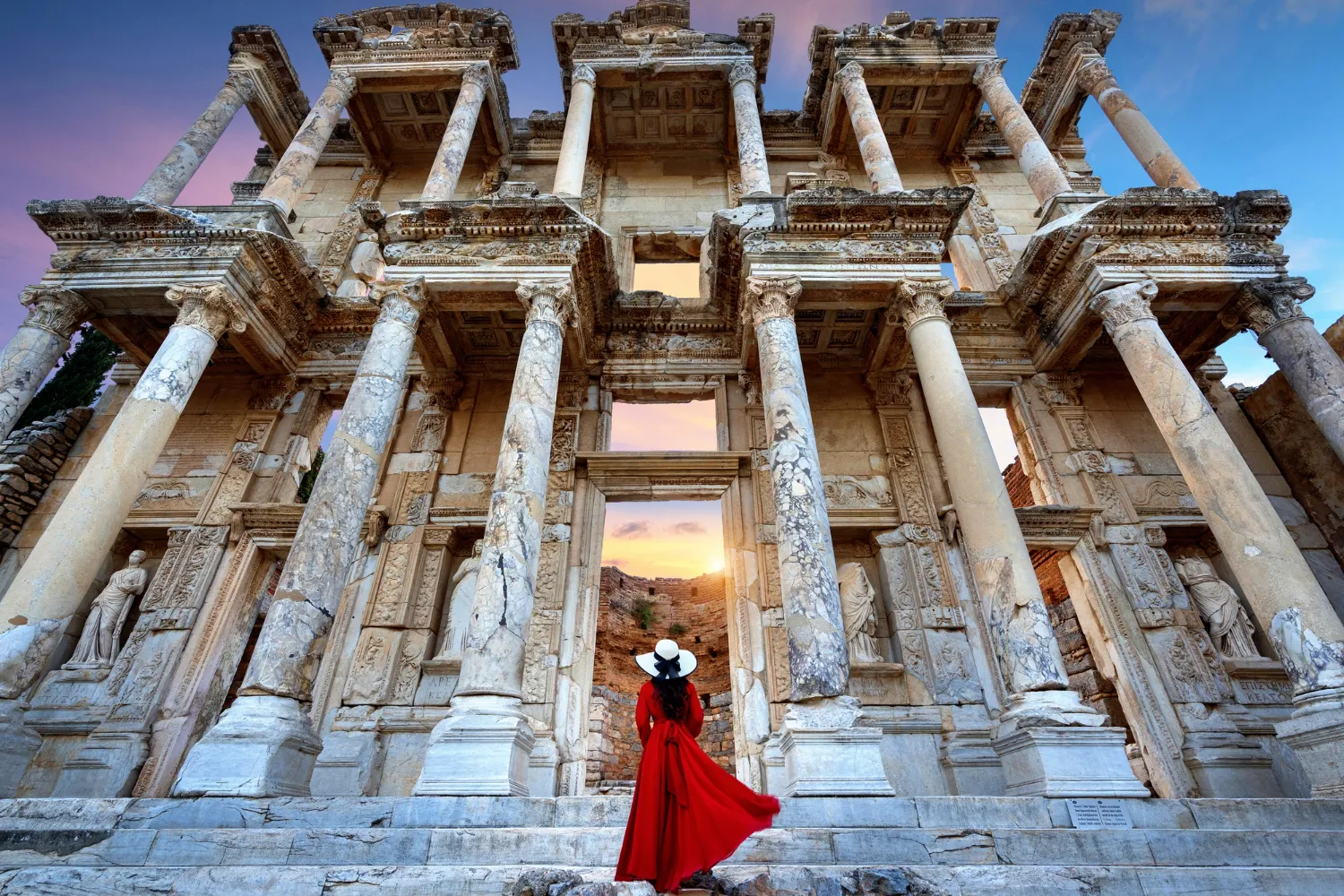

The sun-drenched landscapes of Western Anatolia have long served as a bridge between East and West, a region where the whispers of antiquity still resonate through the marble-paved streets of forgotten empires. At the heart of this historical treasury lies the modern town of Selcuk, a destination that manages to balance contemporary Turkish hospitality with an archaeological heritage that is arguably unparalleled in the Mediterranean basin. While many travelers recognize the name Ephesus, few realize that the surrounding district of Selcuk is home to a dense concentration of monuments that span from the Neolithic era to the twilight of the Ottoman Empire. This article serves as a deep dive into the historical, spiritual, and cultural significance of this region, offering a comprehensive guide for those who seek to walk in the footsteps of emperors, apostles, and philosophers.
The Historical Tapestry of Selcuk and Ephesus
To understand the magnitude of Ephesus, one must first look beyond the iconic Library of Celsus and into the very soil of the region. Archaeological excavations at the Cukurici Mound have revealed that the history of settlement in this area dates back nearly nine thousand years, long before the first Greek colonists arrived on these shores. However, it was during the Roman Imperial period that Ephesus truly flourished, serving as the capital of the Province of Asia and boasting a population that exceeded 250,000 residents. It was a cosmopolitan hub, a city of wealth and intellect where the finest minds of the ancient world gathered to debate and trade.
The strategic importance of Ephesus was primarily rooted in its position as a major port city. During its peak, the harbor was a bustling gateway for goods traveling between the Aegean Sea and the interior of Asia Minor. However, the very geography that granted Ephesus its power also led to its eventual decline. Over centuries, the Cayster River (Kucuk Menderes) deposited silt that slowly pushed the coastline further away, eventually turning the harbor into a marshland. This environmental shift, combined with the devastating Goth raids in the 3rd century and subsequent earthquakes, led to the gradual abandonment of the lower city. Yet, even in its ruin, the architectural integrity of Ephesus remains so profound that it was inscribed on the UNESCO World Heritage List as an exceptional testimony to the cultural traditions of the Hellenistic and Roman periods.
Architectural Marvels: Walking Through Time
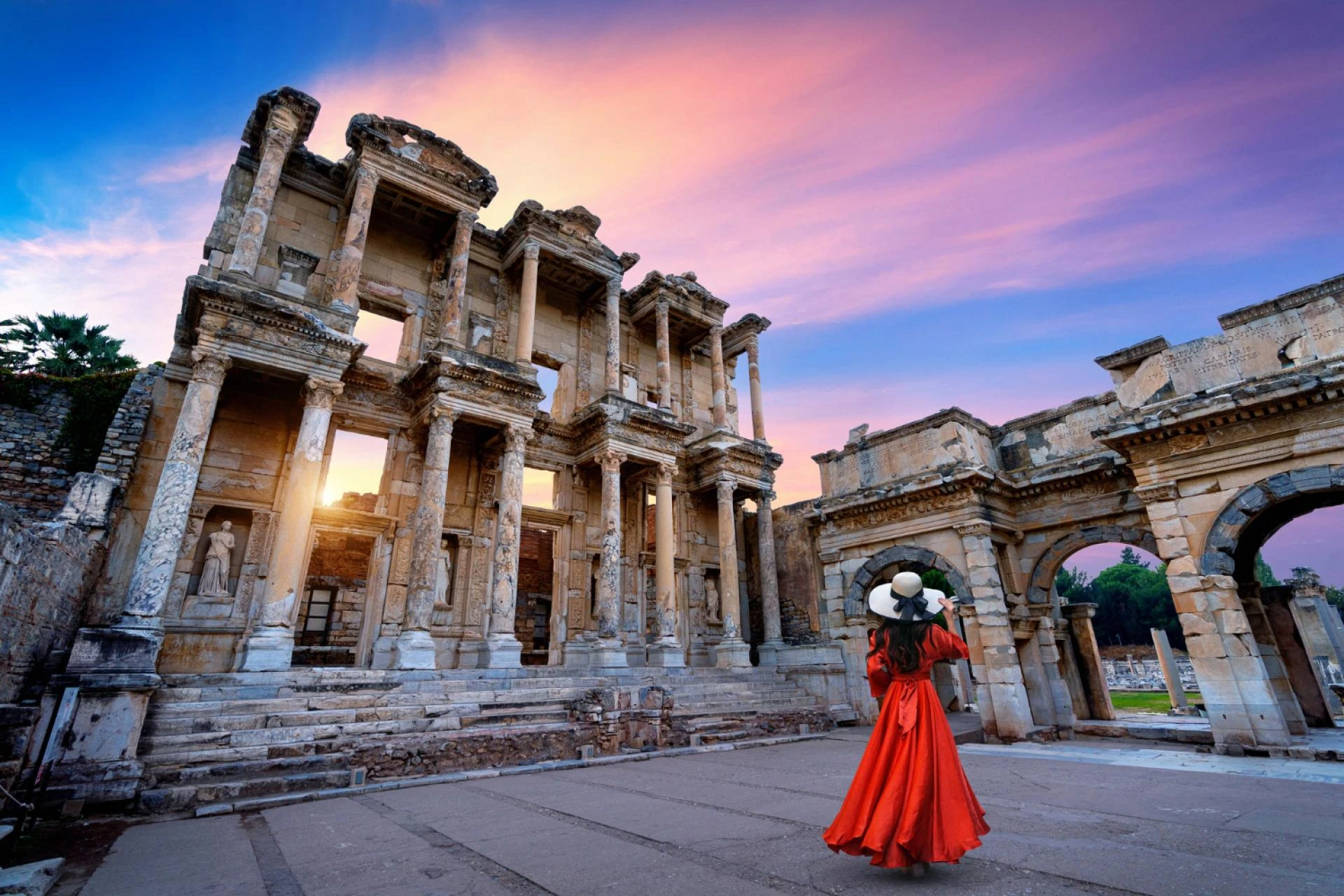
Entering the archaeological site of Ephesus is akin to stepping through a portal into the 2nd century AD. The journey typically begins at the Upper Gate, leading visitors down the Curetes Way, a ceremonial street lined with statues, fountains, and temples. Every stone here tells a story of civic pride and Roman engineering. One of the most breathtaking structures is undoubtedly the Library of Celsus. Built in honor of the Roman Senator Tiberius Julius Celsus Polemaeanus, the library once housed over 12,000 scrolls, making it the third-largest library in the ancient world after Alexandria and Pergamum. The facade, meticulously reconstructed in the 1970s, stands as a masterclass in Roman architectural aesthetics, featuring four statues representing Wisdom (Sophia), Knowledge (Episteme), Intelligence (Ennoia), and Virtue (Arete).
Further down the marble path, the Great Theatre emerges from the slope of Mount Pion. This massive structure, capable of seating 25,000 spectators, was not only a venue for dramatic performances and gladiator combats but also the site of significant historical events. It was here that the silversmith Demetrius incited a riot against the Apostle Paul, fearing that the spread of Christianity would threaten the lucrative trade of silver shrines dedicated to Artemis. The acoustics of the theatre remain remarkable to this day, a testament to the sophisticated understanding of sound propagation possessed by ancient architects.
While the public buildings are awe-inspiring, the Terrace Houses offer a more intimate look at ancient life. These "houses of the wealthy" are located on the slopes opposite the Temple of Hadrian and provide a vivid glimpse into the domestic luxury of the Roman elite. The well-preserved mosaics, intricate frescoes, and advanced heating systems found within these villas demonstrate a level of sophistication that rivals modern standards of comfort. For anyone interested in the social history of the Roman Empire, the Terrace Houses are an essential stop, as detailed in various Smithsonian Magazine travelogues exploring the daily lives of the city's former inhabitants.
The Spiritual Pilgrimage: Beyond the Ruins
Selcuk is not merely a destination for history buffs; it is a sacred landscape for millions of people across different faiths. Just a few kilometers from the ancient city center, perched on the verdant slopes of Bulbul Mountain, lies the House of the Virgin Mary. According to tradition, the Apostle John brought Mary to this secluded spot to escape persecution in Jerusalem, and she spent her final years in this humble stone residence. Today, the site is a place of pilgrimage for both Christians and Muslims, offering a serene atmosphere that stands in stark contrast to the bustling ruins below. The "Wishing Wall" at the site, covered in thousands of handwritten prayers, serves as a poignant reminder of the enduring human need for spiritual connection.
In the heart of Selcuk town, the Basilica of St. John marks another critical chapter in early Christian history. Built by the Byzantine Emperor Justinian I in the 6th century, the basilica was constructed over the believed burial site of John the Apostle. Once one of the largest religious structures in the world, its ruins still convey a sense of divine grandeur. Nearby, the Temple of Artemis, though now reduced to a single standing column in a marshy field, reminds visitors of the region's pagan past. As one of the Seven Wonders of the Ancient World, the temple was once four times the size of the Parthenon in Athens, attracting pilgrims from across the Mediterranean to worship the multi-breasted goddess of fertility.
The Modern Pulse of Selcuk and Its Surroundings
While the ancient ruins are the primary draw, the modern district of Selcuk possesses a charm that warrants its own exploration. Unlike many tourist hubs that have lost their soul to commercialization, Selcuk remains a working Turkish town where local traditions thrive. The Saturday market is a sensory explosion of colors and scents, where farmers from surrounding villages bring their freshest olives, cheeses, and seasonal fruits. This authentic atmosphere extends to the village of Sirince, located about eight kilometers into the hills. Originally a Greek Orthodox settlement, Sirince is famous for its distinct architecture, narrow cobblestone streets, and fruit wines. A visit to this village provides a perfect afternoon escape, allowing travelers to enjoy a glass of local wine while overlooking the rolling vineyards and olive groves that define the Aegean hinterland.
For those who wish to see the artifacts found during the excavations of Ephesus, the Ephesus Archaeological Museum in Selcuk is an absolute necessity. The museum houses an impressive collection, including the famous statues of Artemis with her many "eggs" or breasts, as well as delicate jewelry, coins, and medical instruments used by ancient physicians. The curation is world-class, providing the necessary context to fully appreciate the scale and complexity of the civilization that once thrived here.
Navigating the Region: Practical Travel Insights
Planning a trip to Ephesus requires a bit of logistical foresight to ensure a smooth and enjoyable experience. Most international travelers arrive via Izmir Adnan Menderes Airport, which is approximately 65 kilometers north of Selcuk. While there are train and bus options available, they can often be time-consuming and difficult to navigate with heavy luggage. For a more seamless transition, many visitors opt for private transfers or local transportation services.
Once you are situated in Selcuk, reaching the various sites can be a challenge if you rely solely on public transport. While the main archaeological site of Ephesus is within walking distance for the adventurous, sites like the House of the Virgin Mary or the more distant Pamucak Beach require a vehicle. The winding mountain roads leading to the Virgin Mary's house are particularly scenic but can be daunting for those unfamiliar with the terrain. In such cases, utilizing a reliable Selcuk taxi service is often the most practical and stress-free solution. Local drivers are well-acquainted with the routes and can provide a level of flexibility that scheduled tours simply cannot match, allowing you to stay at a site as long as you wish without being tethered to a group itinerary.
The best time to visit the region is during the shoulder seasons of spring (April to June) and autumn (September to October). During these months, the weather is pleasantly warm, and the landscapes are either lush with spring blooms or golden with the harvest. If you must visit during the peak of summer, it is highly recommended to enter the ruins as soon as the gates open at 8:00 AM. The Aegean sun can be unforgiving by midday, and the marble surfaces of the ancient city reflect the heat, making exploration quite strenuous during the afternoon hours.
Conclusion: An Enduring Legacy
Ephesus is more than just a collection of ruined buildings; it is a profound reminder of the heights of human achievement and the inevitable cycles of history. From its origins as a Neolithic settlement to its zenith as a Roman metropolis and its later role as a center of early Christianity, the region has consistently been at the forefront of cultural and intellectual evolution. The town of Selcuk, with its layers of history and warm hospitality, serves as the perfect custodian for this legacy.
As you stand in the center of the Great Theatre or look up at the towering facade of the Library of Celsus, it is impossible not to feel a sense of humility. These stones have witnessed the rise and fall of empires, the birth of new religions, and the tireless march of time. By visiting Ephesus and exploring the wider Selcuk district, we do more than just observe history; we participate in the ongoing story of a place that has shaped the course of Western civilization. Whether you are drawn by the allure of archaeology, the call of spiritual pilgrimage, or simply the beauty of the Turkish coast, Selcuk and Ephesus offer an experience that is as enlightening as it is unforgettable. In an ever-changing world, the eternal echoes of Ephesus continue to remind us of where we came from and the enduring power of the human spirit to create something truly magnificent.




























Sign in to leave a comment.