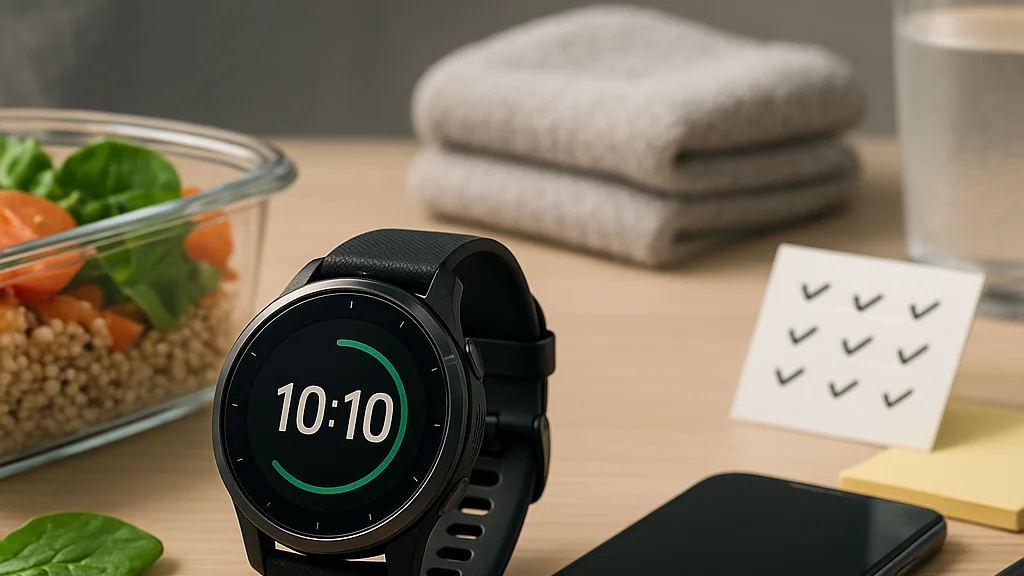

A running watch is turning into a food diary, and that matters
One of the sharpest shifts in fitness tech right now is not about faster GPS locks or brighter AMOLED screens. It is about breakfast 🍳✨. Garmin’s latest training tools, highlighted in Wired’s hands-on look at the new Garmin training features, push the company deeper into nutrition tracking, lifestyle logging, and broader daily context. That sounds small until you think about what athletes, casual runners, and food-conscious users have been asking for years: not just “How far did I run?” but “Did what I ate, drank, and did all day actually help?” 🏃♀️💫
Garmin built its reputation on endurance credibility. Cyclists, triathletes, marathoners, and trail runners trusted the brand because it measured effort with unusual seriousness 📈💚. Yet training has never been only training. A hard interval session after poor sleep and a skipped lunch does not land the same as the identical workout after balanced meals and decent recovery. The old wearable model treated those off-workout variables as background noise. Garmin’s new direction treats them as inputs. Actually, that is a pretty major philosophical change 🍓⌚
For readers in the food and cooking trends space, this is where story gets spicy 🌶️✨. Nutrition tracking inside a sports ecosystem suggests a bigger convergence between wearable tech and eating behavior. Not calorie counting in the old punitive sense, but pattern recognition: meal timing, hydration consistency, alcohol intake, stress, sleep, and training load all beginning to sit in one dashboard. Garmin is not becoming a recipe app, obviously, but it is moving closer to a behavior platform that can influence what people cook, pack, sip, and prioritize each day 🥗💧
If you want the broad feature rundown first, WriteUpCafe already has a useful primer in New Garmin Training Features (2026): Nutrition Tracking, Lifestyle Logging, and More. For this piece, I want to go deeper: why Garmin is doing this now, how the new tools fit into its 2026 device strategy, where they may help, where they may annoy, and why food logging inside a training watch could reshape everyday wellness habits for more than elite athletes 🍜📊
Garmin’s newest move is not just adding more metrics. It is trying to connect training stress, recovery, and eating behavior into one continuous story 🧠✨
How Garmin got here: from workout metrics to full-day behavior
Garmin did not wake up one morning and decide to become interested in lunch 🥪⌚. The company spent years layering context around exercise. First came heart rate, then sleep, then Body Battery, then training readiness, acute load, HRV status, race predictions, and recovery guidance. Each step moved the user away from isolated workout stats and toward a more integrated understanding of the body 💡💤
That progression matters because nutrition tracking and lifestyle logging are not random add-ons. They are extensions of a logic Garmin has been building for years. If a watch can estimate recovery strain from sleep quality and heart rate variability, the next obvious question is what else changes recovery. Meals do. Hydration does. Alcohol does. So do long sedentary periods, travel, and inconsistent routines 🍷🚶♀️
Competitors helped create pressure too. Apple emphasized broad wellness and ecosystem convenience. WHOOP leaned hard into recovery, sleep, strain, and behavioral coaching. Oura made readiness and daily habits feel almost luxurious, like a minimalist anime power-up ring for health nerds 💍🌙. Garmin, by contrast, often looked strongest during the workout itself. The company’s opportunity in 2026 is to prove it can own the hours before and after the run as well.
Recent hardware launches make that push easier. According to Runner’s World, Garmin introduced the beginner-friendly Forerunner 70 and 170 in May 2026, broadening access to the brand’s training ecosystem. MSN and Gizmochina also covered the launch, framing these watches as appealing options for everyday runners rather than only high-mileage obsessives 🏅📱. That positioning is crucial. Nutrition and lifestyle logging become more valuable as Garmin reaches users whose goals are not podium finishes but sustainable health, weight management, consistency, and feeling less wrecked after workday training.
The result is a brand evolution with a wider social footprint. A runner training for a 10K, a desk worker trying to stop late-night snacking, and a recreational cyclist testing hydration habits can now sit inside roughly the same behavioral framework. Garmin still speaks athlete, but it increasingly understands routine ✨🥣
- Phase one: record the workout itself with pace, distance, heart rate, and GPS 🏃♂️📍
- Phase two: add recovery context through sleep, HRV, readiness, and stress 😴📉
- Phase three: capture behavior inputs such as food, drink, and lifestyle habits to explain performance swings 🍽️🧃
That third phase is where 2026 feels different. It is less about another metric and more about a new model of accountability. Garmin is telling users: your day counts, not just your session 📆💛
What the new nutrition and lifestyle tools actually do
The headline feature getting most attention is food tracking, but the more interesting story is how Garmin appears to be grouping several human behaviors into one training narrative 🍚🧠. Based on Wired’s testing, the company’s newer tools let users log meals and lifestyle factors in ways that can be compared against training and recovery patterns. Exact implementation details can vary by device and app experience, yet conceptually Garmin is moving toward a “cause and effect” model rather than a simple food journal 📲✨
That distinction matters. Traditional food logging often asks users to obsess over totals: calories, macros, maybe sodium, maybe water. Garmin’s angle is potentially more functional. Did you underfuel before a long run? Did hydration drop on the same day your recovery score weakened? Did alcohol or poor sleep correlate with lower readiness? For athletes and active consumers, those are more actionable questions than raw calorie arithmetic 🍝💧
Actually, this could be especially relevant for people who cook at home and think in routines rather than numbers 🍲📒. If Garmin can show that a protein-heavy breakfast improves morning training consistency or that late restaurant meals disrupt overnight recovery, it shifts the conversation from restriction to experimentation. That is far more sticky as a behavior product. People keep tools that help them notice patterns; they abandon tools that only scold them 😅📊
There is also a subtle but important lifestyle angle. Logging is not only about food. Garmin’s broader package reportedly includes habit-style entries and contextual notes that can explain why body signals changed. That creates a richer loop between subjective experience and sensor data. A rough day is no longer just a low readiness score; it may be tied to a skipped lunch, travel fatigue, poor sleep timing, or social drinking the night before ✈️🍸
When wearables connect meals, hydration, sleep, and training load, they stop being passive scoreboards and start acting like pattern detectors 🔍⌚
For many users, the appeal will come down to friction. If logging takes too many taps, adoption drops fast. If the interface makes common behaviors easy to record, Garmin has a real chance to become a practical companion for daily wellness, not merely a post-run analytics machine 🫶📱
- Nutrition entries can help users connect meal timing and composition to workout quality 🍌🏋️
- Hydration logging provides context for fatigue, heat performance, and recovery 💦🌡️
- Lifestyle notes may explain anomalies in sleep, stress, or HRV better than sensor data alone 📝💤
- Integrated trends make the app more valuable over weeks and months, not only on race day 📆📈
WriteUpCafe’s Unlocking Garmin’s Latest: Nutrition Tracking and Lifestyle Logging Features captures that consumer-facing promise well, but the larger implication is strategic: Garmin wants to own the feedback loop between what users consume and how they perform 🥗⚡
Why this matters for food culture, not only fitness culture
Fitness companies have talked about nutrition forever, but Garmin’s move lands at a moment when food culture has already become hyper-measurable and hyper-personal 🍱📲. People track protein, glucose spikes, hydration, fasting windows, caffeine timing, and even gut comfort before races. On TikTok and Instagram, meal-prep content sits right beside marathon vlogs, mukbang reactions, and “what I eat before leg day” clips. The wall between cooking content and performance content is basically gone 🍓🎥
That is why Garmin’s new features belong in a food and cooking conversation. When a wearable gives feedback on how eating patterns affect recovery, it changes the incentives around meal planning. Suddenly, a bowl of rice, eggs, avocado, and fruit is not just aesthetic wellness-core content. It is data-linked fuel. A late-night takeout order is not only indulgence. It may become a variable that shows up in next morning’s readiness score 🍚🥑
This does not mean every user will become a quantified-self maximalist. Most will not. But even light-touch feedback can shape habits. Think about three common scenarios ✨🥣
- A beginner runner notices better weekend long runs after eating earlier on Friday night 🍝🌙
- A busy professional sees hydration consistency improve during weeks with prepped soups, fruit, and electrolyte routines 🥣🍊
- A recreational athlete realizes alcohol is hitting sleep scores harder than expected before social training events 🍻😴
Those are food decisions, not gadget decisions. Garmin is entering a space usually occupied by nutrition apps, coaching plans, and sometimes therapists or dietitians. That creates opportunity, but also risk. If the prompts become too moralizing, users may disengage or develop unhealthy fixation. If the system stays educational and pattern-based, it could help normalize a more compassionate, evidence-minded relationship with food 🍰💗
Actually, that balance is the whole thing. Food is not only fuel; it is culture, comfort, family, and pleasure. I am from Cartagena, so trust me, nobody should need a watch to justify joy on a plate 🫓🌴. The best version of Garmin’s nutrition push would not flatten eating into macros only. It would help users notice trends while leaving room for real life: birthday cake, street snacks, travel meals, Sunday brunch, post-race burgers, all of it 🍰🍔
In that sense, Garmin is entering a more emotionally loaded category than pace tracking. Watches can measure. Eating is personal. If the company gets that nuance right, it could expand beyond sports tech into everyday habit coaching with unusual credibility 💛⌚
Garmin’s 2026 device strategy gives these features a bigger audience
The timing of these new tools is not accidental 📅✨. Garmin’s 2026 hardware story suggests a deliberate push toward more mainstream runners and first-time buyers. Runner’s World reported that the Forerunner 70 and 170 arrived as beginner-friendly additions to the lineup, while Gizmochina’s coverage described them as a possible sweet spot for everyday runners. MSN’s report similarly framed the launch as an expansion of choice for people who want running-focused wearables without jumping straight to the most advanced tier 🏃♀️🛍️
That matters because advanced recovery and nutrition tools become more commercially powerful when they are not trapped inside premium devices only. A mass-market runner is less likely to care about obscure training load terminology, but very likely to care whether lunch timing affects evening workouts or whether hydration habits are slipping during summer heat ☀️💦. Garmin can use these broader lifestyle features to make its ecosystem feel relevant on non-running days too.
There is another business layer here. Hardware margins are one thing; ecosystem stickiness is another 📦🔁. The more data categories Garmin captures, the harder it becomes for users to switch platforms casually. If your watch stores not only routes and race history but also your sleep trends, fueling habits, hydration logs, and daily routine patterns, it starts to feel like a personal archive. That is powerful retention logic, and competitors know it.
We should also read this as a response to changing consumer expectations. People now assume devices should synthesize multiple dimensions of health rather than live in silos. A watch that tracks only workouts can feel incomplete next to products that discuss readiness, stress, and behavior loops. Garmin’s answer is to bring more of that intelligence in-house while leaning on its athletic credibility as the differentiator 🧠🏅
For users, the practical upside is coherence. Instead of bouncing between a running app, a separate food tracker, a hydration reminder, and a sleep dashboard, more of the picture may live in one place. The downside, of course, is platform dependence. If Garmin becomes your everything app, leaving becomes harder. That is convenience and lock-in at same time, a very 2026 combo 😵💫📲
For a simpler orientation, newer users can pair this analysis with Beginners Guide to New Garmin Training Features (2026): Nutrition Tracking, Lifestyle Logging, and More, which breaks down the basics without drowning people in jargon 🌟⌚
Where the new system helps most, and where it may fall short
The strongest case for Garmin’s nutrition and lifestyle expansion is not elite optimization. It is behavior awareness for ordinary active people 💪🍽️. Many users know, vaguely, that sleep, hydration, and meal timing matter. Fewer can see those relationships over time in one interface. If Garmin makes those links visible, it can turn abstract advice into personal evidence. That is often what finally changes habits 📈💡
Consider the kinds of insights that could become useful over a six-week block of training:
- Meal timing: harder sessions feel better on days with a more substantial pre-workout meal ⏰🍌
- Hydration: afternoon fatigue aligns with lower fluid intake and warmer weather 💧🌞
- Alcohol: social nights correspond with weaker sleep and lower readiness the next morning 🍷😵
- Routine disruption: travel or late dinners produce measurable recovery drift ✈️🍜
- Consistency: simple repetitive breakfasts support steadier training than chaotic eating patterns 🥣📅
Those are meaningful because they are concrete. A watch cannot tell you what your grandmother’s soup means emotionally, and it should not try 🥹🍲. But it can reveal that your body tends to like certain rhythms. For runners, cyclists, and gym-goers, that can reduce guesswork and improve self-trust.
Still, limits are real. Food logging remains notoriously hard. Portion estimates are messy, restaurant meals are variable, and user compliance drops over time. Even the best-designed systems struggle once novelty fades 📉📱. There is also a danger of false precision. If Garmin presents rough nutrition inputs with too much certainty, users may overinterpret weak correlations as hard truths.
Another concern is psychological. Some users benefit from tracking; others spiral into compulsive monitoring. Garmin is entering territory where design ethics matter a lot. Nudges should support awareness, not obsession. Language should emphasize trends, not guilt. Features should be easy to ignore when life is busy, because life will be busy 🍰🫶
The best health technology offers context without punishment. Once a tool starts making users feel judged, adoption usually collapses 😮💨📉
Actually, Garmin’s challenge is almost editorial: how do you tell a useful story with imperfect data? If it can summarize patterns with humility and clarity, these features could become genuinely valuable. If it overclaims, users will smell it fast. Wearable audiences are skeptical now, and honestly, they should be 🔍⚖️
What athletes, coaches, and food brands should watch next
The most immediate audience for Garmin’s new tools is active consumers, but the ripple effects extend further 🌀⌚. Coaches may gain better context around why athletes are underperforming. Recreational runners could arrive at training plans with more awareness of fueling gaps. Dietitians may find clients increasingly accustomed to bringing wearable-based habit data into consultations 📋🥗
Food brands should be paying attention too. If wearables normalize meal timing and recovery-linked nutrition, product marketing will likely shift. Expect more emphasis on digestibility, hydration support, protein adequacy, and training compatibility rather than generic “healthy” claims 🥤📦. The products that fit neatly into pre-run, post-run, and recovery routines may gain an edge, especially among younger consumers who already document everything from matcha rituals to marathon prep on social platforms 🍵🎽
There is also a content economy angle. Publishers, creators, and recipe developers can build around wearable-informed habits: breakfasts for early runners, high-carb dinners before long sessions, electrolyte-friendly summer meal plans, lower-effort recovery snacks, and realistic social eating strategies. Garmin is not creating that ecosystem alone, but it is giving it another data-rich language 📚✨
For users deciding whether to engage deeply with the new features, a few practical rules make sense:
- Use logging to spot patterns, not to chase perfection 🧘♀️📊
- Track only variables you can realistically maintain for several weeks 📅✅
- Compare trends against how you actually feel, not only what the app says 🫀📝
- Be cautious with conclusions from small sample sizes or unusual weeks ⚠️🗓️
- Remember that pleasure, culture, and social meals still belong in a healthy life 🍰💃
If Garmin keeps developing this category, the next frontier may be smarter interpretation rather than more raw logging. Users do not need infinite fields to fill. They need concise, believable insights: “You tend to recover better when dinner is earlier,” or “Hydration consistency appears linked to steadier afternoon energy.” That kind of guidance would feel less like homework and more like an experienced coach quietly noticing patterns from the sidelines 🏟️💬
For a more tactics-focused read, Mastering Garmin’s New Training Features: Nutrition, Lifestyle, and Beyond is a smart companion. My takeaway, though, is broader. Garmin is no longer content to measure the run. It wants to map the life around the run. And in 2026, that may be the more consequential innovation of all 🌍✨

























Sign in to leave a comment.