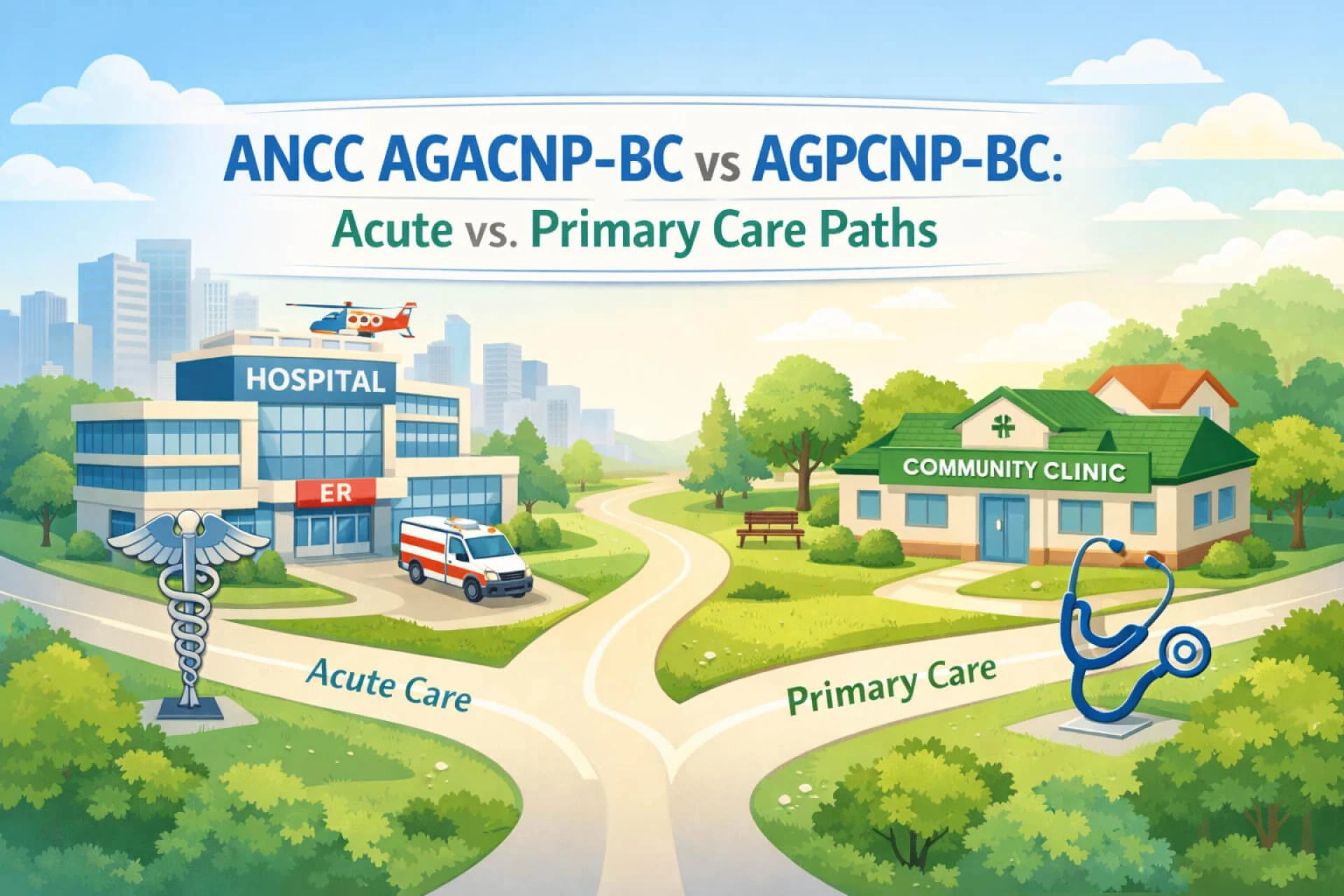

The ANCC AGACNP-BC (Adult-Gerontology Acute Care Nurse Practitioner) and ANCC AGPCNP-BC (Adult-Gerontology Primary Care Nurse Practitioner) certifications are crucial credentials offered by the American Nurses Credentialing Center, validating the specialized expertise of advanced practice registered nurses in caring for adult and geriatric populations. These certifications are designed for nurse practitioners who have completed graduate-level education and are looking to specialize their practice, ensuring high standards of care across diverse healthcare settings. This comprehensive guide is tailored for Adult-Gerontology NPs contemplating which certification best aligns with their professional aspirations, delving into the critical differences in scope of practice, exam content, career trajectories, and effective preparation strategies for both credentials.
Distinguishing Adult-Gerontology NP Roles and Certifications
Adult-Gerontology Nurse Practitioners play vital roles in healthcare, focusing on the unique needs of adult and older adult patients. The American Nurses Credentialing Center (ANCC) offers two distinct certifications within this specialty: the AGACNP-BC and the AGPCNP-BC. While both credentials signify expertise in adult-gerontology, their scopes of practice are fundamentally different, addressing either acute or primary care needs. Understanding these core distinctions is the first step in making an informed career decision, impacting everything from daily responsibilities to practice environments. For broader context on the role of an Adult-Gerontology Nurse Practitioner, you can refer to comprehensive resources on the field.
AGACNP-BC: Acute Care Focus and Patient Needs
The ANCC AGACNP-BC certification prepares nurse practitioners to manage acutely ill adult and geriatric patients across the continuum of acute care services. Professionals holding this credential possess the advanced knowledge and skills necessary to provide complex, episodic, and emergent care for individuals experiencing critical illnesses or exacerbations of chronic conditions. This role demands a high level of clinical judgment and the ability to act swiftly in dynamic healthcare environments.
Typical patient populations for AGACNP-BCs include individuals admitted to hospitals, intensive care units (ICUs), emergency departments, specialty clinics focused on acute conditions, and step-down units. Their expertise is crucial in managing complex diagnoses, performing advanced procedures, and coordinating care during critical phases of illness. The job responsibilities often involve:
- Performing advanced physical assessments: Focusing on rapid identification of acute changes in patient status.
- Initiating and managing pharmacologic and non-pharmacologic interventions: Addressing acute and critical conditions.
- Ordering and interpreting diagnostic tests: Such as lab work, X-rays, and advanced imaging for acute diagnoses.
- Collaborating with interdisciplinary teams: Including physicians, specialists, and other healthcare professionals in fast-paced settings.
- Providing education and support: To patients and families regarding acute illness management and transitions of care.
For more detailed information on the ANCC AGACNP-BC certification, visit the official MedicoExam page for AGACNP-BC.
AGPCNP-BC: Primary Care Emphasis and Lifespan Wellness
Conversely, the ANCC AGPCNP-BC certification focuses on delivering comprehensive primary healthcare services to adult and geriatric populations, emphasizing health promotion, disease prevention, and the management of chronic conditions. Adult-Gerontology Primary Care Nurse Practitioners are foundational to community health, providing continuous, patient-centered care over the long term.
AGPCNP-BCs typically serve patients across the lifespan from adolescence through old age, focusing on stable health conditions, preventative screenings, and long-term wellness. Their practice settings are predominantly outpatient, including:
- Family medicine and internal medicine clinics: Offering ongoing primary care.
- Community health centers: Serving diverse populations with preventative services.
- Long-term care facilities: Managing chronic illnesses and promoting functional independence.
- Home health agencies: Providing care in patients' residences.
- College health services: Addressing the primary care needs of young adults.
Key job responsibilities for AGPCNP-BCs include:
- Conducting thorough health assessments: Focused on identifying risk factors and promoting healthy lifestyles.
- Developing individualized plans of care: For managing chronic diseases like diabetes, hypertension, and arthritis.
- Administering immunizations and screenings: In alignment with preventive health guidelines.
- Providing health education and counseling: On nutrition, exercise, stress management, and medication adherence.
- Referring patients to specialists: When complex or acute issues fall outside the primary care scope.
More information on the ANCC AGPCNP-BC certification can be found on the MedicoExam AGPCNP-BC certification page.
Comparing Exam Logistics for AGACNP-BC and AGPCNP-BC
While the clinical roles of AGACNP-BC and AGPCNP-BC differ significantly, the administrative and structural aspects of their respective certification exams, administered by the American Nurses Credentialing Center (ANCC), share several commonalities. Understanding these logistical details is crucial for candidates planning their examination schedule and financial commitments.
Both the ANCC Adult-Gerontology Acute Care Nurse Practitioner Certification and the ANCC Adult-Gerontology Primary Care Nurse Practitioner Certification exams are designed to rigorously assess a candidate's readiness for advanced practice. Here’s a breakdown of their shared and distinct examination details:
- Exam Name:
- AGACNP-BC: ANCC Adult-Gerontology Acute Care Nurse Practitioner Certification
- AGPCNP-BC: ANCC Adult-Gerontology Primary Care Nurse Practitioner Certification
- Exam Code:
- AGACNP-BC
- AGPCNP-BC
- Exam Price: Both certifications have the same pricing structure:
- Non-member: $395
- Members: $295
- Duration: Both exams allow for the same testing time:
- All Candidates: 210 minutes
- Number of Questions: The total question count is identical for both exams:
- All Candidates: 175 questions
- Passing Score: The scoring methodology and passing threshold are consistent:
- All Candidates: 350 (on a scale of 0-500)
These uniform logistical elements mean that while the content and scope of practice are divergent, the testing environment, time pressure, and scoring expectations for both AGACNP-BC and AGPCNP-BC candidates remain consistent, allowing test-takers to focus on mastering their respective specialized knowledge domains.
Syllabus Focus: Acute vs. Primary Care Content
The core difference between the ANCC AGACNP-BC and AGPCNP-BC certifications is fundamentally reflected in their examination syllabi. Each syllabus is meticulously designed to assess the specific knowledge, skills, and abilities required for safe and effective practice within either the acute or primary care adult-gerontology scope. A thorough review of these content areas is essential for candidates to understand the depth and breadth of topics they must master.
ANCC AGACNP-BC Exam Syllabus Topics and Weighting
The ANCC AGACNP-BC exam focuses on the complexities of acute care, demanding comprehensive knowledge of pathophysiology, advanced diagnostics, and critical interventions. The syllabus is structured to emphasize immediate and intensive management of critically ill adult and geriatric patients.
- Core Competencies - 24%: This section covers foundational knowledge pertinent to acute care, including advanced assessment techniques, clinical decision-making principles, and understanding of diverse patient populations in acute settings.
- Clinical Practice - 43%: The largest portion, this section delves into the management of specific acute and critical conditions across various body systems. It includes topics like pharmacotherapy for acute illness, procedural skills, and emergency management.
- Professional Role - 33%: This area assesses the professional, ethical, and legal responsibilities of an AGACNP-BC in acute care environments, including leadership, quality improvement, and interprofessional collaboration.
For more specific details on the acute care curriculum and additional resources, candidates should visit the official ANCC AGACNP-BC certification page.
ANCC AGPCNP-BC Exam Syllabus Topics and Weighting
In contrast, the ANCC AGPCNP-BC exam syllabus centers on the holistic management of patients in primary care, with a strong emphasis on health promotion, disease prevention, and chronic disease management across the adult-gerontology spectrum.
- Patient Assessment Process - 24%: Similar to acute care, this involves comprehensive health history, physical examination, and risk assessment, but with a focus on preventative and ongoing health needs in primary care.
- Plan of Care - 60%: This is the most heavily weighted section, reflecting the core function of primary care NPs. It covers developing, implementing, and evaluating evidence-based plans for health promotion, disease prevention, and the management of both acute self-limiting and chronic conditions. This includes pharmacologic and non-pharmacologic interventions, patient education, and referrals.
- Professional Practice - 16%: This section addresses the ethical, legal, and professional responsibilities of an AGPCNP-BC within the primary care context, including advocacy, collaboration, and population health initiatives.
Candidates preparing for the primary care certification can find detailed content outlines and preparation materials on the official ANCC AGPCNP-BC certification page.
The stark difference in weighting between "Clinical Practice" for AGACNP-BC and "Plan of Care" for AGPCNP-BC underscores the specialized nature of each role. Acute care necessitates immediate, high-stakes clinical intervention, while primary care prioritizes long-term health planning and preventive strategies.
Practice Settings and Patient Populations: A Direct Contrast
The environments where Adult-Gerontology Acute Care Nurse Practitioners (AGACNP-BCs) and Adult-Gerontology Primary Care Nurse Practitioners (AGPCNP-BCs) typically practice, as well as the specific patient populations they serve, are perhaps the most illustrative distinctions between these two critical roles. These differences directly influence an NP's daily activities, required skill sets, and professional satisfaction.
Acute Care Environments and High-Acuity Patients
AGACNP-BCs are primarily found in settings characterized by high patient acuity and rapid changes in health status. Their expertise is invaluable where patients are experiencing sudden, severe illnesses, injury, or exacerbations of chronic conditions requiring immediate and complex intervention. Common practice settings include:
- Hospital inpatient units: Such as medical-surgical floors, telemetry, and critical care units.
- Intensive Care Units (ICUs): Managing life-threatening conditions and continuous monitoring.
- Emergency Departments (EDs): Providing rapid assessment and stabilization for urgent and emergent cases.
- Specialty acute care clinics: Like cardiology, pulmonology, or nephrology clinics that manage complex, acutely unwell patients.
- Surgical and post-anesthesia care units: Overseeing recovery and managing immediate post-operative complications.
The patient populations here are typically medically fragile, critically ill, or those recovering from acute events. They often present with multiple comorbidities, requiring aggressive treatment plans and vigilant monitoring. AGACNP-BCs excel at managing instability, performing advanced procedures, and making rapid, evidence-based decisions under pressure.
Primary Care Settings and Longitudinal Health Management
In contrast, AGPCNP-BCs function within environments that emphasize continuous, comprehensive, and preventive healthcare services. Their focus is on long-term health maintenance, chronic disease management, and health education across the adult and geriatric lifespan. Key practice settings include:
- Outpatient primary care clinics: Including family medicine, internal medicine, and gerontology practices.
- Community health centers: Providing accessible care and health promotion programs.
- Long-term care facilities and nursing homes: Managing the ongoing health needs of elderly residents.
- Home health services: Delivering care to patients in their homes, often for chronic disease management or post-acute recovery.
- Workplace health clinics: Offering health screenings, preventative care, and acute minor illness treatment for employees.
The patient populations served by AGPCNP-BCs are generally stable, though they may have chronic conditions requiring ongoing management. Their role is to foster health, prevent disease progression, and guide patients through various life stages, ensuring continuity of care and promoting self-management strategies. They are integral to developing trusting, long-term relationships with patients, making them cornerstones of community health.
Role Responsibilities and Career Trajectories
The daily responsibilities and long-term career paths for an Adult-Gerontology Acute Care Nurse Practitioner (AGACNP-BC) and an Adult-Gerontology Primary Care Nurse Practitioner (AGPCNP-BC) are shaped by their distinct scopes of practice. Understanding these differences is vital for prospective NPs to envision their future contributions to healthcare and align their professional development.
Core Responsibilities in Acute Care
An AGACNP-BC's daily activities are centered around the immediate and evolving needs of acutely ill patients. Their responsibilities demand quick assessment, intervention, and the ability to manage complex medical situations. Key tasks include:
- Rapid Assessment and Diagnosis: Performing focused physical exams and interpreting complex diagnostic tests to quickly ascertain patient status and initiate appropriate care.
- Crisis Management: Stabilizing patients experiencing acute decompensation, managing pain, and responding to medical emergencies.
- Advanced Procedural Skills: Often involve performing or assisting with procedures like central line insertion, intubation, arterial line placement, or wound care in acute settings.
- Interdisciplinary Collaboration: Working closely with intensivists, hospitalists, surgeons, and other specialists to coordinate complex care plans within tight timeframes.
- Discharge Planning for Acute Episodes: Ensuring safe transitions of care from acute to post-acute settings or home, with a focus on preventing readmissions.
Career trajectories for AGACNP-BCs often involve advancing into leadership roles within hospital systems, specializing in particular critical care areas (e.g., cardiac ICU, neuro ICU), or moving into academic and research positions focused on acute illness management. They are critical players in hospital quality and patient safety initiatives.
Core Responsibilities in Primary Care
An AGPCNP-BC's responsibilities revolve around sustained patient relationships and comprehensive health management over time. Their work is characterized by preventive care, chronic disease management, and patient education. Typical daily tasks include:
- Health Promotion and Prevention: Conducting routine physical exams, health screenings, and providing immunizations.
- Chronic Disease Management: Developing and implementing long-term care plans for conditions such as hypertension, diabetes, asthma, and hyperlipidemia, including medication management and lifestyle counseling.
- Acute Minor Illness Care: Diagnosing and treating common, self-limiting acute conditions like colds, flu, and minor infections.
- Mental Health Screening: Integrating mental health assessments into primary care and making referrals as needed.
- Referral and Care Coordination: Guiding patients through the healthcare system, referring to specialists, and ensuring continuity of care.
Career paths for AGPCNP-BCs can lead to establishing independent primary care practices, specializing in specific areas like geriatrics or women's health within primary care, pursuing roles in public health, or engaging in policy advocacy to improve population health outcomes. They are foundational to accessible and preventive healthcare.
Anticipating Salary and Job Outlook
The decision between an ANCC AGACNP-BC and AGPCNP-BC certification often involves considering potential salary earnings and long-term job outlook. While both specialties are in high demand, nuances exist that can influence earning potential and career opportunities for Adult-Gerontology Nurse Practitioners.
Salary Expectations: Acute vs. Primary Care NP
Salaries for nurse practitioners, whether in acute or primary care, are generally competitive and tend to be higher than those for registered nurses due to the advanced education and responsibilities involved. However, specific figures can vary widely based on several factors:
- Geographic Location: Metropolitan areas and regions with higher costs of living often offer higher salaries.
- Practice Setting: Hospitals, especially those in acute or critical care, may offer different compensation structures compared to outpatient clinics or community health centers.
- Experience Level: NPs with more years of experience, particularly in specialized fields, command higher salaries.
- Additional Certifications or Specializations: Holding multiple certifications or having expertise in high-demand sub-specialties can increase earning potential.
Generally, AGACNP-BCs, working in higher-acuity settings that often require irregular hours or on-call duties, may sometimes see a slightly higher average salary compared to AGPCNP-BCs. This can be attributed to the intensity and critical nature of their work. However, this is not a universal rule, and factors like rural vs. urban practice, employer type, and specific sub-specialties can heavily influence these averages. For a general overview of AGACNP-BC compensation and career prospects, you can explore resources like IntelyCare's AGACNP-BC overview.
Job Outlook Comparison
The job outlook for all nurse practitioners is exceptionally strong, driven by an aging population, increased demand for healthcare services, and a nationwide shortage of primary care physicians. The Bureau of Labor Statistics projects a much faster than average growth for nurse practitioners. Both AGACNP-BC and AGPCNP-BC roles are integral to addressing these growing needs.
- Acute Care NP Job Outlook: Demand for AGACNP-BCs continues to rise as hospital systems seek to optimize care delivery, reduce physician workload, and improve patient outcomes in complex settings. The increasing complexity of medical care and the aging population's susceptibility to acute illnesses ensure a steady need for these specialists.
- Primary Care NP Job Outlook: The need for AGPCNP-BCs is consistently high and growing, particularly in underserved areas and within the context of preventative care initiatives. As healthcare shifts towards value-based care and emphasizes chronic disease management, the role of primary care NPs becomes even more central to long-term population health.
Ultimately, both certifications lead to robust and rewarding career opportunities. The choice should be based more on personal passion and clinical interest rather than solely on perceived salary differences, as both fields offer excellent professional growth and job security.
Educational Requirements and Pathway to Certification
Achieving either the ANCC AGACNP-BC or AGPCNP-BC certification requires a rigorous educational foundation and specific clinical experience. While the clinical focus diverges, the fundamental educational pathway shares significant commonalities, ensuring that all certified NPs meet stringent academic and practical standards set by the American Nurses Credentialing Center.
Foundational Graduate Education
Both the Adult-Gerontology Acute Care Nurse Practitioner and Adult-Gerontology Primary Care Nurse Practitioner certifications require candidates to hold a graduate degree. This typically means a Master of Science in Nursing (MSN) or a Doctor of Nursing Practice (DNP) from an accredited program. The key is that the program must be specific to the adult-gerontology nurse practitioner population focus and role.
- Accreditation: The graduate program must be accredited by a nationally recognized nursing accrediting body, such as the Accreditation Commission for Education in Nursing (ACEN) or the Commission on Collegiate Nursing Education (CCNE). This ensures the quality and rigor of the educational experience.
- Curriculum Focus: While the core NP curriculum (advanced pathophysiology, advanced pharmacology, advanced physical assessment) is common to both, the AGACNP-BC program will have a heavy emphasis on acute and critical care coursework, whereas the AGPCNP-BC program will focus on primary care, health promotion, and chronic disease management.
Clinical Practice Hours
Beyond didactic coursework, supervised clinical practice hours are a mandatory component of NP education for both specialties. These hours provide hands-on experience in applying theoretical knowledge to real-world patient care scenarios under the guidance of experienced preceptors. While specific numbers can vary by program and state board of nursing, generally, both acute and primary care NP programs require a substantial number of clinical hours within their respective specialty areas.
- AGACNP-BC Clinicals: Focus on managing patients in acute care settings, developing skills in rapid assessment, critical intervention, and collaboration within multidisciplinary teams in hospitals, ICUs, and emergency departments.
- AGPCNP-BC Clinicals: Emphasize providing comprehensive primary care, including health maintenance, disease prevention, and chronic condition management across outpatient clinics, community health centers, and long-term care facilities.
Upon graduation and meeting all program requirements, candidates become eligible to apply for their respective ANCC certification exams, validating their readiness for entry-level practice in their chosen specialty. These rigorous educational and clinical pathways ensure that ANCC-certified NPs are well-prepared to deliver high-quality, specialized care to adult and geriatric populations.
Strategic Exam Preparation for Both Certifications
Successful certification in either the ANCC AGACNP-BC or AGPCNP-BC exam hinges on a well-structured and comprehensive preparation strategy. Given the depth of knowledge required for both acute and primary care adult-gerontology roles, candidates must approach their studies methodically, focusing on content mastery and effective test-taking techniques. The approach to ANCC certification value extends beyond just passing; it's about solidifying the knowledge for impactful practice.
Understanding the Exam Content and Format
Before diving into study materials, thoroughly review the ANCC content outlines for your chosen certification (AGACNP-BC or AGPCNP-BC). These outlines are your blueprint, detailing the specific domains and their weighting, which helps prioritize your study efforts. While both exams are 175 questions over 210 minutes, the clinical scenarios and critical thinking required will align with acute or primary care contexts.
Key preparation strategies include:
- Identify Knowledge Gaps: Begin with a self-assessment or diagnostic test to pinpoint areas where your knowledge is weakest. This allows for targeted study rather than generalized review.
- Utilize Official Resources: The ANCC website offers invaluable resources, including candidate handbooks, test content outlines, and sometimes sample questions. Familiarize yourself with these official materials.
- Comprehensive Review Courses: Consider enrolling in a reputable review course specifically designed for either the AGACNP-BC or AGPCNP-BC exam. These courses often provide structured content, study guides, and expert instruction.
- Diverse Study Materials: Supplement review courses with textbooks, peer-reviewed articles, clinical guidelines, and practice questions from various sources. Avoid relying on a single resource.
- Consistent Practice Questions: Regularly engage with practice questions. This helps reinforce learned material, familiarizes you with the exam's question format, and improves your time management. A platform like MedicoExam offers practice tests designed to simulate the actual exam experience, allowing you to gauge your readiness effectively.
- Create a Study Schedule: Develop a realistic study plan that allocates sufficient time to each content area, factoring in your strengths and weaknesses. Consistency is more important than cramming.
- Form Study Groups: Collaborating with peers can provide different perspectives, clarify difficult concepts, and offer mutual support throughout the preparation process.
- Prioritize Self-Care: Adequate sleep, nutrition, and stress management are critical. Burnout can impede learning and performance on exam day.
- Simulate Test Conditions: As your exam date approaches, take full-length practice tests under timed conditions to build stamina and reduce anxiety for the actual exam.
By implementing a strategic and disciplined approach, candidates can confidently prepare for their respective ANCC Adult-Gerontology NP certification exams, ensuring they are well-equipped to demonstrate their expertise.
Deciding Between AGACNP-BC and AGPCNP-BC
The ultimate decision between pursuing ANCC AGACNP-BC or AGPCNP-BC certification is a deeply personal one, impacting not only your immediate career but also your long-term professional satisfaction and contribution to healthcare. This choice should be driven by a clear understanding of your interests, clinical aptitudes, and career aspirations.
Reflecting on Your Passion and Clinical Experience
The first step in deciding is to honestly evaluate your clinical experiences and identify what type of patient care truly energizes you. Ask yourself:
- What kind of patient presentations do I find most engaging? Do you thrive on the fast pace, critical thinking, and rapid interventions required for acutely ill patients, or do you prefer building long-term relationships, focusing on health maintenance, and managing chronic conditions over time?
- Where have I felt most competent and fulfilled during my RN or NP student clinical rotations? Reflect on the environments (e.g., ICU, ED, outpatient clinic, long-term care) and the types of patient problems that resonated most with you.
- Do I prefer episodic, high-stakes care or continuous, comprehensive care? Acute care is often episodic, managing critical events, while primary care is continuous, fostering overall wellness.
Consider the patient populations as well. AGACNP-BCs often deal with unstable, complex, and critically ill adults and geriatrics, while AGPCNP-BCs manage generally stable populations focusing on preventive, routine, and chronic care.
Considering Long-Term Career Goals
Your future career aspirations should heavily influence your certification choice. Think about:
- Desired Practice Setting: Do you envision yourself in a hospital, intensive care unit, or emergency department? Or do you see yourself in an outpatient clinic, community health center, or long-term care facility?
- Professional Development Opportunities: While both paths offer growth, the specific leadership roles, research opportunities, and sub-specializations will differ.
- Work-Life Balance: Acute care roles may involve shift work, on-call duties, and higher stress levels due to the nature of critical illness. Primary care often offers more predictable hours, though patient volume can still be demanding.
It's important to remember that while the certifications are distinct, the foundational knowledge of adult-gerontology is shared. Many NPs even pursue additional certifications later in their careers to expand their scope or transition roles, but starting with a clear focus is often beneficial. Consulting with experienced AGACNP-BCs and AGPCNP-BCs, as well as academic advisors, can provide invaluable real-world insights to aid your decision-making process.
Conclusion
Navigating the choice between the ANCC AGACNP-BC and AGPCNP-BC certifications is a pivotal moment for Adult-Gerontology Nurse Practitioners. Each pathway offers a distinct and vital contribution to healthcare, specializing in either the immediate, complex needs of acutely ill patients or the sustained, holistic health management inherent in primary care. Understanding the nuanced differences in scope of practice, exam content, practice settings, and career trajectories is paramount to making a decision that aligns with your professional strengths and passions.
By thoroughly evaluating the information presented—from detailed syllabus breakdowns to the specific responsibilities of each role—aspiring NPs can gain clarity on which certification best resonates with their vision for advanced practice. Both credentials from the American Nurses Credentialing Center signify a high level of expertise and dedication to patient care within the adult and geriatric populations, promising fulfilling and impactful careers in a rapidly evolving healthcare landscape.
Embark on your certification journey with confidence, equipped with a clear understanding of your chosen path. Comprehensive preparation is key to success, ensuring you not only pass your exam but also embody the exceptional standards of care expected of an ANCC-certified Adult-Gerontology Nurse Practitioner. For further study aids and to gauge your readiness, consider exploring practice questions and study guides.
To further explore more resources on advanced practice nursing and career development, delve into our comprehensive articles. Whether your passion lies in acute interventions or long-term wellness, careful preparation ensures you are ready to make a significant impact. You can also gain insights into impactful nurse practitioner roles to broaden your understanding of various specialization opportunities.
Frequently Asked Questions
1. What is the primary difference between AGACNP-BC and AGPCNP-BC certifications?
The primary difference lies in their scope of practice: AGACNP-BC (Adult-Gerontology Acute Care Nurse Practitioner) focuses on managing acutely ill, critically unstable, or complex chronically ill patients in acute care settings like hospitals and ICUs. AGPCNP-BC (Adult-Gerontology Primary Care Nurse Practitioner) focuses on providing comprehensive, continuous primary care, emphasizing health promotion, disease prevention, and chronic disease management for generally stable patients in outpatient settings.
2. Are the educational requirements different for AGACNP-BC and AGPCNP-BC?
While both require a graduate-level nursing degree (MSN or DNP) from an accredited program, the curriculum and clinical hours within those programs are specialized. AGACNP-BC programs emphasize acute and critical care, while AGPCNP-BC programs focus on primary care, health promotion, and chronic disease management. Each program prepares the candidate for their specific scope.
3. Can I hold both AGACNP-BC and AGPCNP-BC certifications?
Yes, it is possible for a nurse practitioner to hold both AGACNP-BC and AGPCNP-BC certifications. This typically requires completing separate educational tracks or post-graduate certificates for each specialty and passing both respective certification exams. Holding both credentials expands an NP's versatility across the care continuum.
4. Which certification typically offers a higher salary?
Salary varies significantly by geographic location, experience, and specific practice setting. Generally, AGACNP-BCs working in high-acuity, hospital-based roles may sometimes command a slightly higher average salary due to the intense nature and demand for critical care expertise. However, AGPCNP-BCs also have strong earning potential, especially with experience, specialization, or in underserved primary care areas. The job outlook for both is excellent.
5. How do I decide which ANCC Adult-Gerontology certification is best for me?
The best way to decide is by reflecting on your clinical interests, past experiences, and long-term career goals. Consider whether you are more passionate about managing acute, complex illnesses in a fast-paced environment (Acute Care) or providing continuous, preventive, and chronic care in an outpatient setting (Primary Care). Consulting with academic advisors and experienced NPs in both fields can also provide valuable insights.
































Sign in to leave a comment.