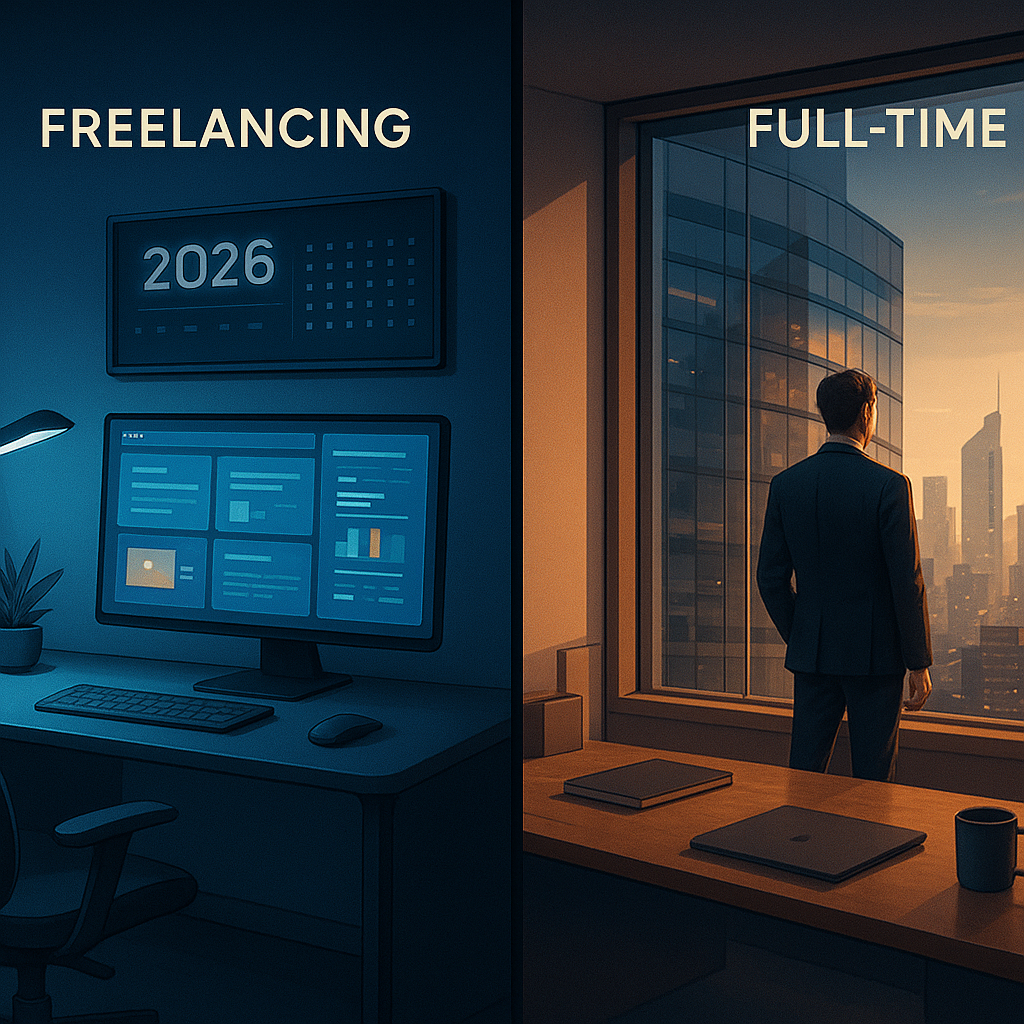

The Shifting Dynamics of Work: Freelancing and Full-Time Employment in 2026
Picture a vibrant Bangalore café buzzing with software engineers and digital marketers, their laptops open, juggling multiple projects while discussing the merits of freelancing versus traditional full-time roles. This scene encapsulates a global trend reshaping career trajectories. In 2026, the choice between freelancing and full-time employment is no longer a simple binary but a complex decision influenced by economic shifts, technological advances, and personal aspirations.
According to a recent report by MSN, employers are increasingly hiring freelancers to fill gaps amid a surge in layoffs reminiscent of the pandemic era. This underscores a pivotal moment where flexibility, adaptability, and strategic career planning come to the forefront. As someone deeply embedded in career development and upskilling, I find it essential to dissect these options with a nuanced lens, offering insights backed by data and expert perspectives.
"Freelancing is more than a side hustle; it’s becoming a primary career path for millions worldwide, driven by digital connectivity and shifting employer needs." – Industry Analyst, 2026
Understanding the evolving landscape is crucial. The lines between freelancing and full-time employment blur as hybrid models emerge, and the skills demanded change rapidly. This article unpacks advanced strategies to evaluate both paths, helping professionals make informed choices aligned with their goals and market realities.
From Stability to Flexibility: Historical Context of Employment Models
Historically, full-time employment represented the gold standard of career stability. Post-industrial revolution economies championed long-term company loyalty, fixed salaries, and benefits. In India, especially in tech hubs like Bangalore, this model dominated until the late 2010s. However, globalization and technological disruption gradually introduced alternative work arrangements.
The rise of the gig economy in the early 2020s accelerated this shift. Platforms facilitating freelance opportunities expanded exponentially, enabling professionals to monetize skills across borders. The pandemic years further disrupted traditional employment, forcing both employers and workers to reconsider conventional setups.
By 2026, we see a matured ecosystem where freelancing is not just supplemental but a viable primary career choice. Yet, full-time roles still offer undeniable advantages in security, structured growth, and social benefits. This historical evolution frames the conversation about pros and cons, which are no longer static but dynamic and context-dependent.
- Pre-2020: Dominance of full-time roles with incremental freelance opportunities.
- 2020-2023: Pandemic accelerates remote work and freelance adoption globally.
- 2024-2026: Hybrid models and strategic freelancing gain prominence amid economic uncertainty.
Understanding this timeline is key to appreciating why advanced strategies in choosing between freelancing and full-time employment matter more than ever.
Core Analysis: Evaluating Pros and Cons with Data-Driven Insights
When weighing freelancing against full-time employment in 2026, it’s essential to move beyond generic lists and adopt a data-driven approach that considers individual circumstances and market trends.
Freelancing Advantages:
- Flexibility and Autonomy: Freelancers control their schedules, clients, and work environments. This autonomy supports work-life integration, a significant factor for many professionals today.
- Diverse Income Streams: Unlike fixed salaries, freelancers can diversify projects across industries, potentially increasing earnings and mitigating risk.
- Skill Enhancement: Exposure to varied projects accelerates learning and upskilling, crucial in fast-evolving fields like AI, digital marketing, and software development.
Freelancing Challenges:
- Income Volatility: Earnings can fluctuate unpredictably, complicating financial planning.
- Benefits Gap: Lack of employer-provided health insurance, retirement plans, and paid leave.
- Administrative Burden: Freelancers manage taxes, contracts, marketing, and client acquisition independently.
Full-Time Employment Advantages:
- Financial Stability: Predictable monthly income with structured raises and bonuses.
- Comprehensive Benefits: Health coverage, retirement plans, paid vacation, and parental leave.
- Career Pathways: Clear progression ladders and mentorship opportunities.
Full-Time Employment Challenges:
- Limited Flexibility: Fixed schedules and office presence expectations persist in many industries despite remote work trends.
- Skill Stagnation Risk: Repetitive tasks can limit exposure to new technologies or roles.
- Job Security Concerns: Layoffs remain a reality, especially in volatile sectors; recent 2026 layoffs have hit pandemic-era levels according to MSN.
From a Bangalore perspective, where tech professionals face intense competition and rapid skill shifts, freelancers may find richer opportunities for growth. Meanwhile, corporate roles continue to offer stability for those prioritizing long-term security.
"The decision between freelancing and full-time employment hinges on balancing financial security with professional freedom and growth potential." – Priya Sharma, Career Development Expert
Current Developments in 2026: Market Trends and Employer Strategies
The 2026 job market reflects several notable trends influencing the freelancing versus full-time debate. Employers, especially in Silicon Valley and Bangalore, are recalibrating their workforce strategies amid economic pressures and technological innovation.
According to MSN’s recent analysis, companies are increasingly leveraging freelancers to fill temporary or specialized roles, reducing fixed costs and enhancing agility. This trend partly stems from pandemic-era layoffs that have lingered, pushing firms to rely on flexible talent pools rather than permanent hires.
Simultaneously, technology platforms have evolved, offering freelancers sophisticated tools for project management, payment security, and networking. AI-powered marketplaces match skill sets with client needs more efficiently, while blockchain solutions improve contract transparency and payment speed.
On the full-time employment front, companies invest heavily in employee engagement and upskilling programs to retain talent. Bangalore’s tech giants have launched initiatives emphasizing continuous learning, hybrid work models, and mental health support to attract and maintain skilled workers.
- Employer Hiring Trends: 40% rise in freelance contracts compared to 2024.
- Technology Impact: 60% of freelancers use AI-driven platforms for client acquisition.
- Employee Development: 75% of full-time employees participate in employer-sponsored upskilling in Bangalore.
These dynamics create a complex environment where career decisions must factor in not only personal preferences but also evolving market realities and technological enablers.
Expert Perspectives and Industry Impact: Voices from the Field
Engaging with industry leaders and career strategists provides valuable insights into the nuanced advantages and pitfalls of freelancing versus full-time roles. An executive at a leading Bangalore-based IT firm shared that while freelancing offers agility, full-time employees benefit from deeper organizational knowledge and networking opportunities that freelancers often miss.
Meanwhile, veteran freelancers emphasize the importance of building a personal brand and financial discipline. They recommend diversifying client portfolios and investing in continuous learning to stay competitive. This aligns with strategies highlighted in WriteUpCafe’s Freelancing vs Full-Time Employment in 2026 article, which advocates for a hybrid approach blending stability with flexibility.
Career coaches in Bangalore also stress the growing value of soft skills such as communication, adaptability, and self-management—traits that empower freelancers to thrive independently and full-time employees to excel within teams. Exploring WriteUpCafe’s Advanced Strategies for Soft Skills Employers Value Most in 2026 offers actionable guidance on cultivating these capabilities.
"Soft skills are the currency of the modern workplace, whether you're a freelancer negotiating contracts or a full-time employee leading projects." – Career Coach, Bangalore
Industry impact extends beyond individual careers. The rise of freelancing influences organizational structures, pushing companies toward more fluid, project-based teams. Simultaneously, it challenges policy-makers to rethink labor laws and social security frameworks to protect non-traditional workers.
Future Outlook and Strategic Takeaways for Career Planning
Looking ahead, the distinction between freelancing and full-time employment will continue to evolve. Hybrid careers—where professionals combine steady employment with freelance projects—are becoming increasingly common. This model offers a balance of income stability and growth opportunities, especially relevant for early-career workers and those seeking gradual transitions.
To navigate this landscape strategically, professionals should consider:
- Assessing Personal Priorities: Financial security, flexibility, skill development, and lifestyle preferences should guide decisions.
- Building a Growth Mindset: Continuous upskilling is vital regardless of employment type.
- Networking Proactively: Both freelancers and full-timers benefit from strong professional networks for opportunities and support.
- Leveraging Technology: Utilizing AI tools and platforms enhances productivity and market reach.
- Planning Financially: Freelancers especially must manage irregular income and benefits planning carefully.
For those considering a shift or balancing both worlds, exploring resources like Soft Skills Employers Value Most in 2026: A Career Development Guide can provide essential frameworks for success.
"The future belongs to adaptable professionals who can blend the security of full-time roles with the dynamism of freelancing." – Priya Sharma
In conclusion, the debate between freelancing and full-time employment is less about choosing one over the other and more about crafting a personalized career path that leverages the strengths of both. In 2026, armed with data, market insights, and strategic foresight, professionals can design resilient careers that thrive amid uncertainty and change.




























Sign in to leave a comment.