

Setting the Stage: The Growing Divide Between Freelancing and Full-Time Roles
By 2026, the workforce landscape has transformed significantly with over 60% of global professionals engaging in some form of freelancing or gig work, according to the latest Statista reports. This shift is particularly pronounced in tech hubs like Bangalore, where the startup ecosystem and remote work culture thrive. Yet, despite the appeal of autonomy, many freelancers find themselves grappling with challenges that full-time employees often avoid. Conversely, full-time workers sometimes miss out on the flexibility and diverse experiences freelancers enjoy.
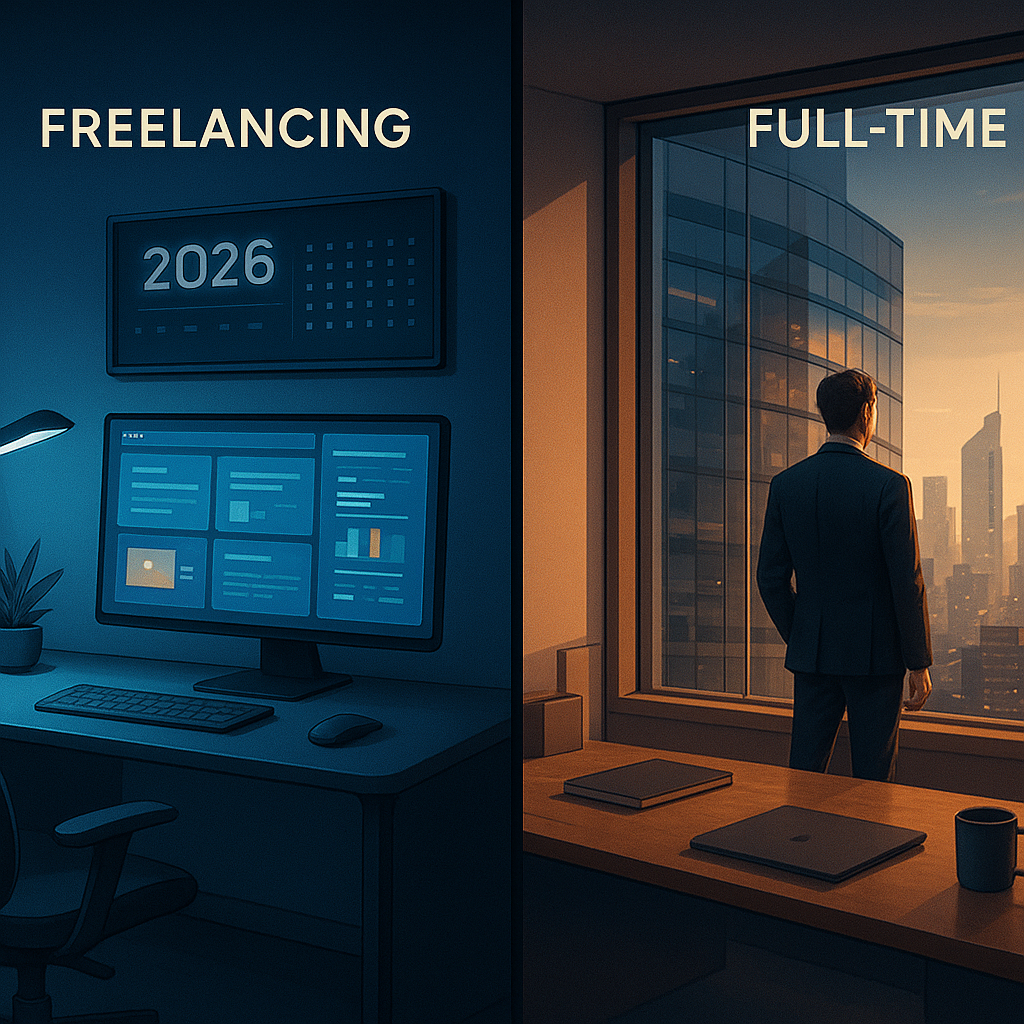
Imagine Anjali, a software developer in Bangalore, who recently transitioned from a stable full-time job at a multinational corporation to freelancing for Silicon Valley startups. While her income initially surged, she quickly encountered hurdles in client acquisition and financial planning. Meanwhile, her colleague Raghav, who remains in a traditional role, enjoys steady benefits but feels boxed in by rigid schedules and limited skill growth.
This article unpacks the common mistakes professionals make when choosing between freelancing and full-time employment, explores the nuanced pros and cons of both paths in 2026, and offers actionable insights for those navigating these critical career decisions.
Historical Context: How Freelancing Evolved and Full-Time Roles Adapted
The dichotomy between freelancing and full-time employment is not new but has gained unprecedented relevance over the past decade. Traditionally, full-time employment dominated the career landscape, offering stability, benefits, and a clear professional trajectory. Freelancing was often relegated to side gigs or creative fields.
The rise of digital platforms like Upwork, Freelancer, and specialized marketplaces has revolutionized access to freelance opportunities. By 2024, reports from the San Antonio Express-News highlighted a surge in individuals starting online freelancing businesses, driven by technological advancements and a cultural shift toward work-life balance. This trend accelerated through the COVID-19 pandemic recovery years, pushing companies to embrace remote and contract workers.
Simultaneously, full-time roles have evolved to incorporate flexible work arrangements, upskilling programs, and hybrid models. Corporations in Bangalore and Silicon Valley alike invest heavily in continuous learning initiatives, understanding that retaining talent requires more than a paycheck. The interplay of these factors has created a complex decision matrix for professionals evaluating their career options.
Common Mistakes in Freelancing and Full-Time Employment: A Comparative Analysis
Understanding the pitfalls in both freelancing and full-time work is essential to making informed career choices. Here are some prevalent mistakes identified through interviews with career coaches and industry data:
- Underestimating Financial Management in Freelancing: Many freelancers neglect budgeting for taxes, healthcare, and retirement. Unlike salaried employees, freelancers must navigate irregular income streams and self-funded benefits.
- Ignoring Network Building: Freelancers sometimes focus solely on current projects, overlooking the importance of continuous relationship-building essential for future work.
- Overcommitting in Full-Time Roles: Employees often struggle with burnout due to excessive workloads and poor boundary setting, especially in hybrid work models.
- Neglecting Skill Diversification: Full-time workers may become complacent in their roles, missing opportunities to upskill or pivot as industries evolve rapidly.
- Poor Contract and Job Offer Evaluation: Freelancers might accept projects without clear scope, while full-time employees sometimes overlook contract clauses related to non-compete or intellectual property.
"Many professionals jump into freelancing lured by flexibility but falter because they underestimate the discipline required for business management," explains career strategist Rahul Mehta.
Conversely, full-time employment can feel like a double-edged sword:
- Stability vs. Stagnation: While stable paychecks and benefits provide comfort, the lack of challenge can stunt growth.
- Limited Autonomy: Hierarchical structures may restrict creativity and decision-making.
- Office Politics and Cultural Fit Issues: These can erode job satisfaction over time.
Understanding these nuances helps clarify why neither path is universally superior but rather suited to individual circumstances and mindsets.
2026 Developments: How the Career Landscape Has Shifted
The year 2026 brings fresh dynamics that influence the freelancing vs. full-time debate. Emerging technologies like AI-driven project management tools and blockchain-based contract verification have enhanced freelancers' ability to secure and manage work efficiently. Platforms now offer integrated tax filing, legal advice, and health insurance bundles tailored for gig workers.
Meanwhile, full-time employment benefits have expanded to include mental health support, equity participation, and personalized learning pathways. According to a 2026 McKinsey report, companies investing in employee upskilling see 30% higher retention rates, underscoring the strategic priority of career development within organizations.
Importantly, hybrid and remote work models have normalized, blurring lines between freelancer and employee experiences. This convergence creates hybrid career models where professionals combine part-time full-time roles with freelance projects, optimizing income and skill diversity.
These trends are vividly reflected in Bangalore's tech sector, where talent fluidity is now common. As Priya Sharma notes in her analysis on WriteUpCafe, "The key to thriving in 2026 is adaptability—leveraging both freelance agility and the structural support of full-time roles." For readers seeking deeper strategic insights, the article Advanced Strategies for Freelancing vs Full-Time Employment Pros and Cons in 2026 offers a comprehensive guide.
Expert Perspectives and Industry Impact
Insights from industry leaders and career experts provide valuable context on how professionals can navigate these career paths effectively:
- Shweta Gupta, HR Director at a Bangalore-based fintech startup: "We see a growing preference among younger employees for hybrid work arrangements, combining full-time stability with freelance gigs to build diverse portfolios."
- Vinod Reddy, Freelance Consultant and Author: "Proper financial literacy and contract clarity are non-negotiable for freelancers. These are often overlooked, leading to common pitfalls."
"The conversation is shifting from freelancing vs. full-time to how individuals can curate a career that blends the best of both worlds," says Priya Sharma.
This evolution impacts talent acquisition strategies, compensation models, and organizational culture globally. Companies that recognize and integrate flexible career options tend to attract top talent and foster innovation.
Looking Ahead: Future Outlook and Tactical Takeaways
As we move beyond 2026, professionals face a landscape where career fluidity is the norm rather than the exception. Key takeaways for making informed choices include:
- Evaluate Personal Priorities: Stability, flexibility, income predictability, and professional growth should guide decisions.
- Invest in Financial and Contract Literacy: Whether freelance or full-time, understanding income management and agreements is critical.
- Build and Maintain Networks: Relationships fuel opportunities in all employment forms.
- Commit to Lifelong Learning: Upskilling is essential to remain competitive and adaptable.
- Consider Hybrid Career Models: Combining freelance and full-time roles can diversify income and experience.
For actionable strategies and deeper exploration of these themes, readers can refer to the detailed comparative analysis in Freelancing vs Full-Time Employment in 2026: Pros and Cons Explored.
In conclusion, the decision between freelancing and full-time employment must be personalized and informed by clear understanding of common mistakes and evolving market conditions. Embracing a growth mindset and proactive career management will empower professionals to thrive regardless of their chosen path.





























Sign in to leave a comment.