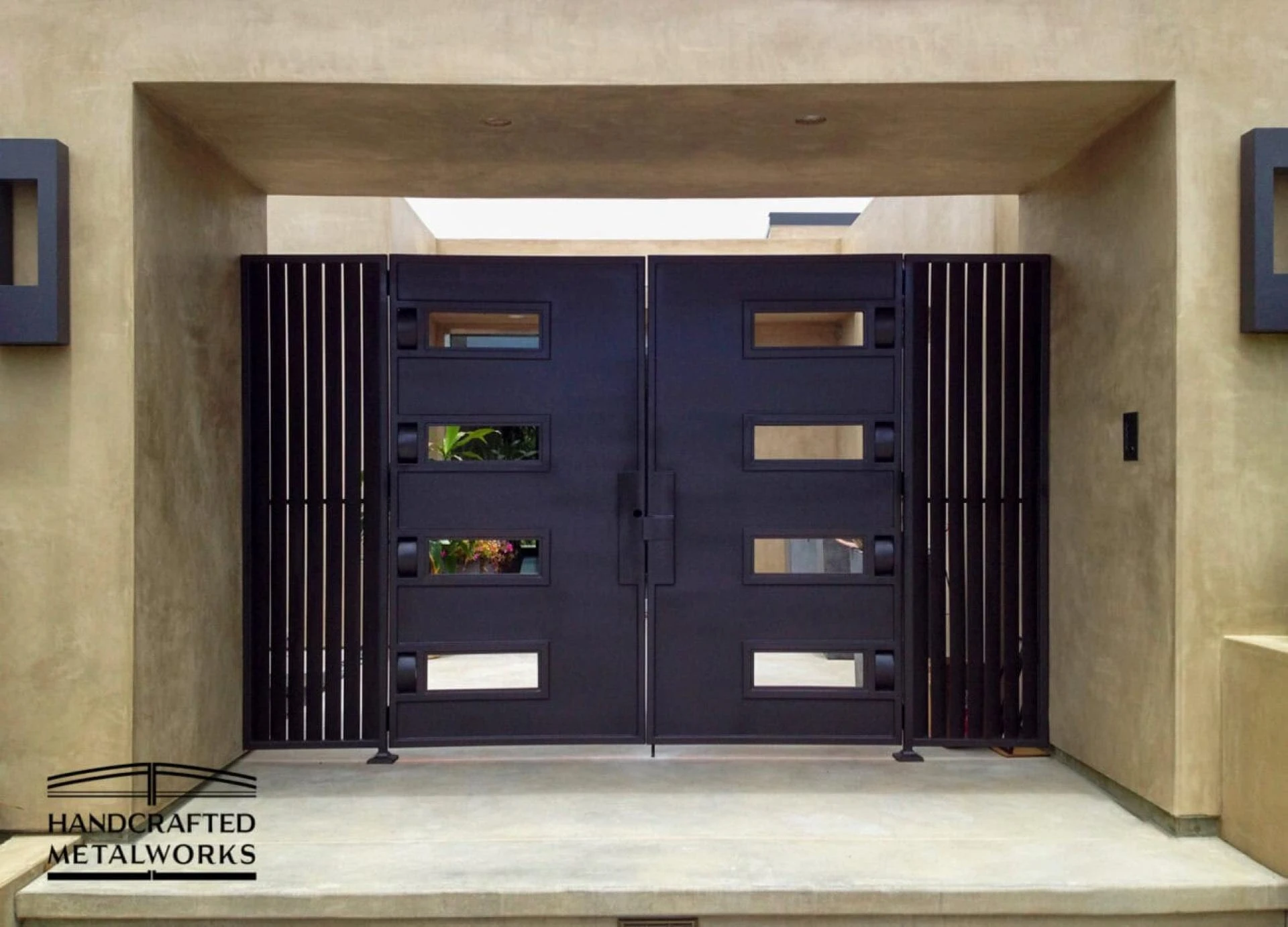

Why Custom Metal Entry Gates Matter More Than You Think
Most people don’t wake up thinking about gates. You think about the kitchen, bathrooms, flooring, all the sexy stuff. Then you pull up in front of your house one day and realize the first thing anyone sees is… a flimsy, off‑the‑shelf gate from a big box store that wobbles in the wind.
That’s the moment custom metal entry gates start making sense. This is your front handshake. Your first impression. It frames the whole property before anyone even gets to the front door. If the gate looks cheap or half‑broken, everything behind it feels a notch lower. Even if you spent a fortune on the interior, your curb appeal quietly undercuts you.
Custom metal entry gates do a few jobs at once. They set tone. They control access. They handle daily abuse from weather, delivery drivers, kids, pets, you name it. A good gate doesn’t just look nice on day one. It works properly day after day, doesn’t sag, doesn’t rust out in a year, doesn’t squeal and drag across your driveway like a bad horror movie.
And honestly, in neighborhoods where every second house is starting to look the same, a custom gate is one of the simplest ways to make your place feel like yours. Not “plan D from the builder catalog,” but actually yours.
From Stock Panels To Custom Metal Entry Gates: The Difference
If you’ve only ever priced cookie‑cutter gates, custom metal can feel expensive. On paper, a standard panel system is cheaper. Until you start staring at the compromises. Wrong height. Wrong width. Weird gaps at the bottom. Generic pattern you’ve already seen five times on your street.
With custom metal entry gates, the fabricator builds for your exact opening, your slope, your columns, your hardware. No filler plates, no awkward extensions, no hacked‑in posts that look like an afterthought. The hinge lines up where it should. The latch hits the strike clean. The clearances are right for your paving and grade. Everything feels intentional.
You also get design freedom. Want a modern flat‑bar design with tight horizontal lines and a hidden frame? No problem. Prefer something more classic with subtle scroll work and a heavier, almost European feel? Also fine. Want to match an existing pattern on your balcony or a custom stair railing you added last year? That’s where custom shines.
The other piece nobody mentions: structure. Stock gates are designed to be “good enough” for the widest range of conditions at the lowest cost. Custom gates can be engineered properly. That means thicker wall tubing where it matters, better bracing, smart hinge choices, stronger posts set at the right depth. Especially important if you’re going motorized. A sloppy frame plus a heavy operator is a great way to burn out equipment and twist steel.
Designing For Real Life: Security, Privacy, And Daily Use
It’s easy to get stuck on looks. Scroll Instagram, save a dozen pictures, tell your fabricator “just do something like this.” But the best custom metal entry gates aren’t just pretty. They’re built around how you actually live.
Think about traffic. Do you walk in more than you drive? Do kids cut through with bikes? Do you get a lot of packages? Maybe you need a pedestrian gate integrated into the main entry, or a spot for a parcel box or intercom. Those details change the framing, the layout, even how the gate swings.
Security is another layer. Some people just want a psychological barrier, something that says “this is private property.” Others want real security: pick‑resistant locks, minimum spacing that stops climbing, no easy footholds. That affects bar spacing, height, panel layout, the way you treat the top edge.
Then there’s privacy. Decide early how “open” you want things to feel. Solid panels, perforated sheets, slats with small gaps, or more open pickets. Too solid and you feel like you’re living behind a wall. Too open and you might as well not bother if your goal is to block views. Custom work lets you dial that in, not just accept whatever the catalog page offered.
And don’t forget the boring stuff, like wind. Solid metal panels on a tall gate in a windy area are basically sails. If your fabricator doesn’t think about that, you’ll be dealing with torque on hinges, stressed posts, maybe even failure. Good design looks ahead at the physics, not just the finish.
Material And Finish Choices For Custom Metal Entry Gates
Most custom metal entry gates you see are steel, aluminum, or a combo. Each has upsides and trade‑offs, and no, there isn’t one “best” answer for everyone.
Steel is strong, feels solid, and handles impacts better. It’s usually the go‑to for security‑focused designs or big, heavy gates. The trade‑off: it wants to rust if you don’t treat it right. So you’re talking about proper surface prep, primers, powder coat or high‑quality paint systems, maybe even galvanizing in tough climates. Done right, it lasts decades. Done lazily, it starts bubbling and flaking too soon and you’re repainting before you’re ready.
Aluminum is lighter and naturally resistant to rust. Great if you’re in a coastal climate or using an automatic opener that you don’t want working overtime. But it’s softer. So for high‑abuse locations, or if you want very slender, long spans, you have to design carefully so it doesn’t feel flimsy.
Finishes are where personality shows up. Matte black powder coat is the standard “can’t go wrong” choice. But you can get more adventurous. Texture coats that hide fingerprints and dust. Subtle metallics that catch light without looking tacky. Even mixed materials, like metal frames with wood infill, so you get warmth without losing strength.
If you’re planning custom interior metal as well, like a custom stair railing, this is your chance to coordinate. Same color family, similar profiles or patterns, so the whole property feels coherent instead of pieced together from random Pinterest moods.
Tying It Together With Custom Stair Railing Indoors
Here’s where a lot of people miss an easy win. They invest in beautiful custom metal entry gates outside, but inside the house, the stair railing is whatever the builder threw in at the last minute. Totally different style, different metal, different vibe. Feels disjointed.
If you think about both at the same time, you can turn them into a design language that runs through the whole property. Maybe the vertical bars of your gate echo the balusters on your custom stair railing. Maybe the flat bar handrail inside mirrors the top rail profile outside. Or you carry a simple geometric pattern, like a square motif or diagonal line, across both elements.
This doesn’t mean everything has to match perfectly, like a furniture set from a catalog. That can actually look cheap. But when the gate and railing feel like cousins instead of strangers, the house suddenly feels more intentional. People won’t always know why, they’ll just say “it feels really put together.”
There’s also a practical angle. If the same fabricator builds your gate and your custom stair railing, they’re already set up with your chosen metal, finish, and hardware preferences. Less back‑and‑forth, fewer surprises about colors not matching or details getting lost between shops. One point of responsibility. One person you call if something isn’t right.
What The Process Actually Looks Like, Start To Finish
A lot of folks picture commissioning custom metal as this vague, artistic thing. In reality, it’s a pretty structured process if you’re working with a decent shop. Messy at times, sure, but not mysterious.
Usually it starts with a site visit and some rough ideas. Measurements, photos, checking slopes, looking at existing columns or walls. You talk about what you like, what you hate, budget range, whether the gate is manual or automatic, how you use the property.
Next comes design. Could be hand sketches, could be full CAD drawings or even 3D renders if the project is big enough. This is where you nail down height, profiles, patterns, hinge type, latch location, clearances. Don’t rush this part. Fixing decisions on paper is easy. Fixing them in steel is not.
Once you approve a design, the fabricator orders material and heads into the shop phase. Cutting, welding, grinding, test fitting hardware, checking squareness. Good metalworkers dry‑fit moving parts, make sure things swing or slide properly before anything gets painted. After fabrication comes finishing, then installation: digging or core‑drilling posts, setting them in concrete or onto plates, hanging the gate, aligning, adjusting, final tweaks.
Same general flow applies to a custom stair railing, just in a different context. Measure, design, fabricate, finish, install. The difference with stairs is you usually deal with tighter tolerances and more interaction with building code. Handrail heights, spacing, graspability. Which is another reason you want someone who knows what they’re doing, not just someone who can weld.
Common Mistakes People Make With Custom Metal Work
Custom metal is pretty forgiving in some ways, unforgiving in others. A few mistakes show up over and over. Easy to avoid if someone warns you first.
First, going too thin to save money. Skinny posts, light‑gauge material, big spans. Looks fine in the rendering, feels cheap in real life. Or worse, it starts to twist and sag. Especially with gates, structure matters. You can’t cheat physics.
Second, ignoring how things will be used five years from now, not just on install day. Maybe you love a delicate pattern with tight scrolls, but you’ve got a dog that will slam into it daily. Maybe you install a solid gate, then realize backing trailers or delivery trucks in is now a nightmare. Thinking forward beats regretting later.
Third, forgetting about code and clearance. A gorgeous custom stair railing that fails inspection because baluster spacing is wrong or the handrail is too low is not a win. Same with gates that don’t leave enough space to swing open without hitting cars or interfering with public sidewalks.
And finally, picking a fabricator on price alone. This stuff is literally welded to your house. It’s not like a chair you can just replace. If a bid comes in way under everyone else, you have to ask why. Something’s usually missing: prep, finish quality, warranty, or frankly, skill.
Budget, Value, And How To Choose A Fabricator
Let’s talk money without dancing around it. Custom metal entry gates aren’t the cheapest line item in your project. They sit in that weird space between “luxury” and “infrastructure.” It’s tempting to either overspend on crazy ornament, or underspend and end up with something you hate.
The goal is value, not just a low or high number. A solid, well‑designed gate that works every day, looks good, and doesn’t cause drama with rust or misalignment is worth more than a showpiece that constantly sticks or peels. Same with a custom stair railing: you touch it every day. Quality there pays back quietly, over and over.
When you’re choosing a fabricator, look at three things: previous work, communication, and how they handle details. Past projects should show variety, not the same design recycled everywhere. Communication should feel straightforward. If they’re already flaky at the quote stage, it won’t improve later. And the way they talk about hinges, coating, drainage holes, installation… that tells you whether they think long‑term or just want to get paid and get out.
Expect quotes to vary. That’s normal. Just make sure you’re comparing the same scope: material thickness, finish type, hardware, demolition of old gates if needed, concrete work, electrical if you’re automating. Once you see the full picture, the “cheap” option usually doesn’t look so cheap anymore.
Conclusion: From Custom Metal Entry Gates To The Last Handrail
Custom metal entry gates are one of those upgrades that quietly change how your whole property feels. Not in a loud, look‑at‑me way, but in that calm “this actually fits” way. The gate opens and closes cleanly. It lines up. It matches your house instead of fighting it. And when you carry that thinking inside, with a well‑designed custom stair railing that speaks the same design language, you stop feeling like the exterior and interior came from two different worlds.
This isn’t about perfection or chasing some magazine cover. It’s about making durable choices with a bit of taste and a bit of foresight. Spend time on design, pick a fabricator who cares about structure as much as style, and you’ll end up with metal work that earns its keep every single day. From the first time a guest pulls up to your custom metal entry gates, to the last time you walk up that stair railing decades from now, still grabbing the same solid rail you picked on purpose, not by default.
How long do custom metal entry gates actually last?
If they’re built and finished properly, custom metal entry gates can easily last a few decades. The exact lifespan depends on climate, material, and maintenance. Galvanized or well‑coated steel in a mild climate will outlive most of your other exterior finishes. Cheap paint, poor prep, or ignoring rust spots will cut that life down fast.
Can I match my gate and custom stair railing design?
Yes, and you probably should if you care about a cohesive look. You don’t need a perfect match, but using similar profiles, colors, or patterns between the gate and your custom stair railing ties the property together. If the same fabricator handles both, it’s much easier to coordinate details and finishes so nothing clashes.
Are custom gates hard to maintain day to day?
Not really, if they’re built right. Basic care is simple: keep hinges lubricated, wash off dirt and road grime now and then, touch up chips before rust spreads. Automated gates need a bit more attention—checking sensors, keeping tracks clear if it’s a slider—but nothing crazy. Most problems come from bad installation or cheap hardware, not from the idea of custom metal itself.
Do I need a designer or architect for custom metal work?
You don’t always need a separate designer, especially for simpler projects. Many fabricators are comfortable developing designs with you from reference photos and rough ideas. For complex properties, historic homes, or when you’re tying custom metal entry gates and interior railing into a larger remodel, an architect or designer can help keep everything aligned. Either way, make sure whoever leads the design understands both aesthetics and how the metal will actually be built.





















Sign in to leave a comment.