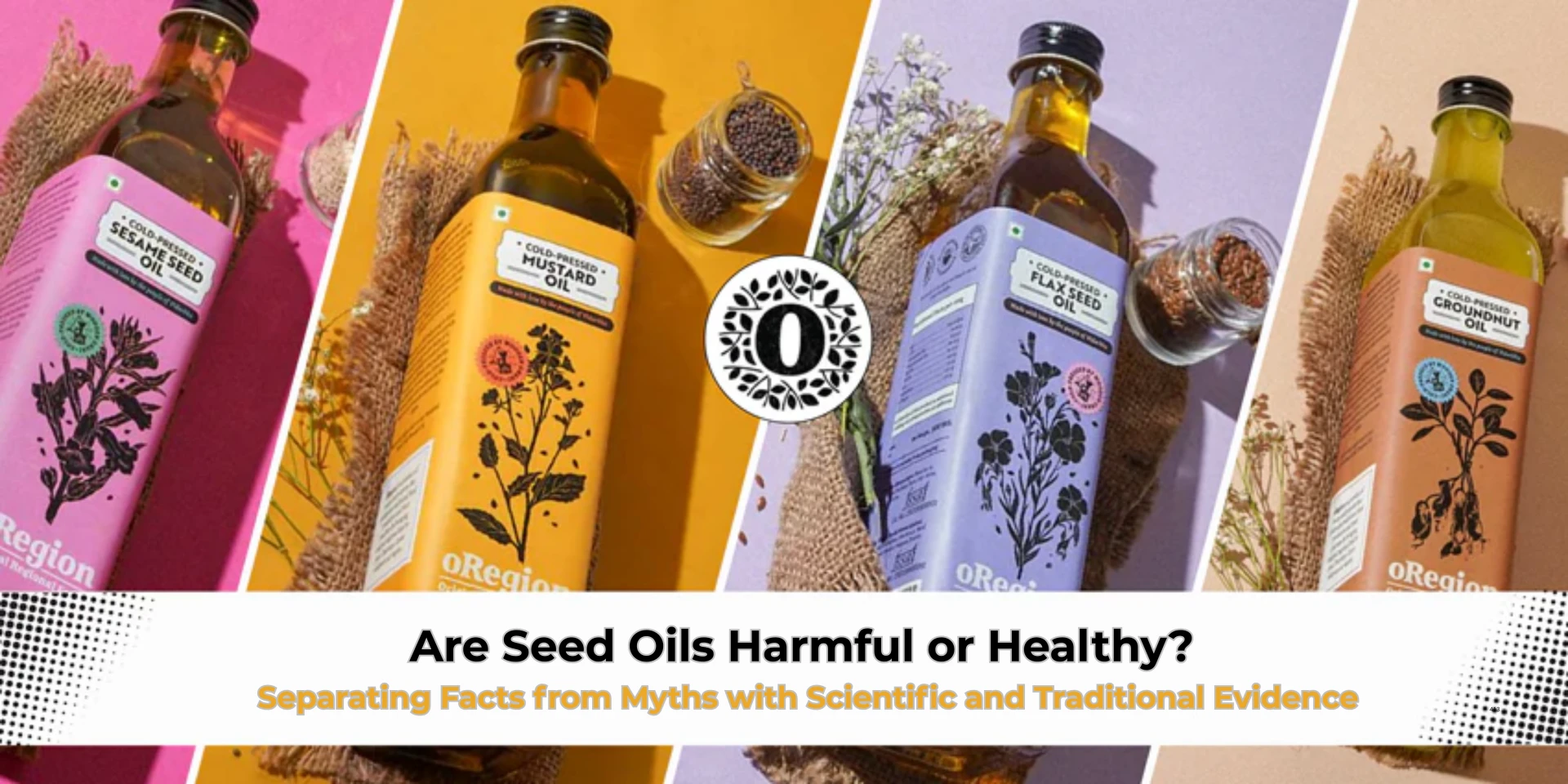

Introduction: Let’s Pause the Fear and Start the Conversation
We’ve all seen it: influencers warning that seed oils are inflammatory and toxic. But is that the full story—or just half close to home? At oRegion, we believe in transparency, tradition, and science-driven clarity. This article—crafted for you, the health-conscious reader—explores the real story behind seed oils, especially Cold Pressed Flaxseed Oil (Alsi Ka Tel), plus mustard (Sarso) and groundnut (Chekku) oils. We’ll untangle myths, spotlight traditions, and explain why cold-pressed, wood‑pressed oils deserve respect—and perhaps, a place in your pantry.
Let’s debunk, not deepen, the confusion.
What Are Seed Oils — And Why Is Everyone Talking About Them?
Seed oils are, quite simply, oils extracted from plant seeds. The controversy stems from how they’re made—and how they’re used.
- Traditional extraction: In India, we have a long legacy of lakdi ghani (wood‑pressed) or cold‑pressed oils—think alsi oil, Sarso tel, til oil, and Chekku groundnut oil. These methods use mechanical pressure, minimal heat, and zero chemicals, preserving nutrients, aroma, and antioxidants.
- Industrial refined extraction: On the flip side, many supermarket seed oils—like canola, corn, and sunflower—are extracted using high heat, chemical solvents like hexane, plus bleaching and deodorizing steps.
The real issue? Not all seed oils are equal. The traditional ones? Worthy. The industrial varieties? Approach with awareness.
Myth vs. Science: Are Seed Oils Really Inflammatory or Toxic?
Myth 1: Seed oils cause inflammation—especially due to omega-6
True, many seed oils are rich in omega‑6, which in excess may skew our omega‑6 to omega‑3 ratio. But modern science tells a clearer story:
- Clinical human studies show that even high linoleic acid (a key omega‑6) does not raise inflammation markers.
- One review even finds that higher levels of circulating linoleic acid correspond with lower risk of cardiovascular events.
- Another recent study found seed oils linked to reduced inflammation and lower type 2 diabetes risk.
Bottom line? Omega‑6 seed oils aren’t inherently inflammatory—context and balance are key.
Myth 2: Refined seed oils are toxic due to solvents like hexane
Concerns around hexane residue are common. But regulatory agencies (e.g., the EPA) recognize the minimal residue in commercial oils as safe. And nutrition experts clarify: while these industrial oils are highly processed, the trace chemicals present are not in harmful amounts.
Myth 3: Seed oils oxidize, forming toxic compounds when heated
All oils can degrade under excessive heat—but this is not unique to seed oils. The key lies in using the right oil for the right purpose and not reusing or overheating it repeatedly
Debunking the Myths: What Experts and Reviews Say
- A 2025 review of human data confirms that seed‑derived linoleic acid doesn’t increase chronic disease or inflammation.
- An article by Today's Dietitian highlights that most linoleic acid does not convert into the inflammatory arachidonic acid, and in fact, many trials show no link with inflammation.
- Consumer Reports recently called out myths about seed oils being inflammatory or cancer-causing, reminding us that ultra-processed foods—not the oils themselves—are often the real culprit.
- reinforces that moderate intake of seed oils can be heart-healthy, especially when replacing saturated fats Health.
Traditional Indian Oils That Deserve Respect
At oRegion, we stand for ancient wisdom backed by modern science:
Flaxseed Oil (Alsi Ka Tel)
- Rich in plant-based omega‑3 (ALA), a rarity among oils.
- Benefits include reducing inflammation, heart health, skin glow, digestive support, hormonal balance, and hair nourishment.
- Use raw—avoid heating. Drizzle over salads, curries, or incorporate in smoothies or daals.
Mustard Oil (Kacchi Ghani Sarso Tel)
- Naturally anti-microbial, and traditionally used for joint care and digestion.
- High smoke point—ideal for Indian cooking.
- Rich in monounsaturated fats and plant sterols. Great for both health and flavor.
Groundnut Oil (Chekku Oil)
- Mild, nutty, stable cooking oil.
- Contains vitamin E and a heart-friendly fatty acid profile.
Sesame Oil (Til Oil)
- Botanical and Ayurvedic uses, from cooking to massage.
- Immunity-supportive, aromatic, and nourishing.
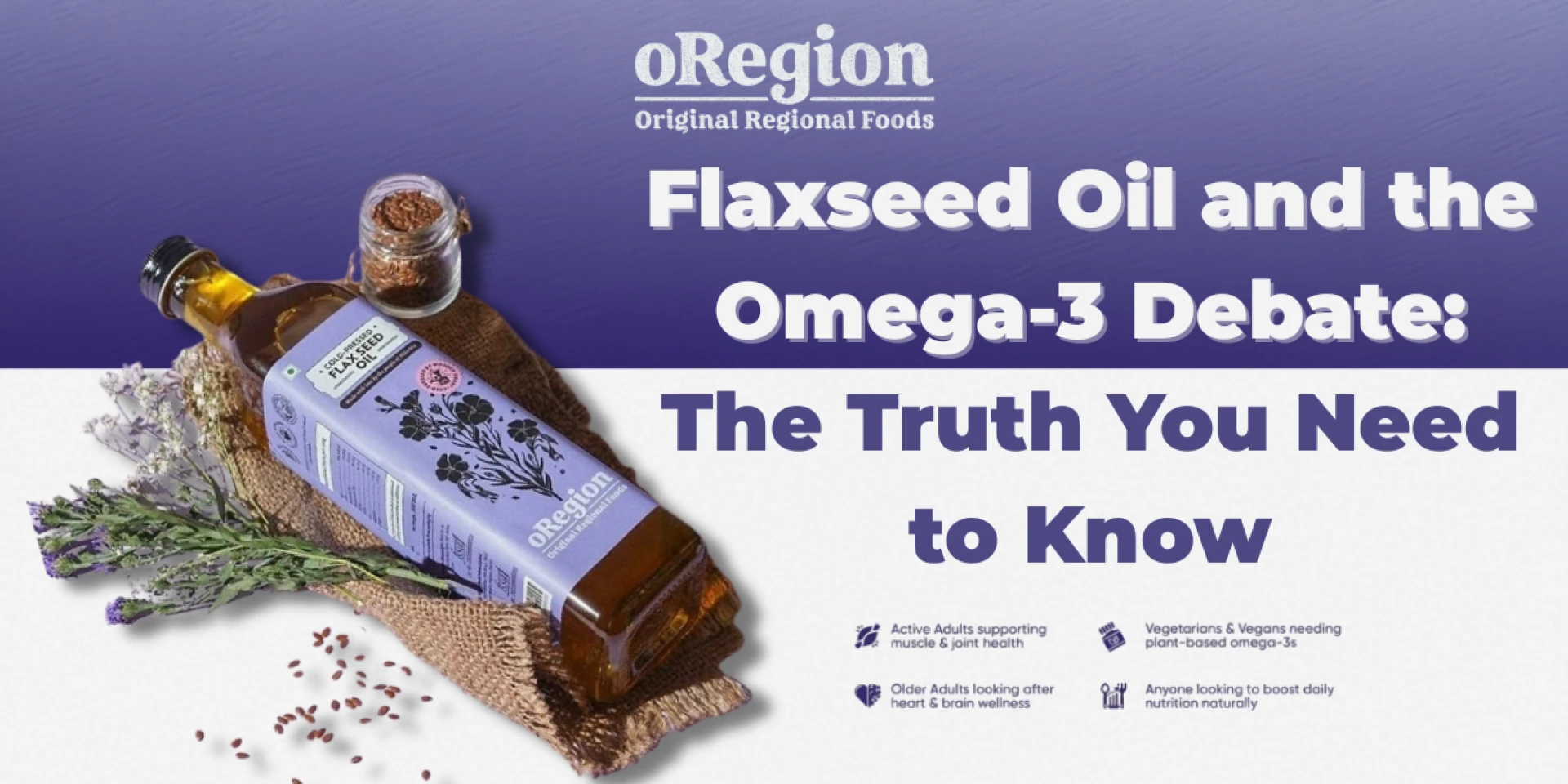
Flaxseed Oil: Why It’s a Modern Essential (Especially for Women)
Let’s zoom in on the all-star: cold‑pressed flaxseed oil.
- One of the richest vegetarian sources of omega‑3 (ALA); America’s GRAS designation for high-ALA flaxseed oil confirms its safety
- Particularly valuable for women—supports hormonal balance, skin hydration, heart and brain health, and digestive well-being.
- It’s trending among those seeking a vegan omega‑3 and a healthy olive-oil alternative, especially for cold use.
Choosing the Right Oil: The Three Critical Questions
When selecting seed oils, ask:
What seed does it come from? Not all are nutritionally equal—flax, mustard, groundnut stand out, while cottonseed and highly refined options deserve caution.
How is it processed? Cold‑pressed or wood‑pressed preserves nutrients. Industrial refining doesn’t.
Is it fresh and traceable? Small-batch, local—yes. Over‑stored, generic—no.
At oRegion, all oils are sourced from clean farms in Vidarbha, using traditional lakdi ghani pressing, with transparent, chemical-free processing.
Source : Truth About Seed Oils – Facts & Myths
Practical Tips to Enjoy Seed Oils in Your Daily Diet
- Don’t fear oils—understand them.
- Use flaxseed oil raw, mustard and Cold Pressed Groundnut Oils for cooking, and sesame oil for flavor and wellness.
- Keep your omega‑3 to omega‑6 balance in check by including omega‑3-rich foods (flaxseed oil, chia, walnuts).
- Avoid heating delicate oils; match oil type to cooking method and avoid overheating.
- Store oils properly—in cool, dark places—to avoid oxidation.
Final Thoughts: Let’s Embrace Clarity, Not Fear
The buzz around seed oils often comes from half-truths—ignoring the difference between industrial processing and wholesome tradition. At oRegion, we believe—and our science-backed approach confirms—that cold‑pressed, traditional oils like flaxseed, mustard, sesame, and groundnut offer real health benefits when used mindfully.
Don’t let myths deprive you of wellness. Choose oils that:
- Promote heart, skin, and hormone health
- Are rooted in tradition and made with care
- Support modern nutrition needs
Next time you reach for oil, think: “Is this cold‑pressed, fresh, and traceable?” Let oRegion help bring purity and wellness back to your kitchen.






























Sign in to leave a comment.