
If you have ever wondered about radon in Canada, you’re not alone. Many homeowners are becoming more aware of this invisible gas that can enter homes without any obvious signs. Radon has no colour, smell, or taste, yet it can accumulate indoors over time and affect your indoor air quality.
The good news is that with proper awareness and radon testing in Canada, homeowners can take simple steps to better understand and manage their indoor air safety
What Is Radon Gas?
Radon is a naturally occurring radioactive gas formed when uranium in soil, rock, and water breaks down. Outdoors, it disperses harmlessly. However, when it enters enclosed spaces like homes, it can build up over time.
Radon gas typically seeps into homes through:
- Cracks in floors and foundation walls
- Gaps around pipes and utility lines
- Sump pumps and floor drains
- Crawl spaces with exposed soil
Over time, exposure to elevated radon levels may increase health risks, which is why understanding radon levels in Canadian homes is important for long-term safety.
How Big Is the Radon Problem in Canada?
In October 2024, the University of Calgary published the most comprehensive update on Canadian radon exposure since 2012. The findings shocked researchers and public health officials alike.
Here is what the data revealed:
- 10.3 million Canadians are living in homes with radon above the safe threshold
- The proportion of homes above 200 Bq/m³ jumped from 7% in 2012 to nearly 18% in 2024, more than double
- Radon levels were found to be rising in virtually every part of the country
- No area of Canada was found to be free of high radon risk, not a single one
- In parts of BC's Interior, as many as 1 in 3 homes exceed safe levels
- Radon is responsible for an estimated 16% of lung cancer deaths in Canada
How Does Radon Enter Your Home?
Your home essentially acts like a vacuum. Warm air rises and escapes through the upper floors, creating a pressure difference that draws air and radon up from the soil below. Common entry points include:
- Cracks in concrete floors and walls
- Gaps around pipes, drains, and utility lines
- Hollow block walls and construction joints
- Sump pits and floor drains
- Exposed soil in crawl spaces
Once radon gets in, it accumulates especially in basements and lower floors where ventilation is limited. That's exactly where most Canadian families spend significant time: in finished basements, home offices, and living rooms.
Who Should Consider Radon Testing?
Radon can affect any home, regardless of age or type. However, some situations may increase the likelihood of higher levels:
- Homes with basements or ground-level living spaces
- Energy-efficient homes with limited airflow
- Older homes with structural gaps or cracks
- Homes built on certain soil types
- Families are spending more time in lower-level living areas
For this reason, experts recommend that all homeowners test radon levels at home as part of regular home maintenance.
Radon Testing in Canada: What You Need to Know
When choosing a method for radon testing in Canada, it’s helpful to understand how traditional test kits compare with newer digital solutions, such as an electronic radon monitor (ERM).
Traditional Radon Test Kits
- Typically used for long-term testing (90+ days)
- Require sending results to a lab
- Provide a single averaged reading
- Widely recommended for baseline measurement
Electronic Radon Monitoring Devices
- Provide continuous radon testing instead of a one-time result
- Help track changes in radon levels over time
- Offer faster initial insights
- Allow homeowners to better understand daily and seasonal variations
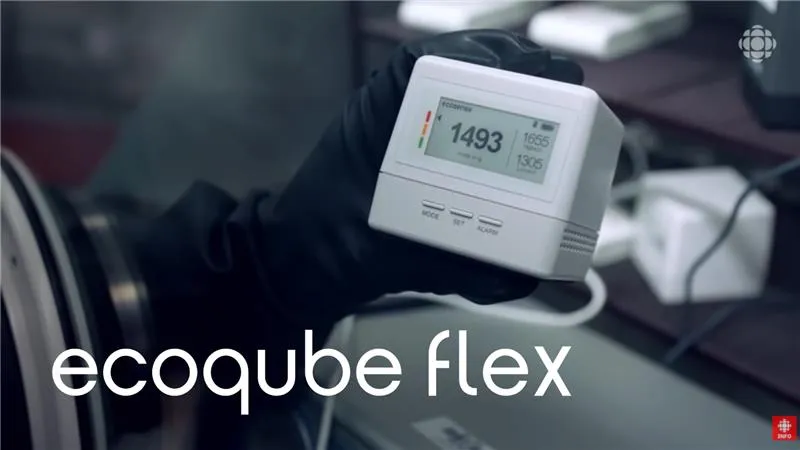
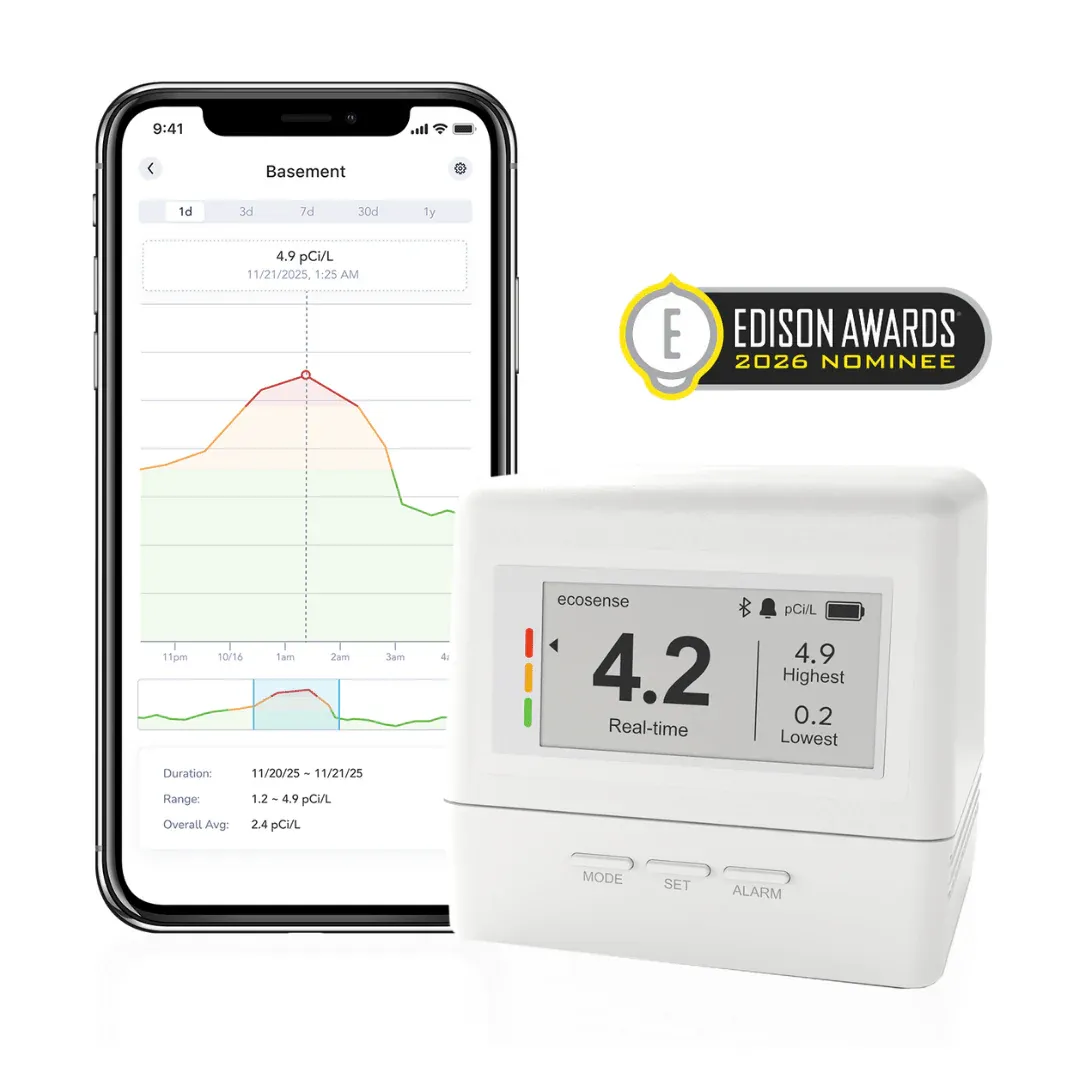
For example, devices like the EcoQube Flex by Ecosense are designed to provide continuous radon testing with quick initial readings and ongoing data tracking. This type of approach can be helpful for homeowners who want more visibility into how radon levels change within different areas of their home.
A Real Story That Highlights the Importance of Radon Awareness
Public awareness around radon gas in Canada has grown in recent years, partly due to real-life stories shared through national media. A report by Radio-Canada Info highlighted the experience of a Canadian homeowner who was diagnosed with lung cancer despite being a non-smoker.
In the report, the homeowner later discovered that elevated radon levels in his home may have contributed to long-term exposure. His family shared that radon had gone unnoticed for many years, as it cannot be seen, smelled, or easily detected without proper testing.
While not every case can be directly attributed to a single cause, health experts across Canada continue to emphasise the importance of regular radon testing in homes as a practical step toward better indoor air safety.
This is why understanding your home’s radon levels through reliable testing methods has become an important step for many Canadian homeowners.
For more context, you can watch the full report:
https://www.youtube.com/watch?v=KXo9Lbzn18w&t=748s
Introducing EcoQube Flex: Fast, Accurate, Portable Radon Testing
The EcoQube Flex is built around Ecosense's patented ion chamber technology, the same technology used by radon professionals. It delivers 15× greater sensitivity than industry standard requirements, giving you readings you can actually trust.
⚡ Fast Results First reading in 10 minutes. Reliable results within 1 hour. No lab wait times. | 🔋 Battery Powered Up to 7 years of battery life in offline mode. Fully wireless — no power outlet needed. |
📱 Bluetooth App Sync with the free Ecosense app. Track trends room by room with detailed charts. | 🏠 Room-by-Room Testing Portable design lets you test every floor and room. Save and compare all readings in the mobile app. |
🖥️ Always-On Display E-ink screen shows current, peak, and low readings — no app needed. | 🇨🇦 Canada-Ready Pre-set for Health Canada's 200 Bq/m³ radon guideline. Easy to configure on the device and take action. |
EcoQube Flex vs. Traditional Radon Testing: Comparison
Not all radon testing is equal. Here's how EcoQube Flex radon monitor stacks up against the methods most Canadians currently use.
| Feature | Charcoal Test Kit | Alpha Track (Mail-in) | EcoQube Flex ★ Recommended |
|---|---|---|---|
| Time to First Result | 2–7 days (+ mail) | 90+ days (+ mail) | 10 minutes |
| Ongoing Testing | No | No | Yes — 24/7 continuous |
| Portability | Fixed, single-use | Fixed location | Room-to-room testing |
| Real-Time Readings | No | No | Every 10 minutes |
| Lab Fees Required | Yes | Yes | None |
| Seasonal Tracking | No | No | Weekly, Monthly & Yearly trends |
| Smartphone App | No | No | iOS & Android |
| Sensitivity | Basic | Good (long-term) | 15× industry standard |
| Battery Life | N/A | N/A | Up to 7 years |
| Health Canada 200 Bq/m³ | Yes | Yes | Pre-configured |
| Reusable | No — single use | No — single use | Yes — years of use |
What to Do If Your Radon Levels Are High
Health Canada recommends taking action if your home tests above 200 Bq/m³. The good news: high radon levels can be fixed. Here's the typical process:
- Test first use continuous radon testing to get a clear, ongoing picture of your home's levels
- Confirm the reading, run EcoQube Flex for at least 7 days in the lowest occupied area for a reliable baseline
- Contact a certified professional, look for a C-NRPP (Canadian National Radon Proficiency Program) certified contractor
- Install a sub-slab depressurisation system, the most common and effective radon mitigation method, typically costing $1,500–$3,500
- Re-test after mitigation, confirm your radon levels have dropped with a follow-up radon test
- Test again seasonally radon levels change with weather and seasons, so periodic radon testing is a smart practice
Final Thoughts
Awareness is the first step when it comes to radon in Canada. While it’s an invisible presence, it doesn’t have to be an unknown one. With modern home radon testing devices and a better understanding of how radon behaves, homeowners can take informed and confident steps toward maintaining a safer indoor space.
Frequently Asked Questions About Radon in Canada
1. How do I know if my home has radon?
The only way to know is through testing. Radon cannot be seen or smelled, so using a reliable testing method is essential.
2. What is considered a safe radon level in Canada?
Health Canada recommends taking action if radon levels exceed 200 Bq/m³.
3. How often should I test for radon?
It’s a good idea to test every few years or after major home changes, and to test periodically since levels can vary over time.
4. How long does radon testing take with EcoQube Flex?
You'll see your first reading in approximately 10 minutes, with reliable results available within 1 hour. For the most accurate baseline, leave the device in one room for 2–7 days. Unlike traditional mail-in test kits, there are no lab fees and no waiting weeks for results.
5. Does my home need radon testing if I live in a low-risk area?
Yes. The 2024 Cross-Canada Survey found that no area of Canada is completely free of high radon risk. Radon levels vary significantly even within the same neighbourhood. The only reliable way to know if your home is safe is to test it directly.
6. Why is radon the leading cause of lung cancer in non-smokers?
When radon decays, it releases radioactive particles that can lodge in the lungs. Over time, repeated exposure damages lung tissue at the cellular level, eventually causing cancerous mutations. Because radon exposure is chronic and invisible, many people don't discover the risk until they receive a diagnosis.


























Sign in to leave a comment.