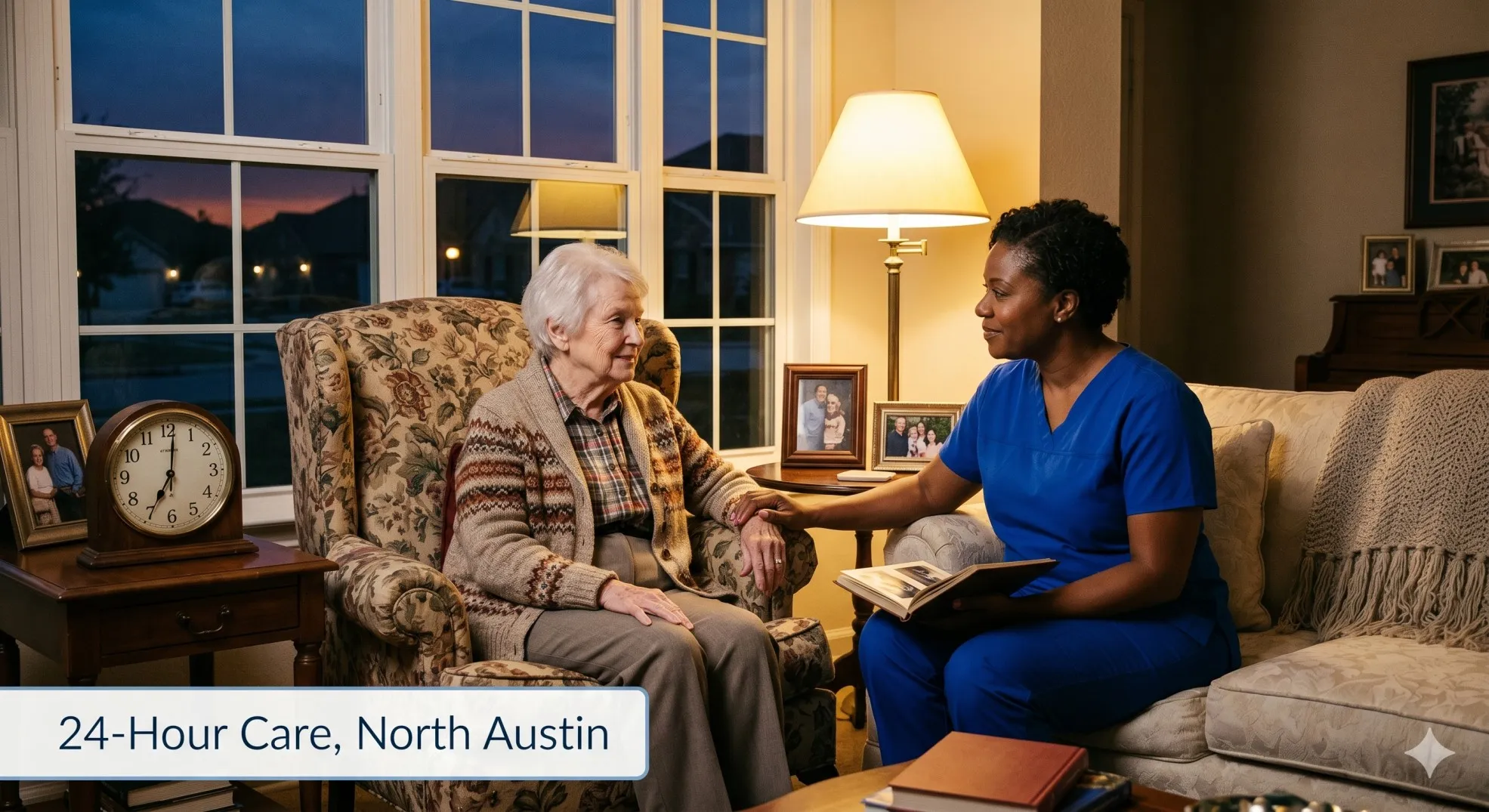

For many families in Central Texas, helping an aging parent stay in their own home is a top priority. "Aging in place" offers seniors a sense of dignity, independence, and comfort surrounded by their own memories. However, as the years go by, subtle changes in a loved one’s health or mobility can suddenly escalate into a major safety concern. You might find yourself lying awake at night wondering, “What if Dad tries to get out of bed and falls? What if Mom leaves the stove on?”
When a few hours of help a week is no longer enough to keep your loved one safe, it might be time to consider continuous support. But what exactly does that entail? Let us explore what round-the-clock assistance looks like and how to recognize when it is time to seek 24 hours home care north austin for your aging family member.
Understanding 24-Hour Home Care
Simply put, 24-hour home care means that a trained professional is present in the home at all times, day and night. Unlike traditional live-in care, where a single caregiver stays in the home and requires a mandated eight hours of sleep, true 24-hour care typically involves a rotating team of caregivers working in shifts (usually 8 to 12 hours each).
This model ensures that there is always a 24 hour caregiver north austin who is fully awake, alert, and ready to assist your loved one at any given moment, particularly during the vulnerable midnight hours. They assist with everything from meal preparation and personal hygiene during the day to bathroom assistance, repositioning, and wandering prevention at night.
The Tipping Point: Signs Your Loved One Needs Continuous Care
Making the transition from part-time assistance to round-the-clock care is a significant emotional and financial decision. Families often struggle to identify the exact "right time" to make this leap. Here are the most critical signs that a senior requires 24-hour supervision:
1. Frequent Falls and Severe Mobility Issues
If a senior has recently suffered a fall, or if their balance has deteriorated to the point where walking to the bathroom alone is a major risk, continuous care is vital. The majority of dangerous falls happen at night when a senior is disoriented, the house is dark, and they are rushing to the restroom. Having an alert caregiver present to assist with safe transfers can literally be life-saving.
2. Advanced Cognitive Decline and Wandering
Conditions like Alzheimer’s disease and other forms of dementia often cause seniors to lose their sense of time and place. A common symptom is "sundowning," where confusion and agitation peak in the late afternoon and evening. This can lead to nighttime wandering, attempting to leave the house, or leaving appliances turned on. A specialized care team is essential to de-escalate anxiety and keep the environment secure.
3. Post-Hospitalization Recovery
If your loved one is returning home after a severe stroke, a major surgery (like a hip replacement), or a prolonged illness, their physical needs will be at their highest. Continuous care ensures that medication schedules are strictly followed, wound care is managed, and sudden changes in their condition are immediately noticed and addressed.
4. The Family Caregiver is Running on Empty
Often, the biggest indicator that a senior needs 24-hour care is the declining health of the family caregiver. If you are waking up multiple times a night to help your parent, you are likely suffering from severe sleep deprivation and burnout. You cannot safely manage your loved one’s heavy physical needs if you are completely exhausted.
Why Clinical Expertise Matters in Round-the-Clock Care
When a senior's needs are complex enough to require 24-hour supervision, hiring just any caregiver is not enough. The care must be rooted in deep clinical insight to actually improve the senior's quality of life, rather than just passively watching them.
In communities like North Austin and Round Rock, families are increasingly turning to expert-led agencies to manage this complex level of care. Partnering with an agency led by professionals with heavy clinical backgrounds, such as ComForCare Home Care, directed by Akanksha Bist, MD, DPT—provides a distinct advantage.
With over 11 years of healthcare experience and a specialized background as a Doctor of Physical Therapy, leaders like Akanksha understand the biomechanics of aging. A physical therapy perspective is incredibly valuable in a 24-hour care setting because the caregivers are trained in expert fall prevention, proper transferring techniques that protect fragile joints, and mobility exercises that prevent muscle atrophy.
Furthermore, when dealing with cognitive decline, it is crucial to use an agency that boasts credentials like DementiaWise® Certification. This ensures that the caregivers are not just present, but are actively engaging the senior in ways that reduce dementia-related behaviors and promote joy.
As Akanksha’s philosophy highlights, the goal is to alleviate stress and strain, making aging in place not only possible but truly sustainable. When clinical insight meets personalized care, families get real answers and real support.
Making the Decision with Confidence
Accepting that a parent needs 24-hour supervision is difficult, but it is ultimately an act of profound love and protection. By recognizing the warning signs, like nighttime wandering, fall risks, and caregiver exhaustion, you can act before a preventable emergency occurs.
Bringing a dedicated 24 hour caregiver north austin into your home ensures that your loved one is safe, respected, and expertly cared for at all hours of the day and night. It allows you to step back from the exhausting role of a full-time nurse and return to being what your loved one truly needs: a loving daughter, son, or spouse.




























Sign in to leave a comment.