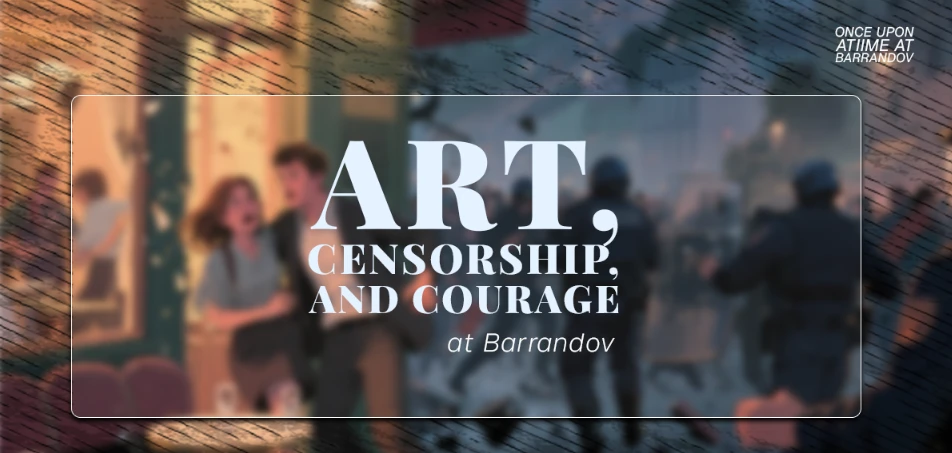

Barrandov is never merely a backdrop in Once Upon a Time at Barrandov — it’s the novel’s nervous system, the place where creative impulse, political pressure, and personal survival meet. The manuscript stages an intimate theatre of power: writers and directors who love cinema, ideologues who want control, and a culture that one day believes it can open and the next day is hemmed in again.
The book takes us into dramaturgy meetings, editorial rooms, and canteens where the conversation can flip from genial to dangerous in a single sentence. Characters like Jan Procházka and Ota Hofman are portrayed as artists who believe in film’s moral and social power; they aren’t naïve dreamers — they’re professionals who know how cinema can move publics, and that ability makes them both valuable and suspect. Procházka’s public speeches, the disciplinary hearings, and the eventual purges are rendered with forensic care, showing how quickly state tolerance can calcify into punishment.
At the center of this tension is the arrival of new ideological gatekeepers. The manuscript doesn't paint villains as mustache-twirling caricatures; rather, it shows a bureaucracy convinced of its duty to protect ideology — and willing to remake art to fit a narrative. Toman, Purš, and the new party overseers appear in meetings where scripts are edited for political safety, film festivals are politicized, and "creative" choices become tests of loyalty. The result is not only an aesthetic compromise but the slow erosion of trust within creative communities.
Yet the novel is most humane when it details how artists answer that pressure. Some conform; some resist quietly; some try to build bridges with foreign partners; others use humour, allegory, or children’s stories to slip truth past the censor’s eye. The origin stories of projects like Pan Tau and other cross-border collaborations show creative ingenuity in action: filmmakers negotiate, adapt, and find loopholes to keep imaginative work alive. The manuscript captures those small, brilliant acts of artistic survival — the real, day-to-day ways creators protect the soul of their art.
Crucially, the book is not a polemic but a witness. It records meetings, phone calls, and lunches, the small moments where careers are made or broken. Through reportage-like scenes, it reveals how censorship functions not merely by prohibition but by shaping the conditions of production: who is hired, who is fired, which films go to festivals, and which names gradually disappear from credits. That slow attrition becomes the book's heartbreaking measure of normalization.
At the emotional core of the Barrandov episodes is a question: what is the artist obligated to? The manuscript insists on complexity. Characters are not saints or villains; they are people who must choose between family, principle, career, and safety. The book’s power lies in this moral ambiguity — in the small choices that reveal character and the sudden historical turns that render those choices consequential.
Once Upon a Time at Barrandov is ultimately an elegy for a cultural moment when openness and possibility briefly bloomed — and a portrait of how art bends but does not always break under pressure. For readers interested in the interplay of politics and creativity, the book offers both paperwork and poetry: minutes from meetings, files from the StB, and luminous scenes of film-making that linger because they show what’s at stake when a society debates freedom.
Stay tuned: Once Upon A Time AT Barrandov





















Sign in to leave a comment.