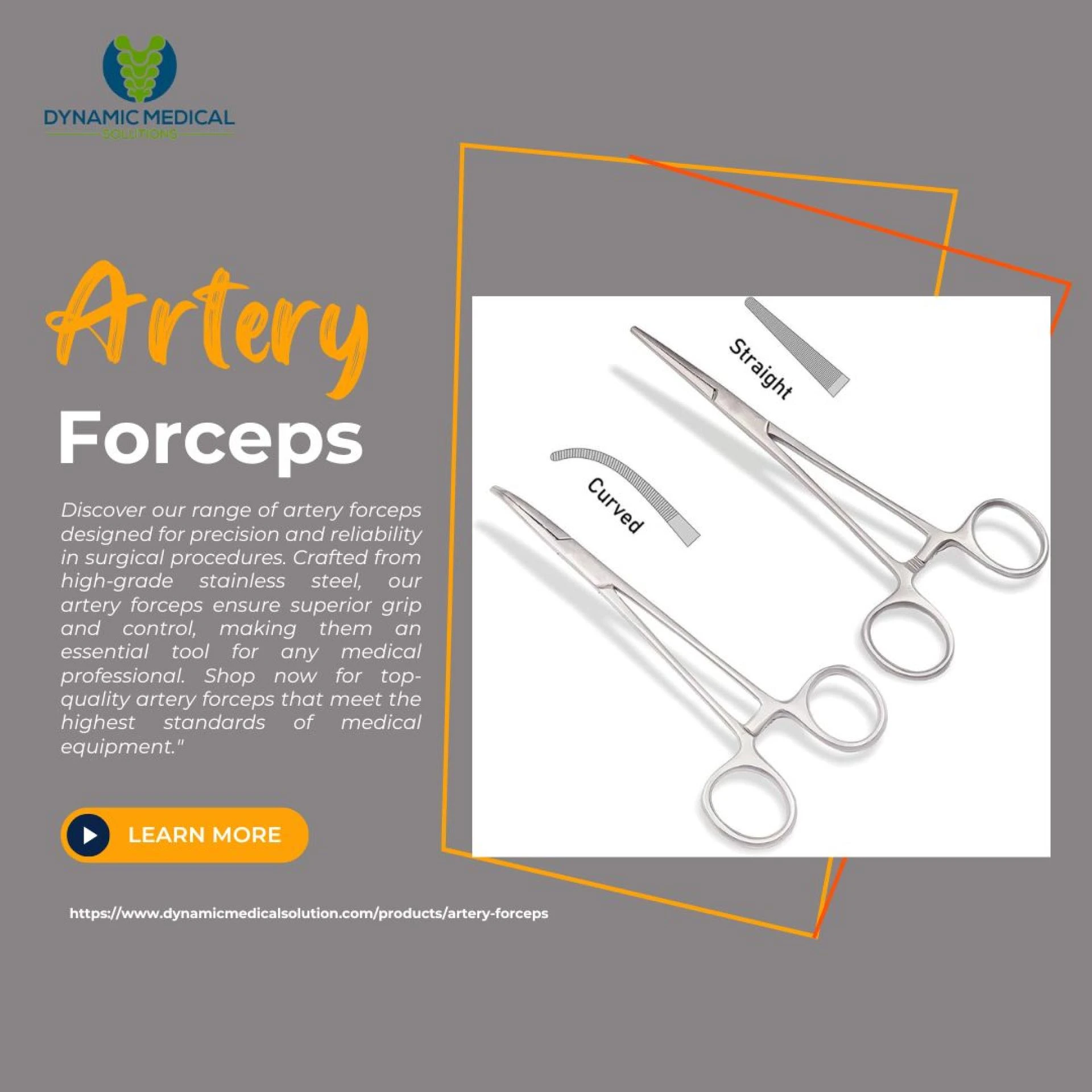

Artery forceps, also known as hemostatic forceps or vascular clamps, play a pivotal role in surgical procedures, addressing specific challenges in blood flow management. This article delves into the various types of artery forceps, highlighting their distinct features and applications.
Straight Artery Forceps:
Straight artery forceps are the quintessential choice for open surgeries, featuring straight jaws that facilitate the clamping of accessible blood vessels. Available with smooth or serrated jaws for enhanced tissue grip, these forceps are straightforward in design, allowing for easy application and removal.
Curved Artery Forceps:
In scenarios requiring access to deep or narrow areas, curved artery forceps excel. Their angled jaws enable surgeons to reach and clamp blood vessels in challenging anatomical locations, ensuring enhanced visibility and control during intricate procedures.
Long Artery Forceps: Essential for Minimally Invasive Techniques
Addressing the complexities of minimally invasive surgery (MIS), long artery forceps feature extended shafts that navigate through laparoscopic instruments. They facilitate the clamping of deep-seated blood vessels, crucially maintaining a clear operative field during laparoscopic procedures.
Specialty Forceps:
In addition to standard types, specialty artery forceps cater to unique surgical demands:
- Mosquito Forceps: Fine-pointed jaws for delicate microsurgery, ideal for clamping tiny blood vessels.
- Rochester Pean Forceps: Broad, curved jaws suitable for larger vessels and secure tissue grasping.
- Spencer Wells Forceps: Right-angle jaws designed for clamping vessels in awkward angles or corners.
Material and Design:
Crafted from high-grade stainless steel, artery forceps prioritize durability and functionality. Serrated jaws enhance grip on vessels, while a locking mechanism secures clamping, freeing the surgeon\'s hands for other tasks. Ergonomic finger rings on the handles ensure comfortable handling.
Choosing the Right Forceps:
The selection of artery forceps hinges on surgical nuances such as vessel depth, size, and procedural requirements. Surgeons consider these factors alongside personal preferences to optimize surgical outcomes.
Conclusion:
Artery forceps embody surgical innovation, offering a spectrum of designs and functionalities to manage blood flow effectively across diverse procedures. Whether in traditional open surgery or advanced minimally invasive techniques, these instruments remain indispensable in the surgeon\'s toolkit. For more details visit our website Dynamic medical.





























Sign in to leave a comment.