
Artificial Intelligence (AI) has had a profound impact on the automotive industry, transforming various aspects of vehicle design, manufacturing, operation, and maintenance. Here are some of the key impacts of AI in the automotive industry:
Autonomous Vehicles: AI is driving the development of autonomous or self-driving vehicles. AI-powered sensors, machine learning algorithms, and real-time data processing enable autonomous vehicles to perceive their surroundings, make decisions, and navigate roads without human intervention. This has the potential to revolutionize transportation by improving road safety, reducing traffic congestion, and increasing fuel efficiency.
Advanced Driver Assistance Systems (ADAS): AI is powering ADAS, which are systems that assist human drivers in operating vehicles safely. Examples of ADAS include lane departure warning, adaptive cruise control, and automatic emergency braking. These AI-enabled systems can detect potential collisions, monitor driver behavior, and provide warnings or take control of the vehicle to prevent accidents.
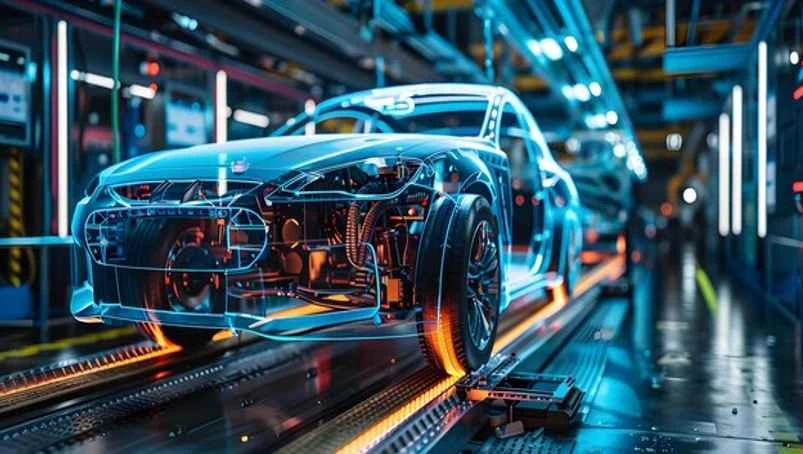
Vehicle Design and Manufacturing: AI is used in the design and manufacturing of vehicles to optimize aerodynamics, structural integrity, and fuel efficiency. AI algorithms can analyze vast amounts of data to generate optimized designs, simulate crash tests, and optimize manufacturing processes, leading to improved vehicle performance, reduced weight, and increased safety.
Predictive Maintenance: AI is used to monitor vehicle performance and predict maintenance needs. Sensors and data analytics can analyze vehicle data in real-time to detect anomalies, predict failures, and schedule maintenance proactively. This helps prevent unexpected breakdowns, reduces downtime, and lowers maintenance costs.
Enhanced User Experience: AI is used to enhance the in-car user experience. Natural Language Processing (NLP) enables voice commands for navigation, entertainment, and communication. AI-powered infotainment systems can learn driver preferences and provide personalized recommendations. Virtual assistants can assist with tasks such as scheduling appointments, making reservations, and finding nearby services.
Supply Chain Optimization: AI is used in supply chain management to optimize logistics, inventory management, and demand forecasting. AI algorithms can analyze data from various sources, such as production lines, supplier performance, and customer demand, to optimize the flow of materials and minimize costs, leading to increased efficiency and reduced waste.
Enhanced Safety: AI is used to improve safety in vehicles by analyzing real-time data from sensors, cameras, and other sources to detect and respond to potential safety hazards. For example, AI can detect driver fatigue or distraction, monitor road conditions, and provide warnings or take control of the vehicle to prevent accidents.
In conclusion, AI is revolutionizing the automotive industry by enabling autonomous vehicles, powering ADAS, optimizing vehicle design and manufacturing, predicting maintenance needs, enhancing user experience, optimizing supply chains, and improving safety. These advancements are transforming the way vehicles are designed, manufactured, operated, and maintained, leading to improved safety, efficiency, and user experience in the automotive industry.







Sign in to leave a comment.