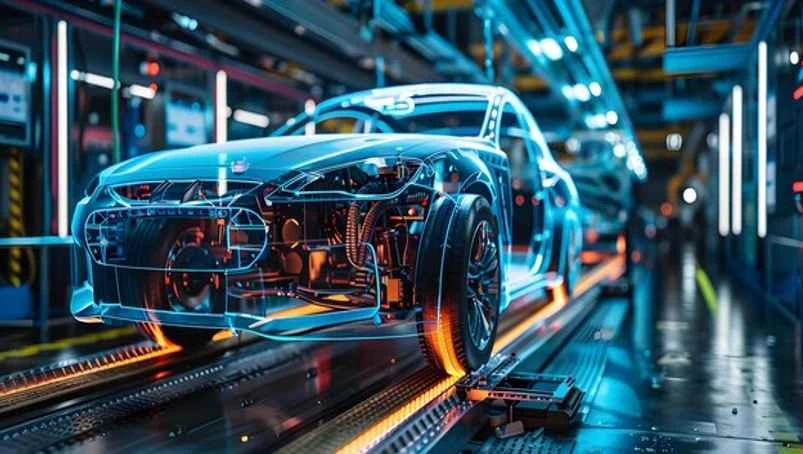

The automotive industry is undergoing a transformative shift driven by the integration of Artificial Intelligence (AI) in various aspects of vehicle design and development. From conceptualization to production, AI is playing a crucial role in making vehicles safer, more efficient, and tailored to the needs of modern consumers. This blog explores the multifaceted impact of AI on the automotive design and development process, highlighting its benefits, applications, and future potential.
The Role of AI in Vehicle Design
- Conceptual Design and Creativity
The initial stages of vehicle design are highly creative, involving the generation of new ideas and concepts. AI-powered tools can assist designers by providing inspiration and automating repetitive tasks. Generative design algorithms, for example, can produce a wide range of design options based on predefined parameters and constraints. This allows designers to explore unconventional ideas and optimize designs for aerodynamics, weight reduction, and aesthetics.
- Computer-Aided Design (CAD) Enhancements
AI enhances traditional CAD software by integrating machine learning algorithms that can predict and suggest design modifications. These intelligent CAD systems can analyze past design data to recommend structural improvements, material choices, and design features that align with safety standards and performance goals. AI-driven CAD tools can also simulate real-world conditions, enabling designers to assess the impact of their designs before physical prototypes are built.
- Human-Machine Collaboration
AI fosters a collaborative environment where human designers work alongside intelligent systems. By leveraging AI\'s computational power and speed, designers can focus on creativity and innovation. For instance, AI can handle complex calculations and optimization tasks, allowing designers to iterate quickly and refine their ideas. This synergy between human creativity and AI precision leads to the development of superior vehicle designs.
AI in Engineering and Development
- Simulation and Testing
One of the most significant contributions of AI in vehicle development is in simulation and testing. AI-powered simulation tools can create virtual prototypes of vehicles and test them under various conditions, such as crash scenarios, weather conditions, and performance stress tests. These simulations provide valuable insights into a vehicle\'s behavior and identify potential issues before physical testing, reducing development costs and time.
- Materials Science and Engineering
AI algorithms can analyze vast datasets of material properties and performance metrics to identify the best materials for specific components. This capability is crucial for developing lightweight, durable, and sustainable vehicles. Machine learning models can predict how different materials will behave under stress, helping engineers make informed decisions about material selection and component design.
- Optimization of Aerodynamics
Aerodynamics plays a vital role in vehicle performance, particularly in terms of fuel efficiency and handling. AI-driven tools can optimize the aerodynamic properties of a vehicle by simulating airflow around its body and identifying areas for improvement. Computational Fluid Dynamics (CFD) simulations, powered by AI, allow engineers to fine-tune designs to reduce drag and improve overall efficiency.
- Battery and Powertrain Development
For electric vehicles (EVs), AI is instrumental in developing efficient battery systems and powertrains. Machine learning models can analyze battery performance data to optimize charging cycles, predict battery lifespan, and enhance energy management. AI also aids in the design of electric powertrains, ensuring that they deliver the necessary performance while minimizing energy consumption.
The Benefits of AI in Automotive Design and Development
- Cost Reduction
AI helps reduce development costs by minimizing the need for physical prototypes and extensive testing. Virtual simulations and predictive analytics enable engineers to identify and address issues early in the design process, saving time and resources. Additionally, AI-driven optimization leads to more efficient use of materials and manufacturing processes, further cutting costs.
- Improved Safety and Reliability
Safety is a paramount concern in the automotive industry. AI enhances safety by enabling comprehensive simulations of crash scenarios and other hazardous conditions. These simulations provide critical data that engineers use to design safer vehicles. AI-driven predictive maintenance also improves reliability by identifying potential failures before they occur, ensuring that vehicles remain in optimal condition.
- Enhanced Performance
AI-driven optimization and simulations result in vehicles that are better designed for performance. Whether it’s improved aerodynamics, more efficient powertrains, or optimized materials, AI contributes to the creation of vehicles that perform exceptionally well under various conditions. This leads to a better driving experience and higher customer satisfaction.
- Sustainability
The automotive industry is increasingly focusing on sustainability, and AI plays a significant role in this endeavor. By optimizing designs for weight reduction and material efficiency, AI helps reduce the environmental impact of manufacturing. AI also contributes to the development of electric vehicles and other eco-friendly technologies, promoting a greener future for the industry.
Real-World Applications and Case Studies
- General Motors (GM) and Generative Design
General Motors has been leveraging generative design, an AI-driven approach, to develop lightweight components. By using Autodesk’s generative design software, GM created a new seat bracket that is 40% lighter and 20% stronger than the previous design. The software generated multiple design options based on specified parameters, which were then evaluated and refined by GM engineers.
- Tesla’s Autopilot and Neural Networks
Tesla is renowned for its use of AI in developing advanced driver assistance systems (ADAS). The company’s Autopilot feature relies on neural networks to process data from cameras, radar, and ultrasonic sensors, enabling semi-autonomous driving capabilities. AI algorithms continuously learn from data collected from Tesla vehicles on the road, improving the system\'s performance and safety over time.
- Ford’s AI-Driven Manufacturing
Ford has integrated AI into its manufacturing processes to enhance quality control and efficiency. AI-powered vision systems inspect components on the production line, identifying defects with high accuracy. Additionally, Ford uses machine learning models to predict equipment failures, enabling proactive maintenance and reducing downtime.
The Future of AI in Automotive Design and Development
The future of AI in automotive design and development looks promising, with several emerging trends and technologies poised to further revolutionize the industry.
- Integration of Quantum Computing
Quantum computing has the potential to solve complex optimization problems that are currently beyond the reach of classical computers. In automotive design, quantum computing could significantly enhance simulations, material discovery, and optimization processes, leading to groundbreaking advancements.
- AI-Driven Autonomous Vehicle Design
As autonomous vehicles become more prevalent, AI will play a crucial role in their design and development. AI algorithms will optimize the placement of sensors, compute hardware requirements, and enhance vehicle-to-everything (V2X) communication systems, ensuring that autonomous vehicles operate safely and efficiently.
- Personalized Vehicle Design
AI will enable the customization of vehicles to meet individual preferences and needs. By analyzing user data and preferences, AI systems can recommend design features, interior layouts, and even driving dynamics tailored to each customer. This level of personalization will enhance the driving experience and foster brand loyalty.
- Sustainable and Smart Materials
AI will continue to drive the discovery and application of smart materials that can adapt to environmental conditions or self-heal. These materials will improve vehicle durability and efficiency, contributing to the sustainability goals of the automotive industry.
Conclusion
The integration of AI in the design and development of vehicles is revolutionizing the automotive industry. From enhancing creativity in the design phase to optimizing engineering processes and improving safety and performance, AI is a powerful tool that drives innovation. As AI technology continues to evolve, it will unlock new possibilities and reshape the future of transportation, making vehicles safer, more efficient, and more aligned with the needs of modern consumers. The automotive industry stands on the brink of a new era, where AI will be a cornerstone of progress and transformation
References
Alam, M. F., Lentsch, A., Yu, N., Barmack, S., Kim, S., Acemoglu, D., Hart, J., Johnson, S., & Ahmed, F. (2024). From automation to augmentation: Redefining Engineering Design and manufacturing in the age of nextgen-ai. An MIT Exploration of Generative AI. https://doi.org/10.21428/e4baedd9.e39b392d
Arinez, J. F., Chang, Q., Gao, R. X., Xu, C., & Zhang, J. (2020). Artificial Intelligence in advanced manufacturing: Current status and future outlook. Journal of Manufacturing Science and Engineering, 142(11). https://doi.org/10.1115/1.4047855
Endsley, M. R. (2017). Autonomous Driving Systems: A preliminary naturalistic study of the Tesla Model S. Journal of Cognitive Engineering and Decision Making, 11(3), 225–238. https://doi.org/10.1177/1555343417695197
Gupta, Siddharth. (2024). Incorporating AI into Current Autonomous Vehicle Design. https://doi.org/10.58445/rars.888
Kumari, D., & Bhat, S. (2021). Accelerating the race to autonomous cars – A case study. International Journal of Applied Engineering and Management Letters, 219–231. https://doi.org/10.47992/ijaeml.2581.7000.0114
Kumari, D., & Bhat, S. (2021b). Application of artificial intelligence in tesla- A case study. International Journal of Applied Engineering and Management Letters, 205–218. https://doi.org/10.47992/ijaeml.2581.7000.0113
Ntintakis, I., & Stavroulakis, G. E. (2020). Progress and recent trends in Generative Design. MATEC Web of Conferences, 318, 01006. https://doi.org/10.1051/matecconf/202031801006
Oranim, R. (2024). The Impact and Benefits of AI in the Automotive Industry. FullPath. https://www.fullpath.com/blog/the-impact-and-benefits-of-ai-in-the-automotive-industry/#:~:text=AI%20is%20crucial%20in%20developing,mobility%2C%20and%20improve%20traffic%20flow.

About the Author
Neil Shah is a certified senior professional in human resources. He holds a MBA (with a Delta Mu Delta distinction), and presently, Neil is a Doctoral Candidate, with his research expertise focusing in HR methodologies and employee skills gaps.
As Canada’s HR subject matter expert, his expertise is in operational and strategic HR practices. Overseeing all aspects of human resource management, he establishes and develops human resource teams and infrastructure for global technology and automotive companies to support rapid business growth effectively.























Sign in to leave a comment.