

The debate around LangChain 1.0 vs LangGraph 1.0 has become more important as businesses build smarter AI applications and automated workflows. Companies are no longer creating basic chatbots only for answering questions. They are now developing advanced AI systems that can manage tasks, remember information, make decisions, and work across multiple tools and platforms. Because of this shift, choosing the right AI workflow framework has become an important part of long-term business planning.
Why AI Workflow Frameworks Matter
Artificial intelligence is growing rapidly across industries. Businesses are using AI to improve customer support, automate operations, analyze documents, manage software development tasks, and increase productivity. However, building a successful AI system requires more than connecting a language model to a website or application.
Modern AI systems often involve:
- Data processing
- Memory management
- Workflow automation
- Multi-step reasoning
- Tool integrations
- Decision-making systems
- Long-running processes
Without a structured framework, these systems become difficult to manage and scale.
According to recent industry studies, companies are moving beyond AI experimentation and focusing more on reliable deployment and operational performance. Businesses want AI systems that can work consistently in real-world environments without constant human supervision.
This growing demand has increased the importance of AI workflow frameworks.
The Evolution of AI Applications
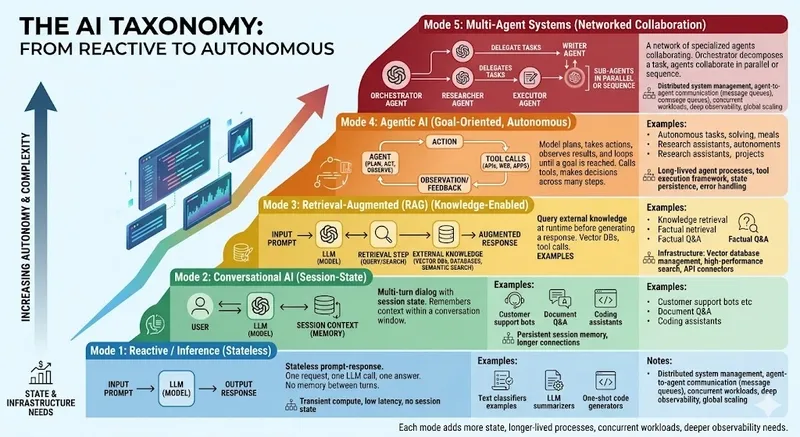
The first wave of AI tools focused mainly on simple conversations. A user entered a question, and the AI returned a response. These systems worked well for basic tasks but struggled with complex business operations.
Today, AI workflows are much more advanced.
Modern AI systems may need to:
- Handle multiple tasks at the same time
- Access external tools and databases
- Maintain context across sessions
- Coordinate several AI agents
- Recover from failures
- Track workflow progress
- Process large amounts of information
As AI systems become more sophisticated, workflow management becomes more important.
Industry experts now describe agentic AI systems as one of the fastest-growing technology areas in 2026. Businesses are investing heavily in AI agents capable of performing autonomous tasks and improving operational efficiency.
Understanding Stateful AI Systems
One of the biggest changes in AI development is the move toward stateful systems.
Traditional AI chat systems were mostly stateless. Every conversation started fresh without memory of previous interactions. Modern business applications require AI systems to remember context and maintain workflow continuity.
For example:
- Customer service AI needs conversation history
- Financial systems require transaction tracking
- Healthcare systems need patient context
- Automation tools must track task progress
This type of persistent memory is becoming essential for enterprise AI applications.
Recent research shows that developers increasingly prioritize workflow frameworks capable of supporting memory retention, state tracking, and multi-step execution.
Multi-Agent Systems Are Expanding
Another important trend is the rise of multi-agent AI architectures.
Instead of relying on one AI model to perform every task, companies are dividing responsibilities among specialized AI agents. One agent may gather information, another may validate outputs, while another handles customer communication.
This approach offers several advantages.
Better Efficiency
Specialized agents can focus on specific tasks, improving workflow performance.
Improved Scalability
Distributed systems can handle larger workloads more effectively.
Easier Maintenance
Smaller agents are easier to update and manage.
Higher Reliability
Multiple agents can help reduce workflow failures.
Research involving multi-agent AI systems shows strong growth in enterprise adoption, especially in industries focused on automation and operational efficiency.
Why Workflow Design Is Important
Many companies focus only on AI model quality. However, workflow structure is equally important.
A poorly designed AI workflow can create problems such as:
Inconsistent Outputs
Unstructured workflows may produce unreliable responses or actions.
Difficult Debugging
Complex workflows become difficult to troubleshoot without proper orchestration.
Weak Error Recovery
AI systems need structured recovery methods when failures occur.
Integration Problems
Enterprise systems must connect with databases, APIs, cloud services, and internal tools.
Scalability Challenges
Systems that work during testing may fail under production workloads.
Choosing the right framework helps businesses avoid these issues.
Enterprise Expectations Are Changing
In 2026, businesses expect more from AI systems than simple automation.
Organizations want AI platforms that are:
- Reliable
- Scalable
- Observable
- Secure
- Flexible
- Easy to integrate
Recent industry reports show that many companies still struggle to move AI projects from prototype to production. Concerns around workflow monitoring, governance, and operational control remain major challenges.
Because of this, businesses are paying closer attention to workflow orchestration capabilities before selecting a framework.
Integration Flexibility Is Critical
Modern AI systems rarely work alone. They connect with many external tools and platforms.
These integrations may include:
- Databases
- Search systems
- APIs
- Analytics platforms
- Cloud infrastructure
- CRM software
- Enterprise applications
A flexible framework simplifies these integrations and reduces development complexity.
Industry surveys show that developers increasingly prefer modular AI frameworks because they support easier expansion and long-term scalability.
The Importance of Workflow Visibility
As AI workflows become more advanced, visibility becomes extremely important.
Developers need to understand:
- How workflows move between steps
- Where failures occur
- How decisions are made
- Which tools are being used
- How memory is managed
Visualization tools help developers monitor workflow behavior more effectively.
Graph-based workflow structures are becoming popular because they simplify debugging and workflow analysis. Businesses operating in regulated industries also benefit from better workflow visibility because it improves auditing and compliance management.
Reliability Is Becoming a Competitive Advantage
Many businesses originally focused on AI capabilities only. Today, reliability has become equally important.
An unstable AI system can create:
- Customer frustration
- Operational delays
- Compliance risks
- Increased costs
- Security concerns
Recent enterprise studies show growing pressure on business leaders to demonstrate clear returns from AI investments while maintaining operational stability.
As a result, companies are investing more heavily in:
- Workflow testing
- Error handling
- Monitoring systems
- Performance optimization
- Governance controls
Reliable AI workflows are now viewed as a major business advantage.
Industry Adoption Continues to Grow
AI workflow frameworks are expanding across many industries.
Healthcare
Hospitals use AI workflows for medical documentation, scheduling, and patient support.
Finance
Financial institutions automate fraud detection, compliance monitoring, and reporting.
Retail
Retail businesses use AI for customer personalization, inventory management, and support automation.
Manufacturing
Manufacturers use AI workflows for predictive maintenance and supply chain optimization.
Software Development
Development teams automate testing, documentation, and deployment processes using AI systems.
This widespread adoption is increasing demand for scalable and maintainable AI workflow platforms.
Open Source Innovation Is Accelerating Growth
Open source communities continue to play a major role in AI workflow development.
Large developer communities contribute:
- Integrations
- Workflow templates
- Documentation
- Plugins
- Monitoring tools
- Testing frameworks
Strong community support often leads to faster innovation and broader ecosystem compatibility.
Research on AI workflow ecosystems shows rapid growth in framework development and community participation during the past two years.
Future Trends in AI Workflow Engineering
AI workflow engineering is still evolving rapidly.
Several major trends are expected to shape the future:
Autonomous Workflow Optimization
AI systems may eventually optimize their own execution processes automatically.
Smarter Memory Systems
Future AI applications will likely maintain deeper long-term contextual understanding.
Advanced Multi-Agent Coordination
Businesses will continue building collaborative AI systems with specialized agents.
Better Governance Features
Compliance and monitoring capabilities will become more advanced.
Enterprise-Grade Stability
Production-ready reliability will become a standard requirement.
Industry analysts predict that AI agents and autonomous workflow systems will continue expanding across enterprise operations throughout the next several years.
Conclusion
Choosing the right framework for AI workflows is now an important business decision. Modern AI systems require much more than simple prompt-response interactions. Businesses need frameworks capable of handling memory, workflow orchestration, tool integrations, multi-agent coordination, and scalable automation.
As AI adoption continues to grow, companies are focusing more on reliability, operational control, and long-term scalability. Organizations that build strong workflow foundations today will be better prepared for the next generation of intelligent automation systems.
The future of AI development will depend heavily on structured workflow management, stable orchestration systems, and scalable AI architectures. Businesses that choose the right framework early will have a significant advantage as enterprise AI continues evolving.





























Sign in to leave a comment.