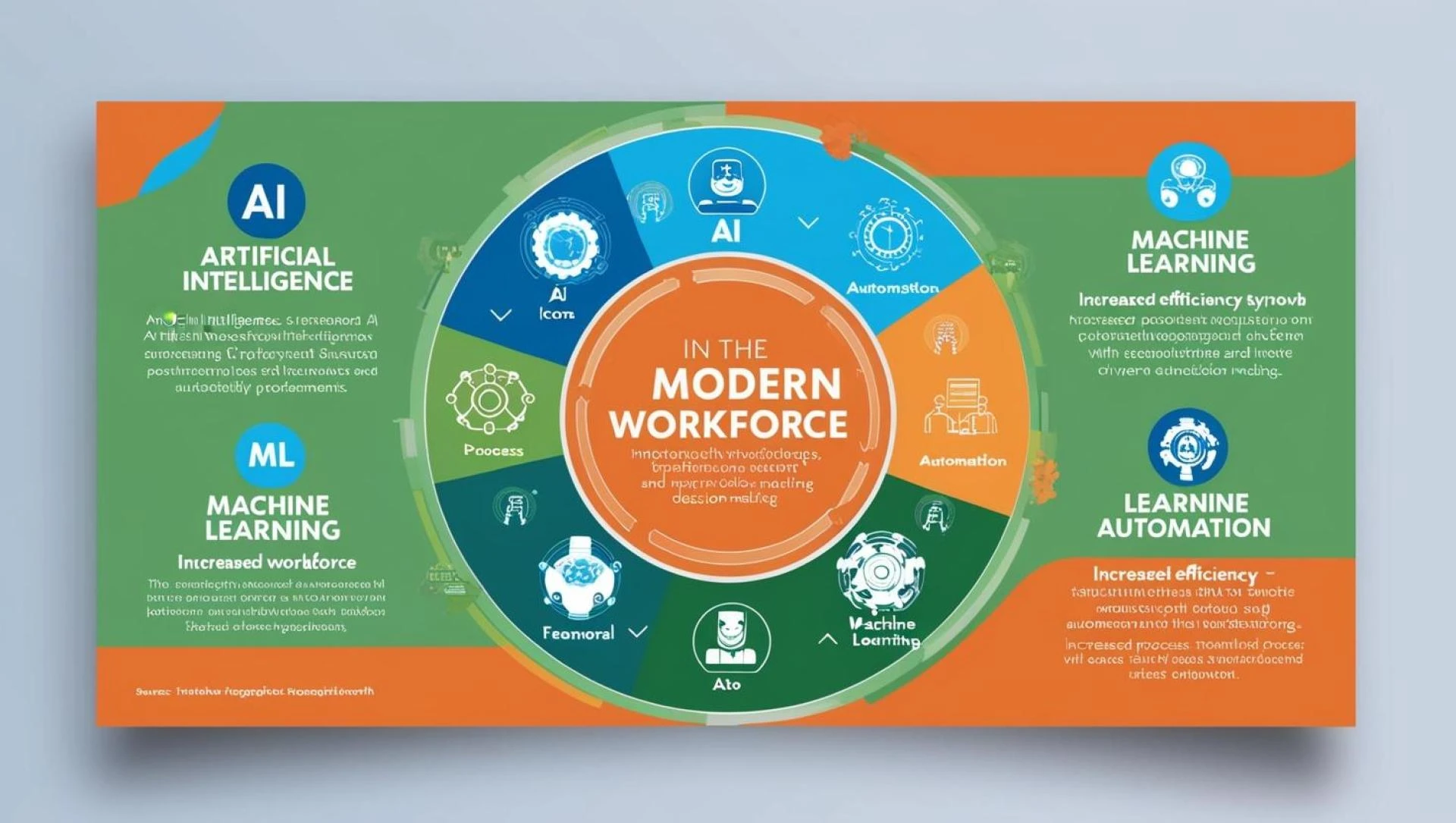

The modern workforce is evolving rapidly. One of the most transformative forces reshaping how businesses operate is artificial intelligence (AI). No longer just a futuristic concept, AI has firmly established itself in the day-to-day operations of leading enterprises. Whether optimizing logistics, streamlining recruitment, or enhancing customer service, AI is proving to be a powerful asset across industries.
Why AI in the Workforce Matters Now More Than Ever
Organizations today are under increasing pressure to improve efficiency, reduce operational costs, and stay agile in a volatile market. Integrating artificial intelligence in the workforce isn't just a tech trend—it's a business necessity. AI automates repetitive tasks, provides valuable insights through data analysis, and supports smarter, faster decision-making.
Recent market research predicts that the global augmented intelligence sector will grow from $25.52 billion in 2024 to over $106.84 billion by 2032, signalling a strong and sustained demand. The appeal is clear: better decision-making, real-time responses, cost reductions, and a workforce that's more focused on strategic outcomes.
Sector-Specific Transformations Through AI
AI’s versatility allows it to make a measurable impact across diverse industries:
Manufacturing
Factories are using AI to monitor equipment in real time, prevent breakdowns, and enhance production planning. Machine learning algorithms help detect defects during quality control, while predictive maintenance keeps the production line running smoothly.
Healthcare
In the healthcare sector, AI is being used to assist in diagnostics, manage patient data, and improve operational efficiency. Technologies like AI Staff Augmentation in Healthcare are helping medical institutions cope with staff shortages and ensure timely, data-driven care delivery.
Finance
Banks and financial institutions are using AI to analyse customer data, detect fraudulent activity, and automate customer service. Robo-advisors are also offering intelligent investment suggestions, making wealth management more accessible and efficient.
Retail and eCommerce
AI enable retailers to personalize shopping experiences by analyzing customer behaviour, recommending products, and managing inventory with higher accuracy. From virtual try-ons to chatbots, AI boosts both sales and customer satisfaction.
Logistics and Supply Chain
One of the most valuable applications of AI is in logistics, where AI-driven fleet management systems are revolutionizing how goods are moved and tracked. These systems optimize delivery routes, reduce fuel costs, and provide real-time vehicle monitoring—making operations leaner and more responsive.
Travel and Hospitality
AI enhances the travel experience through dynamic pricing, real-time itinerary updates, and hyper-personalized customer service. Ai powered Virtual assistant development help travellers manage bookings and respond to inquiries instantly.
Construction
AI tools are streamlining project planning, resource allocation, and safety monitoring. Drones equipped with AI can inspect sites, while predictive analytics can help avoid delays and cost overruns.
Media and Entertainment
Content creators use AI to analyse viewer preferences, tailor content recommendations, and even generate media assets. This creates more engaging content while optimizing distribution strategies.
Legal and Compliance
Law firms and compliance teams are automating document review, legal research, and risk assessment using AI. This not only saves time but also ensures higher accuracy and regulatory adherence.
Strategies to Effectively Implement AI in the Workforce
Integrating AI into your operations doesn’t happen overnight. It requires a strategic approach tailored to your organization's structure and goals. Here are key areas where businesses are successfully deploying AI to future-proof their workforce:
AI in Recruitment
From resume parsing to personality assessments, AI tools streamline the hiring process. They reduce bias, improve candidate matching, and significantly cut down the time to hire.
Workforce Management
AI-powered software helps manage shifts, monitor productivity, and balance workloads. It ensures that the right resources are assigned to the right tasks at the right time.
Workforce Development
As AI takes on more operational duties, employees must evolve into more strategic roles. Investing in upskilling and reskilling programs is essential to keep the workforce future-ready.
Decision Support
AI helps leaders make faster, more accurate decisions by analyzing complex datasets and identifying patterns that would be invisible to the human eye.
Automation of Core Operations
Repetitive tasks—such as data entry, invoice processing, and reporting—can be handed off to AI, freeing up employees to focus on higher-value work.
AI-Enhanced Customer Service
AI chatbots and virtual assistants provide 24/7 support, answer FAQs, and resolve issues faster. Natural language processing allows for increasingly human-like conversations.
Smarter Project Management
AI applications in project management track deadlines, allocate resources, and flag potential issues before they derail timelines—ensuring better project outcomes.
Risk Management and Compliance
AI helps monitor real-time data for compliance violations and detects anomalies that may indicate risk, giving businesses a proactive edge.
Supply Chain Optimization
AI enhances demand forecasting, inventory management, and supplier selection—creating lean, resilient supply chains that adapt quickly to changes.
Employee Engagement
AI tools can assess employee satisfaction, track engagement metrics, and suggest interventions to improve morale and retention.
Staff Augmentation
For fast-scaling teams, AI-powered platforms can help identify specialized talent and plug them into existing workflows seamlessly. This is especially useful when combined with business consulting services that focus on digital transformation.
Implementing AI: A Roadmap for Businesses
- Evaluate Internal Readiness
- Understand your current processes and pinpoint areas where AI can deliver immediate value.
- Identify Key Use Cases
- Not all AI implementations need to be massive. Start with manageable use cases that promise a quick ROI.
- Choose the Right Technology Stack
- From AI engines to cloud-based platforms, the tools you select should align with your long-term digital strategy.
- Build the Right Partnerships
- Collaborate with providers experienced in deploying AI solutions across your specific industry. This reduces risk and accelerates success.
- Train Your Workforce
- Encourage a culture of continuous learning. Equip your team with the tools and training they need to thrive in an AI-augmented environment.
- Prioritize Ethics and Governance
- Responsible AI use is critical. Ensure your AI systems are transparent, secure, and unbiased.
- Track, Optimize, and Scale
- Once in place, monitor AI performance, refine strategies, and expand use to other business areas.
The Bottom Line
Artificial intelligence in the workforce is no longer a luxury—it’s a strategic driver of growth. Businesses that embrace AI now are not only cutting costs and improving efficiency but also gaining a significant edge over competitors still relying on manual processes.
By leveraging AI smartly, you can reimagine how work gets done—unlocking productivity, enhancing decision-making, and creating room for innovation.
To explore this topic in greater depth, including industry-specific use cases and actionable strategies, read the original article: Artificial Intelligence in the Workforce: Strategies to Address in 2025.























Sign in to leave a comment.