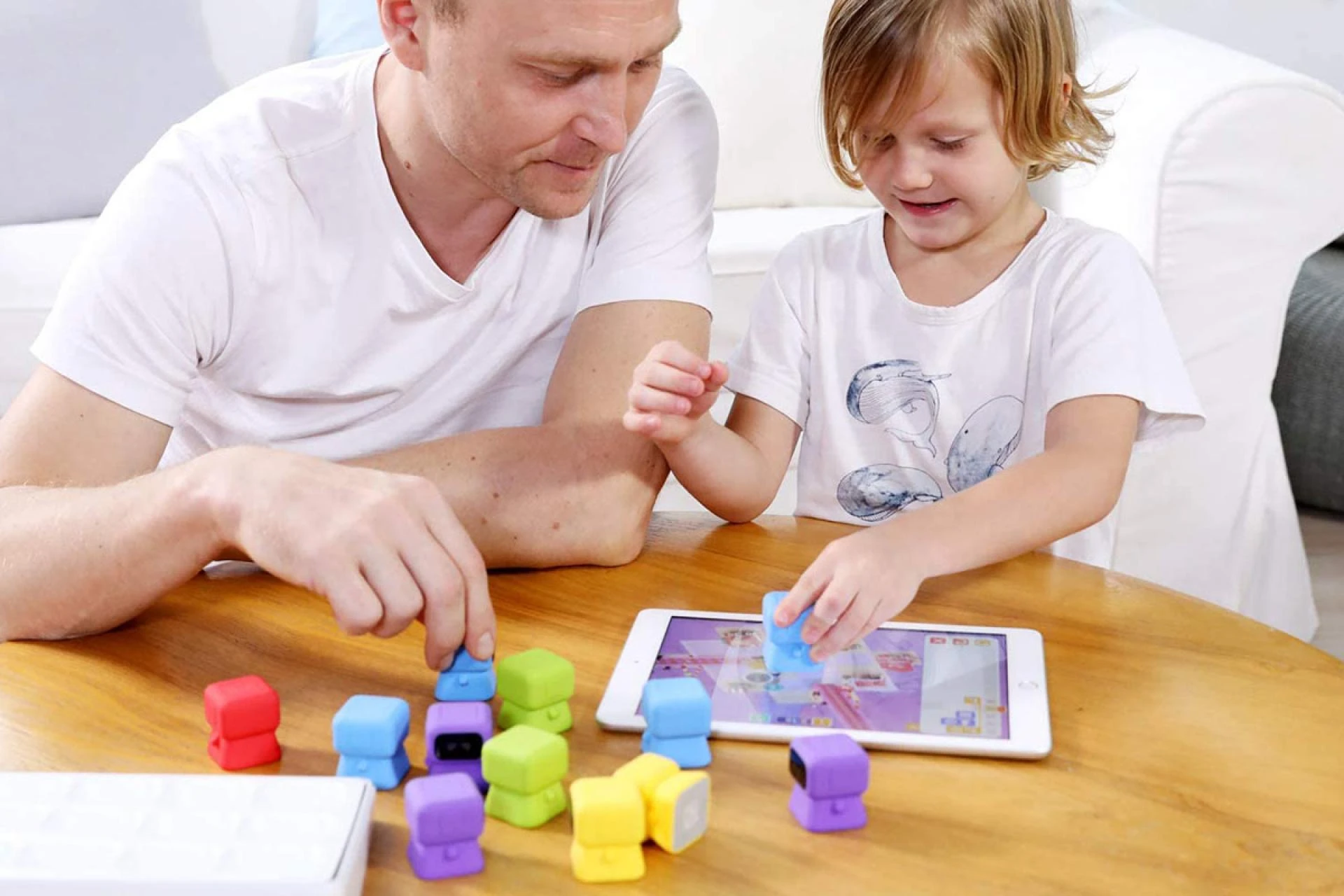

Talking about play means talking about one of the most important activities in the child\'s development. Spending time playing when we are children is spending time with ourselves. It is to build our world view and self-perception in a natural, intuitive and enjoyable way. It is to find the way and the tools to be able to make ourselves more effective cognitively, socially and affectively adults.
Starting from these reflections, I invite you, dear readers, and not without some personal challenge, to reflect on the social discourse around the game, think about the gaze of the other that accompanies and that tends to reduce the playful act only to a moment of leisure, trivial and minor. When in reality, as children, the act of playing concentrates an effort to understand the world and to develop and discover the skills that we will require as adult humans to survive and even are happy in it regards to best toys and games.
More often than I would like to, I hear fathers, mothers, caregivers, and even teachers, refer to play as a complementary and accessory activity. An activity reserved almost exclusively for early childhood (0 to 3 years). As adults and driven by the rapidity of the inclusion of technology in childhood, the age of play shortens. With some concern, I observe that free and imaginative playtime is drastically reduced with schooling, with children spending most of their time on academic demands and not on play. What is printed as an immediate message in the child\'s fantasy is that play is NOT important, that imagination does not belong to the adult sphere and that discipline and attention have nothing to do with playing.
[caption class="snax-figure" align="aligncenter" width="662"] [/caption]
It is difficult for me to imagine within the world of children a more disciplined activity than play. Be it alone or in a company. Because where the adult sees chaos there is an exquisite order. The planning and staging - I would almost say wise - of an approach, of fantasy and in short, of a story.
Understanding the world is a titanic process (it still is even in adult life). And we can only access it when we are children, through play. First, exploring it sensually (hand, eye, mouth, ear, nose doomed to try to recognize the links, our living space and discover their content), but later, during symbolic play, reproducing patterns, roles and conflicts and using fantasy and imagination. Imagination to solve our concerns, conjectures and fabrications. We seek answers through the game and we ask ourselves questions from that place as well.
We cannot think of the toys and games except as the ideal instrument for every human mammal to socialize, to find its place in the world, to face conflicts, fears and the emotional and cognitive challenges that living in the community entails.
Toys are an inescapable, magnificent and privileged resource to achieve all this, to build our inside and our outside. To identify ourselves, to feel safe, to develop our potentialities and talents, to discover and build (us).
When we opened Kamchatka 15 years ago we were clear about it and we still have it, it is important to know how to choose. Less is more and the premise that what we play with will largely determine what we will be when we grow up, has given us more than once demonstrations of veracity.
Create the world we want, that freer, more egalitarian, more supportive and sensitive to beauty. Participating in the construction of a healthier future world for the inhabitants of the planet and for the planet itself inevitably passes through our choices. And the materials and the game have a lot to contribute to that challenge.
Playing is a very serious thing and that is why we have insistently dedicated ourselves to looking for toys to create, grow, dream and play those that we have always called real toys!





















Sign in to leave a comment.