
Introduction
The automotive industry is undergoing a profound digital transformation, driven by emerging technologies such as artificial intelligence, IoT, and particularly augmented reality (AR). Once associated mainly with gaming and entertainment, AR has evolved into a powerful industrial tool that is reshaping how vehicles are designed, manufactured, sold, and driven.
Augmented reality refers to the integration of digital information — such as 3D models, instructions, and real-time data — into the physical world. In the automotive sector, this means engineers, technicians, and even drivers can interact with virtual elements overlaid onto real environments, enhancing decision-making and efficiency.
Today, AR is no longer experimental. It is actively being implemented by leading automotive manufacturers to improve productivity, reduce costs, enhance safety, and create better customer experiences. This blog explores how augmented reality is transforming the automotive industry, its key applications, benefits, challenges, and future potential.
Understanding Augmented Reality in Automotive
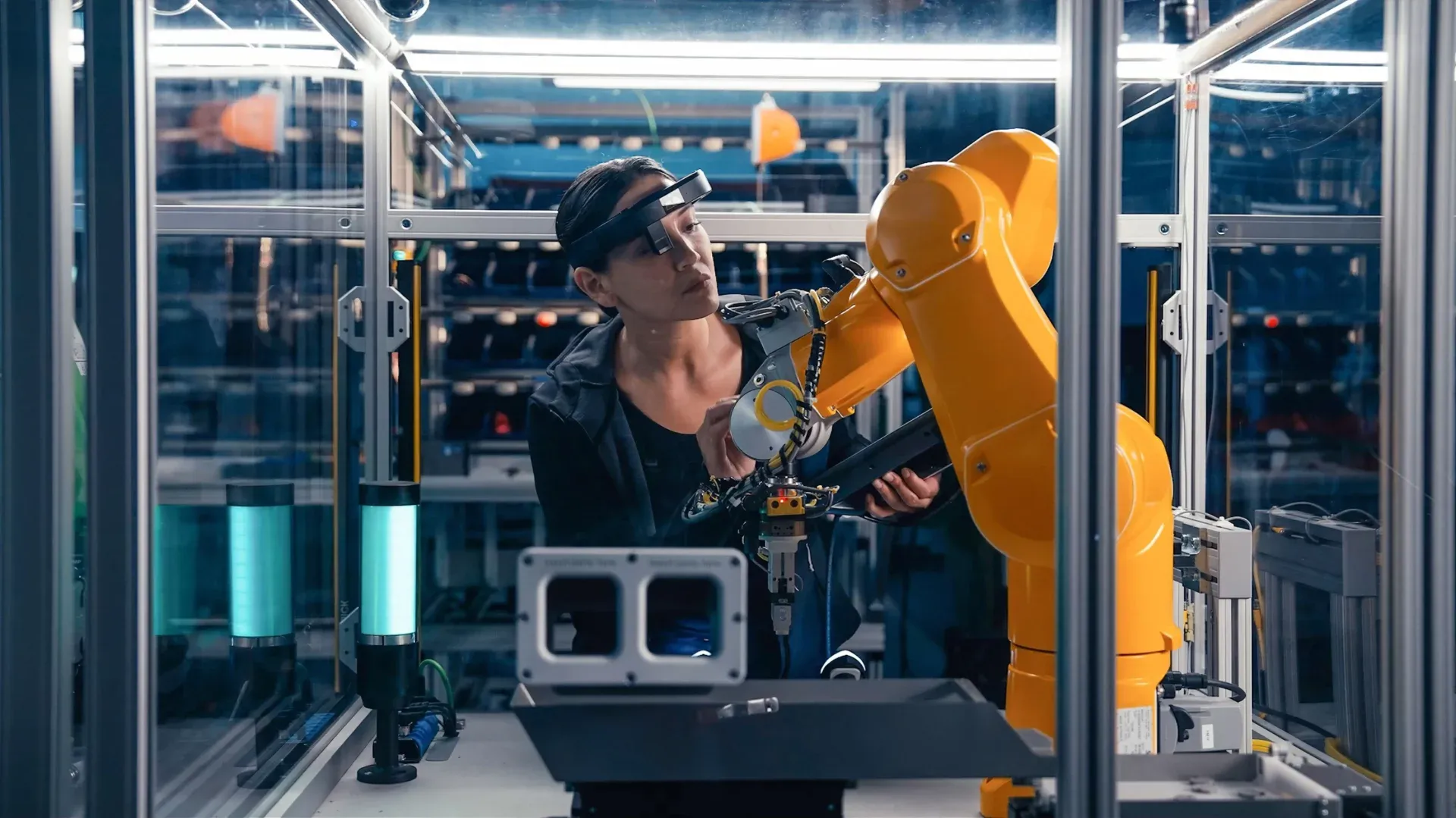
At its core, AR bridges the gap between digital and physical environments. In automotive applications, AR systems typically use devices such as smart glasses, tablets, head-up displays (HUDs), and wearable devices to overlay digital content onto real-world objects.
For example:
- A factory worker can see step-by-step assembly instructions projected directly onto a car component.
- A designer can visualise a full-scale 3D car model in a real environment.
- A driver can view navigation instructions on the windshield without looking away from the road.
This seamless integration of information enhances efficiency, accuracy, and user experience across the entire automotive value chain.
Key Applications of AR in the Automotive Industry
1. Vehicle Design and Prototyping
One of the most impactful applications of AR is in the design and development phase. Traditionally, automotive design relied heavily on physical prototypes, clay models, and time-consuming iterations.
With AR:
- Designers can visualize full-scale 3D models in real-world environments.
- Teams can collaborate remotely on the same digital prototype.
- Design flaws can be identified early, reducing costly revisions.
AR enables faster iteration cycles and reduces dependency on physical prototypes, significantly cutting development time and cost. In fact, companies like Ford have used AR tools to streamline design processes and improve collaboration between teams. A great example would be Realwear ARC 3 by Realtime AR.
2. Manufacturing and Assembly
Manufacturing is where AR delivers some of its most tangible benefits. Automotive production involves complex processes with thousands of components, making precision critical.
AR enhances manufacturing by:
- Providing real-time, step-by-step assembly instructions
- Overlaying digital guides onto physical components
- Reducing reliance on manuals and external screens
This leads to:
- Up to 25% reduction in assembly time
- Significant reduction in errors (up to 90% in some cases)
Workers can complete tasks faster and more accurately, improving overall productivity and product quality.
3. Maintenance and Repair
Maintenance and after-sales service are critical aspects of the automotive lifecycle. AR is transforming this area by enabling technicians to diagnose and fix issues more efficiently.
Key benefits include:
- Real-time remote assistance from experts
- Visual overlays showing repair instructions
- Faster identification of faults
Technicians can use AR Technology to access instant guidance, reducing downtime and improving repair accuracy. This also allows less experienced workers to handle complex tasks with confidence.
4. Training and Workforce Development
Training in automotive manufacturing can be time-consuming and resource-intensive. AR offers a more interactive and efficient alternative.
With AR training:
- Employees can practice tasks in a simulated environment
- Learning becomes hands-on and immersive
- Training becomes standardized across locations
This reduces the learning curve and minimizes errors during real production. AR also allows companies to train employees without disrupting actual operations.
5. Quality Control and Inspection
Quality assurance is critical in automotive production. AR enhances inspection processes by allowing workers to compare real components with digital models in real time.
Applications include:
- Detecting defects or misalignments instantly
- Ensuring components meet design specifications
- Improving consistency in quality checks
AR-based inspection reduces human error and improves overall product reliability.
6. Customer Experience and Sales
AR is revolutionizing how customers interact with vehicles before purchase.
Examples include:
- Virtual showrooms where customers can explore cars in 3D
- Customization tools that allow buyers to change colors, features, and interiors
- AR apps that let users visualize cars in their driveway
These experiences enhance engagement and help customers make informed decisions, ultimately boosting sales.
7. In-Car Experience and Driver Assistance
AR is also transforming the driving experience itself. Modern vehicles are increasingly equipped with AR-powered head-up displays (HUDs).
These systems:
- Project navigation directions onto the windshield
- Highlight hazards and road conditions
- Provide real-time driving information
By displaying critical data within the driver’s line of sight, AR glasses like Realwear Navigator 520 improve safety and reduce distraction.
Benefits of AR in the Automotive Industry
1. Increased Efficiency
AR streamlines workflows by providing real-time information and reducing the need for manual processes. Workers can perform tasks faster and with greater accuracy.
2. Cost Reduction
By minimizing errors, reducing training time, and eliminating the need for physical prototypes, AR significantly lowers operational costs.
3. Improved Accuracy and Quality
AR ensures precision by guiding workers with visual instructions and real-time data, leading to higher-quality outputs.
4. Faster Time-to-Market
With quicker design iterations and streamlined manufacturing processes, automakers can bring new models to market faster.
5. Enhanced Safety
From factory floors to highways, AR improves safety by providing critical information in real time and reducing human error.
6. Better Customer Engagement
Interactive AR experiences create a more engaging and personalized buying journey for customers.
Challenges of Implementing AR in Automotive
Despite its advantages, AR adoption comes with challenges:
1. High Initial Investment
Implementing AR systems requires significant upfront costs, including hardware, software, and integration.
2. Technical Complexity
Developing and maintaining AR applications requires specialized expertise.
3. Integration with Existing Systems
Automotive companies must integrate AR with legacy systems, which can be complex.
4. User Adoption
Employees may require time and training to adapt to AR technologies.
5. Data Security Concerns
AR systems often rely on real-time data, raising concerns about cybersecurity and data protection.
The Future of AR in Automotive
The future of augmented reality in the automotive industry looks highly promising. The market is expected to grow significantly, reaching tens of billions of dollars in the coming years.
Key trends shaping the future include:
1. Integration with AI and IoT
AR will become more intelligent by combining with AI and IoT, enabling predictive maintenance and smarter manufacturing.
2. Digital Twins
AR will enhance digital twin technology, allowing real-time simulation and monitoring of vehicles and production systems.
3. Autonomous Vehicles
As self-driving technology advances, AR will play a key role in enhancing passenger experience and navigation.
4. Wearable AR Devices
Advancements in smart glasses and headsets will make AR more accessible and practical for everyday use.
5. Fully Immersive In-Car Experiences
Future vehicles may offer fully immersive AR environments for entertainment, navigation, and productivity.
Conclusion
Augmented reality is no longer a futuristic concept — it is a transformative force reshaping the automotive industry. From design and manufacturing to customer experience and driving safety, AR is delivering measurable benefits across the entire value chain.
By enhancing efficiency, reducing costs, and improving accuracy, AR is helping automotive companies stay competitive in an increasingly digital world. While challenges remain, the rapid pace of technological advancement and growing adoption indicate that AR will play a central role in the future of mobility.
As the industry continues to evolve, companies that embrace augmented reality will be better positioned to innovate, adapt, and lead in the next generation of automotive excellence.


























Sign in to leave a comment.