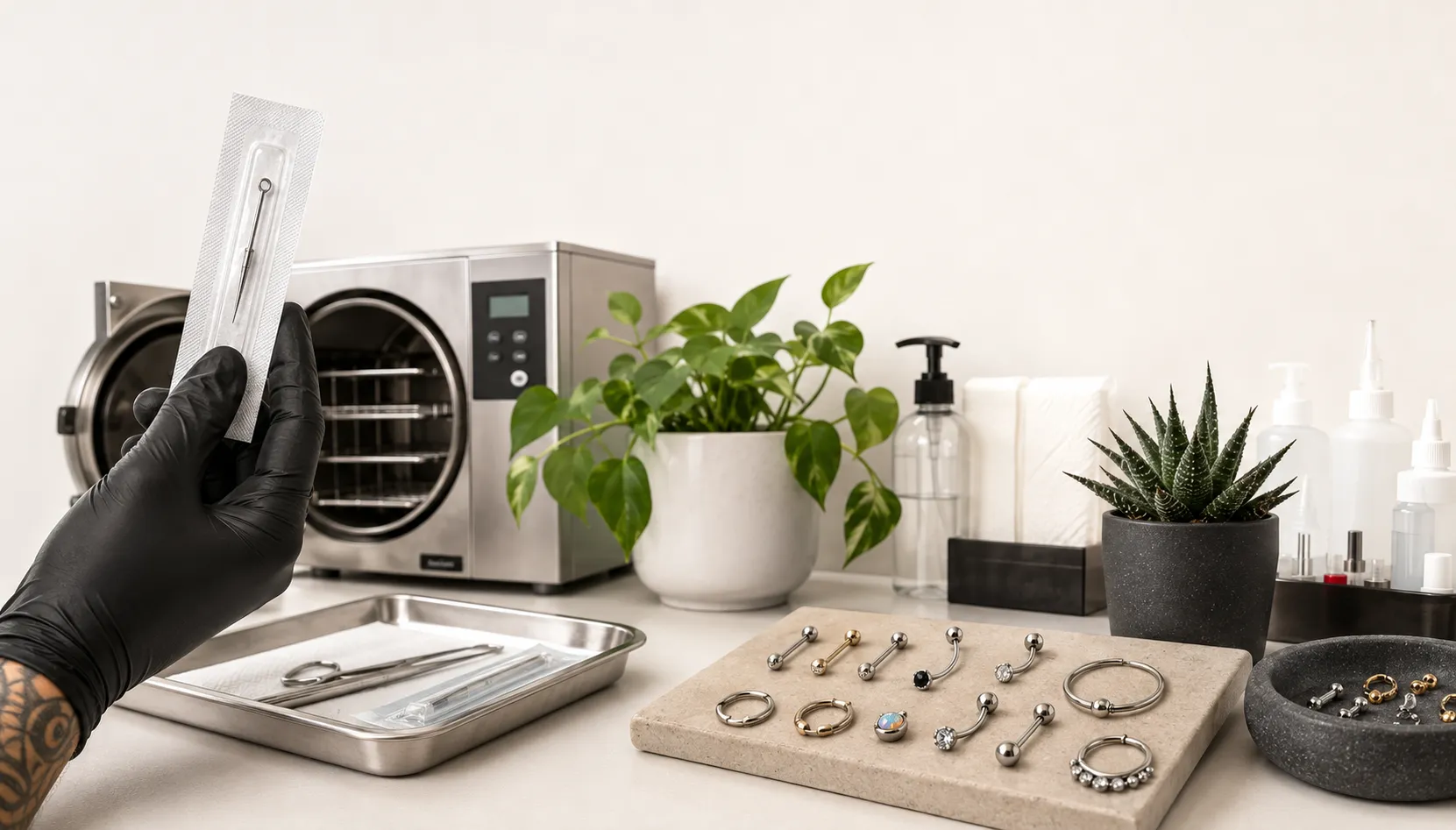

Getting pierced should never be a gamble. Body piercing Australia wide runs under strict health rules, and knowing them helps you spot a professional studio in minutes.
We've been piercing since 1996, so this guide comes straight from the shop floor. It covers what the law requires, which jewellery is safe, and how to judge any studio.
Body Piercing Australia: How the Rules Actually Work
There's no single national piercing licence. Each state and territory writes its own skin penetration laws, and local councils enforce them. Studios register with their council, which sends environmental health officers to inspect the premises.
The core requirements look the same everywhere. Needles have to be sterile and disposable. Equipment used multiple times gets sterilised in the autoclave, and the process is carried out by the piercer using washed hands, new gloves and clean equipment.
Also, the studios need to provide you with all the health information before the procedure and maintain a record of your visit. All these requirements apply to body piercing Australia wide, regardless of whether you live in Cairns or Hobart. The age restrictions and consent regulations vary from state to state and some piercings are prohibited for teenagers at all. Thus, you'll have to take a photo ID with you.
Safety Measures That Should Be Visible to You
If you want to find body piercing shops near me, make sure to follow this list. A professional studio makes hygiene visible.
In our stores, every needle comes out of sealed sterile packaging in front of you. If a piercer won't show you that, walk out. The bench gets disinfected between clients, and gloves go on fresh after a proper hand wash.
Anything reusable is sterilised in an autoclave. Good studios can show you spore test results that prove it works. Our piercing FAQs explain the process step by step.
Cartilage should always meet a needle, never a piercing gun. Guns can't be fully sterilised, and they force blunt studs through tissue that deserves better.
What Goes Into a Fresh Piercing Matters
The law says jewellery must be sterile at the time of use. The other part of the picture is quality.
For your new piercing, the safest material to use would be implant-grade titanium. It is nickel-free and very easy on the skin as it heals.
Internally threaded fittings help too, because nothing sharp drags through the wound.
Good results for body piercing stores near me will stock implant-grade pieces as standard. Browse our body jewellery range and you'll see titanium and surgical steel clearly labelled. An honest tip: a $15 plated bar suits a healed lobe, never fresh cartilage.
Aftercare Is Half the Job
Our work ends when yours begins. Studios must give you written health information by law, and our piercers talk you through aftercare before you pay.
This is a basic procedure. Clean with sterile saline two times daily, clean your hands before touching, and leave the jewellery as it is. Do not twist the jewellery, avoid swimming pools and sea during the healing period.
It takes six to eight weeks for lobes, and six months or even more for cartilage. Grab saline from our aftercare range before you leave the counter. Studios that skip this conversation are the body piercing places near me results you scroll straight past.
How to Choose a Studio Near You
Typing body piercing places near me into Google is the easy part. Five minutes of homework sorts the contenders from the pretenders.
Look for the council registration certificate on the wall. Compare a few body piercing stores near me listings and read reviews that mention hygiene, not just friendly staff. Check healed results on the studio's social media, because fresh photos flatter everyone.
Then walk in and ask questions. How do you sterilise your tools? Which metal is this exactly?
Professionals answer happily, while dodgy operators get cagey. All our stores welcome walk-ins, so find your nearest store and size us up in person.
To Conclude
Body piercing Australia wide is safer than it has ever been, and these standards are the reason. Next time you search body piercing places near me, you'll know exactly what separates the professionals. Check our piercing prices and procedures, then drop into your nearest Off Ya Tree.
FAQs :
1. Australian Body Piercing Standards: What Every Customer Should Know?
These include council-registered studios, sterile single-use needles, well-sterilised equipment, implant-grade jewellery and clear information about aftercare. All states have different regulations, and the local councils check if the studios are in compliance.
2. What safety measures should a professional piercing studio follow?
You should see that the piercer washes hands, uses new gloves, disinfected surfaces and needles sterilised in front of you in sterile packages. All reusable tools should be sterilised by autoclaving and tested for spore presence regularly.
3. What type of jewellery is safest for a new body piercing?
Titanium implant is the safest choice of jewellery because it's nickel-free and bio compatible. Implant-grade steel is suitable for most customers, while sensitive skins would prefer to use titanium jewellery initially.
4. Why is aftercare important following a body piercing?
Fresh piercing is still an open wound which needs to be regularly cleaned with saline solutions to protect from infections. Touching or manipulating piercing creates irritation bumps. Aftercare determines how well the piercing will heal.
5. How can I choose a safe and reputable body piercing studio in Australia?
Check for a registration certificate by the council, hygiene conditions and implant-grade jewellery. Ask how equipment gets sterilised. Professionals answer happily, and honest reviews plus healed photos confirm genuinely consistent work.

























Sign in to leave a comment.