
Thermal imaging and traditional night vision serve different purposes. Traditional night vision amplifies available light to produce a visible image, making it useful for viewing shapes, surfaces, and environmental details when sufficient light or infrared illumination is available.
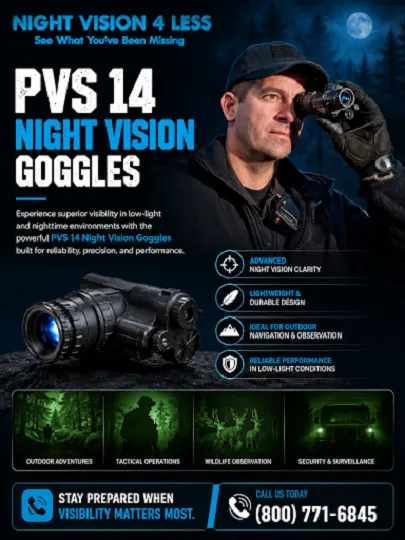
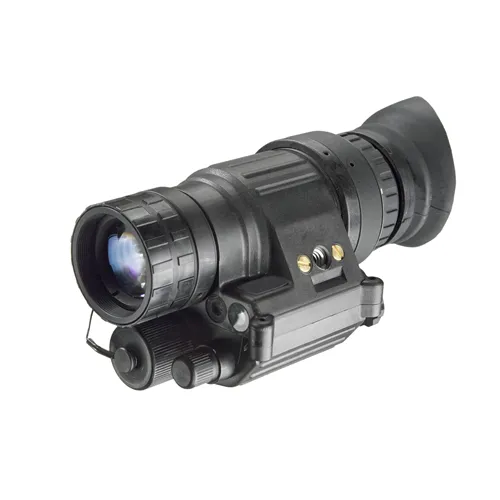
Selecting the right PVS14 Night Vision device requires more than just comparing basic specifications. The quality of the image intensifier tube, especially those with high FOM ratings
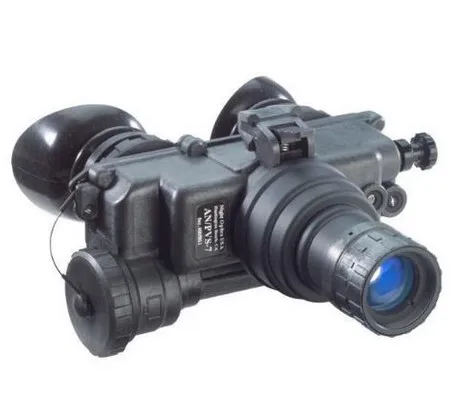
Night vision goggles are often used in challenging environments where reliability is critical. The PVS7 system is widely trusted because it is designed for real operational use, including mobility, navigation, and field tasks in low-light conditions.
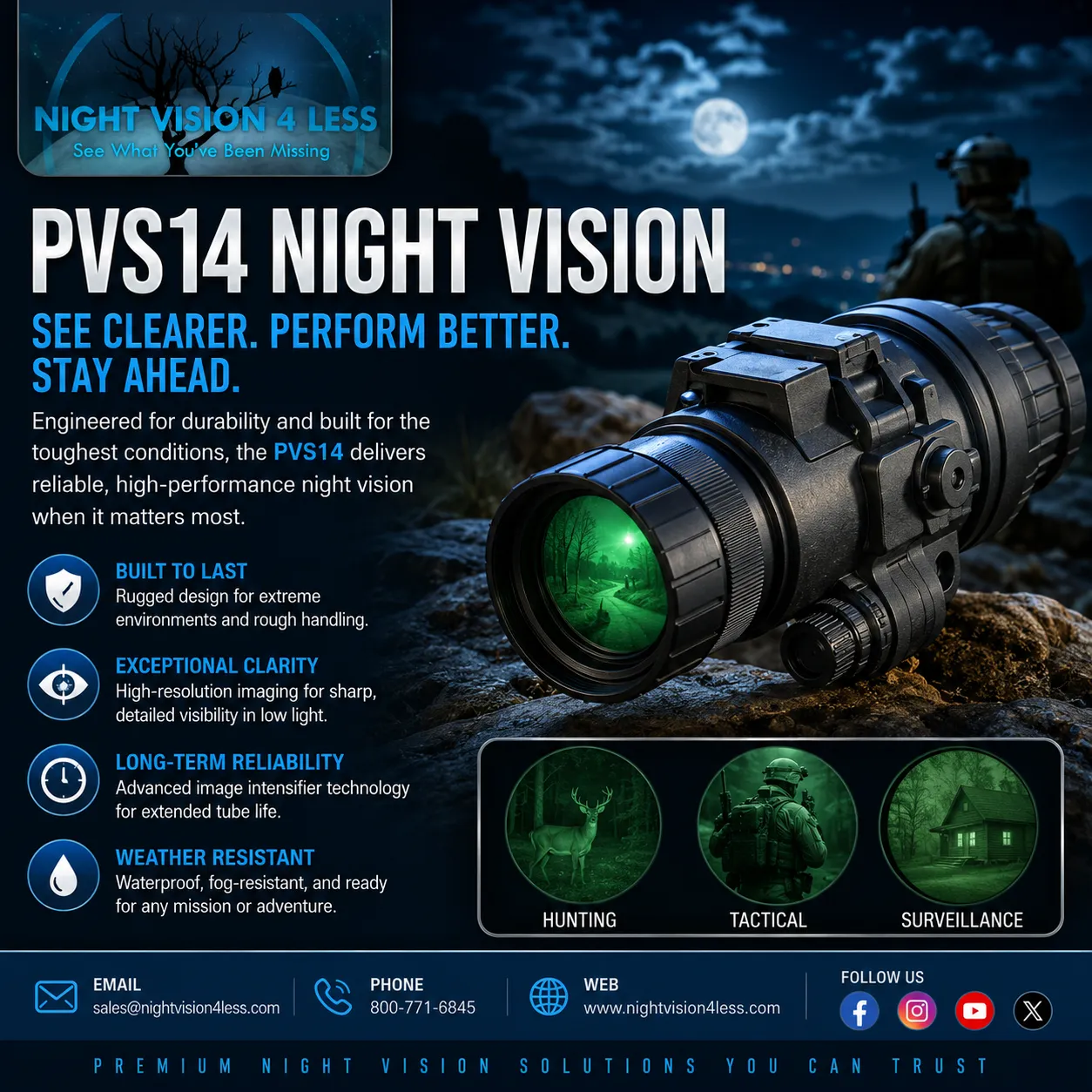
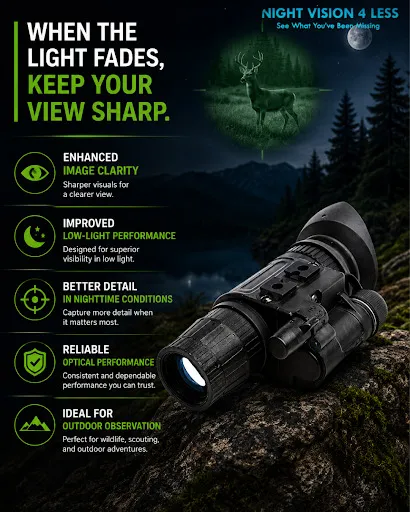
A well-built PVS14 system offers dependable visibility, consistent image quality, and durability suited for demanding environments.
The right binoculars depend heavily on what you plan to do with them. A person interested in occasional backyard wildlife observation may have different requirements from someone who regularly spends nights outdoors.
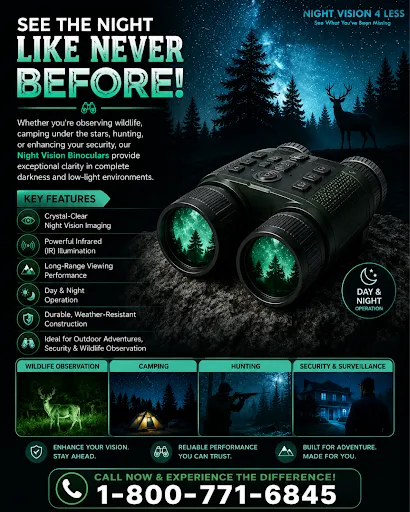
Most modern binoculars rely on image intensifier tubes. These tubes collect photons, convert them into electrons, and amplify them to produce a brighter image. The result is the familiar green-tinted view that improves visibility in darkness.

Modern PVS14 systems are built using advanced night vision technologies that significantly improve performance. Many of these devices incorporate high-sensitivity photocathodes and enhanced microchannel plate designs.
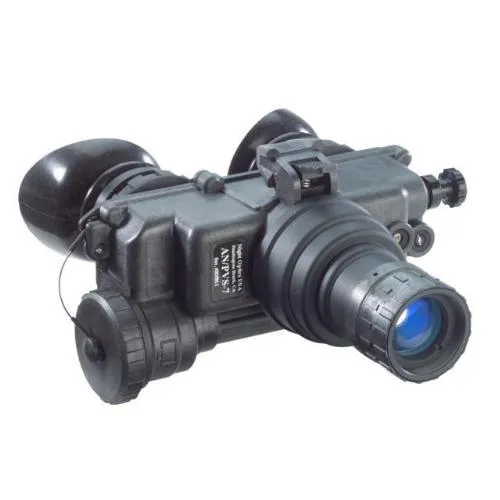
This is where PVS7 Night Vision Goggles continue to stand out. Known for their durability and dependable performance, they have remained a preferred choice for users who require reliable visibility in challenging conditions.
One of the strengths of PVS14 systems is their versatility.

A night vision device might look impressive initially, but its overall value depends on how long the image intensifier tube continues to deliver consistent results. This is essential for users investing in professional-grade night vision binoculars for regular or demanding use.
These tubes are individually chosen based on strict criteria like signal-to-noise ratio and image clarity. They result in noticeably sharper, cleaner imaging—especially in extremely low-light conditions.
Photonis ECHO image tubes use advanced unfilmed technology. This technology allows more light to pass through the system, improving image clarity and sensitivity in low-light environments. The result is a sharper, more detailed image without the excessive grain often seen in standard options.
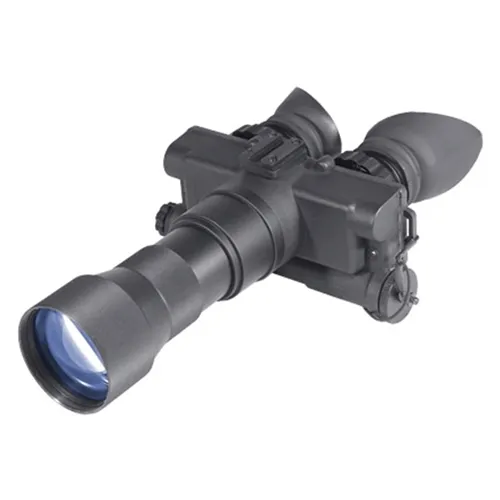
Manufacturers test and evaluate image tubes based on certain performance metrics. An important metric is the signal-to-noise ratio (SNR), which determines how clearly an image appears in low-light conditions.
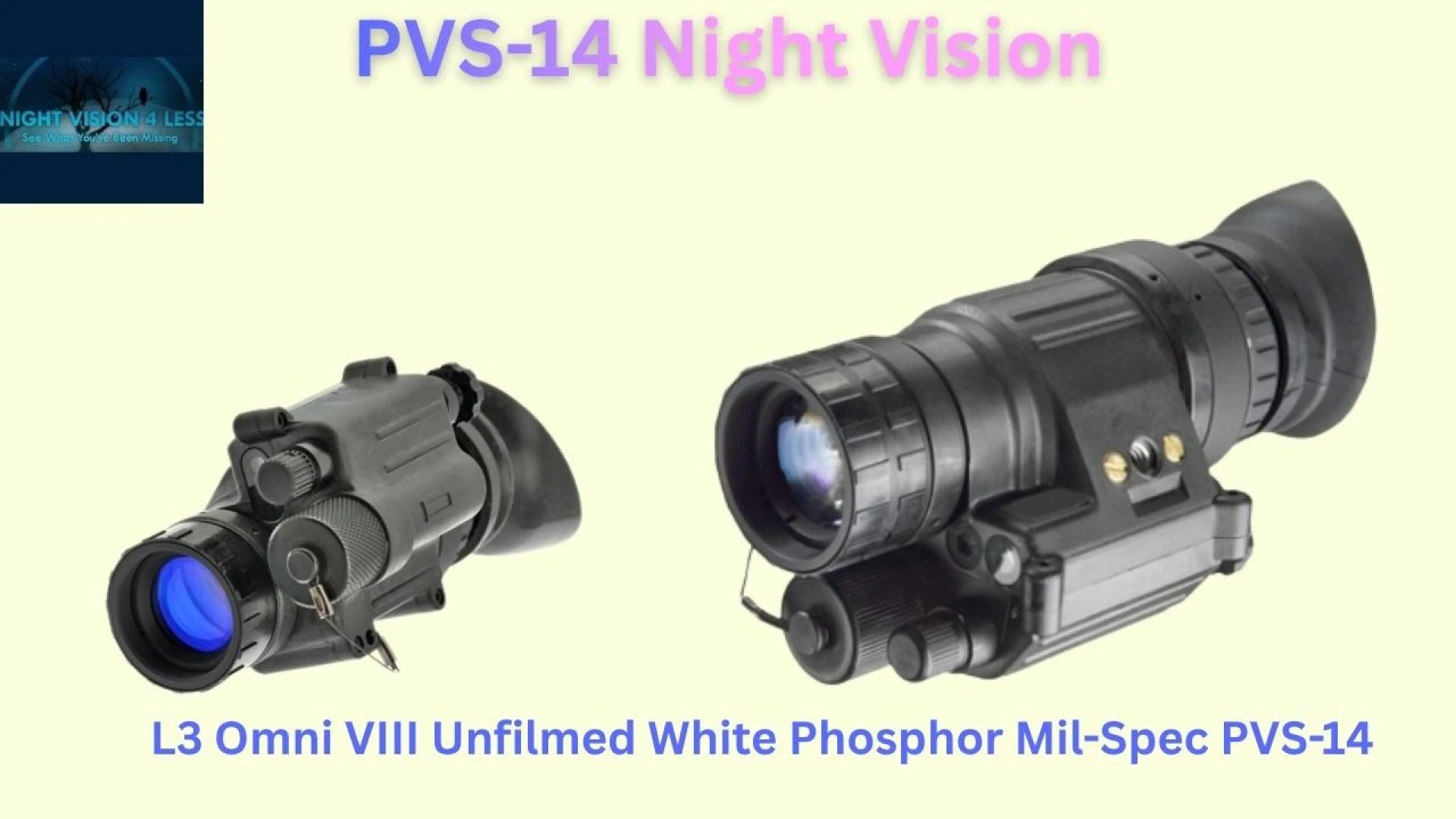
One of the key advantages of the PVS14 Night Vision monocular is its compact and lightweight design. Weighing approximately 12 ounces, it is easy to carry and comfortable to use during extended operations in the field. Despite its small size, it delivers powerful night vision performance and reliable imaging in low light environments.
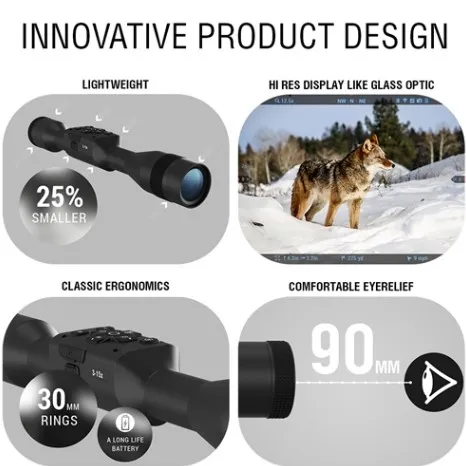
If you are shopping for Night Vision Scopes, it is crucial to understand that Digital and Analog are two totally different animals. One is a computer; the other is physics.
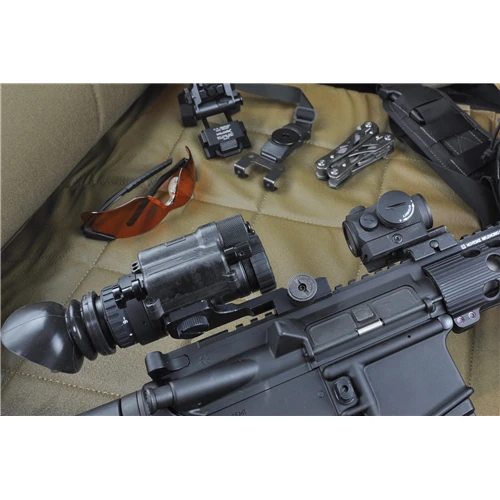
This is how most pros use it. By attaching the PVS14 to a helmet or a "skull crusher" head mount, you get night vision while keeping both hands free. This is perfect for driving an ATV at night, hiking through the woods, or navigating a boat. The cool part is that it only covers one eye. This lets your other eye stay adapted to the natural darkness, giving you better situational awareness.
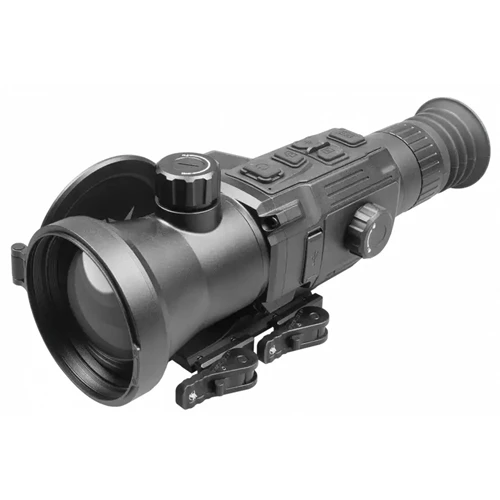
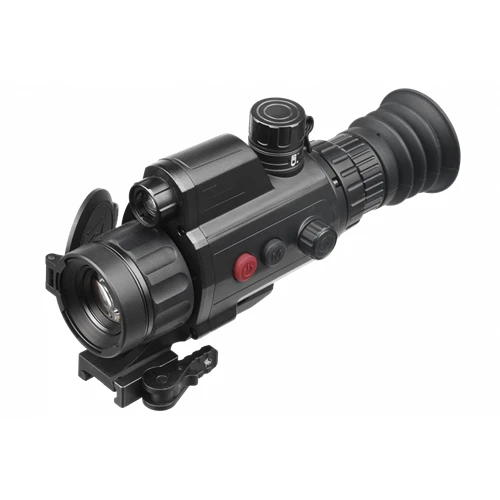
Thermal scopes have quickly become invaluable tools for wildlife monitoring and research. While your focus is on wildlife, it’s worth noting that the same thermal technology can find lost pets or even people in wilderness settings.