

This is where experienced electronic design services make the difference between a device that works on the bench and one that performs reliably on a moving, living body.
This is precisely why experienced teams lean on structured electronic product design services from the outset. Rigorous methodology at the front end, such as schematic review, component selection, and thermal and power analysis, catches problems before they become expensive prototype rework.
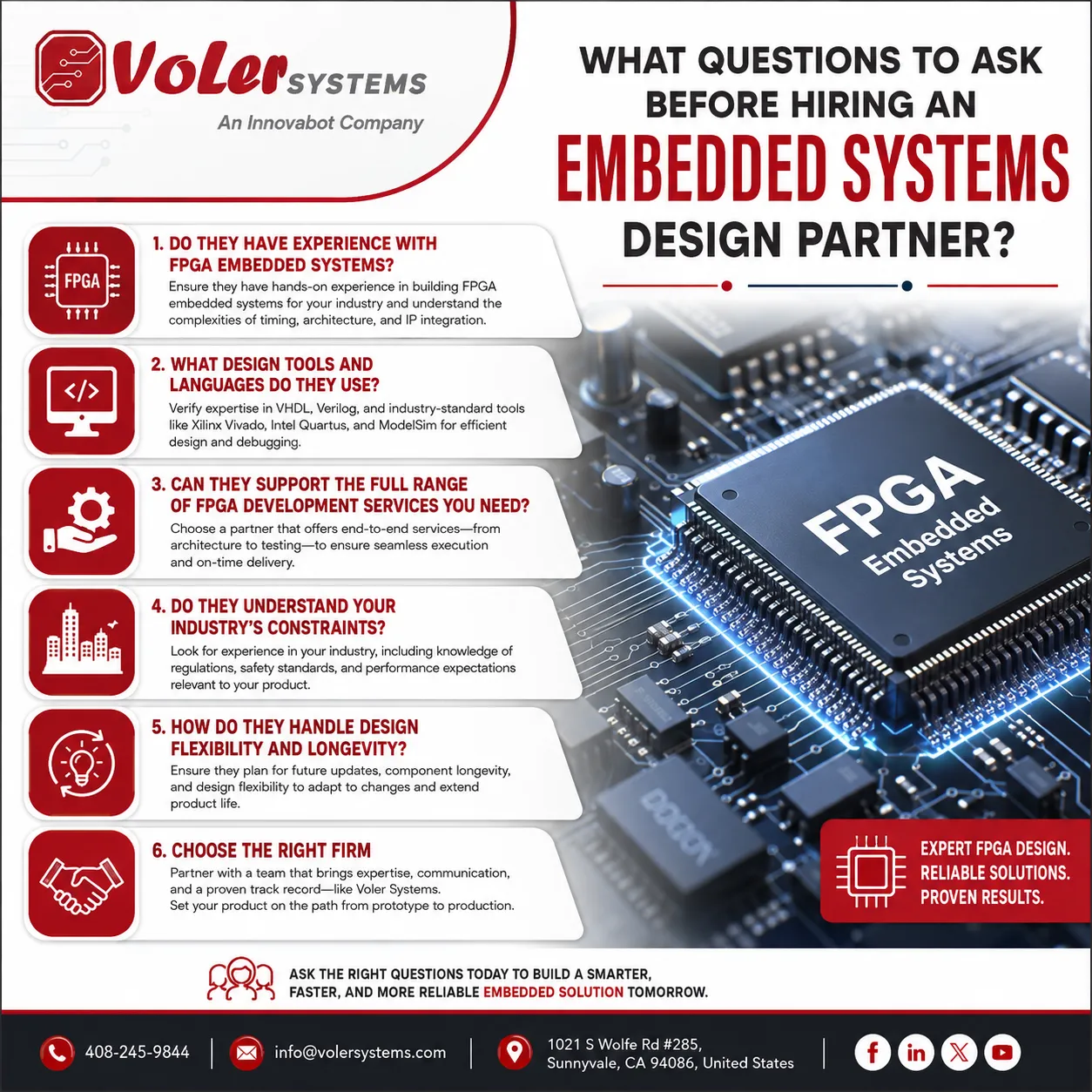
Some firms handle only isolated parts of a project, such as architecture, but not verification, coding, or system integration. Before committing, you can confirm the partner can offer complete FPGA development services.
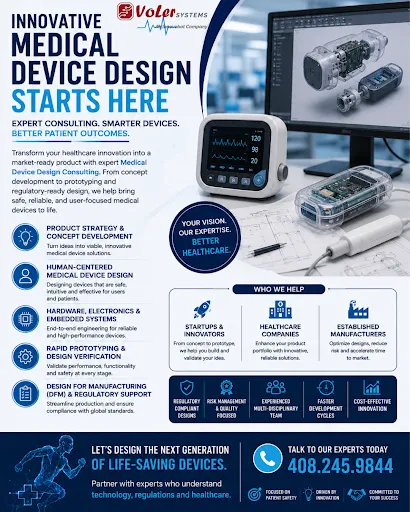
Medical device product development is rarely a straight line. Sensor accuracy, wireless connectivity, biocompatibility, and manufacturability must work together to meet regulatory expectations.
An FPGA in embedded system applications can be customized to perform highly specific functions. That’s why it is ideal for medical devices where precision and real-time performance are essential. Engineers can configure the hardware to match the exact application requirements without costly custom chip development.

Experienced embedded systems designers know how efficient power architecture directly affects battery life, system stability, and long-term product durability. When a prototype overheats or drains power faster, it often shows deeper engineering compromises within the design.

One common frustration users experience with wearable devices is constant charging. Healthcare wearables should operate continuously for extended periods without interruption. A device that often loses power becomes less useful for patients and medical professionals.
A wearable health monitor must measure accurately, process information reliably, and present it in a way that supports medical decisions.

FPGAs never just change how systems perform; rather, they change how engineers approach the design itself.

Before digital systems can analyze this data, it must be accurately captured, conditioned, and converted. That critical process starts with well-engineered analog circuitry.
A noteworthy electronics design company builds regulatory strategy into the very first phase of development, from requirements documentation through design verification. So nothing can catch you off guard during submission.