How to Save a Client $100K+ Without Sacrificing Quality: A Budget-First Approach to Custom Development
How devs used gap analysis, an open-source foundation, and staged delivery to reduce estimated effort by 21% without weakening the product vision.
Software Development Insider sharing insights from real software projects at XB Software. Writing about AI, system design, and how products actually behave in production, not just in theory.
How devs used gap analysis, an open-source foundation, and staged delivery to reduce estimated effort by 21% without weakening the product vision.
Sometimes, slow releases are caused by a coordination problem. Unclear deployment ownership, fuzzy handoffs, and undefined readiness criteria create costly bottlenecks. Fixing accountability for each critical stage cuts waiting periods, accelerates time‑to‑production, and makes rollouts predictable.
Patient feedback has evolved into a real-time indicator of healthcare performance, but many providers still struggle with disconnected workflows and manual follow-ups. This article explores how care coordination software, healthcare workflow automation, and AI-powered tools help ambulatory organizations act on patient feedback faster, improve patient satisfaction, reduce staff burden, and turn feedback into actionable operational insights.
This article describes how to add AI-based semantic search to an existing fitness app without migrating your database or over‑engineering. Using MySQL, JavaScript, and in‑memory vector comparison, this pragmatic approach helps users find content by intent, not exact-match keywords.
Operational silos plague growing contractors as data scatters across disconnected systems. This article explores a phased approach to construction software modernization, without disrupting active projects. Learn how to audit workflows, prioritize fixes, and roll out changes incrementally.
How predictive risk intelligence helps assess future drilling regions using incident correlation, AI risk scoring, geospatial data, and multi-source risk signals.
Most construction firms still manage field crews through spreadsheets and phone calls. The result is idle time and misallocated labor. Custom Workforce management software connects planning, execution, and analytics in real time, reducing downtime and improving efficiency.
This article explores how XB Software built a healthcare knowledge management platform for a regional healthcare network. It shows how business analysis uncovered workflow bottlenecks, leading to practical UX, scalable architecture, and lightweight compliance features that improved operational visibility and coordination.
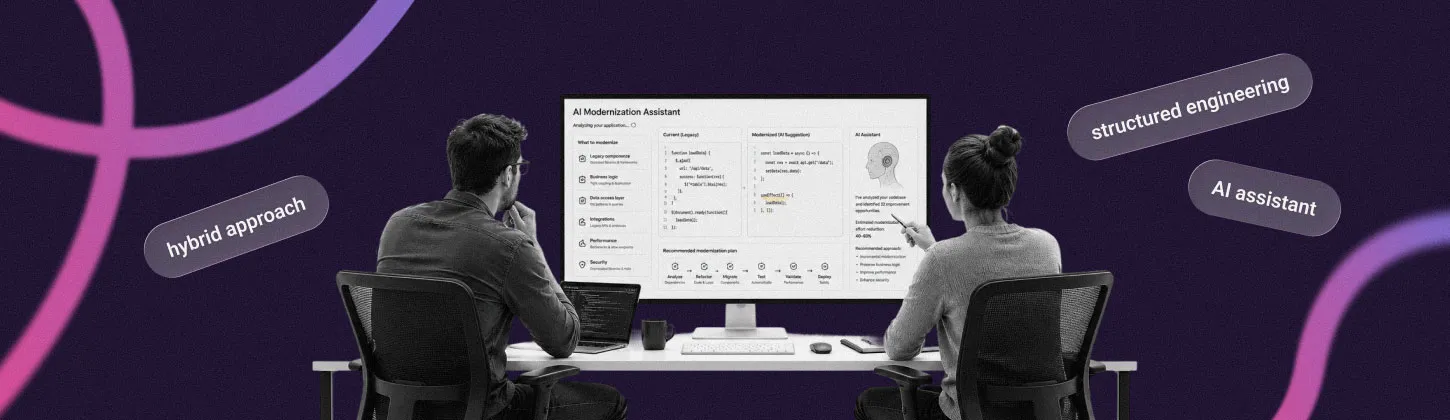
AI accelerates app modernization but doesn’t replace engineers. It compresses discovery, automates translation, and generates tests. Risks include hidden errors and governance pressure. Human-led AI assistance is the only reliable path
This article explains how intelligent ambulatory care workforce management software—featuring automated scheduling, predictive analytics, and real-time visibility—can reduce administrative burdens and help clinicians focus more on patient care.
This article compares manual and automated testing, and shows how Artificial Intelligence enhances automation with Playwright MCP, self‑healing tests, and smart generation. It covers drawbacks of both manual and automated approaches and explores such tools as KaneAI, Autify, BetterBugs, and Testmo.
Share