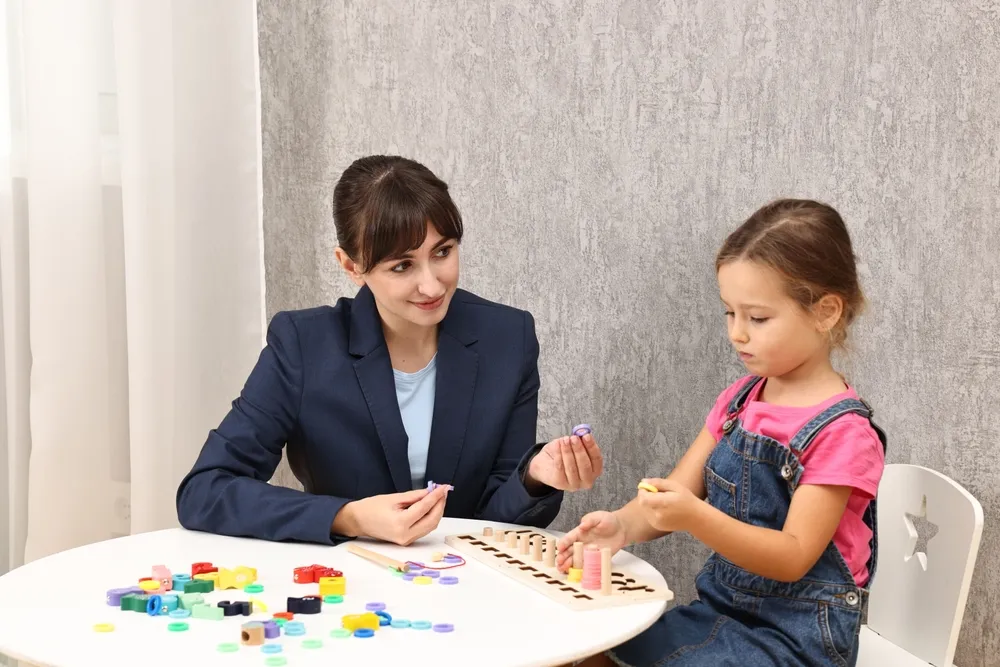
Autism can influence how children understand language, express their needs, and interact with others. Some autistic children begin speaking later than expected, while others develop spoken language early but experience differences in social communication. Understanding autism speech language development can help parents recognise their child's communication needs and explore appropriate support.
At Brave Little Heroes Psychology Hub, we recognise that every child has individual strengths, preferences, and developmental needs. Learning about communication differences can help parents build meaningful connections, encourage self-expression, and support their child's participation in everyday activities.
What Is the Connection Between Autism and Speech Language Development?
Autism spectrum disorder (ASD) is a neurodevelopmental condition associated with differences in social communication, behaviour, sensory processing, and interaction with the surrounding environment. Its effects on communication vary considerably between children.
Some autistic children communicate primarily through spoken words, while others use gestures, pictures, writing, or augmentative and alternative communication (AAC) tools. Children may also understand more language than they can express verbally.
Speech refers to producing sounds and words, whereas language involves understanding and communicating meaning through words, gestures, and symbols. Social communication includes skills such as conversational turn-taking, interpreting facial expressions, and understanding how communication changes across situations.
Understanding autism speech language differences means recognising that communication involves much more than speaking. A child may have an extensive vocabulary but find implied meanings, conversational exchanges, or figurative expressions challenging.
What Are the Common Signs of Speech and Language Differences in Autistic Children?
Children develop communication skills at different rates, and no single behaviour confirms an autism diagnosis. However, certain patterns may indicate that a child could benefit from professional assessment.
Common signs of communication differences include:
- Delayed spoken language: A child may begin using words or combining them into sentences later than expected for their developmental stage.
- Differences in nonverbal communication: A child may use gestures, facial expressions, or eye contact differently from their peers.
- Repeated words or phrases: Some children repeat words they have heard, known as echolalia, which may serve different communication purposes.
- Challenges with conversational exchanges: A child may find it difficult to initiate conversations, respond to questions, or interpret implied meanings.
Some children have advanced vocabulary or detailed knowledge of particular interests but experience differences in social communication. Others communicate effectively in familiar environments but find unfamiliar settings overwhelming.
When considering autism speech language development, parents should look at their child's overall communication patterns rather than relying on a single sign. Developmental history, individual circumstances, and professional assessment can help clarify whether additional support may be beneficial.
How Does Autism Affect Speech and Language Development?
Autism may influence several aspects of communication, including expressive language, receptive language, and pragmatic language. Understanding these areas can help parents identify their child's strengths and potential support needs.
- Expressive language involves communicating thoughts, feelings, and needs through words, gestures, or other methods. A child may understand what they want but struggle to find the words to express it.
- Receptive language refers to understanding spoken or written information, questions, and instructions. Some children benefit from shorter instructions, visual supports, and additional processing time.
- Pragmatic language involves using communication in social situations. This may include understanding conversational turn-taking, recognising another person's perspective, and interpreting humour or nonliteral language.
Sensory sensitivities, anxiety, and unfamiliar environments may also affect how a child communicates. For example, a child who speaks comfortably at home may communicate less in a busy classroom.
Recognising these differences helps families understand autism speech language needs in context. Communication abilities can vary according to the situation, the people involved, and how comfortable a child feels.
How Can Parents Support Speech and Language Development at Home?
Parents and caregivers can encourage communication through everyday interactions. Support does not need to involve complicated activities or formal lessons. Small, consistent opportunities can help children express themselves in ways that feel comfortable.
Consider these practical strategies:
- Follow your child's interests: Join activities they enjoy, such as drawing, puzzles, building blocks, or imaginative play. Shared interests can create natural opportunities for interaction.
- Use clear and simple language: Give manageable instructions and allow enough time for your child to process information before repeating a question.
- Model useful words and phrases: If your child points towards a drink, you could say, "You want water." This demonstrates language without requiring them to repeat it.
- Accept different communication methods: Gestures, pictures, writing, and communication devices can help children express their needs when spoken words are difficult.
These strategies can support autism speech language development by creating opportunities for meaningful communication without unnecessary pressure.
Avoid forcing eye contact or insisting that a child speak before receiving something they need. Instead, acknowledge their communication attempts and respond supportively. The aim is to help children communicate effectively, not to make every child communicate in the same way.
When Should Parents Seek Professional Support?
Parents may consider seeking professional guidance when communication concerns persist, developmental milestones are delayed, or difficulties affect their child's everyday participation. Support can be helpful at different ages, and families do not need to wait until difficulties become severe.
A speech pathologist can assess speech, language, and communication skills. Depending on the child's needs, an assessment may explore understanding language, expressing ideas, speech sounds, social communication, and alternative communication methods.
A psychologist may provide support when communication concerns occur alongside anxiety, emotional distress, behavioural challenges, or difficulties with social interaction. Depending on the child's needs, collaboration between professionals can provide a more comprehensive approach.
It is important to remember that an autism diagnosis does not automatically mean a child has a speech or language disorder. Similarly, speech delay alone does not establish that a child is autistic. Professional assessment helps identify individual strengths, developmental differences, and suitable support options.
Understanding autism speech language concerns can help parents prepare useful observations for appointments, including how their child communicates at home, at school, and in social situations.
How Can Child Psychology Support Autistic Children?
Psychological support can help children develop emotional awareness, strengthen coping skills, and navigate social experiences in ways that respect their individual needs. It may also help parents understand behaviours that communicate discomfort, frustration, uncertainty, or unmet needs.
At Brave Little Heroes Psychology Hub in Hawthorn East, Melbourne, our child-focused approach incorporates evidence-based psychological practices and creative, play-based engagement where appropriate. Individualised sessions consider each child's developmental profile, interests, emotional needs, and family circumstances.
Families exploring Autism treatment can learn more about our approach through our Autism treatment therapy page for better understanding.
Psychological therapy and speech pathology have different roles, although they may complement each other. When speech or language concerns are identified, families may benefit from consulting a qualified speech pathologist alongside other relevant professionals.
Supporting autism speech language needs may involve different professionals working towards complementary goals, such as helping a child express emotions, communicate needs, and participate more comfortably in daily routines.
Frequently Asked Questions About Autism Speech Language Development
Do all autistic children experience speech delays?
No. Some autistic children develop spoken language within typical developmental timeframes, while others experience speech or language delays. Some communicate using gestures, pictures, or assistive communication tools. Each child's communication profile is different.
Can autistic children improve their communication skills?
Many autistic children develop new communication skills with appropriate support and opportunities to practise in comfortable environments. Progress varies, and meaningful communication may involve spoken language, gestures, pictures, or other methods.
What is the difference between speech delay and autism?
Speech delay describes speech or language skills developing later than expected. Autism is a broader neurodevelopmental condition involving differences in social communication and restricted or repetitive patterns of behaviour or interests. A qualified professional can help determine which assessments are appropriate.
Should I consult a psychologist or a speech pathologist?
The appropriate professional depends on your concerns. Speech pathologists assess and support speech, language, and communication development. Psychologists can help with emotional regulation, anxiety, behaviour, and developmental concerns within their professional scope. Some children benefit from both services.
Supporting Every Child's Communication Journey
Understanding autism speech language development helps parents focus on their child's individual abilities rather than comparing them with others. Patient interactions, suitable communication strategies, and appropriate professional guidance can help children express their needs, build relationships, and participate in everyday life.
If you have concerns about your child's communication or developmental progress, consider discussing them with an appropriate health professional. Brave Little Heroes Psychology Hub provides child-focused psychological assessment and therapy in Hawthorn East, Melbourne, to support children and their families according to their individual needs.



















Sign in to leave a comment.