
In today\'s data-driven landscape, businesses are accumulating vast amounts of information from diverse sources. Traditional data warehousing solutions often struggle to handle the volume, variety, and velocity of big data. Enter Azure Data Lake, Microsoft\'s cloud-based solution designed to store and analyze massive datasets with ease.
What is Azure Data Lake?
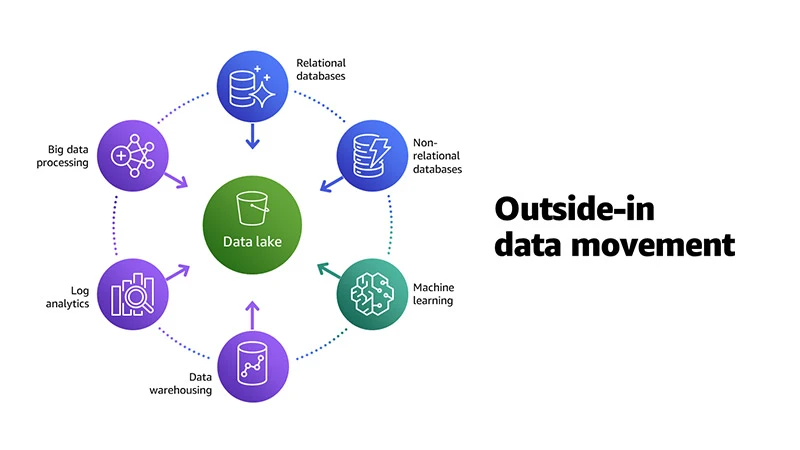
Azure Data Lake is a highly scalable and secure data storage and analytics service that can handle structured, semi-structured, and unstructured data. It\'s built on the foundations of Azure Blob Storage, providing the durability and availability needed for mission-critical applications. Data Lake acts as a centralized repository for all your data, making it easily accessible for various analytics and machine learning workloads.
Key Components of Azure Data Lake
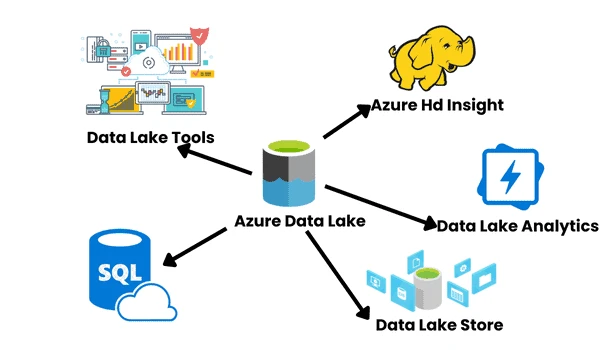
- Azure Data Lake Storage Gen2: This is the core storage component, offering hierarchical namespaces, improved performance, and compatibility with Hadoop Distributed File System (HDFS) APIs.
- Azure Data Lake Analytics: A serverless analytics service that enables you to run massively parallel processing jobs on your data lake using familiar languages like U-SQL, R, Python, and .NET.
- Azure HDInsight: A cloud-based distribution of Hadoop and Spark, providing a fully managed platform for big data processing and analytics.
- Azure Databricks: A collaborative Apache Spark-based analytics platform that integrates seamlessly with Azure Data Lake Storage, offering a powerful environment for data science and machine learning.
Advantages of Azure Data Lake
- Scalability: Data Lake Storage Gen2 is designed to handle petabytes of data, effortlessly scaling to meet your growing needs. You can start small and expand your storage capacity as your data volumes increase.
- Flexibility: Data Lake supports a wide range of data formats, including structured (e.g., CSV, JSON), semi-structured (e.g., XML, logs), and unstructured (e.g., images, videos, audio). This flexibility allows you to store and analyze all your data in one place.
- Cost-Effectiveness: By leveraging the cloud\'s pay-as-you-go model, Azure Data Lake helps you optimize your costs. You only pay for the storage and compute resources you actually use, eliminating the need for large upfront investments.
- Security: Data Lake offers robust security features, including encryption at rest and in transit, role-based access control, and network isolation. You can also integrate Data Lake with Azure Active Directory for seamless identity and access management.
- Integration: Data Lake integrates seamlessly with other Azure services, such as Azure Synapse Analytics, Power BI, and Machine Learning, enabling you to build end-to-end big data solutions.
Use Cases for Azure Data Lake
- Big Data Analytics: Analyze large volumes of raw data to gain insights, identify patterns, and make data-driven decisions.
- Data Science and Machine Learning: Train and deploy machine learning models on your data lake to uncover hidden patterns and make predictions.
- Internet of Things (IoT) Analytics: Store and analyze massive amounts of IoT data to monitor device performance, detect anomalies, and optimize operations.
- Log Analytics: Centralize and analyze logs from various sources to troubleshoot issues, monitor system health, and detect security threats.
Best Practices for Azure Data Lake
- Define Your Data Architecture: Develop a well-structured data lake architecture that includes data ingestion, storage, processing, and analysis layers.
- Organize Your Data: Use folders and partitions to organize your data based on business needs or data characteristics. This improves query performance and simplifies data management.
- Secure Your Data: Implement appropriate security measures to protect your sensitive data. Use encryption, role-based access control, and network security groups to safeguard your data lake.
- Monitor and Optimize: Regularly monitor your data lake usage, performance, and costs. Identify optimization opportunities, such as compressing data or archiving infrequently accessed data.
Conclusion
Azure Data Lake empowers businesses to unlock the full potential of their big data. Its scalability, flexibility, cost-effectiveness, and security make it a compelling choice for organizations seeking to build data-driven solutions.
Whether you\'re a small business or a large enterprise, Azure Data Lake offers a powerful platform to store, process, and analyze your data, helping you gain valuable insights and drive innovation.


Sign in to leave a comment.