

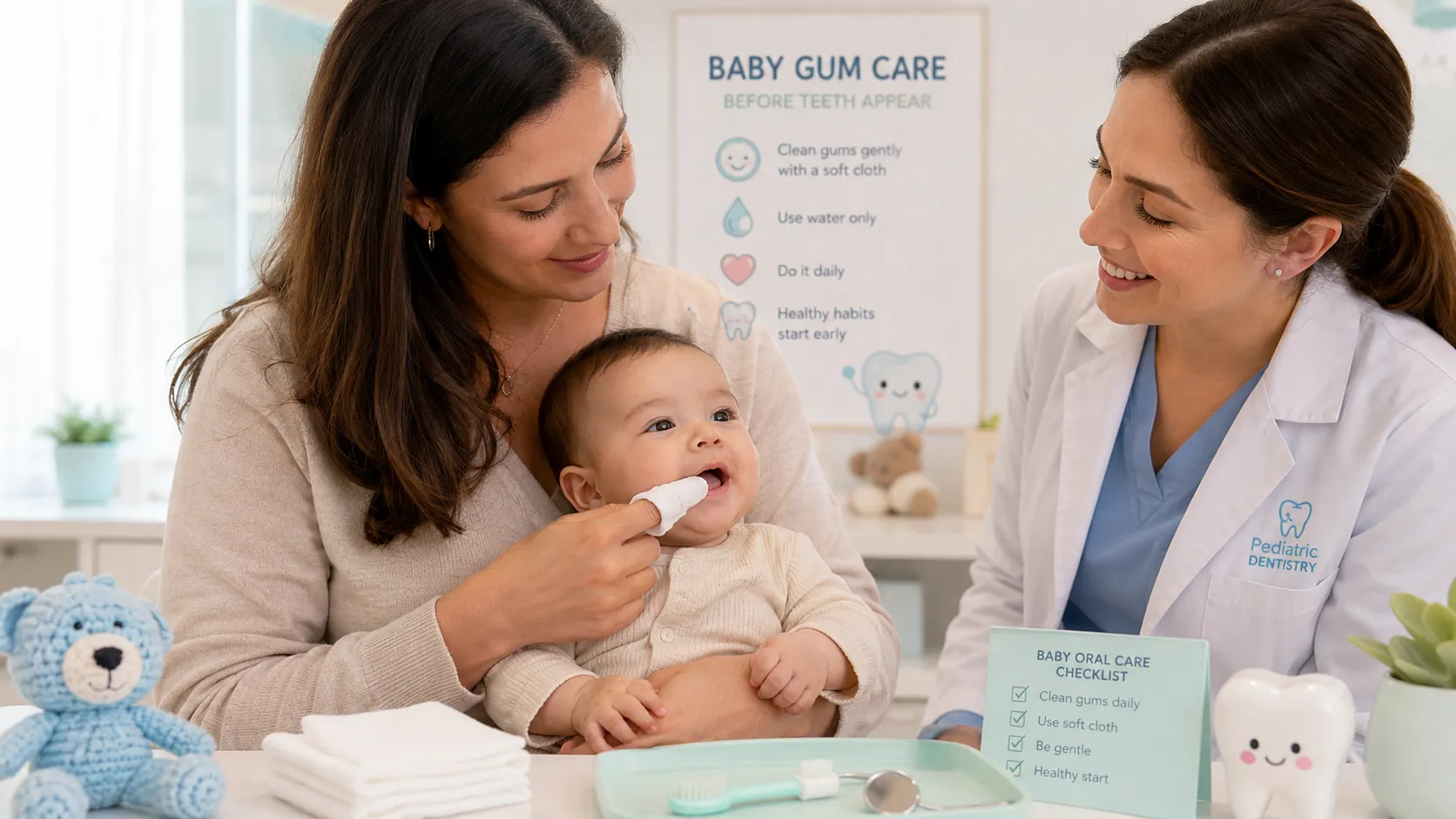
Many parents assume oral care begins only after the first tooth appears. That is a very common belief, but it is not entirely true. A baby’s oral health starts much earlier. Before teeth even erupt, the mouth, gums, tongue, and soft tissues are already playing an important role in feeding, comfort, and early development. This is why baby gum care matters from the beginning.
Parents often ask how to clean infant mouth when there are no visible teeth yet. Others wonder how do you clean a newborn's mouth without causing discomfort. These are important questions, especially for first-time parents who want to do the right thing but may not know where to begin.
Good oral hygiene in infancy is simple, gentle, and easy to include in the daily routine. Cleaning the baby’s mouth before teeth appear helps remove milk residue, keeps the gums fresh, reduces bacteria, and helps children get used to oral care from an early age. It also prepares parents for the next stage, when teeth begin to emerge and more structured care becomes necessary.
For families looking for professional support, learning more about infant oral care guidance can help parents build healthy habits for their child’s smile from the start.
Why Infant Mouth Care Starts Before Teeth Appear
Many people think brushing and oral hygiene only matter after the first tooth comes in. In reality, infant mouth care should begin even before that stage. A newborn’s mouth contains gums, cheeks, tongue, and other tissues that can collect milk residue and bacteria after feeding.
Cleaning the mouth early helps keep these tissues healthy and comfortable. It also gives parents a chance to become familiar with their baby’s mouth and notice any changes. Most importantly, it helps create a routine. When a baby becomes used to oral cleaning early, it often becomes easier to introduce brushing later.
Another reason infant oral care before teeth matters is that oral health is part of overall health. A clean mouth supports better hygiene, helps keep feeding areas fresh, and reduces buildup that may irritate soft tissues. These early habits can also support a smoother transition into future infant tooth care once teeth appear.
How to Clean Infant Mouth Safely
The good news is that learning how to clean infant mouth is not difficult. Parents do not need special equipment or complicated methods. In most cases, all that is needed is a clean, soft cloth or a piece of gauze and some clean water.
The best time to clean the mouth is after feeding or at least once or twice a day. The process should always be gentle. Start by washing your hands thoroughly. Then wrap a clean, damp cloth around your finger. Gently wipe along the baby’s upper gums, lower gums, cheeks, and tongue.
The movement should be slow and soft. There is no need to scrub. The goal is simply to remove any leftover milk or residue and keep the mouth clean. Parents should make the process calm and comforting. Talking softly or smiling at the baby can help make the experience feel normal and safe.
This simple practice is one of the best ways to build an early oral care habit. It also answers one of the most common parent concerns: how do you clean a newborn's mouth in a way that feels safe and practical.
How Do You Clean a Newborn's Mouth?
Many parents specifically ask, how do you clean a newborn's mouth when the baby is still very small and fragile. The answer is to keep everything as gentle and simple as possible.
Newborn oral care should focus on soft tissues only. A damp washcloth, gauze pad, or soft finger cloth can be used to gently wipe the inside of the mouth. Avoid toothpaste, strong cleaners, or anything rough. At this stage, gentle cleaning with clean water is usually enough.
It is also important not to force the baby’s mouth open. If the baby is sleepy, calm, or already relaxed after a feeding, it may be easier to do the cleaning then. Parents should never rush the process. Even a few soft wipes along the gums and tongue can be enough.
By making the routine simple and comfortable, parents can build confidence and reduce stress around daily oral hygiene.
How to Clean Infant Tongue
Another common question is how to clean infant tongue. The tongue can hold milk residue after feedings, especially in very young babies. In most cases, the same damp cloth used for the gums can be used to clean the tongue.
Gently wipe the top surface of the tongue without pressing too hard. A baby’s mouth is delicate, so gentle pressure is enough. If the baby resists, do not worry. A quick, soft wipe is often enough to keep the tongue clean.
Parents should also know that not every white appearance on the tongue is simply milk residue. Sometimes babies can have oral thrush, which may appear as white patches that do not wipe away easily. If parents notice thick white patches or signs of irritation, it is a good idea to speak with a pediatrician or pediatric dentist.
In general, learning how to clean infant tongue is part of good daily oral hygiene and can easily be included in the same routine used for the gums.
Why Infant Oral Care Before Teeth Matters
Some parents may wonder whether it is really necessary to focus on infant oral care before teeth if the child does not yet have teeth. The answer is yes, because the mouth is already an active part of daily life.
Feeding happens many times a day, and that means the mouth is exposed to milk, formula, and natural bacteria regularly. The gums and tongue should be kept clean just like the rest of the baby’s body. Even before teeth appear, a healthy oral environment matters.
This early care also helps parents establish the habit before life gets busier with teething, brushing, and more active toddlers. Once a routine is in place, it becomes easier to continue. Children often respond better to oral hygiene later when they are already familiar with the feeling of gentle mouth cleaning.
Benefits of Infant Mouth Care
Regular infant mouth care offers several simple but important benefits.
First, it helps remove leftover milk or food residue from the gums and tongue. This keeps the mouth fresher and cleaner. Second, it introduces oral hygiene in a calm, non-stressful way. Third, it helps parents become more aware of their child’s mouth, making it easier to notice anything unusual such as sores, swelling, or white patches.
Another important benefit is preparation. Good oral care before teeth appear makes the transition to infant tooth care much smoother. The baby becomes familiar with someone cleaning inside the mouth, and the parent becomes comfortable doing it.
Early care is not about perfection. It is about building a simple routine that supports healthy development.
Common Mistakes Parents Should Avoid
When learning how to clean infant mouth, parents may worry about making mistakes. Most mistakes are easy to avoid once they know what to watch for.
One common mistake is waiting until teeth erupt before starting oral care. Another is using too much pressure when wiping the gums or tongue. The baby’s mouth is delicate, so a light touch is always best.
Some parents may also use inappropriate products, such as adult toothpaste or rough materials. Before teeth appear, plain clean water and a soft cloth are usually enough. It is also important not to skip daily cleaning simply because the baby has no visible teeth yet.
Another mistake is assuming all white patches are just milk. If white patches do not wipe away easily or seem to bother the baby, professional advice may be needed.
What to Do with Baby Teeth When They Start Appearing
Parents often search what to do with baby teeth because they are unsure what changes once the first tooth appears. This is a natural next step after good gum care.
As soon as the first tooth emerges, oral care should shift from only wiping the gums to also cleaning the tooth. Parents can use a soft infant toothbrush or a finger brush designed for babies. The new tooth should be gently brushed to remove plaque and residue.
This is also the point where infant tooth care becomes even more important. Teeth may be tiny, but they are still at risk for early decay if not cleaned properly. Feeding habits, nighttime bottles, and sugary drinks can all affect those small new teeth.
Parents should not wait until several teeth appear. Once the first tooth comes in, it is time to adjust the routine accordingly.
When Infant Tooth Care Should Begin
Many parents ask when exactly infant tooth care should start. The answer is simple: it begins as soon as the first tooth appears. Before that, daily gum and tongue cleaning is the focus. Once teeth erupt, parents should start using a baby toothbrush and discuss age-appropriate dental guidance with a pediatric dentist.
This early stage is important because baby teeth support eating, speech development, and space for permanent teeth later. Even though they are temporary, they still matter a great deal.
Parents should also continue watching the gums, cleaning the mouth regularly, and seeking professional guidance if they notice anything unusual. Building strong habits now helps reduce dental problems later.
Building a Healthy Routine Early
One of the best parts of baby gum care is that it does not need to be complicated. A healthy routine can be built with just a few simple steps.
Parents can clean the mouth once in the morning and once before bed, or after feedings if that feels easier. The routine should be gentle, consistent, and positive. Babies do not need a perfect system; they need calm repetition.
Over time, this routine becomes part of normal care, just like bathing or changing clothes. When parents stay consistent, oral hygiene becomes something familiar rather than stressful.
A healthy oral care routine in infancy can support long-term dental habits. It teaches both parents and children that oral health is important from the very beginning.
When to Ask a Pediatric Dentist for Guidance
Although most parents can manage daily gum cleaning at home, there are times when professional advice is helpful. If a baby has white patches that do not wipe off, swollen gums, mouth sores, feeding discomfort, or unusual changes, it is a good idea to check with a dental professional.
Parents may also want guidance if they feel unsure about how to clean infant mouth, if the baby strongly resists oral care, or if the first teeth appear and they want help adjusting the routine.
At OWL Pediatric Dentistry, families can find support for early oral care, teething concerns, and the transition from gum care to baby tooth care. A pediatric dental team can help answer questions and give parents confidence about the next steps.
Final Thoughts
Baby gum care is one of the earliest and most important oral health habits parents can build. Even before teeth appear, the mouth needs gentle daily attention. Learning how to clean infant mouth gives parents a simple way to protect their child’s oral health from the beginning.
By understanding how do you clean a newborn's mouth, practicing infant oral care before teeth, and learning how to clean infant tongue, parents can create a routine that supports comfort, cleanliness, and healthy development.
As teeth begin to emerge, the focus naturally expands into infant tooth care and understanding what to do with baby teeth. Starting early makes that transition much easier.
Good oral health does not begin with a full set of teeth. It begins with small daily habits, gentle care, and a parent’s attention from the very first months of life.





























Sign in to leave a comment.