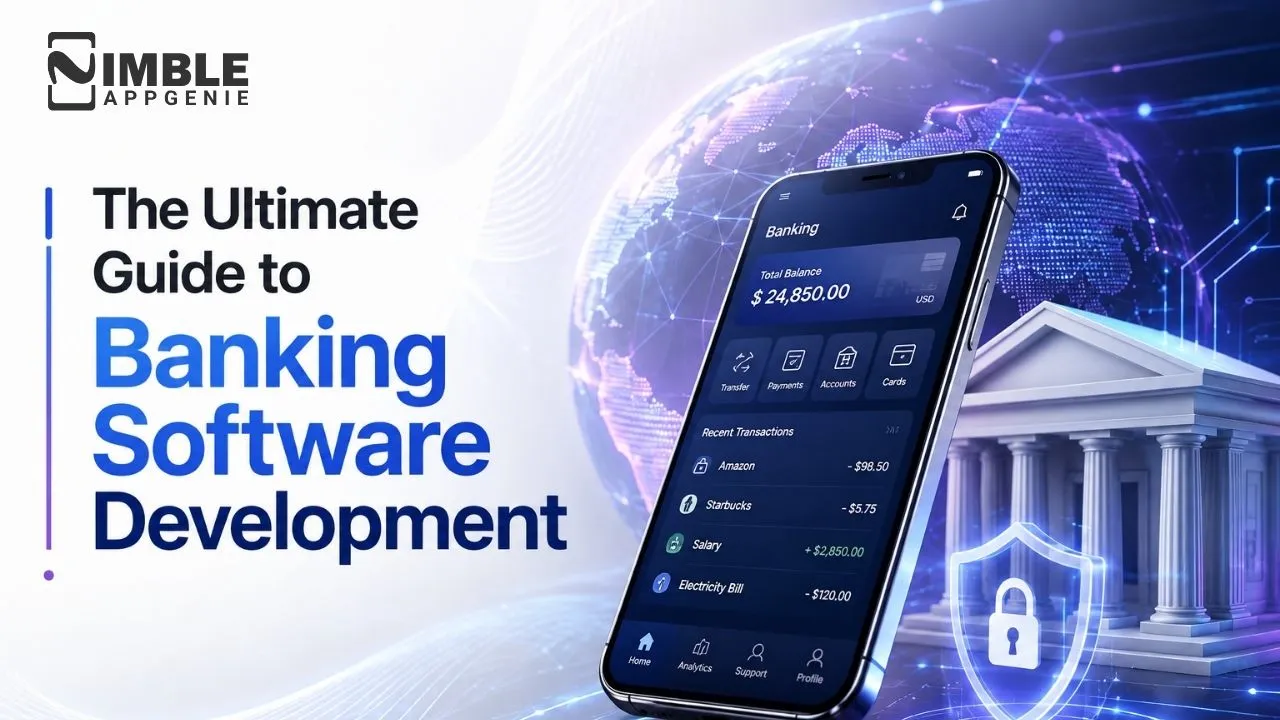

Banking has gone digital-first. Banking software development is the engine behind that shift. It powers everything from core banking systems to mobile banking solutions. Whether you're a fintech startup, a traditional bank pursuing digital transformation, or simply searching for the right banking software development company, this guide is for you.
This Banking Software Development Guide breaks down the features, technologies, challenges, and trends shaping the industry today.
Banking Software Development Guide: What is Banking Software Development?
Banking software development is the process of designing, building, testing, and maintaining digital systems for banks and other financial institutions. These systems help institutions manage
their day-to-day operations.
This includes core banking systems that handle account management, transactions, and ledgers. It also includes customer-facing banking applications, like mobile and web banking portals.
Modern banking software isn't just one product. It's a full ecosystem. It includes core banking platforms, payment gateways, loan origination systems, and fraud detection engines. More and more, it also includes AI-driven tools for personalization and risk management.
Financial technology (fintech) keeps evolving. Banks are moving away from old, monolithic legacy systems. They're shifting toward modular, API-first architectures instead. These new systems adapt faster to market and regulatory changes.
This is why so many institutions now search for custom banking software solutions instead of off-the-shelf products. Generic software can't keep up. It doesn't meet the compliance, scalability, and customer experience demands of today's financial sector.
Key Features of Banking Software
Most strong banking software solutions share a common set of core features:
- Account Management – Tracks balances, transaction histories, and account statuses in real time, across products like savings, checking, loans, and credit cards.
- Core Banking Engine – The backbone system. It processes deposits, withdrawals, transfers, and interest calculations.
- Mobile Banking Solutions – Apps that let customers check balances, transfer funds, pay bills, and deposit checks remotely.
- API Integration – Secure connections to third-party services, like payment processors, credit bureaus, and open banking platforms.
- Fraud Detection and Security Measures – Real-time monitoring, multi-factor authentication, and encryption to protect financial data.
- Regulatory Compliance Tools – Built-in checks for KYC (Know Your Customer), AML (Anti-Money Laundering), and data protection rules.
- Analytics and Reporting – Dashboards that give customers and admins insight into spending, risk, and performance.
These features are the foundation of any strong banking software development services offering. They're also the baseline for institutions moving toward full digital transformation.
Benefits of Custom Banking Software Solutions
Off-the-shelf banking platforms get you up and running fast. But they often come with limits: rigid workflows, generic user experiences, and integration headaches. Custom banking software solutions solve these problems. Here's how:
- Tailored to Business Needs – Custom systems are built around your specific processes, customers, and regulatory environment. You don't have to adapt to a vendor's template.
- Scalability – As your institution grows, custom software grows with it. You can add features and users without a costly platform migration.
- Better Security Control – You decide exactly how security measures work. You're not stuck waiting on a vendor's roadmap.
- Seamless Integration – Custom systems are built for smooth API integration from day one. This includes your core banking systems, credit bureaus, and payment networks.
- Competitive Differentiation – A better user experience in banking software, like a smarter app or faster loan approvals, becomes a real competitive edge.
Custom banking software development often costs more upfront than a pre-built solution. But for mid-to-large financial organizations, the long-term ROI usually wins out. Complex compliance and integration needs make custom the smarter long-term bet.
Challenges in Banking Software Development
Banking software isn't like a typical business app. The stakes are higher. Financial accuracy, data security, and regulatory scrutiny all raise the bar. Common challenges include:
- Regulatory Compliance – Financial software must follow a patchwork of regional and international rules (PCI DSS, GDPR, PSD2, SOX, and more). These rules change often. Teams now treat regulatory change management as its own discipline, building flexibility directly into system architecture.
- Legacy System Integration – Many banks still run on decades-old core banking systems. Modernizing without disrupting daily operations is a real technical and logistical challenge.
- Security Threats – Banking software is a high-value target for cyberattacks. Strong security measures can't be an afterthought. They need to be there from day one.
- Data Accuracy and Consistency – Financial transactions demand exact precision. Even small bugs can cause big financial and reputational damage.
- User Expectations – Customers expect the same smooth experience from their bank that they get from apps like Amazon or Uber. This pushes teams to prioritize user experience in banking software, right alongside security and compliance.
Top Technologies Used in Banking Software Development
Modern banking platforms run on a tech stack built for security, speed, and scale:
- Cloud Computing in Banking – Cloud infrastructure (AWS, Azure, Google Cloud) lets banks scale on demand, cut infrastructure costs, and deploy updates faster than old on-premise systems.
- Artificial Intelligence and Machine Learning – AI powers fraud detection, credit risk scoring, chatbots, and personalized recommendations. This is driving demand for an experienced AI banking software development company that understands both machine learning and financial regulation.
- Blockchain – Used for secure, transparent transaction records, especially for cross-border payments and smart contracts.
- APIs and Open Banking Frameworks – API integration sits at the center of open banking. It lets third-party developers build services on top of bank data, with customer consent.
- Microservices Architecture – Breaks core banking systems into smaller, independent services. This makes it easier to update one feature without touching the whole platform.
- DevSecOps Practices – Builds security into the development pipeline from the start, so teams catch vulnerabilities early, not after launch.
Best Practices for Developing Banking Software
Teams that succeed in this space tend to follow the same core practices:
- Security by Design – Build encryption, access controls, and monitoring into the architecture from day one. Don't bolt it on later.
- Regulatory Compliance from Day One – Bring compliance and legal teams in early. This avoids costly redesigns down the line.
- Agile Development with Rigorous Testing – Combine agile sprints with heavy QA, penetration testing, and code audits. Financial data demands it.
- Prioritize User Experience – Invest in UX research. Make sure banking applications work for all customers, including less tech-savvy ones.
- Design for Scalability – Plan ahead for growth in users, transaction volume, and product lines when you architect core systems.
- Choose the Right Development Partner – Whether you need full financial & banking software development services or a smaller, focused engagement, pick a partner with real financial sector experience. General software experience isn't enough.
Case Studies: Successful Banking Software Implementations
Every institution's journey looks a little different. But a few clear patterns of success stand out:
- Digital-Only Banks (Neobanks): Companies like Chime and Monzo built mobile-first platforms from scratch. Without legacy infrastructure holding them back, they delivered fast onboarding and highly personalized mobile banking solutions. Traditional banks have had to race to keep up.
- Legacy Bank Modernization: Several established banks have moved their core systems to cloud-based, API-driven architectures in phases. They run old and new systems in parallel to avoid disruption, then gradually shift customer accounts to the new platform.
- AI-Driven Fraud Prevention: Institutions that added machine learning-based fraud detection report fewer false positives and faster catches on real fraud. Security and customer trust both improve.
These examples all point to the same trend: the shift from traditional banking to digital solutions isn't optional anymore. It's the baseline for staying competitive.
Future Trends in Banking Software Development
Looking ahead, a few trends will shape the next generation of banking software:
- Hyper-Personalization Through AI – Banking apps will use AI to offer tailored financial advice, spending insights, and proactive alerts based on individual behavior.
- Embedded Finance – Banking services will show up inside non-financial platforms, like e-commerce and ride-sharing apps, through API integration. The line between banking and other industries will keep blurring.
- Increased Regulatory Automation – RegTech tools will automate more compliance monitoring. This cuts manual overhead as regulatory complexity grows.
- Biometric and Passwordless Security – Facial recognition, fingerprints, and behavioral biometrics will keep replacing passwords as core security measures.
- Greater Cloud Adoption – More banks will move core operations to the cloud. The flexibility and cost savings of cloud computing in banking make this an easy call.
Final Thoughts
Banking software development blends finance, technology, and regulation. Success comes down to getting security, compliance, and user experience right from day one.
Ready to build a secure, scalable banking platform? Nimble AppGenie brings hands-on expertise in custom banking software solutions, from mobile banking apps to AI-driven core systems. Partner with Nimble AppGenie to turn your banking software vision into a compliant, future-ready reality.

























Sign in to leave a comment.